

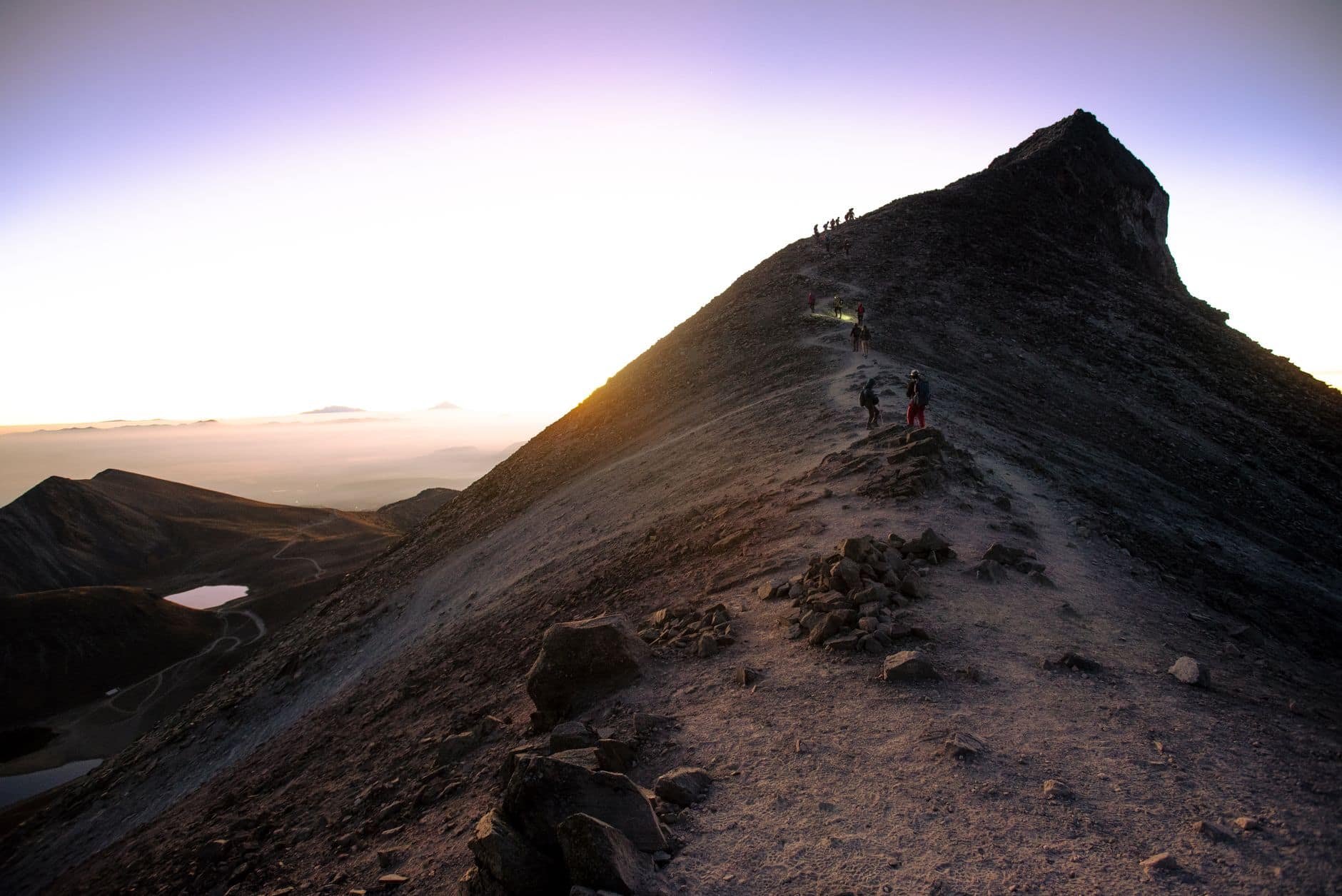
Planning the Mount Batur Sunrise Hike? This guide covers the complete schedule, what to pack, and when to go. Best months: April–October for the clearest sunrises.
By Alex Moskvin, Founder of SB Excursions · Published 21 May 2026 · Updated 16 October 2026
Tour on this route: Mount Batur Sunrise Hike — From $35, 5-8 hours.
How hard is the Mount Batur sunrise hike?
Moderate. It is roughly 2 hours up and 1.5 hours down on loose volcanic gravel, with no climbing or scrambling. Anyone who walks regularly can do it; the difficulty is the early start and the dark, not the terrain.
This guide also answers:
- How early is the pickup for the Mount Batur sunrise hike?
- How high is Mount Batur and how cold does it get?
- What is included in the Mount Batur sunrise hike?
📌 Tour overview at a glance
This is the classic Bali volcano morning: a real summit trek that stays within reach of most fitness levels, with the uphill section taking around 1.5 to 2 hours. It suits couples, friends, and solo travelers who would rather earn their sunrise than drive to it.
- Duration: 5-8 hours
- Format: Private guided summit trek
- Area: Kintamani and Mount Batur
- Pickup: Pre-dawn pickup, 01:30-03:00
- Best for: Active travelers and sunrise seekers
- Starting from: From $35
🗺️ Complete itinerary — what happens and when
Here is the step-by-step flow of the Mount Batur Sunrise Hike. Exact timing can shift depending on your hotel location, traffic, weather, and group size — but this is the standard sequence.
- Start: Pre-dawn pickup and transfer — Depending on your hotel area, pickup runs between roughly 01:30 and 03:00 so you reach the trailhead near Toya Bungkah while it is still dark.
- Then: Guided climb to the summit — The ascent takes around 1.5 to 2 hours at a steady pace, with headlamps provided and short breaks along the way.
- Next: Sunrise and summit breakfast — Watch the sky change over Lake Batur and Mount Agung while breakfast is steamed over the volcano's natural vents.
- Later: Crater rim and descent — Walk part of the crater rim, then head down in daylight, with an optional Kintamani coffee stop or a soak at the Batur natural hot spring before the drive back.
💡 What to expect at each stop — tips from travelers
The numbers and details below help you plan around the real experience, not the brochure version.
- Pickup from south Bali (Kuta, Seminyak, Nusa Dua) is around 01:40–02:00 AM. From Ubud it is around 02:30–03:00 AM.
- How long the day runs depends on where you stay. Ubud sits about an hour from the trailhead, Kuta and Seminyak about two, and Uluwatu, Jimbaran, Canggu or Nusa Dua closer to three. From Ubud, Kuta or Seminyak: pickup 01:40-03:00 and back at your hotel between 10:30 and 12:00. From the far south: pickup 00:45-01:30 and back between 12:30 and 13:30, once the return traffic clears. Keep the afternoon free either way — most people sleep when they get back.
- The climb takes about 2 hours up and 1.5 hours down over loose volcanic gravel. Normal fitness is enough — this is a steady walk, not a technical climb.
- Mount Batur stands at 1,717 m (5,633 ft). Temperatures at the top feel 10–15 °C cooler than at sea level.
- A certified local guide is mandatory for all Batur treks — enforced by the Kintamani trekking association (HPPGB).
- Batur Natural Hot Spring entry costs around $15–20 and includes towel, welcome drink, and locker. The pools overlook Lake Batur.
🎒 What to bring and how to prepare
Warm layers (the summit drops to 12–18 °C / 54–64 °F before sunrise), a headlamp or flashlight for the dark ascent, closed-toe shoes with grip, at least 1 L of water, sunscreen for the descent, and a rain jacket in wet season.
- This experience usually runs as a private guided summit trek.
- Best fit: active travelers and sunrise seekers.
- How long the day runs depends on where you stay. Ubud sits about an hour from the trailhead, Kuta and Seminyak about two, and Uluwatu, Jimbaran, Canggu or Nusa Dua closer to three. From Ubud, Kuta or Seminyak: pickup 01:40-03:00 and back at your hotel between 10:30 and 12:00. From the far south: pickup 00:45-01:30 and back between 12:30 and 13:30, once the return traffic clears. Keep the afternoon free either way — most people sleep when they get back.
- Very early departure is part of the value of this route.
- Active shoes, light clothing, and a towel or change of clothes are usually a smart idea.
- Send your hotel area before booking so the route and timing can be matched properly.
📅 Best time of year for this tour
April–October for the clearest sunrises; the trek runs year-round, but dry season mornings give the best odds of a cloud-free caldera view.
Bali has two main seasons: dry season (April–October) with less rain and cooler mornings, and wet season (November–March) with afternoon showers and higher humidity. Both seasons are warm — daytime temperatures average 27–30 °C (80–86 °F) at sea level.
⚖️ How this fits with other Bali experiences
This is the classic version: you walk to the summit yourself and arrive before first light. Choose the jeep tour instead if you want the same caldera sunrise without the 2-hour climb — the view is comparable, the effort is not.
✉️ Booking and confirmation — what you need to send
To confirm the Mount Batur Sunrise Hike, you will need to share your preferred date, hotel name and area, and group size. This lets the operator match the right vehicle, guide, and timing window.
Pricing starts at $35. The exact quote depends on your group size, hotel distance, and any add-on options.
- Hotel pickup and return planning from major Bali areas
- Activity briefing and basic safety equipment
- WhatsApp support for confirmation, timing, and route questions
Frequently Asked Questions
How hard is the Mount Batur sunrise hike?
Moderate. It is roughly 2 hours up and 1.5 hours down on loose volcanic gravel, with no climbing or scrambling. Anyone who walks regularly can do it; the difficulty is the early start and the dark, not the terrain.
How early is the pickup for the Mount Batur sunrise hike?
Pickup is between 01:40 and 03:00 AM depending on your hotel. South Bali hotels (Kuta, Seminyak, Nusa Dua) leave earliest; Ubud hotels leave around 02:30–03:00 AM.
How high is Mount Batur and how cold does it get?
The summit is 1,717 m (5,633 ft). Expect 12–18 °C (54–64 °F) before sunrise, colder with wind chill, so bring a jacket even though Bali is hot at sea level.
Do I need a guide to hike Mount Batur?
Yes. A certified local guide is mandatory, enforced by the Kintamani trekking association (HPPGB). Guides also carry the breakfast and know the trail in the dark.
What is included in the Mount Batur sunrise hike?
The tour starts from $35 per person and runs 5–8 hours door to door, covering hotel pickup and drop-off, the certified guide, and breakfast at the summit. Hot spring entry is a separate add-on at around $15–20.
What happens if it rains or the summit is cloudy?
The hike runs in all weather. Cloud cover can hide the sun itself, but standing above the cloud layer is often the more dramatic view. April–October gives the best odds of clear skies.