

Start with the part most guides bury: you cannot go inside Tanah Lot temple. The shrines on the rock are closed to non-Hindus at every tide, on every day of the year. What you buy at the gate — IDR 75,000 per foreign adult as of August 2026, cash only — is a coastal park: a chain of clifftop viewpoints, a sea arch, a market you have to walk through, and, when the tide is out, a walk across the causeway to the base of the rock. Whether that walk is possible depends on the hour you arrive rather than the day, and low water lines up with sunset only a few days a fortnight. Sunset itself falls between 18:05 and 18:50 depending on the month. This guide covers the fee, the tide, where to stand, and the ride home that strands people after dark.
By Alex Moskvin, Founder of SB Excursions · Published 21 May 2026 · Updated 23 October 2026
Tour on this route: Tanah Lot and Bedugul Tour — From $65 per car, 9-11 hours.
How much is the Tanah Lot entrance fee?
IDR 75,000 for a foreign adult and IDR 40,000 for a foreign child, the rates in force since January 2024 and still showing on the site's own ticket page in August 2026. Indonesian visitors pay IDR 30,000 and IDR 20,000. Parking is IDR 3,000-10,000 depending on vehicle. Cash only, no ATM on site, no online booking. An announced rise to IDR 100,000 for foreign adults was postponed in March 2026 with no new date set, so check the board at the gate.
This guide also answers:
- What time is sunset at Tanah Lot, and when should I arrive?
- Can you walk out to Tanah Lot rock?
- How long does it take to get to Tanah Lot from Canggu or Seminyak?
Top picks from this guide
 #1
#1
The market walk from the gate
The path from the ticket gate to your first sight of the rock runs about 500 metres through covered lanes of stalls — sarongs, hats, sandals, carvings, cold drinks. Five to ten minutes at an unhurried pace, and unavoidable: the site is laid out to route you through it. Haggling is expected. Call it a market gauntlet rather than a village craft market and you will arrive in the right frame of mind.
 #2
#2
The main terraces and Tanah Lot rock
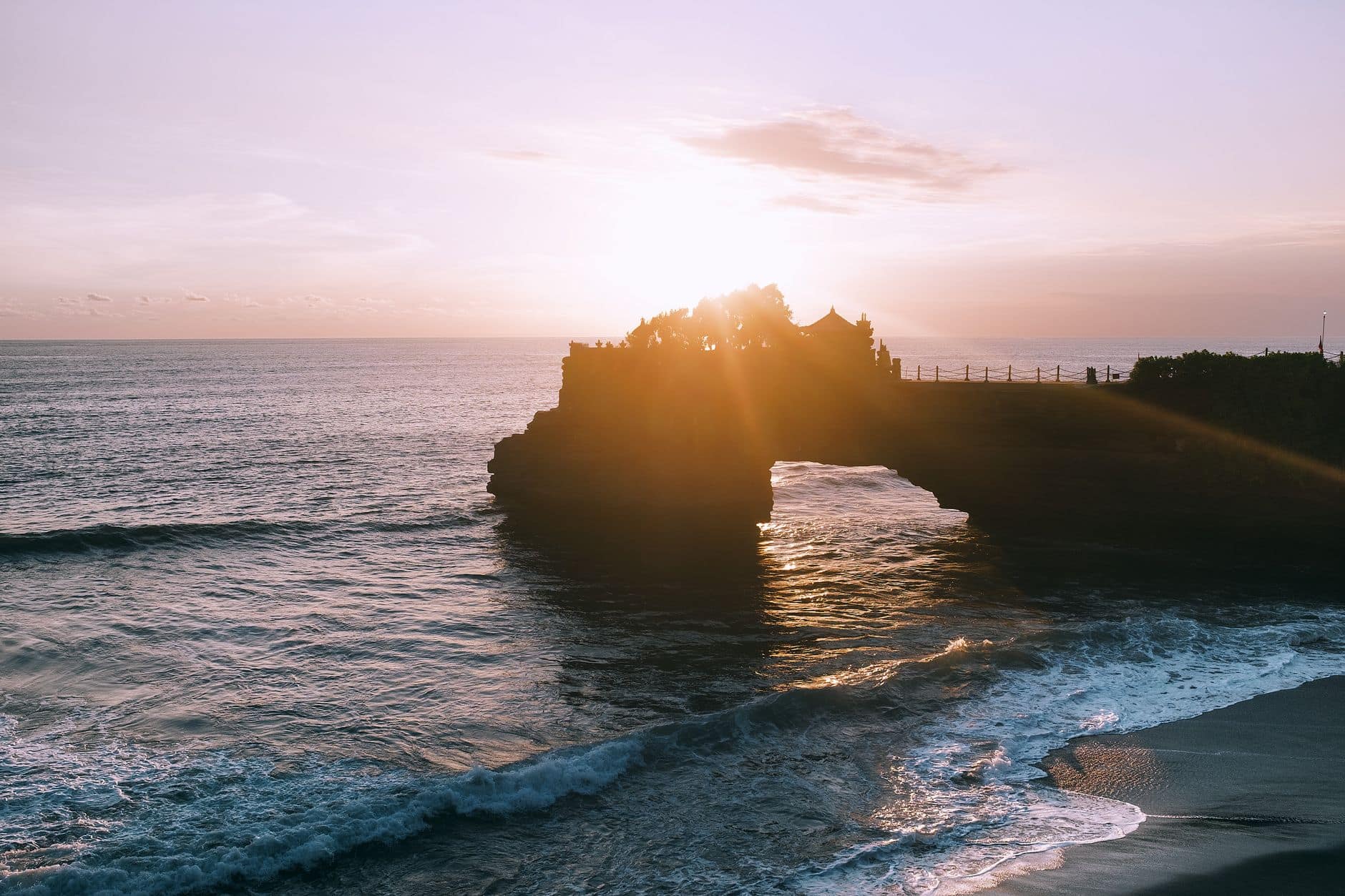
The cliff platforms opposite the rock give the frame everyone knows: the rock centre-frame, the sun setting to its right. They are also where every coach group is unloaded, so at the sunset hour you photograph over other people's raised phones. Worth knowing while you stand there — roughly a third of the visible rock is reinforced concrete, shaped and tinted to match after the face began crumbling in the 1980s. Sixteenth-century in meaning, partly modern in material.
#3
The causeway to the base of the rock
The rock sits only 20-30 metres offshore, and at low water a rock-and-sand causeway is exposed so you can walk across to its base. The usable window is about two hours either side of low water, best within an hour of it. Staff close the crossing when the swell is up and during ceremonies, so even a perfect tide is not a promise. The surface is wet, uneven and slick with algae — closed shoes, not flip-flops.
 #4
#4
Tirta Pabersihan spring and the snake cave
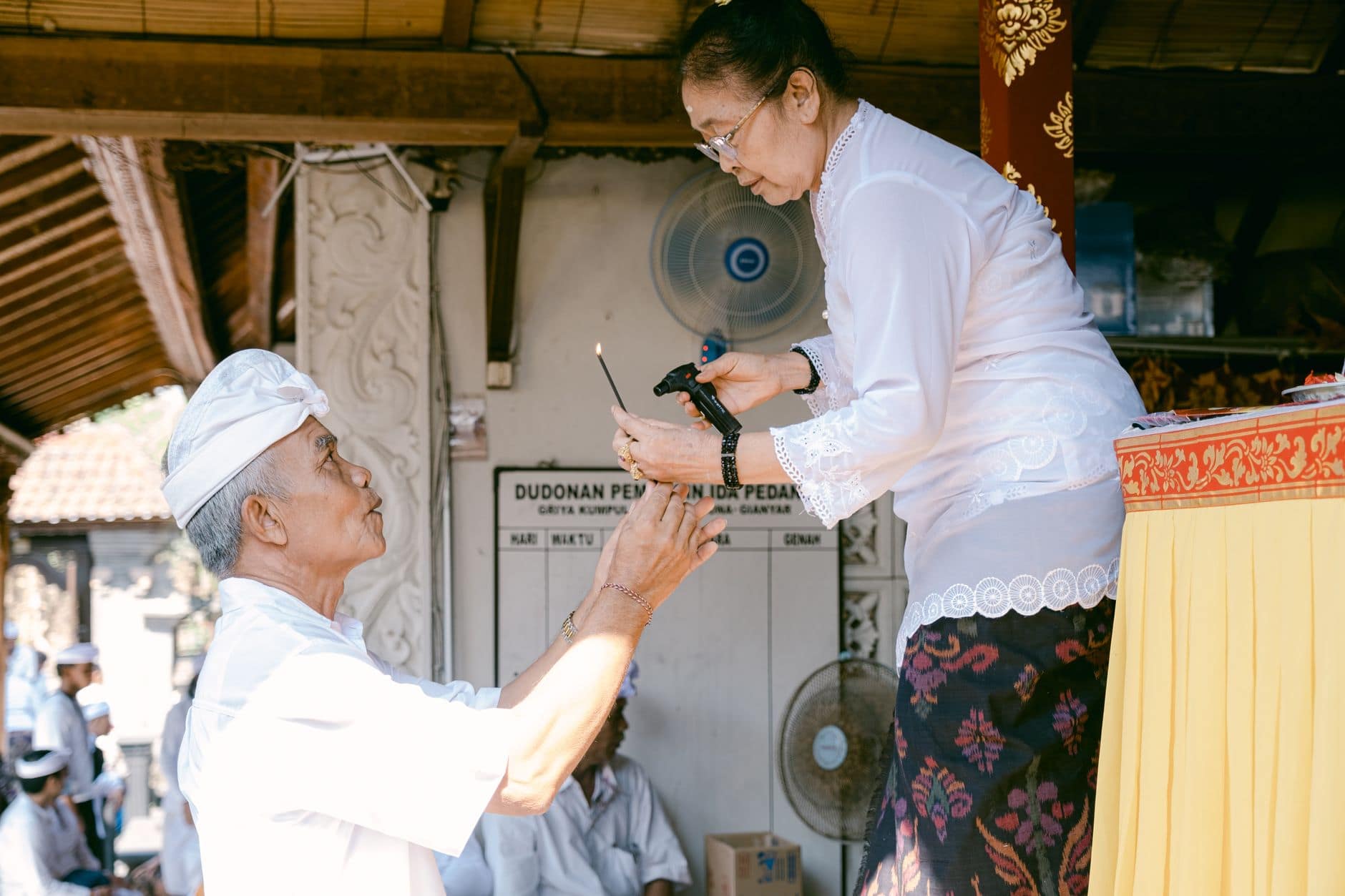
At the foot of the rock, reachable only at low tide, a freshwater spring called Tirta Pabersihan emerges and an attendant performs a short blessing: water on the hands, a sip, wet rice pressed to the forehead. Nearby a grotto holds one or two banded sea kraits, treated as guardians. Neither has a posted price; reported donations cluster somewhere between IDR 10,000 and 50,000, and no figure is official. The kraits are venomous, placid and near-impossible to provoke — touching one is still your choice, not a quaint custom.
 #5
#5
Pura Enjung Galuh headland
A small headland jutting into the sea between the two temples, roughly two minutes further along the clifftop from the main terraces. From one position you get Tanah Lot on one side and the Batu Bolong arch on the other, which no other spot on the site offers. It carries a fraction of the terrace crowd, there is room to set a tripod down, and almost no coach itinerary mentions it exists.
#6
Pura Batu Bolong at Tanah Lot
A second sea temple about four minutes south-west along the clifftop, on a promontory undercut by a natural arch; the walkway to the shrine runs across the top of it, with the sea on both sides. Included in the same ticket, no second gate. The shrine, like Tanah Lot, is not open to non-Hindus. Note the name: type 'Batu Bolong' into a map and you will be sent to a beach in Canggu, a different place entirely.
#7
The cliff warungs and restaurants
Simple warungs and sit-down restaurants line the cliff edge, and buying a drink holds you a seat for the sunset hour. It trades the front-row angle for not standing in a crush for ninety minutes — the right call with children, with anyone who tires standing, and with anyone not there to photograph. There is no cover charge, but you are expected to order; we could not verify any published menu pricing, so ask before you sit down in high season.
 #8
#8
Kecak and fire dance at Surya Mandala
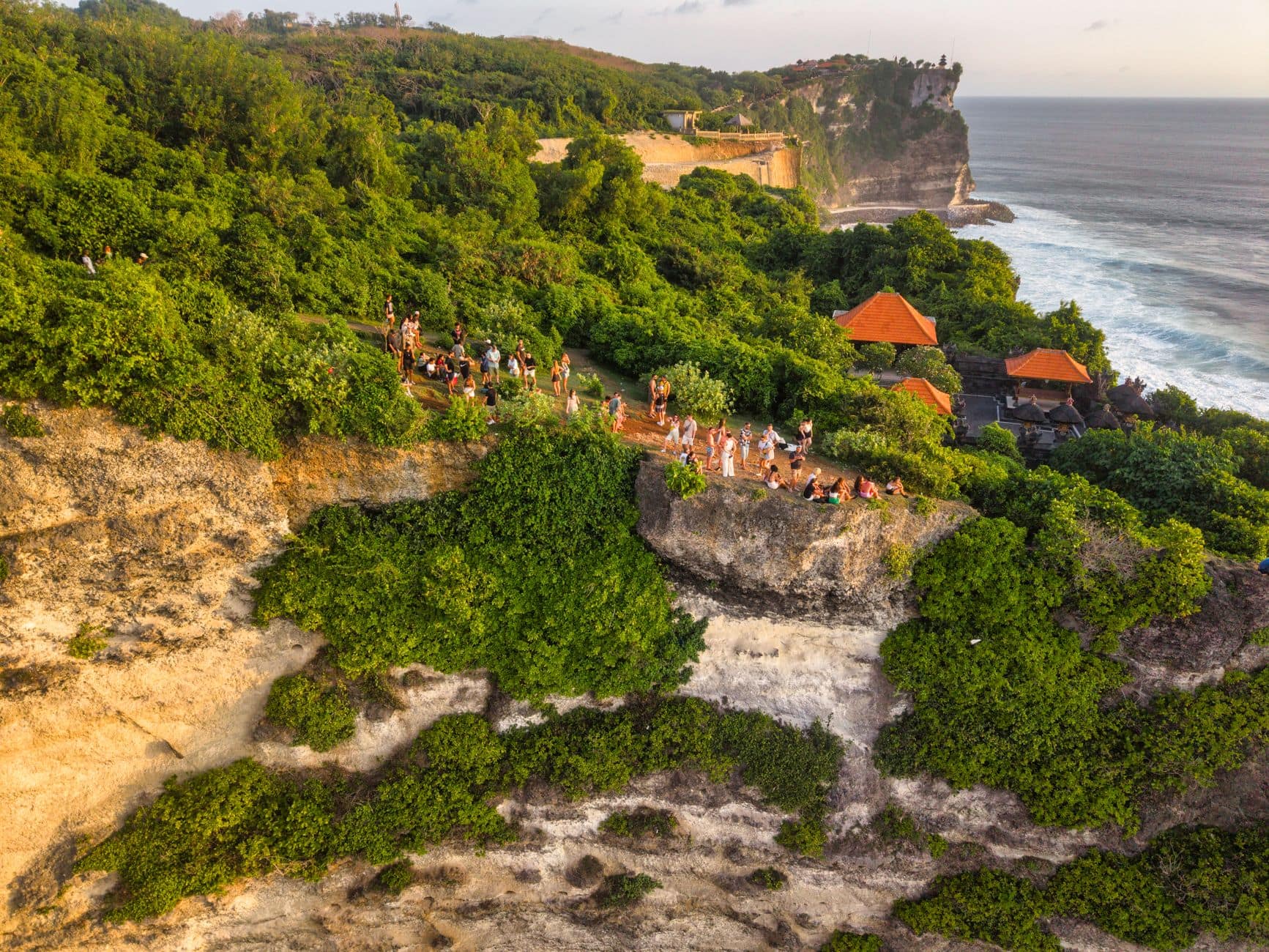
A Kecak and fire dance runs at the Surya Mandala stage inside the grounds, ticketed separately from entry at IDR 100,000 at the door and around IDR 90,000 booked online in 2026; agency listings show US$7-8 with markup added. The catch nobody mentions: it runs through the sunset hour, roughly 18:00 to 19:00, so it is the show or the viewpoint walk, not both. It is also a different performance from the better-known Uluwatu Kecak.
 #9
#9
The car park after dark
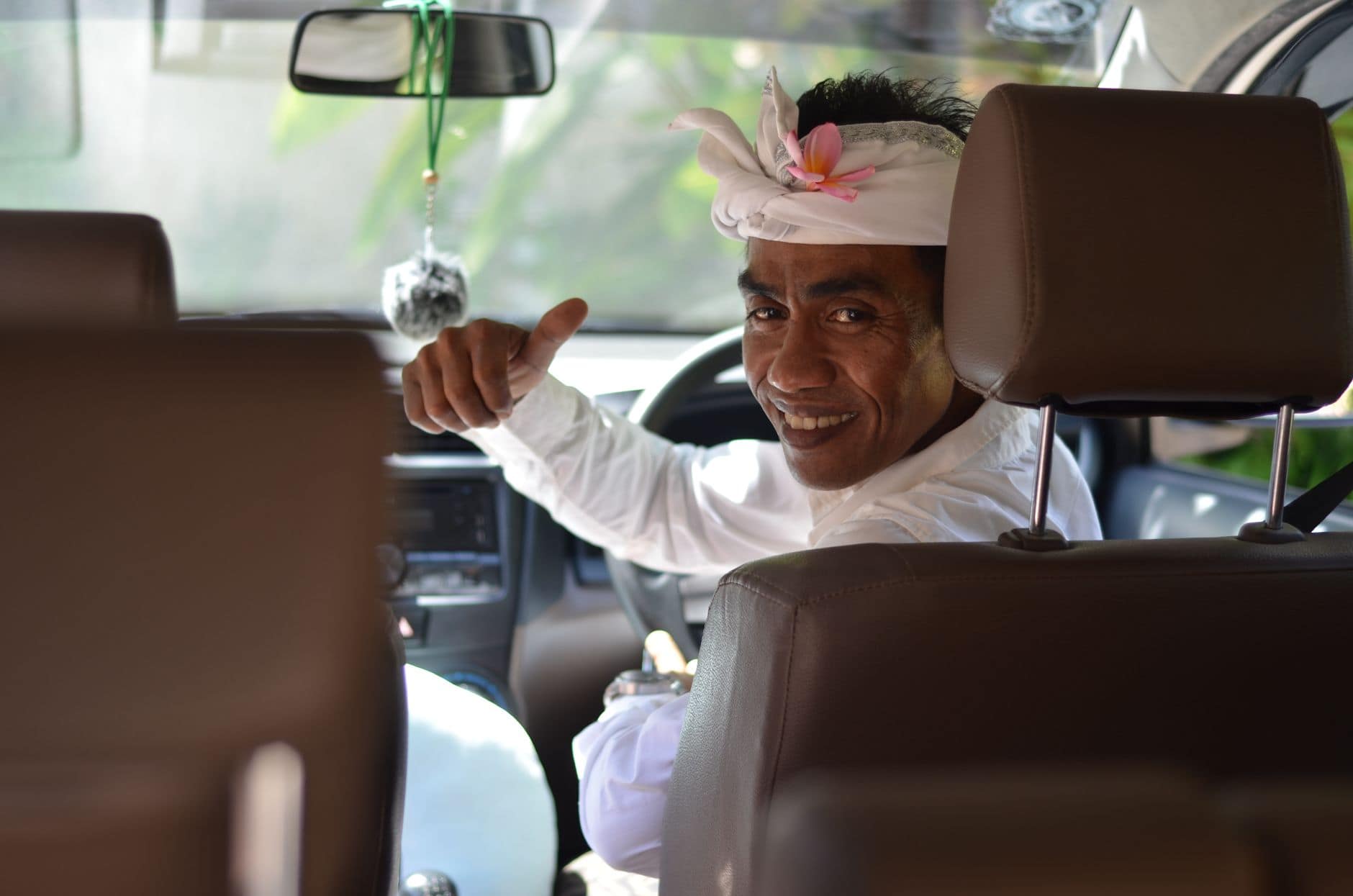
The part that ruins evenings. Grab and Gojek can drop you here but generally cannot collect you — Tanah Lot sits inside a local transport cooperative zone, and the boundary you would have to walk out to is not signed. Add a car park that empties within the same half hour onto a two-lane road, and a return to Seminyak or Kuta that routinely takes one to two hours. Have a driver waiting, or expect to negotiate a price in the dark.
What you can see at Tanah Lot, and what you cannot
The single most useful thing to know before you pay at the gate: non-Hindus cannot enter Tanah Lot temple. Not at low tide, not on a quiet morning, not with a guide. The shrines sit on top of the rock and are reserved for worship, so every visitor photograph you have ever seen was taken from the mainland or from the sand at the base. Copy that invites you to explore the ancient temple is selling something that does not exist, and it is the reason a lot of people leave here vaguely disappointed without being able to say why.
What the ticket does buy is a managed coastal park — the site is run as DTW Tanah Lot by a Tabanan Regency body, not as a free-access village temple. From the gate to the first view of the rock is about 500 metres through the market lanes, five to ten minutes, and the chain of clifftop viewpoints beyond it runs another 500 metres or so. Walking the whole chain end to end at a comfortable pace takes 20-25 minutes, which is the number to plan a sunset around.
One more piece of honesty, because it changes how you look at the thing: roughly a third of the visible rock is engineered — reinforced concrete shaped and tinted to match, installed under a Japanese-funded stabilisation programme after the face began crumbling in the 1980s. The monetary figures circulating for that programme are not credible and we will not repeat them. The rock is genuinely a 16th-century sea temple in use and meaning; part of what you photograph is modern engineering holding it up.
- Included in the one ticket: the clifftop viewpoints opposite the rock, the Enjung Galuh headland, the Pura Batu Bolong headland and the beach below the main terrace — no viewpoint charges a supplement
- Included, tide permitting: the causeway walk to the base of the rock, the Tirta Pabersihan spring and the snake cave
- Included whether you want it or not: the market lanes, because the route from the gate runs straight through them
- Not included: the temple itself, at any tide; and during the temple's anniversary the inner Main Mandala closes to all non-worshippers
- Not included: the Kecak and fire dance, which is a separate ticket on a separate stage inside the grounds
The tide decides whether you reach the rock
Tanah Lot rock sits only about 20-30 metres offshore. At low water a rock-and-sand causeway is exposed and you can walk over to the base; at high water it is cut off completely and the temple appears to float. Both are worth seeing, but they are two different visits, and which one you get is decided by the hour you arrive rather than by the day.
Bali's south coast runs on a semi-diurnal tide: two highs and two lows in roughly every 24 hours 50 minutes, successive lows about 12 hours 25 minutes apart. That gives you two low-water windows a day, and usually at least one falls in daylight — but not necessarily anywhere near sunset. The usable window is roughly two hours either side of low water, and comfortably inside an hour of it. Low water also shifts about 50 minutes later each day, which is why a tide table you checked on Monday is wrong by Thursday.
Sunset and low water only line up in runs of three or four days, roughly every fortnight. If a guest wants both the rock walk and the silhouette on the same evening, we choose the date for it; otherwise we plan them as two different hours or two different days. Read the tide table for the hour you will be standing there, not the day's headline high and low, and know that consumer tide sites interpolate Tanah Lot from a reference port, so times can be 15-30 minutes out. We do not publish a height threshold — the available sources use different datums and disagree — so the honest instruction is to read the table, then look at the sea.
- Closed shoes or grippy sandals. The exposed rock is wet, uneven and slick with algae; flip-flops on that surface are how ankles get hurt
- Staff close the causeway when the swell is up, and during ceremonies at the base — a perfect tide is not a guarantee of access
- In the wet season, November to March, the sea is often too rough for base access even at low water
- Check a tide table for Tanah Lot, Canggu or Benoa the evening before and again on the morning of the visit — the Indonesian Navy's Pushidrosal data sits behind most consumer apps
Tickets, opening hours and the cash you need at the gate
Entry is IDR 75,000 for a foreign adult and IDR 40,000 for a foreign child — the rates in force since 1 January 2024 and still showing on the site's own ticket page in August 2026. Indonesian visitors pay IDR 30,000 adult and IDR 20,000 child. In dollars IDR 75,000 is roughly US$4.50-5, but treat any USD figure as approximate. Parking is IDR 3,000 for a motorbike, IDR 5,000 for a car, IDR 10,000 for a bus. Everything at the gate is cash only — card readers are unreliable, there is no ATM on site, and the nearest machines are back in Kediri or Canggu.
This fee is on a rise that keeps being deferred, so check the board at the gate. Management announced in December 2025 that from 1 April 2026 foreign adults would pay IDR 100,000 and foreign children IDR 60,000, with parking roughly doubling. On 29 March 2026 the site's own promotion office confirmed the increase was postponed, and in early April the Tabanan tourism office said it had been pushed to next year, citing a sharp drop in foreign arrivals to the regency. No new date has been set. A fair number of English-language pages already print IDR 100,000 as though it were live; an equally large number still print IDR 60,000, which has been wrong since the start of 2024.
- Opening hours: sources disagree on the morning. 06:00, 06:30 and 07:00 all appear in print, and the official ticket page lists no hours at all. The 19:00 close is consistent, and last entry is reported at about 30 minutes before it
- The Love Bali tourist levy is a separate payment — IDR 150,000 per foreign visitor per entry to Bali, paid to the province online or at the airport, not at Tanah Lot. Whether it is actually checked here is disputed, so keep the QR voucher on your phone either way
- There is no online booking for the entrance ticket. You pay at the booth on the day
- Carry small notes for toilets and donations. Most blocks charge IDR 2,000-5,000, though there is a free block near the ticket counter
- No sarong is required for the general grounds — this is open coastal parkland and the inner temple is closed anyway. Shoulders and knees covered is the courteous default, and a sarong is expected if you take the blessing at the spring. Anyone told a sarong is compulsory just to walk in is being upsold; our drivers keep spare sarongs in the car, so the question never comes up on our days out
Sunset: when to arrive, where to stand, when to leave
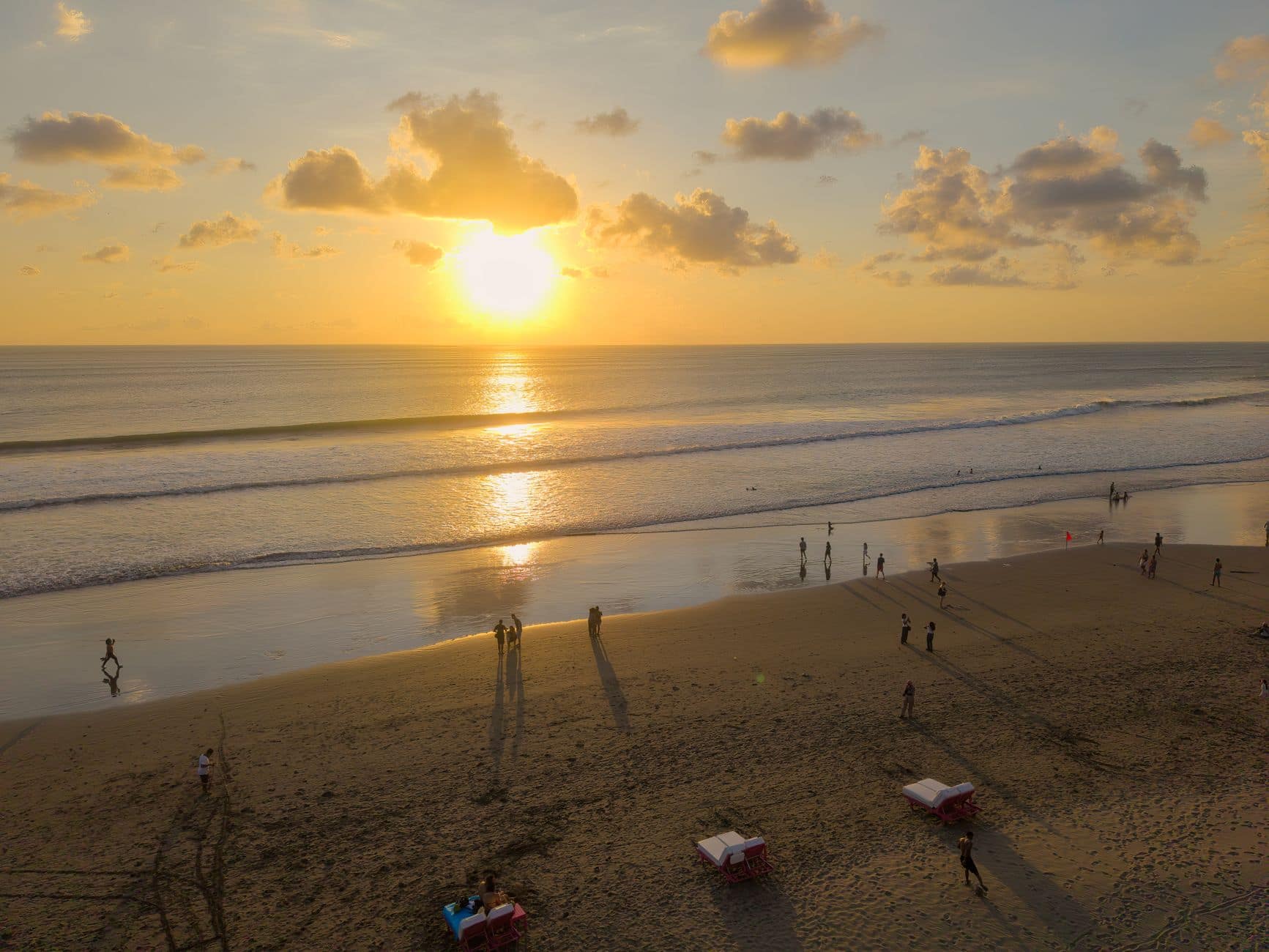
Sunset at Tanah Lot falls between about 18:05 and 18:50 depending on the month — earliest in late May and early June, latest in late January and February. The 18:00-18:30 window repeated across a lot of blogs is simply wrong for most of the year, and from late November to mid-March the sun does not go down until after 18:30. Best light is the 20-40 minutes before sunset, plus blue hour afterwards.
Arrive 16:30-17:00. That gives you time to park, clear the ticket queue, walk the market and choose a position before the surge, which runs 17:30-18:30. Most visitors turn up at 18:00-18:30, too late to do anything but stand behind other people. Then stay twenty minutes after the sun touches the water: almost everyone leaves at exactly that moment, which is usually when the colour starts, and waiting also spares you the worst of the car park.
The main terraces are the default position and the most crowded one, not the best one. Pura Enjung Galuh is about two minutes further along the clifftop and gives you Tanah Lot on one side and the Batu Bolong arch on the other; the Batu Bolong headland is about four minutes and carries a fraction of the crowd. Between November and March a clear sunset is a lottery — the wet-season sky often does not deliver one at all, and any guide selling the famous Tanah Lot sunset without that caveat is setting you up. If sunset is the whole point of your evening, our Tanah Lot versus Uluwatu comparison puts the two side by side. Bring a phone torch: the paths are dark within twenty minutes of the sun going, and there are steps.
Getting there, and the ride home that strands people
Tanah Lot is closest to Canggu — about 13 km, 30-50 minutes — then Seminyak at 60-90 minutes, Kuta and the airport area at 60-100, Ubud at 90-120. From the Bukit (Uluwatu, Jimbaran, Nusa Dua) it is 1.5-2 hours each way, which makes a sunset-only run a very long evening. Those are ranges rather than numbers because Bali's realised average speed off the toll road is around 30-35 km/h, and the leg that has to arrive before sunset lands squarely in the 16:30-20:00 evening peak. If you are self-driving or briefing a taxi, navigate to Pura Tanah Lot or DTW Tanah Lot — typing Batu Bolong will route you to a beach in Canggu, 13 km away.
Grab and Gojek can drop you at Tanah Lot but generally cannot collect you. The area is covered by a local transport cooperative agreement, so app drivers will not or cannot pick up at the gate, the zone boundary is not clearly signed, and working out where it ends in the dark while walking against the outbound crowd is a genuinely bad end to the evening. Either arrange a driver who waits or accept a negotiated local price under time pressure. A car and driver for the day from $59 per car removes the problem outright — the car sits in the car park while you are at the cliff. For comparison, street rates for a private driver in Bali run IDR 600,000-900,000 for an 8-10 hour day, with overtime reported at IDR 50,000-100,000 an hour depending on the source.
Everybody leaves within the same half hour onto a two-lane road, so getting back to Seminyak or Kuta after sunset routinely takes one to two hours. Do not book a 20:00 dinner in Seminyak off a Tanah Lot sunset. If Tanah Lot is the end of a bigger day, our Tanah Lot and Bedugul private day tour from $65 per car runs the highlands in the morning and the coast at sunset, which is the only order that works — Bedugul clouds over from late morning and sunset cannot be brought forward. Budget 11-13 hours door to door for that day; the 10-hour figure most operators advertise does not survive contact with a real sunset. And if you are landing the same day, a private airport pickup from $15 is the sane first leg, because the airport run to Tanah Lot is 60-100 minutes and not a drive to improvise after a flight.
Days to plan around, and what to build the rest of the day from
Two things in the Balinese calendar close the site or change it. Nyepi, the day of silence, shuts the entire island for 24 hours — Tanah Lot, the market, the roads and the airport included. Nyepi 2026 fell on 19 March; the 2027 date is reported as either 8 or 9 March depending on the source, so confirm it before you fix travel dates. The temple's own anniversary, Pujawali, comes round every 210 days and brings large numbers of Balinese worshippers; the inner Main Mandala closes to non-worshippers, although the July 2026 Pujawali did not close the site to visitors at all. The Melasti processions in the days before Nyepi bring sacred objects down to the sea here — spectacular, very crowded, access restricted.
Season matters more than any single date. The dry season, roughly April to October, gives the reliable clear-horizon sunsets; November to March is a lottery, and the swell often closes the base of the rock even at low water. July and August are peak for crowds, though 2026 has been a quieter year than usual — foreign arrivals to Tabanan Regency fell by roughly a third in the first two months of the year, which is precisely why the ticket increase was shelved. One live note as we write in August 2026: the Tanah Lot Art and Food Festival is running at the site in late August, which means extra crowds and pressure on the car park.
Tanah Lot is a 90-minute stop, not a day. The standard pairing is the Bedugul highlands in the morning and the coast at sunset: Ulun Danu Beratan on the lake, the wider Bedugul highlands for the cool air and the market gardens, then the descent to Tabanan. Our route write-up for that day has the hour-by-hour version, including where the schedule usually slips. Pack a layer for the highlands that you will not want four hours later at the coast — the lake sits at roughly 1,200 m and runs 6-8°C cooler than the beach.
FAQ
How much is the Tanah Lot entrance fee?
IDR 75,000 for a foreign adult and IDR 40,000 for a foreign child, the rates in force since January 2024 and still showing on the site's own ticket page in August 2026. Indonesian visitors pay IDR 30,000 and IDR 20,000. Parking is IDR 3,000-10,000 depending on vehicle. Cash only, no ATM on site, no online booking. An announced rise to IDR 100,000 for foreign adults was postponed in March 2026 with no new date set, so check the board at the gate.
Can you go inside Tanah Lot temple?
No — the shrines on the rock are closed to non-Hindus at every tide and on every day of the year. What you can do is view the rock from the clifftop terraces and, at low water, walk the causeway to its base for the spring and the snake cave. Pura Batu Bolong, the second temple inside the grounds, is the same: you walk the causeway across the arch and look, but you do not enter the shrine.
What time is sunset at Tanah Lot, and when should I arrive?
Sunset falls between roughly 18:05 and 18:50 depending on the month — earliest in late May and early June, latest in late January and February, and after 18:30 from late November through mid-March. Arrive 16:30-17:00 to park, clear the ticket queue, walk the 500 metres of market lanes and pick a viewpoint before the 17:30-18:30 crowd surge. Stay twenty minutes past sunset for the best colour and a less painful exit.
Can you walk out to Tanah Lot rock?
Only at low tide, and only when the swell is small enough for staff to open the causeway. The rock sits 20-30 metres offshore and a rock-and-sand crossing is exposed for roughly two hours either side of low water. Because Bali's coast is semi-diurnal, there are two low windows a day and low water shifts about 50 minutes later daily, so check a tide table for the hour you will arrive. Sunset and low water coincide only a few days a fortnight.
How long does it take to get to Tanah Lot from Canggu or Seminyak?
From Canggu it is about 13 km and 30-50 minutes; from Seminyak 60-90 minutes; from Kuta and the airport area 60-100; from Ubud 90-120. The afternoon leg is slower than any published figure because it runs into the 16:30-20:00 peak, and the return after sunset to Seminyak or Kuta routinely takes one to two hours. Grab and Gojek can drop you here but generally cannot pick you up, so plan the ride home before you go.
What are Tanah Lot's opening hours?
The site closes at 19:00, which every source agrees on, with last entry reported at about 30 minutes before that — arriving after roughly 18:30 is pointless. The opening hour is genuinely disputed: 06:00, 06:30 and 07:00 all appear in print, and the official ticket page states no hours at all. For a quiet visit with the tide in your favour, 07:00-09:00 is the least crowded stretch of the day by a wide margin.
Recommended Bali tours for this guide
Tanah Lot and Bedugul Tour
This is a strong all-round Bali day for guests who want culture, wide viewpoints, cooler mountain air, and a memorable coastal finish. It is easy to enjoy and easy to sell because the scenery stays varied all day.
- Duration
- 9-11 hours
- Area
- West and central Bali
- Format
- Private day tour
- Best for
- Classic sightseeing days
From $65 per car No prepayment
View tour
Private Car with Driver in Bali
This is one of the most useful products in Bali because so many plans become easier once transport is flexible. It is perfect for custom sightseeing, shopping days, family pacing, and travelers who already know roughly where they want to go.
- Duration
- Flexible daily use
- Area
- All major Bali regions
- Format
- Private transport service
- Best for
- Travelers who want total route flexibility
From $59 per car No prepayment
View tour
Bali Airport Transfer
Airport transfers are not glamorous, but they have an outsized impact on how the trip starts. A clean pickup, clear driver coordination, and direct route to the hotel make a huge difference after a long flight.
- Duration
- Depends on hotel area
- Area
- Ngurah Rai Airport and Bali hotel areas
- Format
- Private transfer service
- Best for
- New arrivals and stress-free departures
From $15 per car No prepayment
View tour