

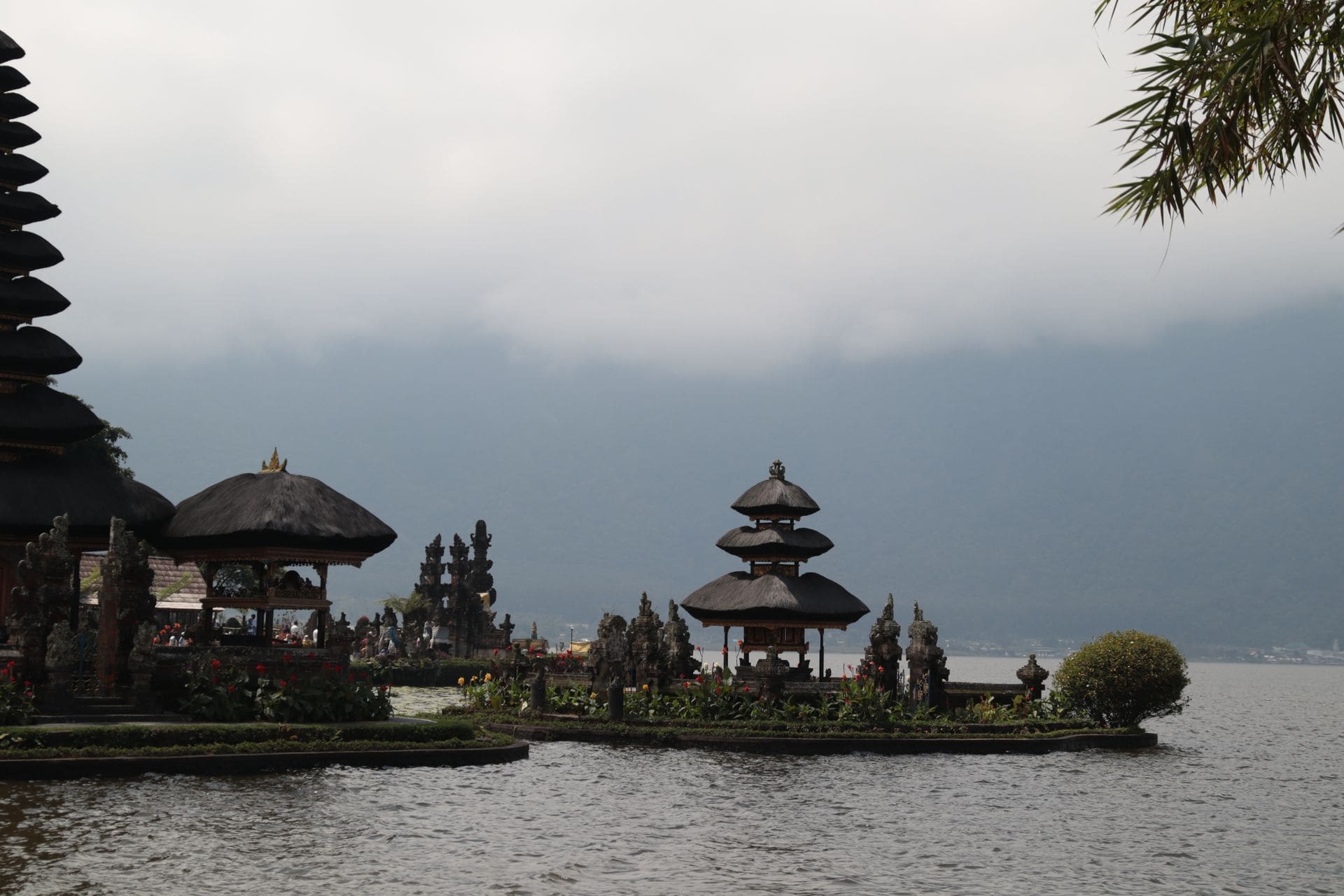
Pura Ulun Danu Beratan sits on Lake Beratan at Candikuning, about 1,200 metres up in the Bedugul highlands, and the eleven-tiered shrine on the islet is the picture everyone knows. Two things to get straight before you go. Foreign adults now pay IDR 100,000 as published from 1 July 2026, up from IDR 75,000, and most English-language guides still quote the old figure. And the temple is on the old 50,000 rupiah note, the one replaced in December 2016; today's note shows a Legong dancer and Komodo. You also cannot walk to the island shrine or enter the inner courtyards: the visit is gardens and lakeshore, looking across water. Mornings here are genuinely cold by Bali standards, and the floating effect depends on how high the lake is standing. We aim to be at the gate between 07:00 and 09:00, before the coaches and the cloud.
By Alex Moskvin, Founder of SB Excursions · Published 21 May 2026 · Updated 23 October 2026
Tour on this route: Tanah Lot and Bedugul Tour — From $65 per car, 9-11 hours.
How much is the entrance fee at Ulun Danu Beratan?
Foreign adults pay IDR 100,000 and foreign children IDR 75,000, as published from 1 July 2026 — about USD 6 at the August 2026 rate of roughly IDR 17,800 to the dollar. Indonesian visitors pay a flat IDR 50,000 and IDR 25,000. The previous rates were IDR 75,000 and IDR 50,000 for foreigners, which is what most English-language blogs still quote. Parking is separate at roughly IDR 3,000-10,000 depending on vehicle. Check the price at the gate; this site raises fees on notice.
This guide also answers:
- Is Ulun Danu Beratan the temple on the 50,000 rupiah note?
- How long does it take to get to Ulun Danu Beratan from Ubud?
- What time does Ulun Danu Beratan open?
Top picks from this guide
 #1
#1
The eleven-tier meru on the islet
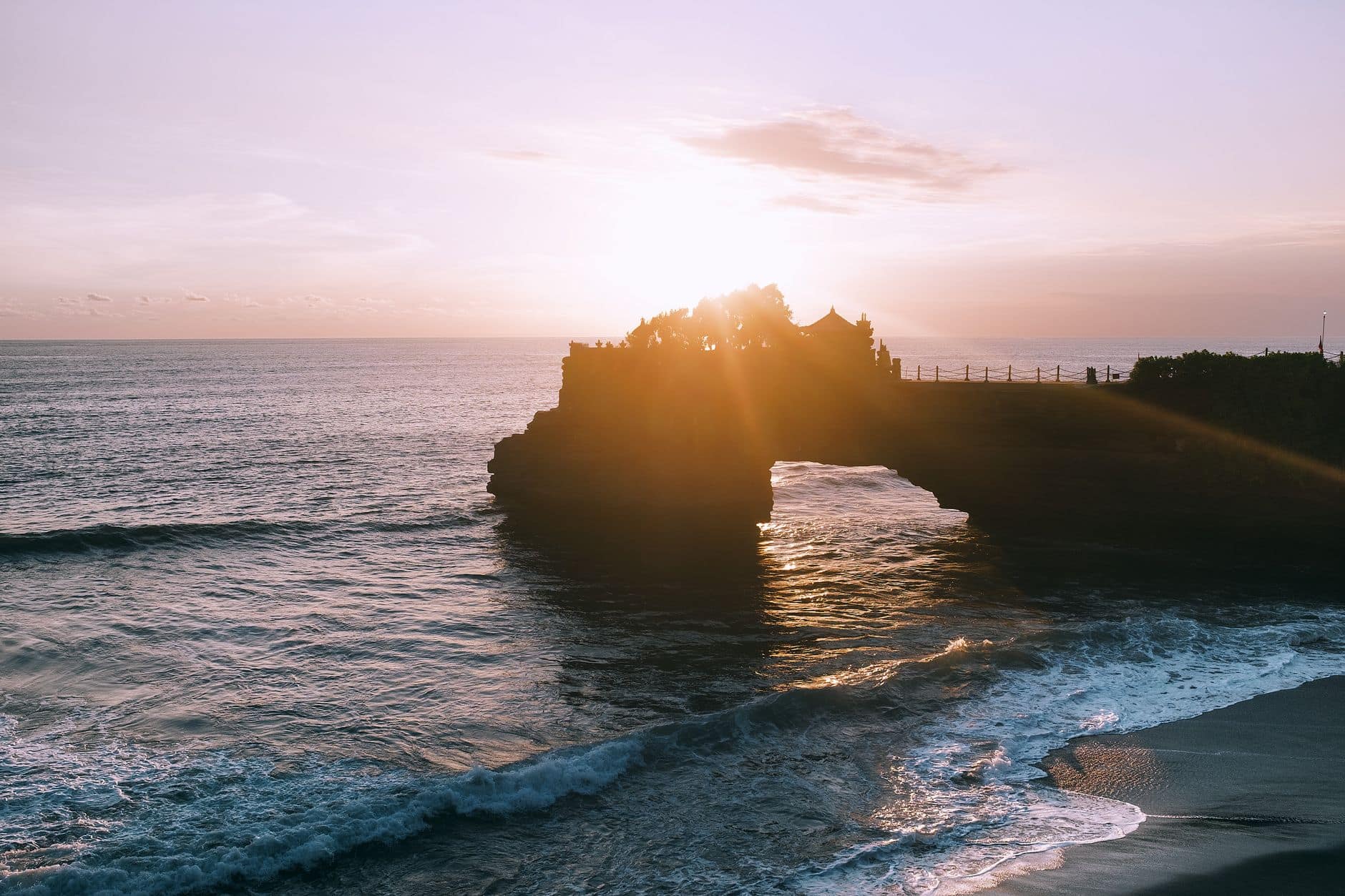
Pura Lingga Petak, the eleven-tiered meru standing on a small islet a few metres offshore, is the shrine in every photograph of Bali's highlands. A second, smaller shrine and a Buddhist stupa sit alongside it on the water. You view it across the lake from the lawn — there is no bridge, no causeway and no walking out to it, which is worth knowing before you frame the picture in your head.
 #2
#2
A working water temple, not a viewpoint
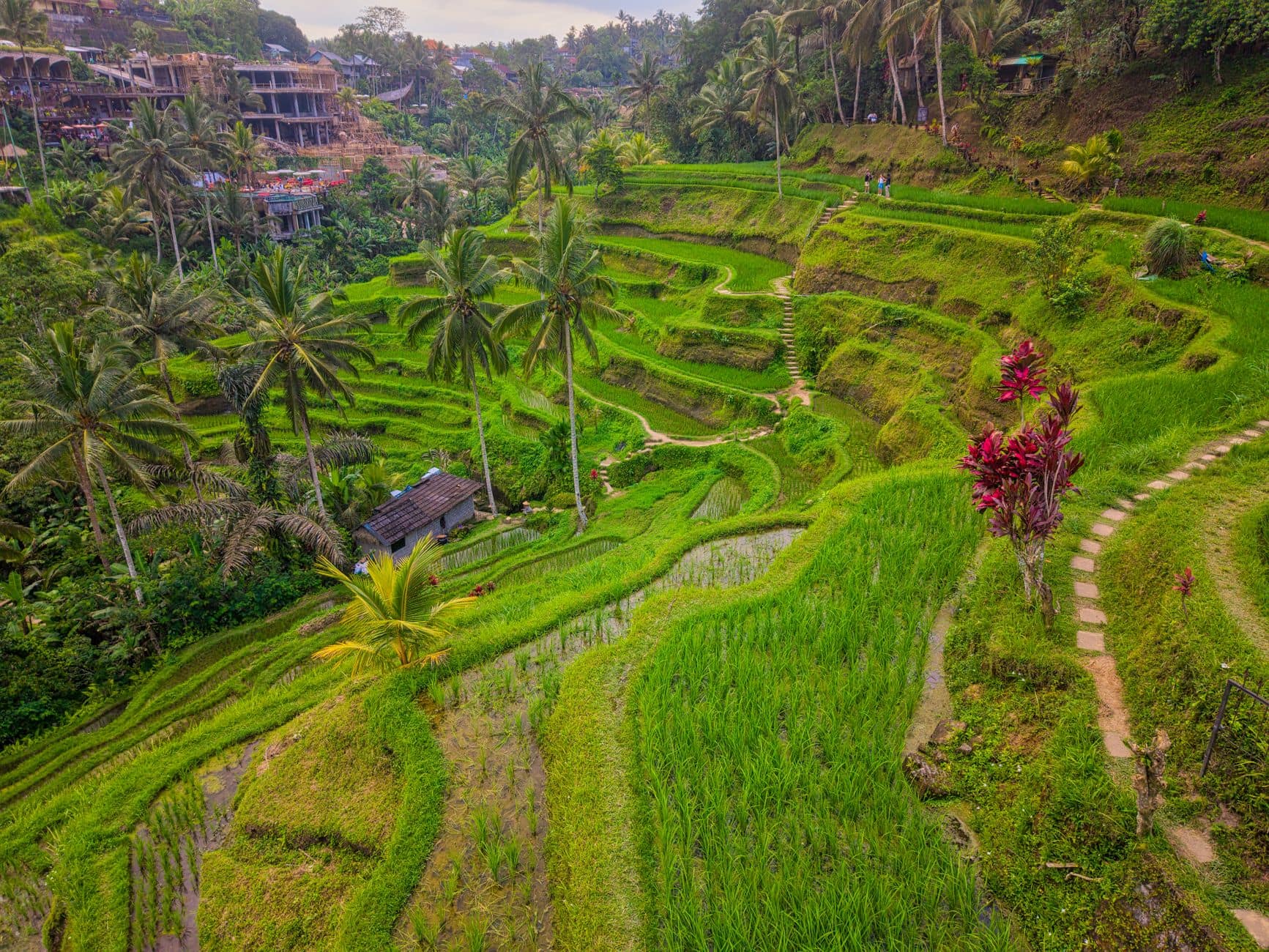
The temple is dedicated to Dewi Danu, goddess of the lake waters, and is historically tied to the subak irrigation system that feeds the rice terraces downhill. Lake Beratan is the reservoir at the top of that chain, which is why a shrine sits on it rather than on a hilltop. Ceremonies still happen here, and sections of the grounds can close without notice when they do.
 #3
#3
IDR 100,000 for foreign adults from July 2026
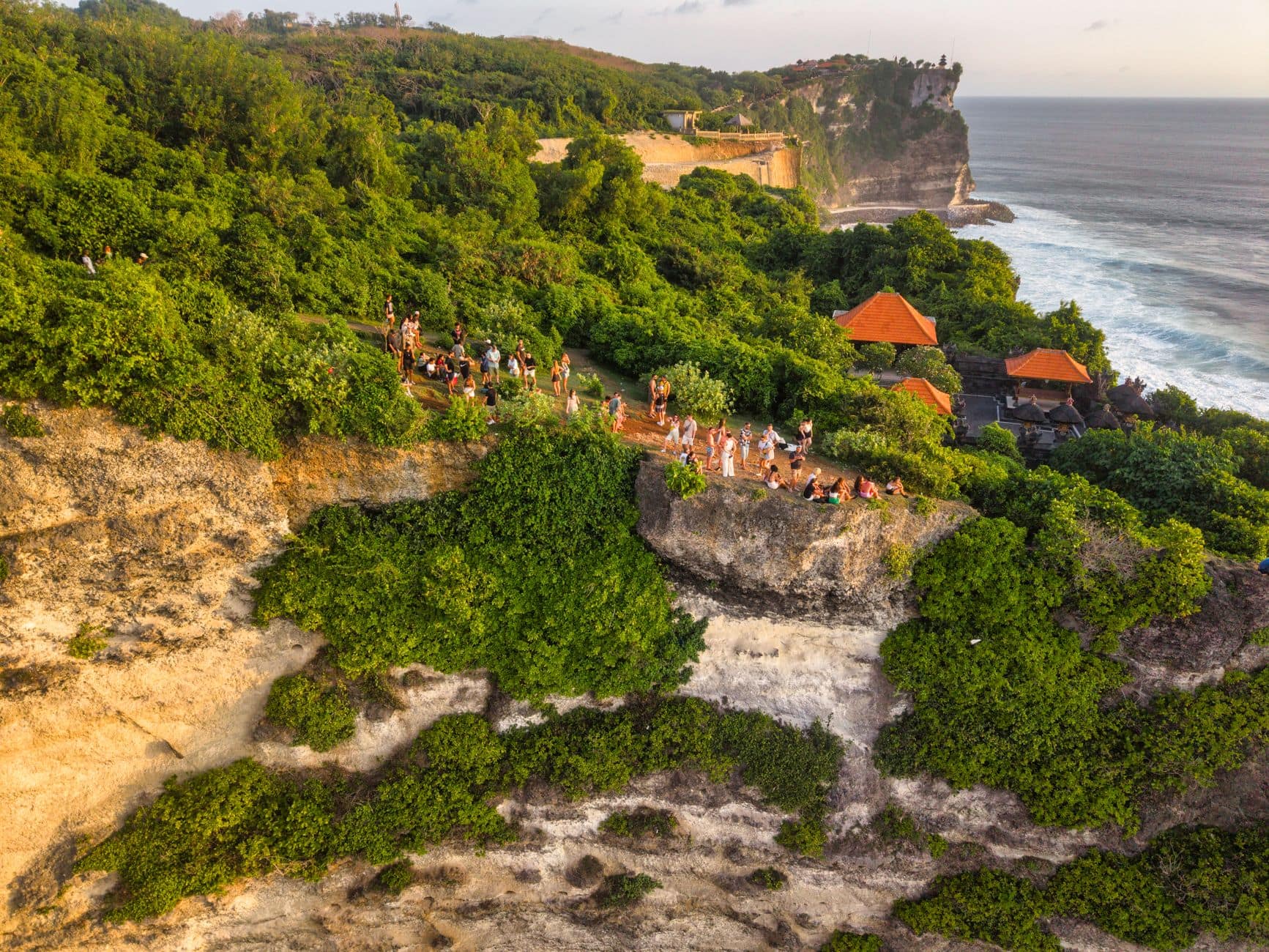
The fee changed on 1 July 2026: foreign adults IDR 100,000 and foreign children IDR 75,000, up from IDR 75,000 and IDR 50,000. Indonesian visitors pay a flat IDR 50,000 and IDR 25,000, replacing the old weekday and weekend split. detikBali, Kompas Travel and The Bali Sun all report the same figures. Most English-language blogs still quote the old price. Check at the gate — this site raises prices on notice.
#4
The old 50,000 note, not today's
Guides say "the temple on the 50,000 rupiah note" in the present tense, and it is wrong. Ulun Danu Beratan appeared on the reverse of the previous Rp50,000 note, the one with I Gusti Ngurah Rai on the front, which was superseded in December 2016. Today's Rp50,000 shows Djuanda Kartawidjaja on the front, with a Legong dancer and Komodo National Park on the back. Old notes were never invalidated, so you may still see one.
 #5
#5
You look at the shrine, you do not enter it
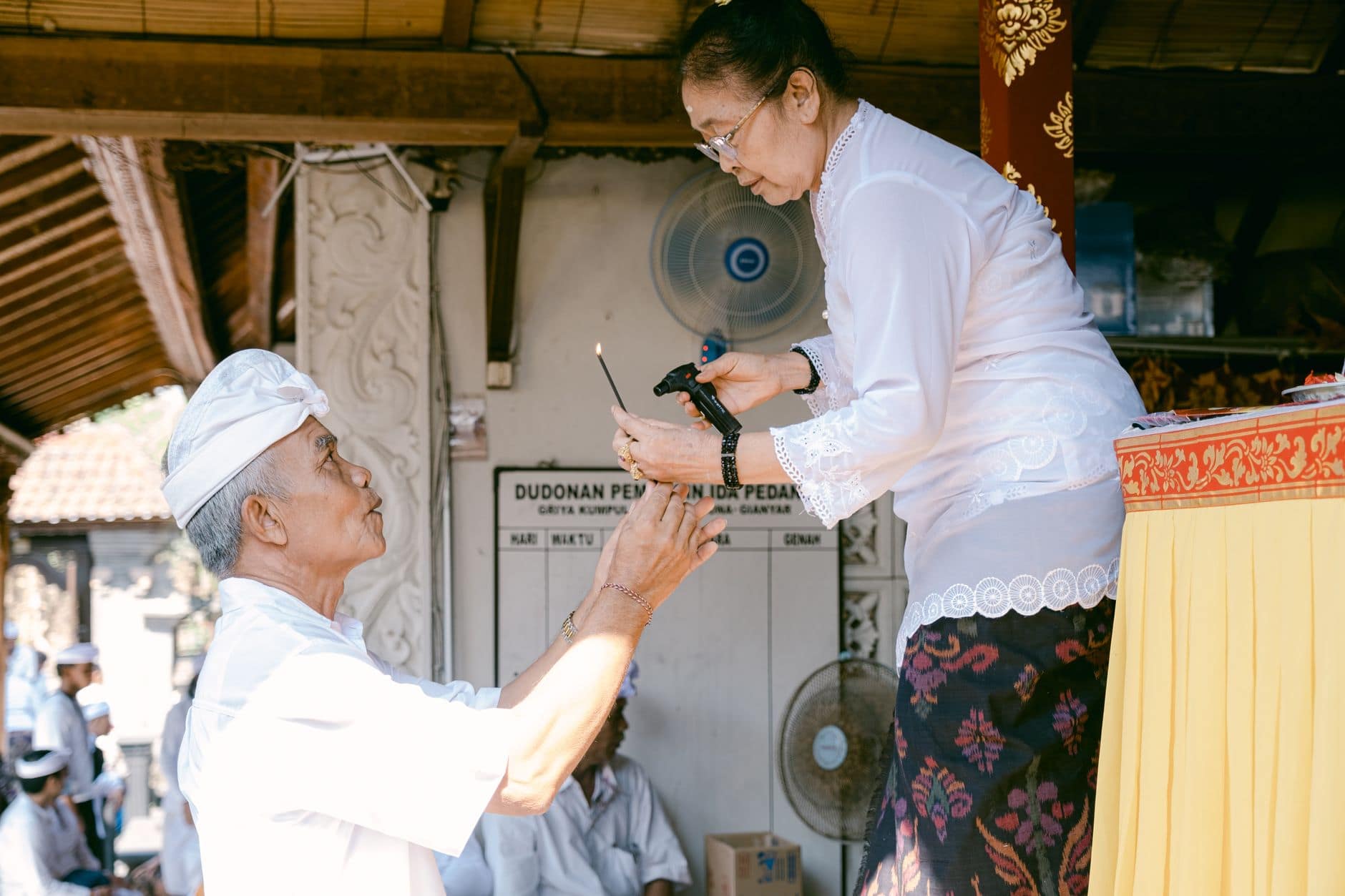
The inner worship courtyards are closed to visitors and the island shrine cannot be reached on foot. What the ticket buys is the lakeside park: gardens, lawns, a small deer enclosure, stalls, jetties and the view across the water. Dress modestly, shoulders and knees covered, though the park area is not sarong-policed the way Lempuyang is, and rental sarongs are available at the entrance.
 #6
#6
The lake level decides the floating look
The floating effect depends on how high the lake is standing. It is widely reported that in drier months the water drops enough to expose mud and grass around the islet, leaving the shrine on land rather than in water. We have found no authoritative lake-level record, so treat that as a risk rather than a rule. High water is associated with the wet season and the months just after it, roughly November to May.
 #7
#7
Be at the gate before the coaches
Two separate clocks push you early. Coach groups from the south begin arriving around 09:30, and highland cloud builds through late morning and again in the afternoon. Sunrise light comes from the east across the water, so early is also the better light. Indonesian sources give hours as 07:00 to 19:00 daily, with Saturday opening at 05:00; a few English pages list shorter hours, so confirm on the day.
What Pura Ulun Danu Beratan actually is
A water temple complex on the shore of Lake Beratan at Candikuning, in Baturiti district, Tabanan Regency, at roughly 1,200 metres above sea level. It is dedicated to Dewi Danu, goddess of the lake waters, and historically tied to the subak irrigation system that feeds the rice terraces further down the mountain. The shrine in every photograph is the eleven-tiered meru, Pura Lingga Petak, standing on a small islet just offshore; a second, smaller shrine and a Buddhist stupa sit nearby on the water.
What surprises most first-time visitors is the setting around it. The wider site is a landscaped lakeside park — gardens, lawns, a small deer enclosure, souvenir stalls and boat jetties — so in practice this is a park with a temple in it rather than a temple visit in the Uluwatu or Lempuyang sense. That is not a complaint. It is a pleasant, unhurried hour of walking at altitude, which is a rare thing in Bali. But do adjust the photo expectation: the images that circulate are usually cropped tight and heavily graded, with the jetties, the moored boats and the people on the bank taken out of frame. Our Bedugul highlands guide covers the other stops strung along the same road.
The entrance fee changed on 1 July 2026
The number most guides still get wrong. From 1 July 2026 the gate charges IDR 100,000 for foreign adults and IDR 75,000 for foreign children, up from IDR 75,000 and IDR 50,000. Indonesian visitors pay a flat IDR 50,000 for adults and IDR 25,000 for children, which replaced the old weekday and weekend split. detikBali, Kompas Travel and The Bali Sun all published the same figures, including the same "before" column. At roughly IDR 17,800 to the US dollar in August 2026, the foreign adult ticket works out at about USD 6 — treat any dollar figure as approximate and check the price at the gate.
Do not treat IDR 100,000 as permanent, either. One Indonesian travel site dates the same increase to 2 January 2026, which appears to be an earlier announcement that slipped; Tanah Lot publicly postponed its own parallel increase in March 2026 after arrivals dropped. Prices here move on notice, so quote it as the published July 2026 fee rather than a fixed fact. Parking is small money: around IDR 3,000 for a motorbike, IDR 5,000 for a car and IDR 10,000 for a coach, though one source quotes cars at IDR 10,000. Published child tickets cover ages 5 to 10, which implies under-fives are not ticketed, but we have not seen that stated outright. detikBali also reports that management offers 20-30% discounts on group and travel-agent bookings, which is worth asking about for a family of six.
The lake boats are a separate charge, and the on-site tariffs are published by craft type: a traditional wooden sampan around IDR 75,000, a pedal duck boat around IDR 90,000 for 20 minutes for two people, a speedboat around IDR 150,000-200,000 per trip for up to five, and pedal water-bikes from about IDR 15,000. Boat hire runs roughly 08:00 to 16:00, a narrower window than the temple itself. The one trap here is the pricing unit: operators quote per boat to Indonesians and per person to foreigners, and at least one outside operator advertises IDR 150,000 per person for a canoe tour. Agree the total, out loud, before anyone steps in.
Getting to Bedugul from Ubud, the south and the airport
Candikuning sits about 60 km north of Ngurah Rai airport on the main Denpasar-Singaraja road, and the figure that matters is driving time, not distance. Realistic private-car times: 1.5-2.5 hours from Seminyak or Canggu, 1.5-2.5 hours from Ubud, 2-2.5 hours from the airport, and roughly 40-90 minutes down the mountain if you are coming from Lovina. Google Maps will sometimes quote 55 minutes from Seminyak. Ignore that number — it assumes an empty island, and we have never seen it achieved on a real morning.
The road is paved the whole way and takes coaches. There is no practical scheduled service for visitors: bemos do run to Candikuning from Batubulan terminal in Denpasar and from Sukasada near Singaraja for around IDR 40,000-50,000, but they are infrequent and no use for a day with a fixed shape. That leaves a private driver or a scooter, and at 1,200 metres in highland rain we would not put a first-time visitor on a scooter. Our Tanah Lot and Bedugul private day tour runs from $65 per car and pairs the lake temple with the west-coast sunset temple; if you would rather build the route yourself, a car and driver for the day is from $59 per car. Both are booked over WhatsApp with no prepayment.
If you are thinking of putting Bedugul on your arrival day, reconsider. It is 2-2.5 hours from the terminal before you have unpacked anything, and the highlands reward a fresh start rather than a red-eye. A private airport pickup from $15 to the hotel first, then the mountains on a proper morning, is the version that works. Our Tanah Lot and Bedugul route notes set out the order we actually drive the day in, and why.
When to go: the hour, the day and the season
Aim to be at the gate between 07:00 and 09:00, for two independent reasons. Coach groups from the south start landing around 09:30, and Bedugul's cloud builds through late morning and again in the afternoon. Sunrise light comes from the east across the water, so early is also simply the better light. Indonesian sources give the hours as 07:00 to 19:00 daily, with Saturdays opening at 05:00 — a genuine sunrise window that most English-language guides miss entirely. A few English pages list shorter hours (08:00-18:00, and one at 08:00-21:00), so confirm on the day rather than planning around a late arrival.
Season matters more at this stop than anywhere else in Bedugul, because the floating effect is a function of lake level. It is widely reported that in the drier months the water drops far enough to expose mud bank and grass around the islet, leaving the meru standing on land. We have not been able to find an authoritative lake-level record to say how far or how often, so we treat it as a risk to disclose rather than a rule to promise. High water — and with it the reliable floating look and the boat rides — is associated with the wet season and the months just after, roughly November to May. Bedugul's driest months are June to September, the wettest is around February, so clear skies and high water pull in opposite directions.
If you have your heart set on the mirror-flat floating shot in August, know the risk before you drive two hours, and build the day so it is worth making anyway — the gardens, the Candikuning market and the Botanic Garden above it do not care about the lake level. Handara Gate is 8-10 km further up the same road and costs almost no extra driving, but it is a golf-resort driveway entrance, not a temple, and the queue rather than the light is the constraint. Our Handara Gate guide explains what is actually behind the gate before you commit an hour to standing in line.
What to wear and what to bring
The most common mistake at this stop is arriving from Seminyak dressed for Seminyak. At 1,200 metres the mornings are genuinely cold by Bali standards, and rain is normal here even in the dry season — this is one of the wetter corners of the island. It is also a working temple site, although the public park area is not sarong-enforced the way Lempuyang is; modest clothing is what is expected, and rental sarongs are available at the entrance if you want one.
Facilities are good by Bali standards — sealed parking, toilets and cafes — and the adjacent Candikuning (Bukit Mungsu) market sells strawberries, spices and mountain produce, which makes the natural snack stop a two-minute walk away. Bear in mind that sections of the temple grounds can close without notice for ceremonies or maintenance, so a specific corner you saw in a photo is not guaranteed to be open.
- A warm layer — a light jacket or long sleeves; visitors shivering in beachwear are a daily sight at the gate
- Shoulders and knees covered — modest dress is expected, and a sarong is only strictly needed if you enter a prayer area
- Cash in rupiah — we have found no source confirming that cards work at the ticket window, so do not rely on one; prepaid e-tickets are sold online if you prefer to pay in advance
- Small notes for parking and the lake boats, which are separate charges from the entrance ticket
- Something waterproof — the cloud that builds late morning frequently arrives as rain
What the visit includes, and how the day fits together
You do not go inside. Visitors cannot enter the inner worship courtyards and cannot set foot on the island shrine — the visit is the gardens, the lawns and the lakeshore, looking at the meru across water, with photography from outside the gates. Every source we have checked agrees on this, and it is the exact point where someone who came expecting to walk out to that shrine feels short-changed. Knowing it before you buy the ticket turns the same visit into a good lakeside hour instead of a letdown.
That also sets the length of the stop. We budget roughly an hour, or an hour and a half if you take a boat out or walk up to the Bali Botanic Garden above the market. It leaves the afternoon for the descent and a sunset on the west coast, which is why Tanah Lot is the standard second half of this route rather than a separate trip. Our Tanah Lot guide covers what that visit does and does not include, so you can decide whether to give it the evening before you are already in the car.
FAQ
How much is the entrance fee at Ulun Danu Beratan?
Foreign adults pay IDR 100,000 and foreign children IDR 75,000, as published from 1 July 2026 — about USD 6 at the August 2026 rate of roughly IDR 17,800 to the dollar. Indonesian visitors pay a flat IDR 50,000 and IDR 25,000. The previous rates were IDR 75,000 and IDR 50,000 for foreigners, which is what most English-language blogs still quote. Parking is separate at roughly IDR 3,000-10,000 depending on vehicle. Check the price at the gate; this site raises fees on notice.
Is Ulun Danu Beratan the temple on the 50,000 rupiah note?
It was on the old note, not the current one. The temple appeared on the reverse of the previous Rp50,000 banknote, the one with I Gusti Ngurah Rai on the front, which was superseded in December 2016. Today's Rp50,000 shows Djuanda Kartawidjaja on the front and a Legong dancer with Komodo National Park on the back. The older notes were never declared invalid, so you may still be handed one in change — but a traveller with a current note in their wallet can disprove the present-tense version on the spot.
Can you go inside the floating temple at Ulun Danu Beratan?
No. The inner worship courtyards are closed to visitors and the island shrine cannot be reached on foot — there is no bridge or causeway. What the ticket covers is the surrounding lakeside park: gardens, lawns, a small deer enclosure, stalls, jetties and the view of the eleven-tiered meru across the water. Photography is from outside the gates. Sections of the grounds can also close without notice for ceremonies or maintenance.
How long does it take to get to Ulun Danu Beratan from Ubud?
Budget 1.5-2.5 hours each way by private car from Ubud, and the same from Seminyak or Canggu; the airport is 2-2.5 hours and Lovina roughly 40-90 minutes down the mountain. Google Maps sometimes quotes under an hour from the south, which is not achievable in real Bali traffic. There is no practical scheduled service for visitors — infrequent bemos run to Candikuning from Batubulan and Sukasada, but a private driver is the workable option.
What time does Ulun Danu Beratan open?
Indonesian sources consistently give 07:00 to 19:00 daily, with Saturdays opening earlier at 05:00 — the sunrise window most English guides miss. A few English-language pages list shorter hours, including 08:00-18:00, so confirm on the day rather than planning a late arrival. Lake boat hire keeps a narrower window of roughly 08:00 to 16:00. Aim to arrive between 07:00 and 09:00: coach groups start landing around 09:30 and highland cloud builds through late morning.
When is the best time of year to see the floating temple effect?
High water is associated with the wet season and the months just after it, roughly November to May, which is when the floating look and the boat rides are most reliable. It is widely reported that in drier months the lake drops enough to expose mud and grass around the islet, leaving the shrine on land — we have found no authoritative lake-level record to confirm how far or how often, so treat it as a risk rather than a certainty. Bedugul is driest June to September and wettest around February, so clear skies and high water pull against each other.
Recommended Bali tours for this guide
Tanah Lot and Bedugul Tour
This is a strong all-round Bali day for guests who want culture, wide viewpoints, cooler mountain air, and a memorable coastal finish. It is easy to enjoy and easy to sell because the scenery stays varied all day.
- Duration
- 9-11 hours
- Area
- West and central Bali
- Format
- Private day tour
- Best for
- Classic sightseeing days
From $65 per car No prepayment
View tour
Private Car with Driver in Bali
This is one of the most useful products in Bali because so many plans become easier once transport is flexible. It is perfect for custom sightseeing, shopping days, family pacing, and travelers who already know roughly where they want to go.
- Duration
- Flexible daily use
- Area
- All major Bali regions
- Format
- Private transport service
- Best for
- Travelers who want total route flexibility
From $59 per car No prepayment
View tour
Bali Airport Transfer
Airport transfers are not glamorous, but they have an outsized impact on how the trip starts. A clean pickup, clear driver coordination, and direct route to the hotel make a huge difference after a long flight.
- Duration
- Depends on hotel area
- Area
- Ngurah Rai Airport and Bali hotel areas
- Format
- Private transfer service
- Best for
- New arrivals and stress-free departures
From $15 per car No prepayment
View tour