

There is no dolphin season in Lovina, because the dolphins do not leave: the 583 km² Buleleng IMMA was confirmed in November 2018 on criteria for regular aggregations, calving and species diversity, and the justification carries no seasonal qualifier anywhere in it. Nobody has ever published a monthly sighting rate — not Mustika, not Westerlaken — so every "April to October is better" line you read comes from a seller rather than a dataset. What has been measured is the boat crowd, and that is the thing which actually decides your morning.
By Alex Moskvin, Founder of SB Excursions · Published 21 May 2026 · Updated 23 October 2026
Tour on this route: Lovina Dolphin Sunrise Tour — From $69, 8 hours.
When is dolphin season in Lovina?
There is no dolphin season. The spinner dolphins off the north coast are a resident population, and the 583 km² Buleleng IMMA confirmed in November 2018 names no months at all in its justification — it qualified on regular aggregations, calving and species diversity, none of them seasonal. What changes month to month is the sea state and the number of boats, not whether the animals are in the bay.
This guide also answers:
- What are the chances of seeing dolphins on a morning trip?
- Is April to October better than the rest of the year?
- What time does the boat leave, and is it worth going later?
Top picks from this guide
 #1
#1
Shared jukung from the beach
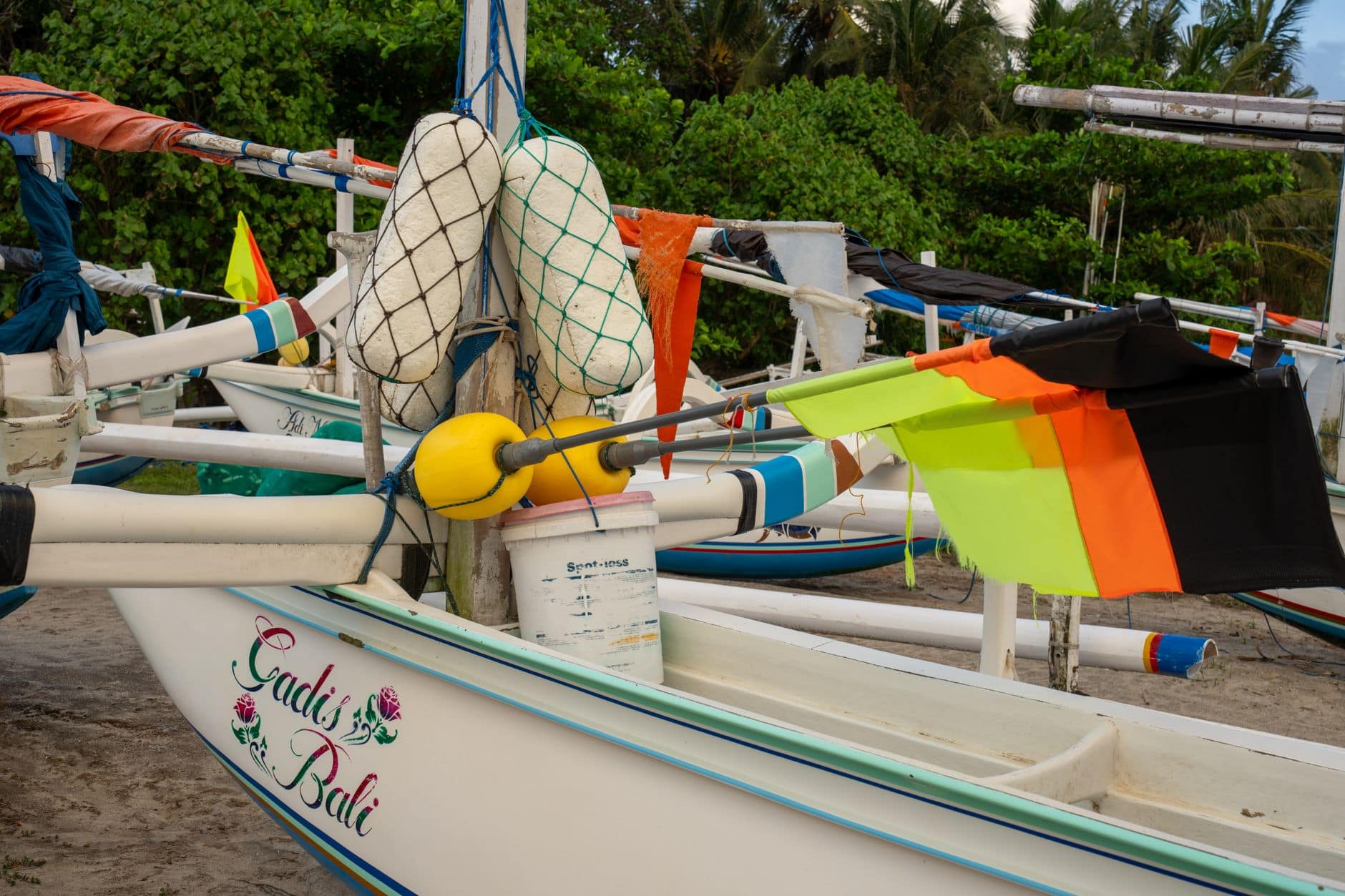
Balipedia's rates, updated 30 April 2026, put a shared boat at IDR 100,000 and IDR 50,000 — the list gives the pair without saying which category is which. Collection on the beach is around 05:45, departure about 06:00, and the trip runs 1-2 hours. You do not choose who else is aboard and you do not choose how close the boat goes, and that second thing decides the morning more than the price does.
 #2
#2
Private jukung
IDR 450,000 for one to three people and IDR 600,000 for four to six on the same balipedia list. The extra money buys one thing worth having: the boat is yours, so asking the boatman to hang back and cut the engine is a request rather than a negotiation with five strangers who each paid to get close. Whether he does it is a separate question, and the compliance figures further down are not encouraging.
 #3
#3
Boat with snorkelling added
The same beach list sells a snorkelling version, priced per seat shared or per boat private. The snorkelling happens on the reef and has nothing to do with the dolphins, so treat it as a second activity bolted onto the same boat rather than a closer look at the animals. Nobody gets in the water with a spinner dolphin on this trip, and any listing that implies otherwise is selling something the boat does not do.
 #4
#4
A departure after 08:00
The fleet sails at about 06:00 and each trip runs 1-2 hours, so a start after 08:00 puts you on water the pack has largely left. Nobody has measured sighting rates by hour, which means this buys you space rather than a better chance: you are trading the market's convention for a quieter sea. Worth asking for if you are already staying in the north and do not need the sunrise.
#5
Lovina Dolphin Sunrise Tour
$69 per person for an 8-hour day with breakfast included, which is the realistic shape of a Lovina morning if you are not already sleeping in the north. We do not quote a percentage chance of seeing dolphins, and we ask the boatman to hold back rather than race the pack. Both of those cost us bookings and we would rather lose them.
 #6
#6
North Bali day tour
$79 per person over 10-12 hours, with the dolphin boat as the first item and the rest of the north coast after it. The honest trade is time in the car: the boat is on the water for 1-2 hours and the day is ten or more. If the dolphins are the only reason you are going, the shorter version above is the one that makes sense.
 #7
#7
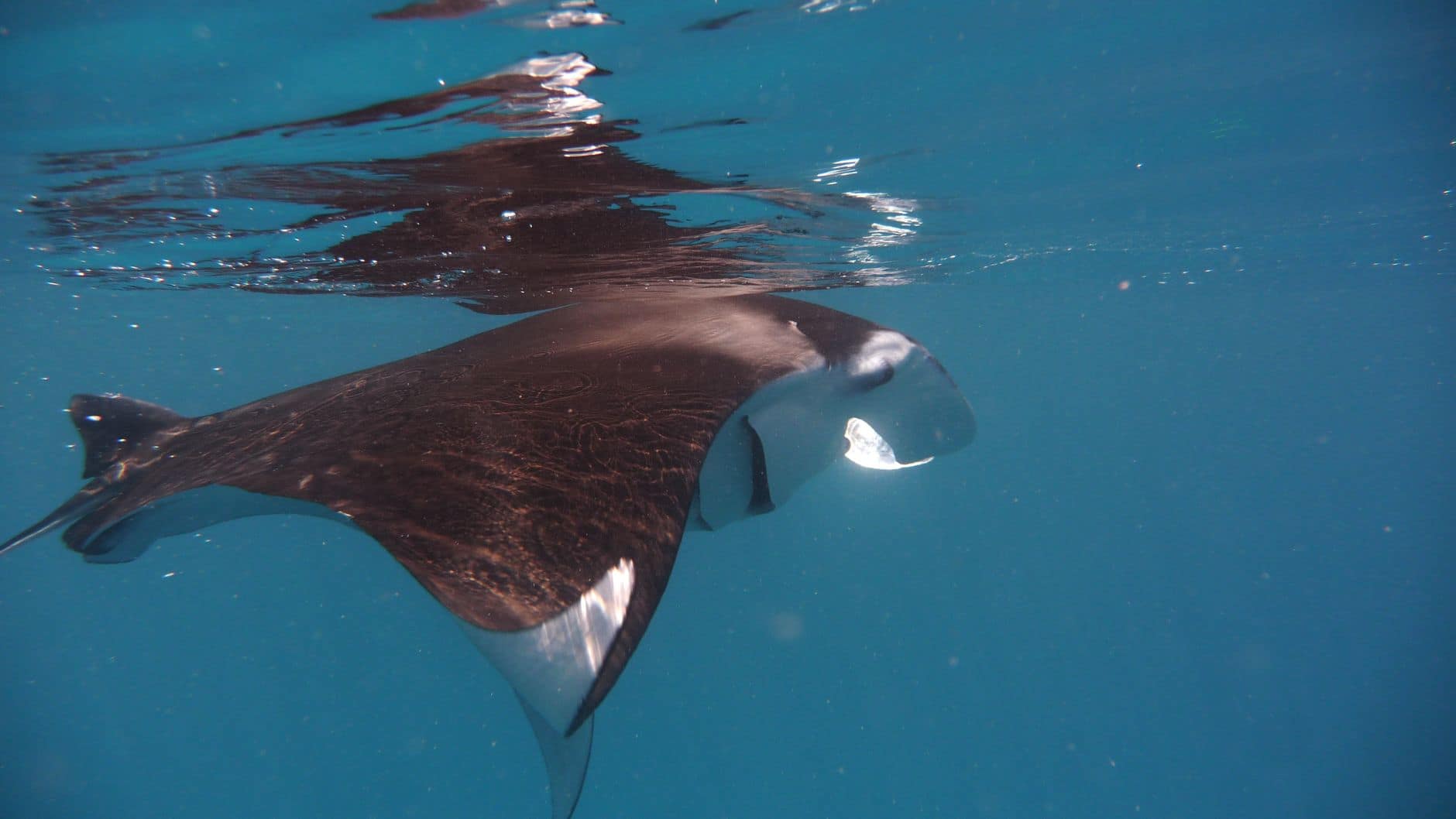
Manta snorkelling at Nusa Penida
From $29 per person, and the difference from Lovina is structural rather than a matter of degree. At the cleaning station the mantas arrive on their own to be cleaned and the snorkellers stay still on the surface, so nothing is being chased. It is the answer we give when a guest asks to swim with the dolphins in Lovina, and it is the only version of that request we will sell.
The dolphins live here, so there is nothing to wait for
The Buleleng Important Marine Mammal Area covers 583 km² of the north coast and was confirmed in November 2018, after a workshop held from 12 to 16 March 2018 in Kota Kinabalu. It qualified on three criteria: B(2) for regular aggregations, C(1) as a reproductive area, and D(2) for diversity. The supporting text notes that dolphins are consistently observed feeding there and that calves are recorded regularly. There is no seasonal qualifier in the justification — no months named, no better half of the year, nothing that would let anyone build a season out of it.
The reason the animals are reliably close is the shape of the seabed rather than anything about the calendar. The bottom falls to 200 m within 2-5 km of shore and to 500 m within 5-8 km, so the deep water sits within sight of the beach. Night feeding at 200-300 m is documented for the species; no study of the daily cycle has been done for the Lovina animals. A jukung needs 15-20 minutes of running time to reach that water, which is why Lovina became a dolphin town and nowhere on the south coast did.
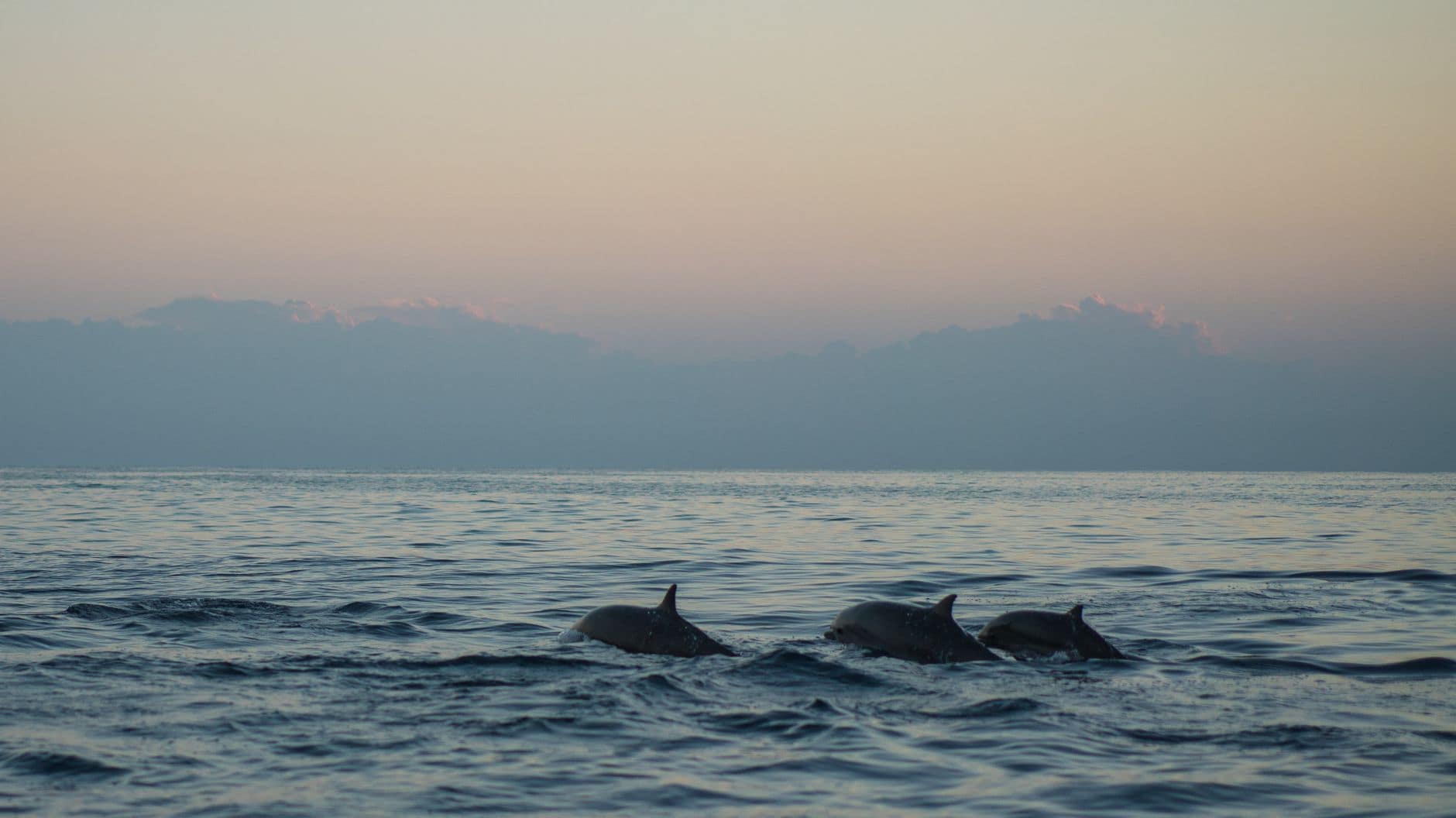
The main animal is the pygmy spinner dolphin, Stenella longirostris roseiventris. Six species have been documented in the area in total. The two qualifying species for the IMMA are the spinner and Fraser's dolphin, Lagenodelphis hosei, with pilot whales, Risso's dolphins, spotted dolphins and bottlenose dolphins also recorded. The population is resident, which is the whole point: the month you choose does not change whether the dolphins are in the bay.
What the month does change is the sea state, the number of boats around you and how the morning feels afterwards. Those are real variables and two of them have been counted. The dolphins are the constant here, not the variable, and any calendar built around them is describing the tourism rather than the animals.
Nobody has ever published a monthly sighting rate
Neither Mustika, in her work from 2011, 2012 and 2015, nor Westerlaken, in 2022 and 2025, counted the proportion of trips that found dolphins — not overall, and certainly not by month. That figure does not exist in the peer-reviewed literature or in any official source. Every "April to October is better" and every "May to September is better" traces back to an operator website with nothing published behind it. We do not quote a percentage, because there is no number to quote.
There is one indirect series worth knowing about. Westerlaken observed daily from 9 January to 15 May 2021, between 06:00 and 10:00, and counted active boats: the range was 0 to 47, the average 15.5, and the peak of 47 happened once, on 14 May 2021. So boats were working in January, February and March, though not every day, which is the closest thing anyone has to evidence about the low months. The caveat has to travel with the number: that was a pandemic season, against a fleet the same paper describes as almost 200 boats. It counts boats, not dolphins.
What argues for a high chance of an encounter is the residency itself, plus a feeding ground that sits 15-20 minutes from the beach. What argues against a spectacle is the animal: spinner dolphins are on the surface for less than two minutes at a time, and at first detection they are almost always simply travelling rather than doing anything photogenic. Both of those things are usually true on the same morning.
So there is no percentage here, and an operator who offers you one is making it up. What we can tell you is what the trip actually consists of, which is covered in our breakdown of whether the Lovina dolphin trip is worth it.
Why the boat leaves at 06:00, and why one captain says go later
Westerlaken chose the 06:00-10:00 window for observations because it coincides with the peak time for dolphin-watching tourism, not because it is when the dolphins are most active. Balipedia confirms the commercial pattern: gathering on the beach around 05:45, departure about 06:00, a trip of 1-2 hours. The hour is a tourism convention that everyone now repeats.
There is a biological argument for the early start, and it needs stating precisely. For Stenella longirostris as a species, the literature documents night foraging on mesopelagic prey at depths of 200-300 m and daytime rest in coastal bays. That is documented for the species; no study of the daily cycle has been done for the Lovina animals specifically. It fits indirectly with Mustika's finding that dolphins at first detection were almost always travelling, which is what an animal heading in from a night offshore would be doing.
The counter-argument comes from inside the market. Captain Zul told Mongabay he advises going out after 8 in the morning, when the scene is less crowded, and that the dolphins are active in the morning generally, from sunrise until midday. Nobody has measured sighting rates by hour, so this is not a settled question, but the man saying it puts boats on that water.
Either way, a 06:00 departure from Lovina means a pickup in the middle of the night if you are staying in the south. Our Lovina dolphin sunrise tour runs $69 per person over 8 hours with breakfast included, and the longer north Bali day is $79 over 10-12 hours with the coast added after the boat. On both, we ask the boatman to keep his distance, and we tell you in advance that we cannot promise an encounter.
The crowd is the variable, and it is the one that has been measured
Westerlaken's 2025 figures put numbers on what the morning looks like from the animals' side. Of recorded approaches, 72.4% happened at less than 50 m, 23.1% at 50 to 100 m, and only 4.5% beyond 100 m. Captain behaviour was scored as not matching the rules in 68.3% of cases, as matching them in 12.4%, and as neutral in 19.3%. This is not a few drivers behaving badly at the edges of an otherwise orderly fleet. It is the normal state of the water.
Dolphin behaviour recorded in the presence of boats breaks down as travelling 45.2%, avoidance 30.1%, social 15.3% and resting 9.4% — shares of the recorded states, not of the animals' day. Close to a third of what observers logged was avoidance. Mustika's earlier data, from 2007 to 2009, gives the scale: an average of 34.5 boats a day, up to about 100 in the high season, a single pod surrounded by as many as 83 boats, a median of 15.35 boats and a median ratio of 0.8 spinner dolphins per boat. Across 36 days and 175 scan samples she logged 64 separate boats showing behaviours of concern. The mean distance of the nearest jukung was about 10 m, and about 25 m averaged across the five nearest. The peer-reviewed wording from 2022 is that the disturbance caused by dolphin watching in Lovina is severe.
There is a commercial reading of the same data. Visitor satisfaction scores 7.1 out of 10, which the study calls low to medium, and for western visitors it correlates with how the encounter is managed and with their preferred number of boats. The crowd is measurably the thing that ruins the morning, not the weather and not the dolphins.
Whether the crowd is seasonal has not been measured. The only modern series of boat counts runs from January to May 2021, in a pandemic year, with an average of 15.5 boats a day. Avoiding the peak holiday weeks is reasonable common sense, and we will not dress it up as a finding. If you can pick your date, pick a weekday outside school holidays and book a boat rather than a seat.
The rules, the gap between them, and what a decent morning looks like
In 2017 the fisheries ministry, together with the Buleleng fisheries and marine office and the Buleleng culture and tourism office, agreed four points for dolphin watching: do not cut across the animals but travel alongside them in the same direction, lift and switch off the engine when close to dolphins, keep a minimum distance of 50 metres, and do not feed them. The document is an agreement between agencies rather than a regulation, and at the same time a BPSPL representative, Permana Yudiarso, said plainly that implementation by boat captains was not yet good. The compliance figures above are what that sentence looks like eight years later.
In February 2023 the Buleleng tourism office, under Gede Dody Sukma Oktiva Askara, drafted a standard operating procedure with the Buleleng SAR post, Balawista, the hotel and restaurant association and BPSPL. It sets 25 m as the threshold for cutting the engine and makes a first-aid kit, life jackets, whistles and buoys mandatory. We could not find any record of it being adopted as a district regulation. At national level there is no code of conduct for marine mammal watching at all, as Sahri and colleagues noted in 2020, even though dolphins have been legally protected in Indonesia since 1975 and three whale species since 1978. So the rules exist as text, twice, at two different distances, and bind nobody.
One practice we will not book under any framing. Boats sell a surcharge on the water for a swim with the dolphins; we do not arrange it, and we ask guests not to buy it on the beach either. Putu Lisa Mustika's objection is about the animals' time rather than etiquette: if the hours available for resting and feeding are cut, the animal is less fit and more prone to disease. If being in the water with a large animal is what you actually want, go to Nusa Penida instead, where the manta cleaning station works from $29 per person and the animals come in of their own accord while the snorkellers stay still.
A decent morning in Lovina looks like this. One boat, yours rather than a seat on someone else's, a boatman who has been asked before departure to stay at 50 m and cut the engine, and a realistic idea of what you are going to see: backs and fins breaking the surface for under two minutes at a time, from an animal that is mostly just moving through. Book it for the sea and the hour rather than for a guaranteed encounter, because no month is dolphin season and no operator can honestly sell you one.
FAQ
When is dolphin season in Lovina?
There is no dolphin season. The spinner dolphins off the north coast are a resident population, and the 583 km² Buleleng IMMA confirmed in November 2018 names no months at all in its justification — it qualified on regular aggregations, calving and species diversity, none of them seasonal. What changes month to month is the sea state and the number of boats, not whether the animals are in the bay.
What are the chances of seeing dolphins on a morning trip?
No published figure exists. Neither Mustika (2011, 2012, 2015) nor Westerlaken (2022, 2025) counted the share of successful trips, in total or by month. What can be said is that the population is resident and the feeding ground sits 15-20 minutes from the beach, with the seabed dropping to 200 m within 2-5 km of shore. Any operator quoting you a percentage invented it, and we do not quote one.
Is April to October better than the rest of the year?
That claim comes from operator websites, not from data. The only modern series of observations ran daily from 9 January to 15 May 2021, from 06:00 to 10:00, and counted 0 to 47 active boats with an average of 15.5 — meaning boats were working through January, February and March, though not every day. It was also a pandemic season against a fleet described as almost 200 boats, so it measures the industry rather than the animals.
What time does the boat leave, and is it worth going later?
Boats gather on the beach around 05:45 and leave about 06:00, running 1-2 hours. That hour is a tourism convention: the research window of 06:00-10:00 was chosen because it coincides with peak dolphin-watching tourism, not because it is peak dolphin activity. Captain Zul, interviewed by Mongabay, advises going after 8 in the morning when the water is quieter, and says the animals are active from sunrise to midday. Nobody has measured sighting rates by hour.
How many boats will be around the dolphins?
Measured, and the numbers are blunt. Mustika recorded an average of 34.5 boats a day between 2007 and 2009, up to about 100 in the high season, and a single pod surrounded by as many as 83 boats. Westerlaken's 2025 data has 72.4% of approaches happening inside 50 m and captain behaviour scored as not matching the rules in 68.3% of cases. The peer-reviewed 2022 wording is that the disturbance is severe.
Is a private boat worth it over a shared seat?
Yes, and not for the comfort. On a shared boat you are one of several people who each paid to get close, so asking the boatman to hang back is a negotiation with strangers; on your own boat it is a request you make before departure. The beach list prices a private hire per boat and a shared trip per person, so a group closes most of the gap. Whether the boatman actually keeps his distance is a separate question — measured compliance with the 50 m agreement is poor.
Can I swim with the dolphins in Lovina?
A surcharge for it is sold on the water. We do not sell it and will not arrange it: as Putu Lisa Mustika puts it, cutting into the hours an animal has for resting and feeding leaves it less fit and more prone to disease. For close contact in the water, the manta cleaning station at Nusa Penida from $29 works the other way round — the animals come in on their own while the snorkellers stay still.
Are there legal rules about how close a boat can get?
Nothing binding. A 2017 agreement between the fisheries ministry and two Buleleng offices set 50 metres as the minimum distance, required the engine to be lifted and switched off near dolphins, and banned cutting across the pod and feeding — but it is an agreement, and a BPSPL official said at the time that captains were not implementing it well. A February 2023 draft procedure by the Buleleng tourism office uses 25 m instead, and we found no record of it being adopted. Nationally there is no code of conduct for marine mammal watching, despite dolphins being protected since 1975.
Recommended Bali tours for this guide
Lovina Dolphin Sunrise Tour
This Lovina Dolphin Sunrise Tour is the cleanest way to do north Bali in one early-start day when you want the sea, a waterfall, and a lake temple without stitching the route together yourself. It includes hotel pickup, private air-conditioned transport, the traditional Lovina outrigger boat, entrance fees, mineral water, and insurance, with the page price set from $69.
- Duration
- 8 hours
- Area
- Lovina, Gitgit Waterfall and Ulun Danu Beratan
- Format
- Private dolphin sunrise day tour
- Best for
- Travelers who want a compact north Bali sunrise route with classic highlights
From $69 No prepayment
View tour
North Bali Tour and Lovina Dolphins
This is one of the fullest Bali day trips on the island, but it pays off with a completely different mood from the south. The route combines sea, mountain air, and scenic temple stops in one professionally paced private experience.
- Duration
- 10-12 hours
- Area
- Lovina and north Bali
- Format
- Private day tour
- Best for
- Travelers chasing a big full-day route
From $79 No prepayment
View tour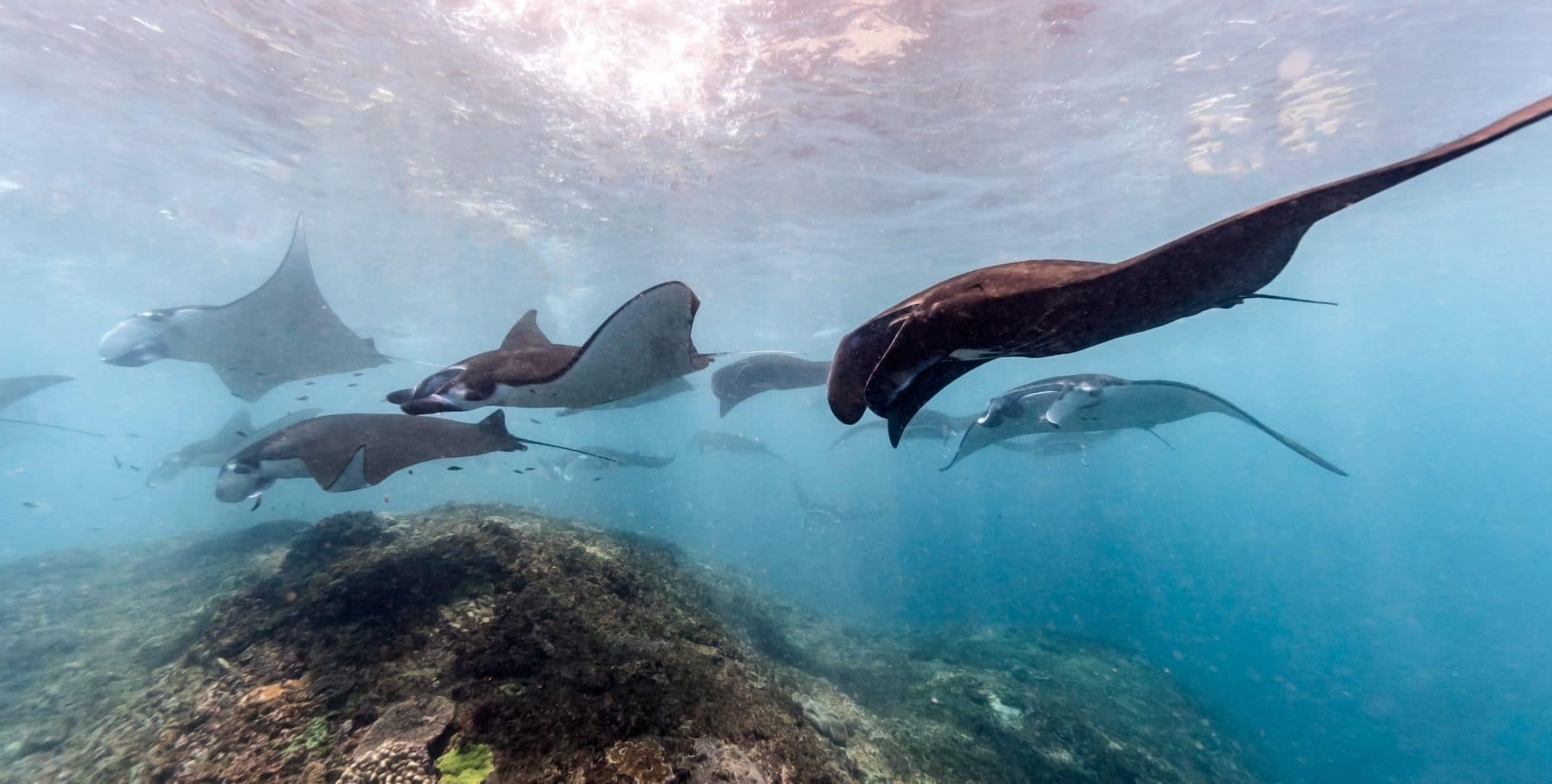
Snorkel with Manta Rays, Nusa Penida
This is one of Bali's strongest sea-day products because the experience starts delivering early and stays visually powerful all day. It works for couples, small groups, and first-time snorkelers who want clear planning and strong photo value.
- Duration
- Full day
- Area
- Manta Point and Nusa Penida waters
- Format
- Snorkeling tour
- Best for
- Snorkeling lovers and sea-day travelers
From $29 No prepayment
View tour