

Eight things to sort out before you book
 #1
#1
The bagan platforms
Bagan are stationary bamboo-and-timber fishing platforms with lift nets, anchored out in Saleh Bay. Crews fish overnight for small baitfish, and whale sharks learned to hang around the nets. That is why this is a fixed-point encounter rather than a chase: you go to the platform the fishermen radio in, and you wait. No platform, no shark.
 #2
#2
It is a dawn trip, not a day trip
Boats leave in the dark because the bagan crews finish hauling nets at first light and the bay is flattest before the wind builds. Expect an alarm somewhere around 04:00 and a cold, black boat ride. Bring a fleece or windbreaker for the crossing. You will be back on shore before most people have had breakfast.
 #3
#3
You need to be comfortable swimming
There is no reef to stand on and no shallow shelf. You enter deep open water off a boat or a platform edge, in a light current, next to an animal the size of a bus. A life vest is available and there is no shame in wearing one. But if deep water with nothing underneath makes you panic, this is not your trip.
 #4
#4
What to actually bring
A dry bag, a rash guard or shorty wetsuit, your own mask if you own one, a towel, cash in small notes, and motion sickness tablets taken the night before rather than on the jetty. Boats are open, spray comes over the side, and there is nowhere dry to put a phone. Leave anything you would hate to lose in the room.
 #5
#5
No sunscreen before you get in
Oils and chemical filters wash straight off your skin into water the shark is filtering through its gills. Wear a long-sleeved rash guard instead, and put sunscreen on afterwards, on dry skin, for the ride home. If you genuinely need something, choose a mineral formula and apply it well before, not at the ladder.
 #6
#6
Season and honest odds
Saleh Bay's sharks are reported year-round because the bagan fish year-round. What changes is the sea. In the wettest months a morning can be rough or cancelled outright, and visibility drops. Operators here quote unusually high hit rates by wild-animal standards, but nobody can promise a sighting. Ask what happens if you see nothing, before you pay.
 #7
#7
The travel leg is the real cost
Sumbawa sits two islands east of Bali. You either fly Denpasar to Lombok or Bima and drive, or take the ferry chain through Lombok. Either way it eats most of a day in each direction, and that is where the money goes. Any operator selling a Bali day trip to see whale sharks is selling you something else.
 #8
#8
Camera settings that work
Turn the flash off and leave it off. At dawn the light is low, so push ISO up rather than reaching for a strobe, shoot wide, and get close by staying still instead of swimming at the animal. Wrist-strap everything. A dropped action camera in forty metres of water is gone, and so is your morning.
The animal you are actually getting in with
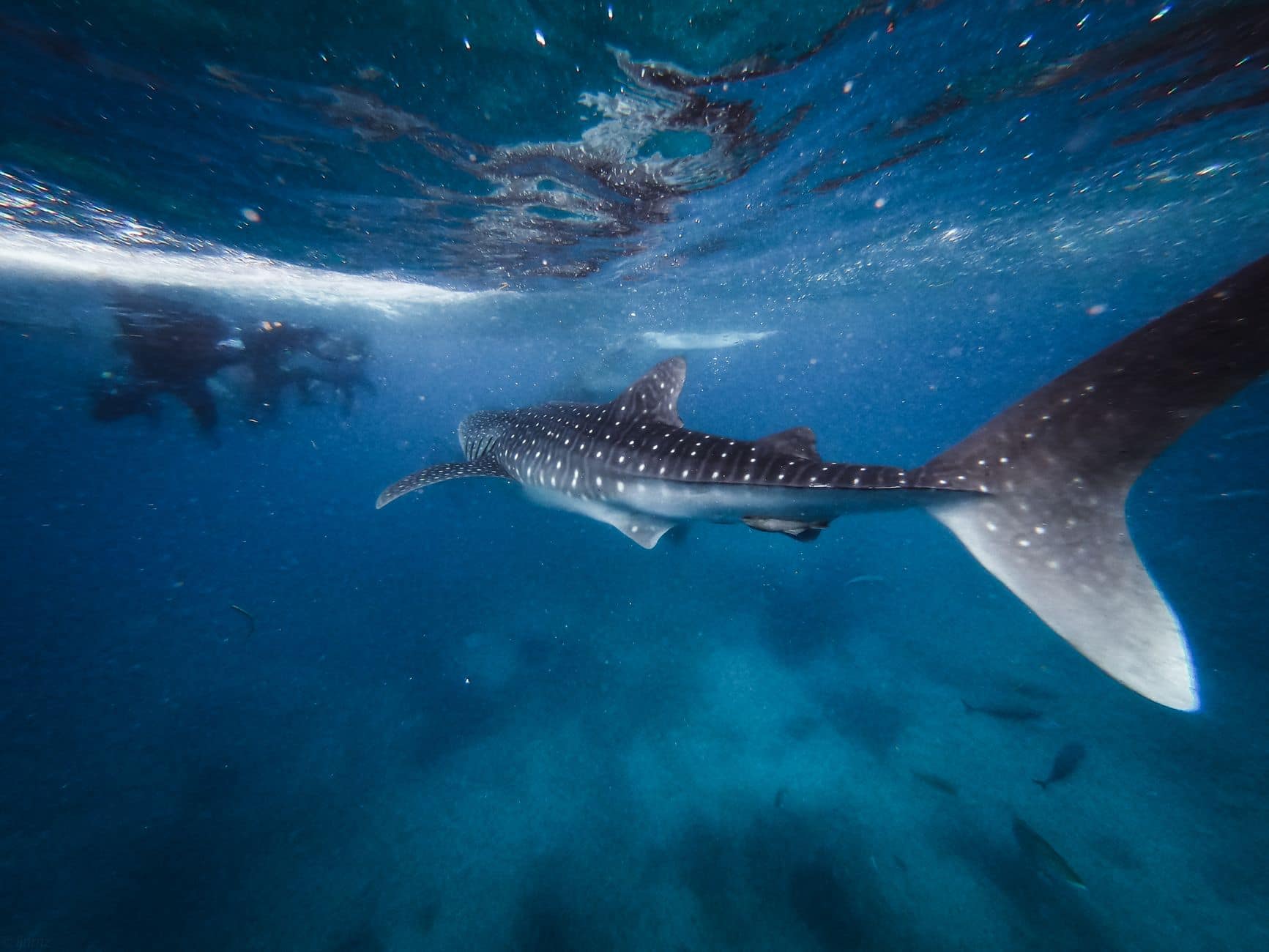
A whale shark is a shark by classification and nothing like one by behaviour. It is the largest fish alive, it strains plankton and small baitfish through its gills, and its teeth are vestigial specks it never uses on anything. There is no recorded case of one attacking a person. The real risks in the water are its size and its tail, not its mouth.
Most animals at the Saleh Bay platforms are juveniles somewhere in the four to nine metre range. That is still longer than the boat you arrived on. They move slowly and deliberately, and if one decides to turn, it turns through you rather than around you. That is the entire reason for the distance rules further down this page.
The spot pattern behind each animal's gills is unique, like a fingerprint, and researchers use photographs of it to identify individuals across years and oceans. If you get a clean side-on shot of the left flank, it is genuinely worth submitting to a whale shark photo ID database. Your holiday snap turns into a data point.
One thing worth knowing before you go: the species is listed as endangered. Global numbers are down from fishing, bycatch and ship strikes. That is part of why the behaviour rules at the platforms are not decoration, and why an operator who shrugs at them is telling you something useful about the rest of their operation.
The rules, and why each one exists
These are not slogans off a poster. They are what a decent crew briefs on the boat and then enforces, even when a guest sulks about it.
- Stay a few metres off the body and much further off the tail. Around three metres from the flank is the usual guidance, and four or more from the tail. A tail sweep from a seven-metre animal carries real force and will wind you.
- Never touch, hold, hitch a ride or push off. Shark skin carries a mucus layer that protects it from infection, and a hand wipes it away. Riding is also the fastest way to get an operator shut down.
- No flash, no strobes, no lights in the face. Shoot ambient. If the photo needs flash, take the worse photo.
- Get in clean. No sunscreen, no oil, no insect repellent on skin that is about to enter water an animal is filtering.
- Small numbers in the water at once. Guides should rotate people through in small groups rather than dropping everyone in together. If a boat unloads fifteen swimmers onto one animal, you are on the wrong boat.
- Approach from the side, never head-on and never from directly above. Blocking the path is what makes an animal leave.
- Let it go. When it descends or moves off, the encounter is over. Chasing burns the animal's energy and ruins the next boat's morning.
Now the caveat most pages skip. The sharks come to the bagan because of baitfish in and around the nets, and at some platforms fishermen hand fish over to hold them there. That is provisioning, and marine biologists genuinely argue about whether it alters natural behaviour. Ask your operator straight out whether their crew feeds. It is a fair question, and the answer tells you plenty.
Saleh Bay against Indonesia's other whale shark spots
Indonesia has four places where a whale shark encounter is a plan rather than a fluke. They are not equivalent, and which one is right depends almost entirely on how much time and budget you have.
| Spot | Getting there | Season | The honest trade-off |
|---|---|---|---|
| Saleh Bay, Sumbawa | Flight or ferry from Bali via Lombok, then a drive | Reported year-round, calmest in the drier months | By far the most reachable from Bali, and built around snorkellers. Still costs you two to three days. |
| Cenderawasih Bay, Papua | Flights to Nabire or Manokwari, then usually a liveaboard | Broadly year-round, worst in the roughest months | The most reliable whale shark site on earth and the most expensive. Think a week and a liveaboard budget. |
| Triton Bay, Kaimana | Flights via Ambon or Sorong, then a liveaboard | Roughly October to April | Remote and spectacular. Almost always sold inside a diving cruise, not as a snorkel trip. |
| Botubarani, Gorontalo | Fly to Gorontalo in Sulawesi, then a short drive | Variable and unpredictable | Cheap and easy, but the animals are drawn in by direct feeding for visitors, and the site has been criticised for it. |
Read that last row carefully, because it is a large part of why we send people to Sumbawa instead. The bagan in Saleh Bay were working fishing gear long before anyone sold a snorkel ticket there, and the sharks turned up on their own. That is a different starting point from a beach where animals are baited in for tourists. It is not spotless, and the caveat in the previous section still stands, but it is a better arrangement.
The other thing the table hides is that the Papua options are diving trips. If you snorkel rather than dive, Saleh Bay is not a compromise. It is the one actually designed around you.
What the morning actually looks like
Timings shift with the season and the crew, but the shape of the morning is consistent.
- 03:45 to 04:15. Alarm, and coffee if the guesthouse has any going. Most people sleep in a simple homestay near Labuan Jambu rather than a resort, because that is where the boats leave from.
- 04:30. Short drive to the jetty in the dark. Bring the fleece. Sumbawa is hotter than Bali by mid-morning and colder than you expect on the water at this hour.
- 05:00 to 05:45. Out across Saleh Bay while it is still black. The crew is on the radio to the bagan fishermen, working out which platform has something underneath it.
- 05:45 to 06:15. First light. You tie up near a platform and everybody stares at the water. This part can be dull, and it can also be the part where a shadow the length of the boat slides past the hull.
- 06:15 to 08:30. The encounter, in rotations. Small groups in for a few minutes each, out, back in. Total in-water time on a good morning often adds up to an hour or more across several short sessions.
- 08:30 to 09:30. Back to shore, rinse, breakfast, and the slightly flat feeling of having done the best thing of the day before nine.
On a bad morning you sit at two or three platforms, see nothing, and go home. It happens, and anyone running this honestly will say so out loud. The operators who guarantee sightings are the ones to be suspicious of. The rest of the day is usually free for Moyo Island and its waterfall, or for starting the long transfer back towards Lombok and Bali.
Getting there from Bali, and what it really costs
This is the part that decides whether the trip happens at all. Sumbawa is not a taxi ride. From Bali there are two realistic routes.
Fly. Denpasar to Lombok is a short hop, and from Lombok you cross to Sumbawa on the Kayangan ferry and drive east. There are also flights on to Bima or Sumbawa Besar, which cut the driving but run less often and cost more. Domestic fares swing hard with season and booking window, so treat any figure quoted on a blog as a starting point and check live prices for your dates.
Overland and ferry. Slower, cheaper, and genuinely fine if you have the time: Padangbai to Lembar, drive across Lombok, Kayangan to Poto Tano, then east along the north coast. Public ferry tickets for a foot passenger are trivial money in rupiah. The cost here is hours, not cash.
On price, here is the honest shape of it. A packaged Saleh Bay trip out of Bali is not a fifty dollar day tour, and anyone advertising it as one is either running a manta trip under a whale shark headline or quietly leaving the flights out. Expect a genuine multi-day package to land in the low-to-mid hundreds of dollars per person in 2026, dropping per head as group size goes up, and shifting with whether flights and nights are included. Ask for the breakdown: transfers, flights, accommodation, boat, permits. An operator who will not itemise it has answered you.
Our Sumbawa whale shark snorkelling trip is quoted with the legs listed out, because that is the only way you can compare it to anything else. If you are still working out how these islands connect, the Bali transport guide covers ferries and domestic flights, and what to pack for Bali has the dry bag and rash guard list.
If Sumbawa does not fit your trip
Not everyone has three days spare, and that is fine. Bali has two big-animal snorkels that need no plane ticket.
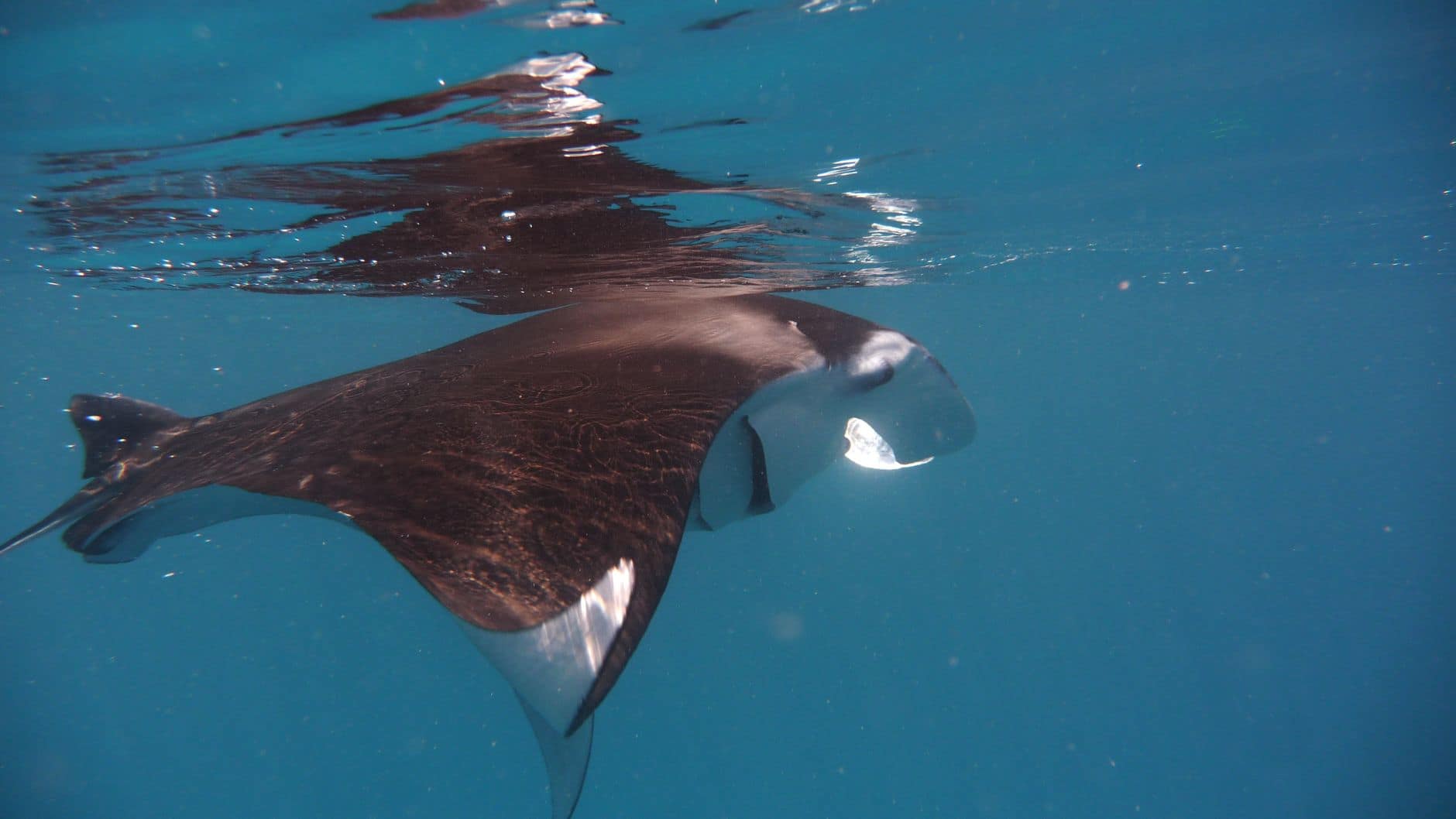
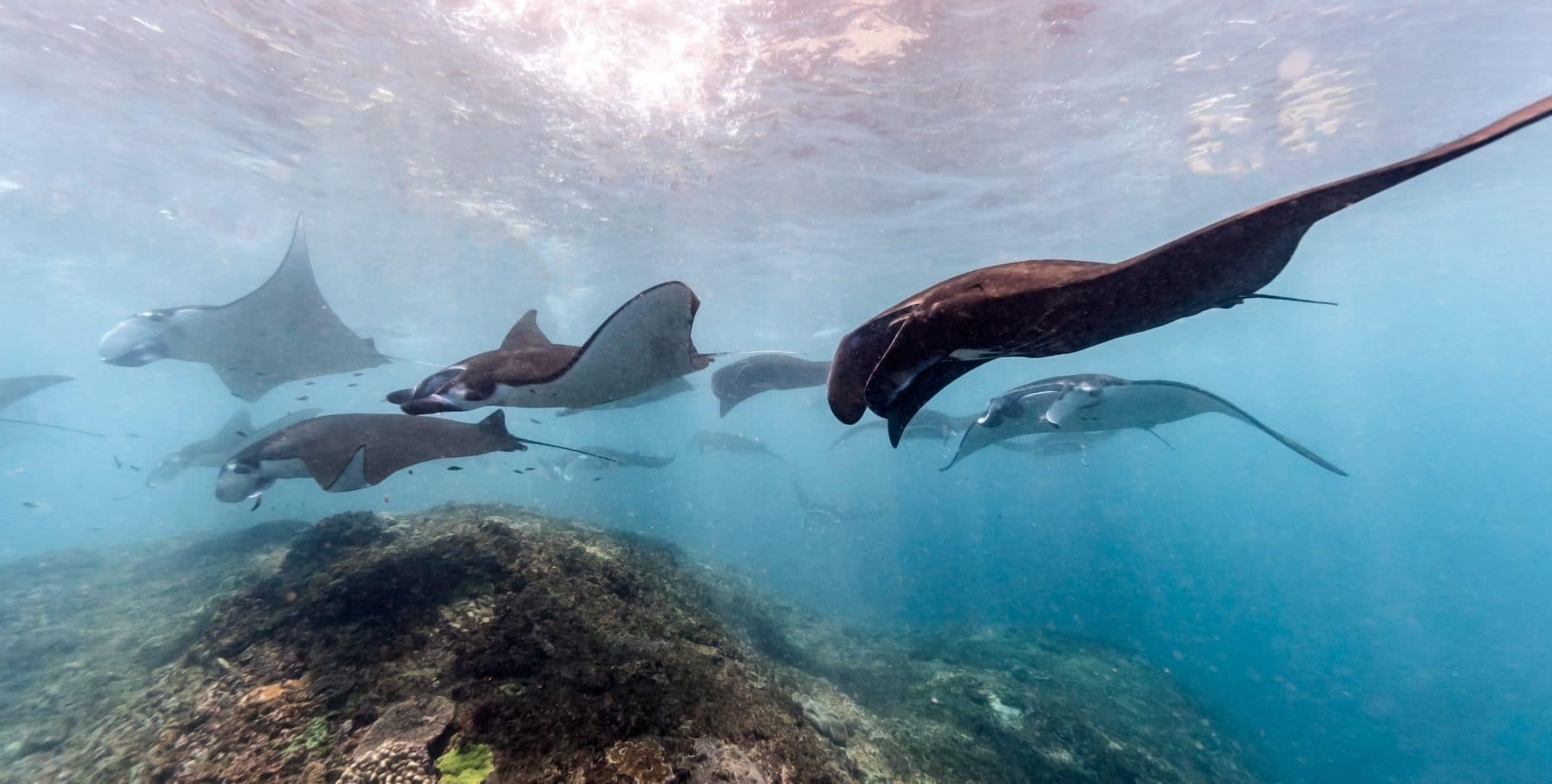
Manta rays at Nusa Penida. Reef mantas with four to five metre wingspans hold at cleaning stations off the south-west coast, and you snorkel with them straight off a boat. It is a day out, not an expedition. The catch, stated honestly: the water at Manta Point is often surgy and green rather than postcard blue, swell shuts the site down for days at a time, and the boat ride is bumpy enough that seasickness tablets are not optional. Sightings are common, not guaranteed. See Nusa Penida Manta Point, or the private Penida day with manta snorkelling if you would rather not share a hull with twenty strangers.
Blue Lagoon, Padang Bai. No megafauna, but calm, shallow, clear and forgiving, which makes it the right call for nervous swimmers, kids, or a warm-up week before Sumbawa. Turtles, plenty of reef fish, easy entry. Blue Lagoon snorkelling is also the cheapest way to find out whether you actually enjoy having your face in the water for an hour.
If you are building out the Penida side of the trip properly, the Nusa Penida guide covers timings and the crowd problem, and the month-by-month guide tells you when the sea is likely to cooperate.
Whale shark snorkelling questions people actually ask
Are whale sharks dangerous to swim with?
No. They are filter feeders with vestigial teeth they never use, and there is no recorded case of a whale shark attacking a person. The real hazards are physical: a tail sweep from a seven-metre animal can wind you, and people get hurt climbing in and out of boats. Keep a few metres off the body, four or more off the tail, and you are fine.
Can you actually swim with whale sharks in Bali?
Not in Bali itself. There is no resident whale shark site on the island. Anything advertised as a Bali whale shark tour is either a transfer to Sumbawa dressed up as a local day trip, or a manta ray snorkel at Nusa Penida sold under a bigger headline. Ask which island you are physically going to before you pay a deposit.
How much does a whale shark trip from Bali cost?
It depends almost entirely on how you cover the Bali to Sumbawa leg. The boat morning itself is a modest slice of the bill. Flights, transfers and a night or two on Sumbawa are the bulk of it, so budget a multi-day package in the low-to-mid hundreds of dollars per person in 2026, less per head with four or more people. Always ask for the itemised breakdown.
What are the chances of seeing a whale shark in Saleh Bay?
High by wild-animal standards, and still not a promise. The bagan platforms give the crew fixed points to check, and the fishermen report what has been under them overnight, which is why hit rates here beat open-ocean searching by a wide margin. Nobody honest guarantees it. Ask what the operator does if the morning comes up blank, before you book.
Do I need snorkelling experience to do this?
You need to be comfortable in deep water with no bottom under you. The technique itself takes ten minutes to learn on the boat, and a life vest is available. If you have never worn a mask, do a calm site like Blue Lagoon in Padang Bai first rather than making Saleh Bay your first ever attempt.
What is the best time of year to go?
Sightings are reported year-round in Saleh Bay, because the fishing that draws the sharks runs year-round. Sea conditions are the real variable. The drier months generally mean flatter water, better visibility and fewer cancelled mornings, while the wettest stretch brings rough crossings. If your dates land in the wet season, build in a spare morning.
Is it ethical to snorkel with whale sharks at the bagan platforms?
It is defensible when the rules are enforced and questionable when they are not. The platforms are working fishing gear the sharks visit on their own, which is a better starting point than baiting animals in purely for visitors. The grey area is whether crews hand fish over to hold them in place. Ask directly. An operator who dodges the question has answered it.
Can children do the whale shark snorkel?
Older children who swim confidently in deep water usually can, with a guide alongside and a vest on. Younger kids realistically cannot, and the 04:00 start plus a long boat ride makes it a hard sell regardless. For families, the manta and Blue Lagoon trips closer to Bali are a far better use of a day.
Trips that put you in the water with something big
Sumbawa Whale Shark Snorkelling Trip
The full Saleh Bay run with transfers, a night on Sumbawa and the dawn boat to the bagan platforms. For confident swimmers who want the largest fish in the ocean and will trade two or three days to get it.
Open tour page
Nusa Penida Manta Point Snorkelling
The closest thing to Sumbawa you can do in a single day from Bali. Four to five metre reef mantas at a cleaning station, with honest warnings about swell, green water and a bumpy crossing.
Open tour page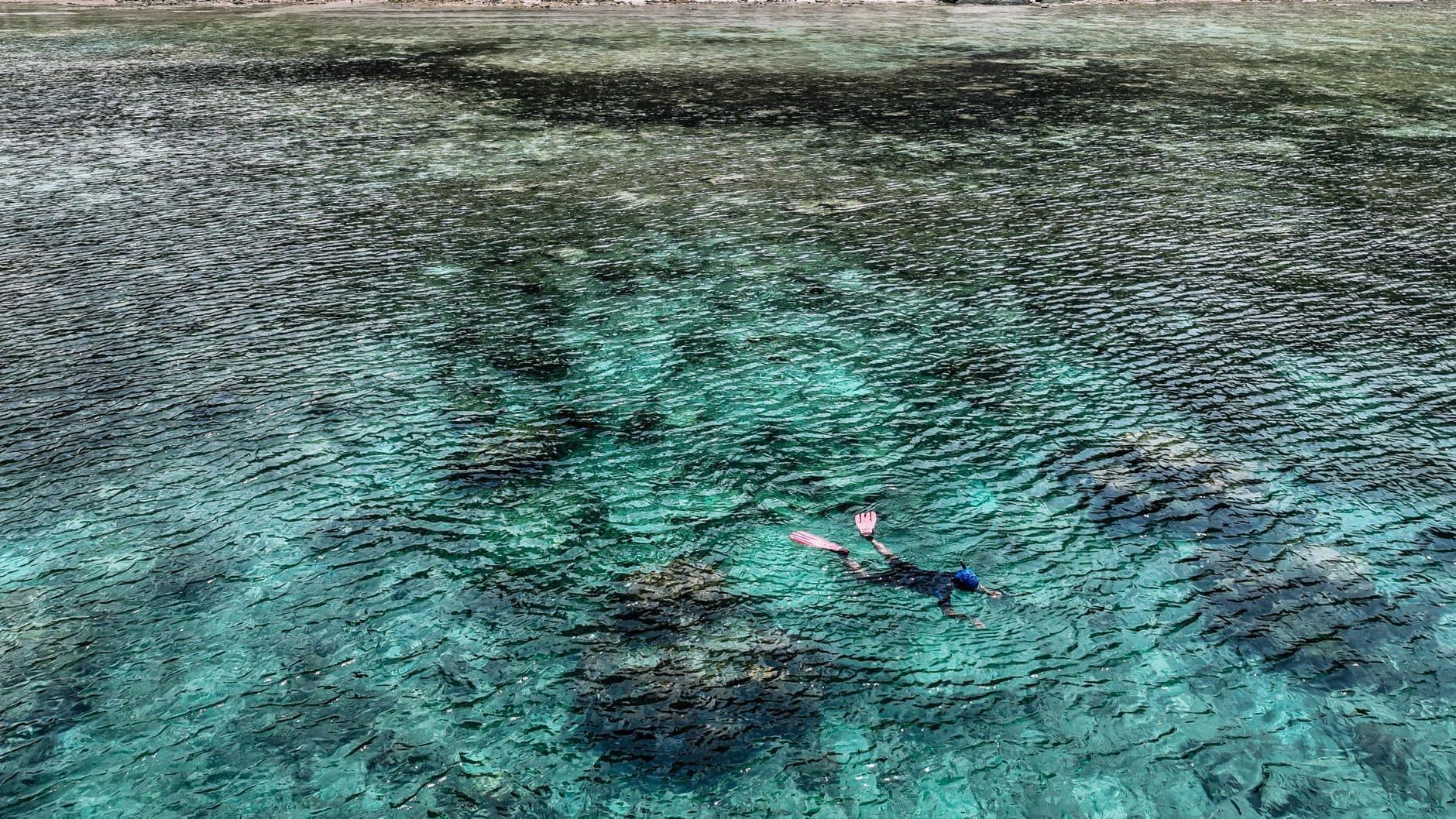
Blue Lagoon Snorkelling
Calm, shallow and forgiving. The right first snorkel for kids, nervous swimmers, or anyone wanting to test their mask and their nerve before committing to deep open water in Saleh Bay.
Open tour page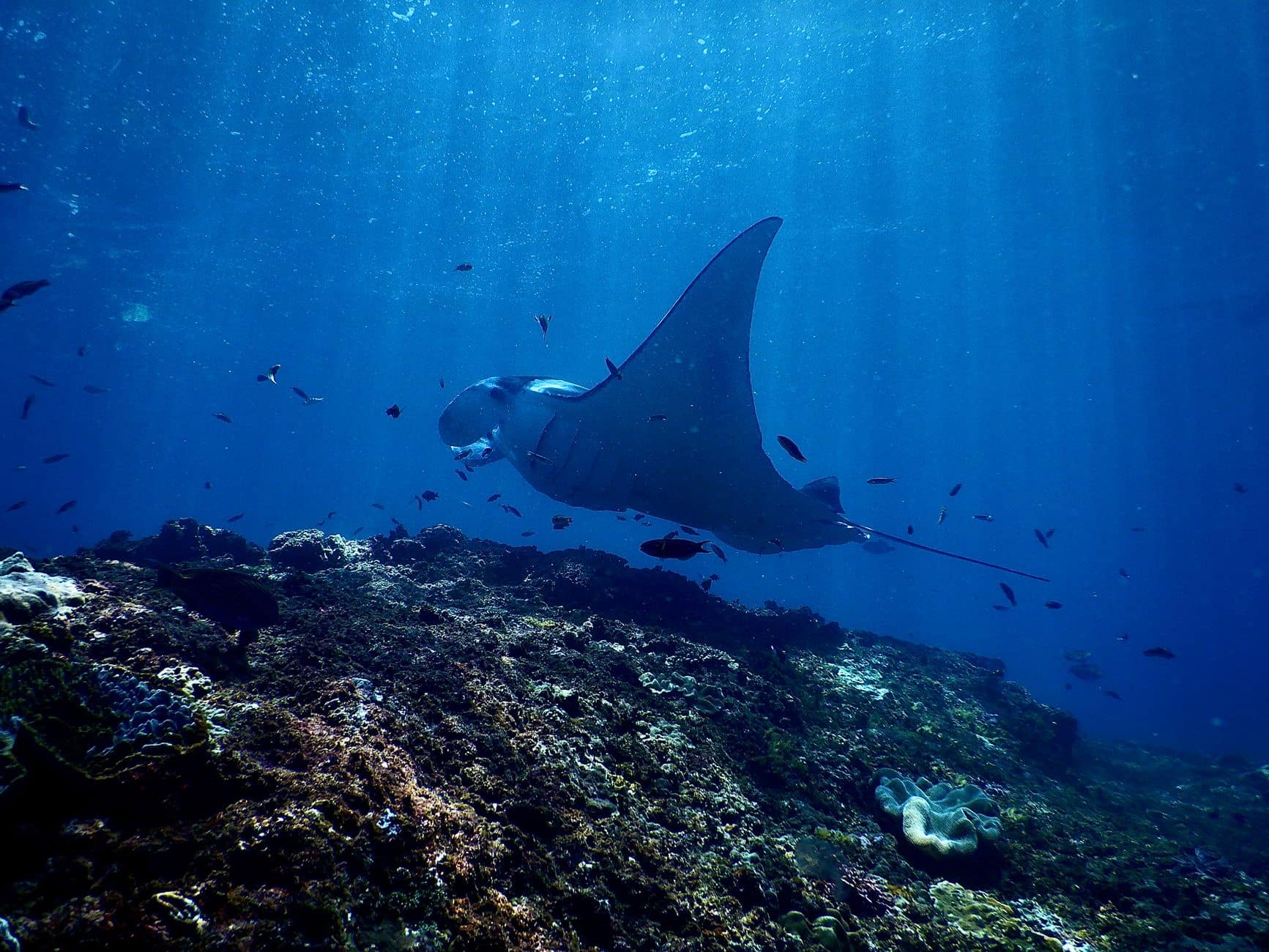
Private Nusa Penida Day With Manta Snorkelling
Same mantas, your own boat and your own timing. Worth it if you want fewer people at the cleaning station, a slower pace in the water, or a photographer's schedule rather than a group one.
Open tour page