

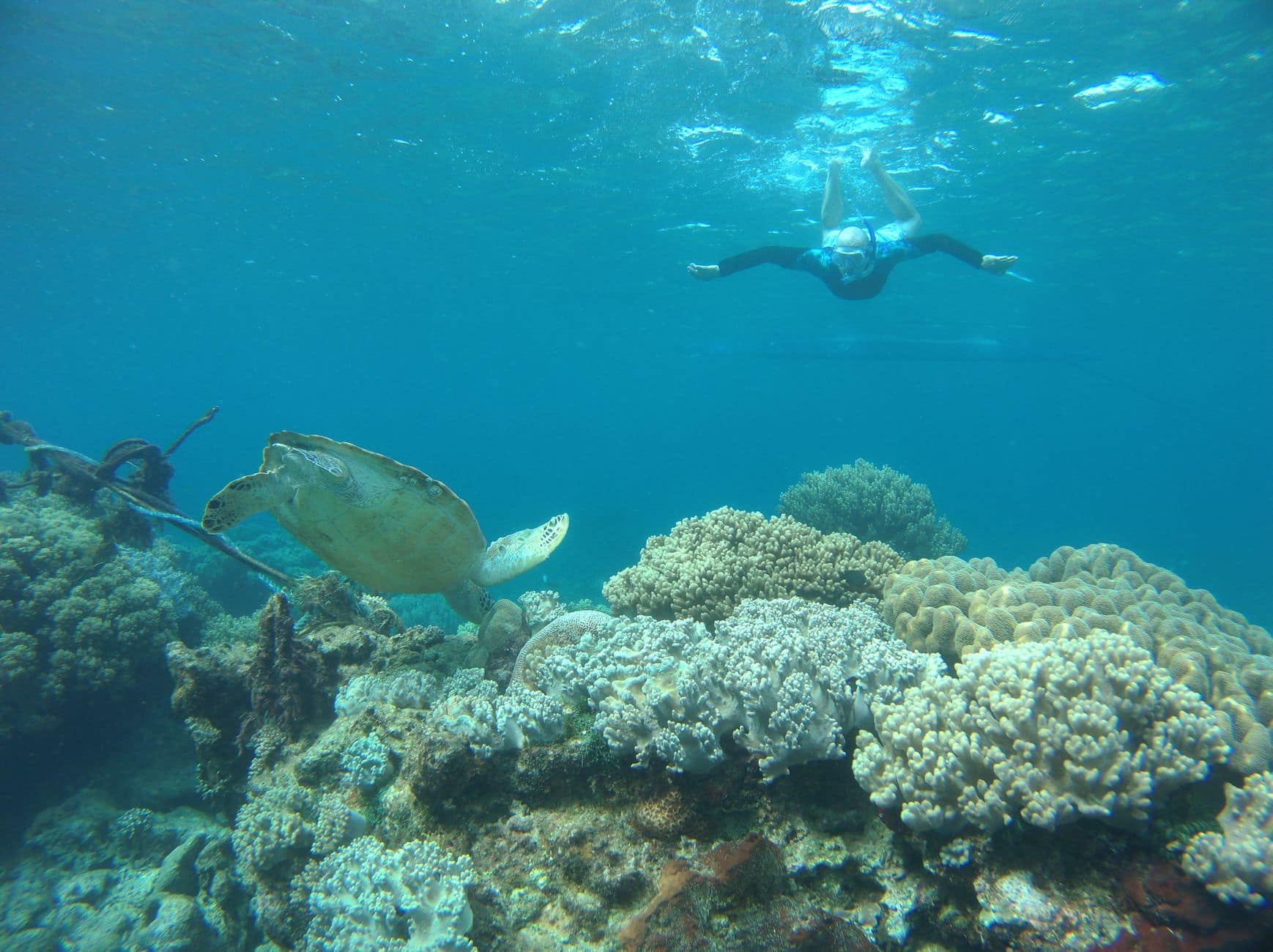
You do not need a boat to swim with a turtle in the Gilis. Green turtles graze the shallow seagrass off Gili Trawangan's north-east tip, Gili Meno's west coast and Gili Air's Sandy Beach, sometimes five to ten metres from the sand, and hawksbills sit deeper along the drop-off. They are resident year-round, so there is no turtle season to plan around — only a turtle hour, which is early morning, before the boats start crossing and the light flattens. A shared three-island snorkel trip runs roughly IDR 100,000-175,000 per person on local listings published in 2025-2026, and mask and fins hire ashore costs very little. This guide covers where to swim in on each island, what the sanctuaries actually are, and the etiquette that keeps these turtles calm enough to approach in the first place.
By Alex Moskvin, Founder of SB Excursions · Published 21 May 2026 · Updated 16 October 2026
Tour on this route: Gili Islands Private Snorkeling Day Trip — From $115, 7-9 hours.
What is the best time to see turtles on Gili Air?
Early morning, not long after first light, is the best time on Gili Air and on all three islands — calmest water, cleanest light and no boat traffic yet across the shallows. Late afternoon is the second window. Turtles are resident year-round, so there is no season to wait for; the shore entry is Turtle Point at Sandy Beach on the north-east coast. Wear reef shoes, because the shallows there hold very spiny sea urchins.
This guide also answers:
- How much does a snorkelling trip in the Gili Islands cost?
- Is there an entry fee for the Gili Meno turtle sanctuary?
- Can you touch the turtles in the Gili Islands?
Top picks from this guide
 #1
#1
Gili Trawangan's north-east shore
The standard turtle swim on the busiest island, and it starts on the sand. Two entry zones sit on the north-east tip: the eastern one is closer to the boat landing and has traffic crossing it, the northern one is quieter with better-preserved coral and fewer boats. The profile is sand and seagrass at half a metre to two metres, coral at two to three, then a drop-off past about six.
 #2
#2
Gili Meno's west and north-west coast
Meno is the strongest of the three for turtles, and several sightings in a single calm morning is normal rather than lucky. Greens and hawksbills come in to five or ten metres off the sand along the west coast near the disused jetty and the north-west near Good Heart. The east coast off the Karma bungalows holds them within roughly twenty metres of shore.
 #3
#3
The Nest, the underwater sculpture circle
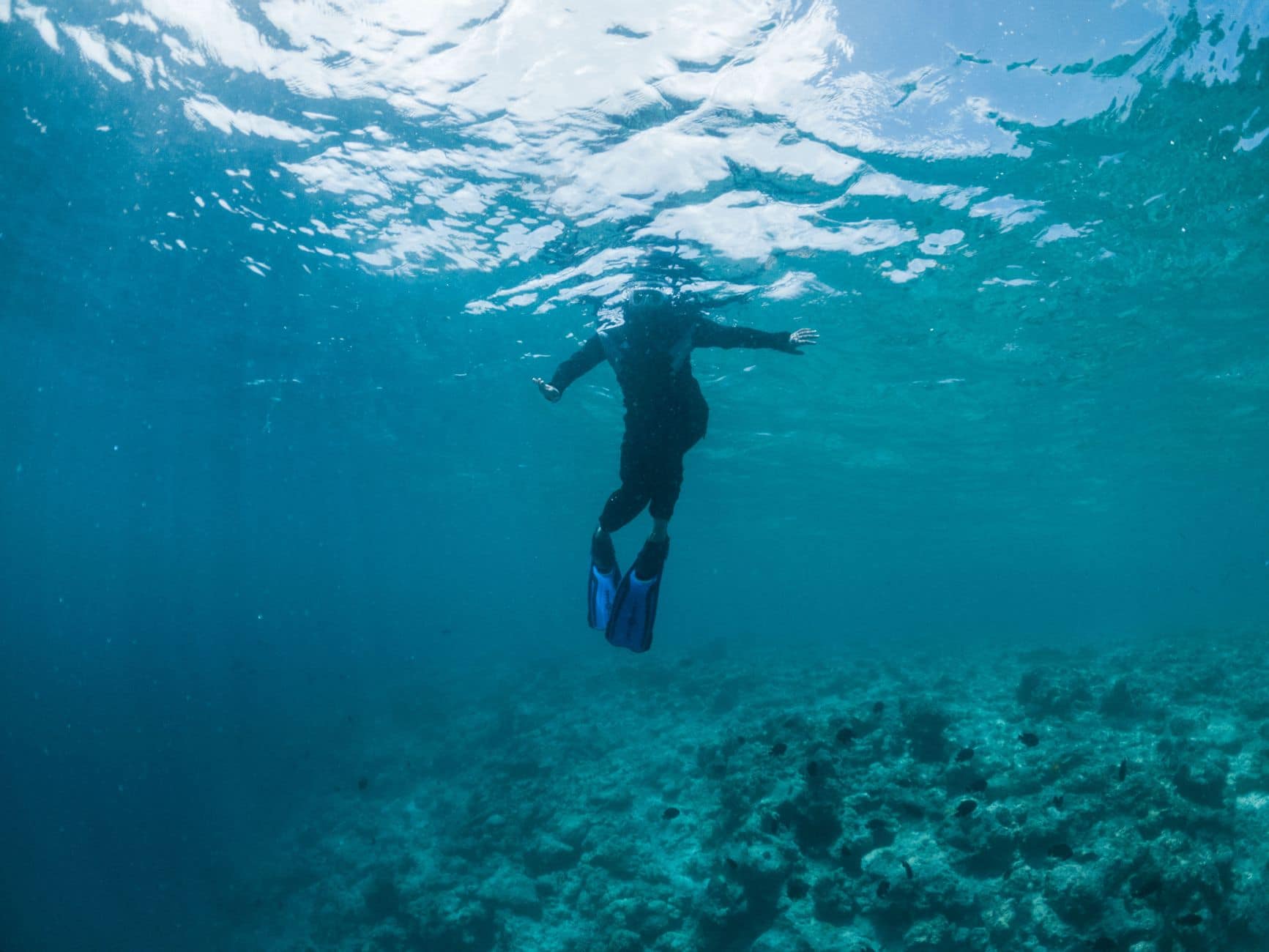
Jason deCaires Taylor's circle of 48 life-size figures, commissioned by the BASK resort and installed in 2017, sits about 100 metres off the beach in three to five metres of water — reachable from shore with no boat. It has grown into an artificial reef, which is also why standing on it is not an option, however shallow it looks on a flat morning.
 #4
#4
Turtle Paradise and Meno Wall
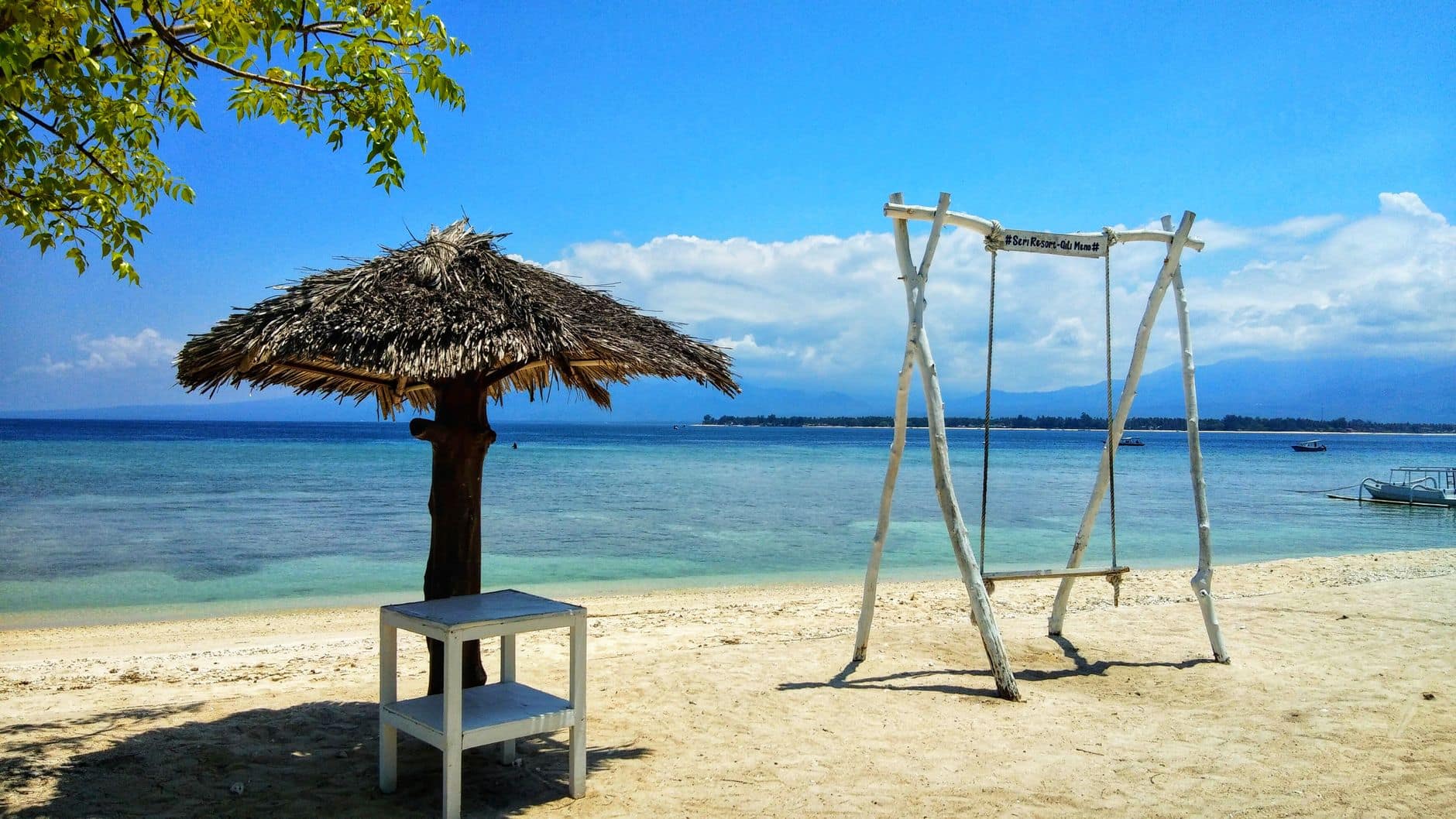
Meno's two named boat sites. Turtle Paradise sits off the north-east corner. Meno Wall carries real current, which makes it a guided site rather than a casual paddle, and it is the one to skip if you are an unconfident swimmer. Both turn up on the standard shared three-island trip, so you rarely need to arrange them separately unless you want a private boat and a quieter reef.
 #5
#5
Turtle Point and Sandy Beach
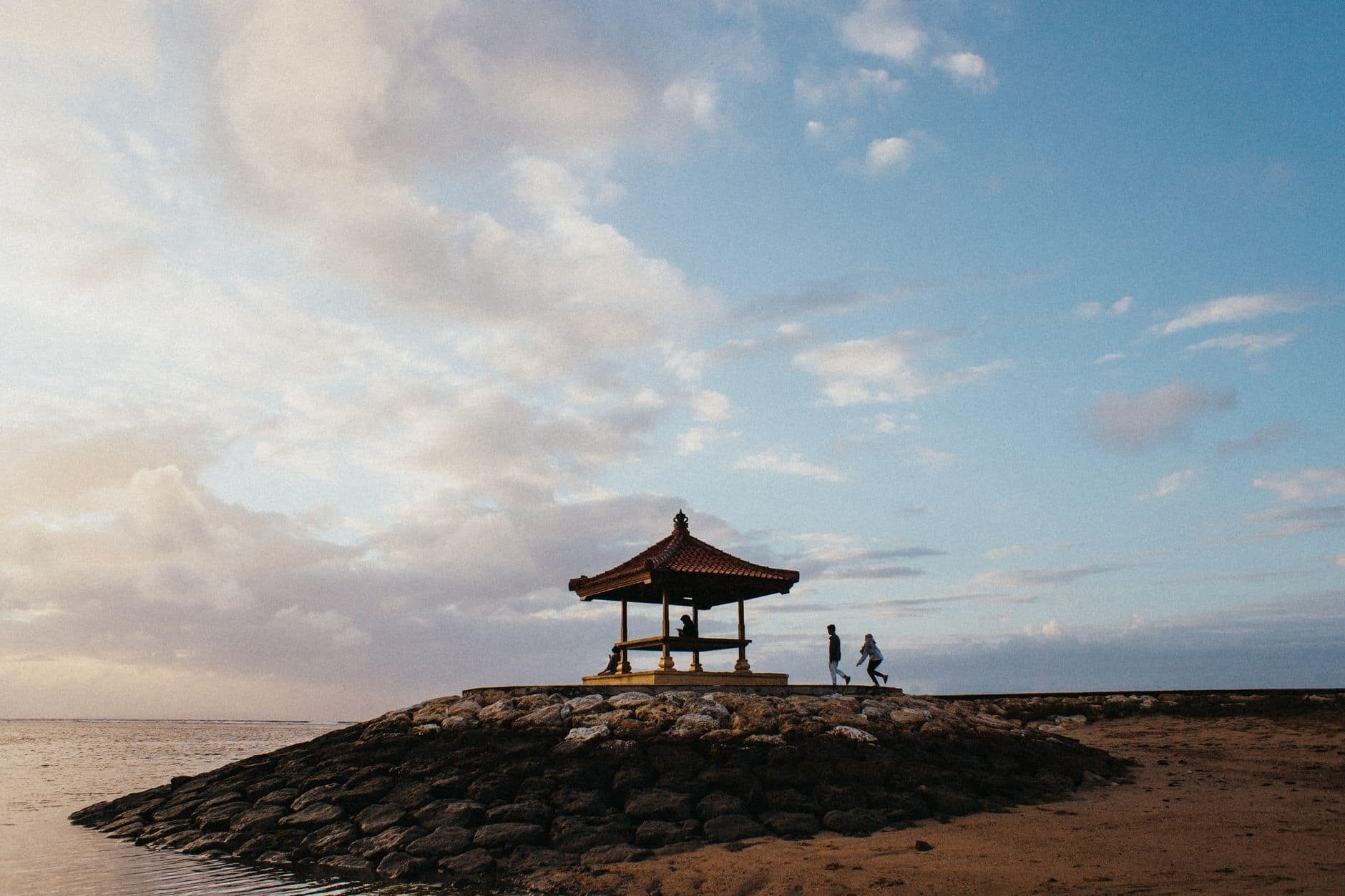
Gili Air's east and north-east coast holds turtles close in, and Turtle Point at Sandy Beach is where people see them from the beach itself. It is the gentlest of the three islands to snorkel from — fewer boats crossing than Trawangan, more infrastructure than Meno. One warning that matters here more than anywhere: the shallows carry very spiny sea urchins, so reef shoes are not optional.
 #6
#6
Hans Reef and Air Wall
The two main boat sites off Gili Air. Hans Reef lies off the north-east and is the better known of the pair; Air Wall is the other named site. Both are primarily dive sites that snorkellers can visit by boat on a calm day. Neither is necessary if turtles are the goal — the shore entry at Sandy Beach does that job for the price of a mask.
#7
The Gili Meno turtle sanctuary
A small local hatchery rather than an accredited rescue centre: eggs are collected, hatchlings reared for roughly a year and then released, at a reported rate of about 2,000 a year. There is no entry fee — it runs on donations, and IDR 50,000-100,000 is a normal contribution. Hatchling activity peaks around May to October. It is the facility usually named as the credible one on the islands.
Turtles here are a shore swim, not a boat trip
Green and hawksbill turtles are resident on all three Gilis year-round, which is the single most useful fact about snorkelling here: there is no season to wait for and no migration to miss. The reason you can meet one without a boat is the shape of the north and east coasts — sand and seagrass at 0.5-2m, coral at 2-3m, then a drop-off beyond about 6m. Green turtles graze and rest on the shallow seagrass, sometimes only metres from the beach. Hawksbills sit deeper along the drop-off and are easier to find at high tide. Sightings are realistic rather than guaranteed: we have had guests see five in an hour and guests see none. Currents, boats and the honest risks on the islands are covered in are the Gili Islands safe.
On Gili Trawangan the standard swim is the north-east tip, entered straight off the beach. There are two zones. The eastern one, closer to the boat landing, is busier and has boat traffic crossing it; the northern one is quieter, with better-preserved coral and fewer boats. Take the northern one if you have a choice. The entry is beginner-friendly — shallow, gradual, little current in good conditions — but Turtle Point at the north-east corner carries a noticeable north-to-south drift that will move you along the coast whether you planned for it or not. Walk up-current before you get in and let it carry you back.
Meno is the stronger island for turtles overall and Gili Air is the quiet middle option; our Gili Meno guide and Gili Air guide cover where to stay and eat on each.
When to go: the hour matters more than the month
Early morning is the answer, and it is not close. At first light the water is calmest, the surface is unbroken so light actually reaches the seagrass, and the day's boats have not started crossing the shallows. Late afternoon is second best for the same three reasons. High tide helps if you are hunting hawksbills on the drop-off, because there is more water over the coral. The exception is The Nest off Gili Meno, which wants a calm morning near low tide, ideally around a new moon, when the light reaches the figures cleanly. That is a narrower window than the shore swims and worth planning a day around.
Season affects the crossing and the visibility more than it affects the turtles. The dry months, roughly April/May to October, bring calm seas, the best underwater visibility and the most reliable fast boats. July and August are peak crowding and peak pricing, and trade winds can still churn the strait, so dry season does not automatically mean flat water. May, June and September are the best combination of calm sea and space. From November to March visibility drops, crossings are cancelled more often and the islands go quiet and cheap. Turtles are there through all of it; hatchling activity at the Gili Meno sanctuary peaks around May to October.
What a snorkelling trip costs
Most people who take a boat take the shared three-island trip, and it is cheap: roughly IDR 100,000-175,000 per person for a 3-4 hour glass-bottom boat, on local listings published in 2025-2026 — very approximately USD 6-10 at 2026 rates, though the rupiah figure is the one to hold onto. One operator lists a four-hour shared trip at IDR 175,000. Booked through a platform before you arrive, the same trip runs IDR 160,000-300,000. Departures are typically around 09:30-10:30 and 13:00, and the boats carry 20-30 people. Prices move with season and operator, so treat every figure here as a band rather than a quote.
That timetable is the catch, and nobody selling the trip will say it. The shared boats leave in the exact hours when the snorkelling is worst — high sun, choppier water, and twenty other people dropping into the same patch of reef. If turtles are the point of your trip, swim from the beach at first light and treat the boat as sightseeing. Private boats are quoted anywhere from about IDR 550,000 for two hours on a small boat up to IDR 1,700,000 for a larger boat, with full-day guided three-island packages higher again; published figures vary widely between operators and most are 2025-dated, so agree the price and the route before you step aboard.
- Snorkel gear hire ashore is cheap and everywhere — mask, snorkel and fins from the shops along every main strip, so there is little reason to fly your own out
- Marine park fee: IDR 100,000 per person, one-time, paid at the dive shop. It is levied on divers; snorkellers are reportedly rarely charged. Ask at the shop rather than assuming either way
- A Gili Eco Trust contribution of about IDR 50,000 is often collected alongside it
- Harbour and arrival fees of roughly IDR 10,000-20,000 per person. Gili Air was reported at IDR 20,000 cash on arrival; Gili Trawangan's is usually already inside the boat fare. Carry small notes and check at the pier — these change without notice
- Bring cash from Bali or from Gili T. Gili Meno's one or two ATMs run dry regularly and cannot be planned around, and boat trips, gear hire and warungs are cash in practice
Getting there, and why a day trip fights the turtles
The Gilis are reached by fast boat from east or south Bali. Padang Bai is the main port — about 1h20-2h at sea to Gili Trawangan, with the most sailings; Sanur is about 2h40 and Serangan roughly 2.5-3 hours. Amed is the shortest crossing on paper, but two booking aggregators currently list Amed port as closed for construction, so verify before you build a plan around it. The road leg is what people underestimate: 1.5-2.5 hours from Seminyak, Canggu or Kuta to Padang Bai and 1-1.5 hours from Ubud, with pickups about 1.5 hours before departure and up to three hours ahead from some Ubud hotels. An 08:00 sailing means a 05:00-06:30 hotel pickup. Door to door from south Bali, allow 5-7 hours. We sell fast boat tickets with hotel pickup from $15, and a car and driver for the day from $59 per car if you would rather run the Bali side on your own schedule.
A day trip is possible, and here is what it actually buys: roughly 3-5 hours ashore against a 12-16 hour door-to-door day. The earliest Padang Bai departures are 08:00-09:00 and the last boats leave Gili Trawangan around 15:00-16:00 and Gili Air around 15:15-15:35 — and operators differ sharply, so a same-day return only works if your outbound and return legs are with the same company. Those hours ashore are the middle of the day, which is the worst snorkelling window on the island. From Amed or Candidasa the arithmetic works. From anywhere else an overnight is materially better value, and in our case it is also cheaper: the Gili day tour is from $115 while the overnight getaway is from $70, both booked over WhatsApp with no prepayment. Our day-trip guide works through the timings in full.
Between the islands, the scheduled hopper runs two circuits a day, out of Bangsal at roughly 09:00 and 16:00, calling at Air, Meno and Trawangan and back. Fares are small and asymmetric — roughly IDR 20,000-45,000 depending on the leg and the direction. Miss the afternoon circuit off Gili Meno and your only option is chartering a boat, which is the biggest single constraint of basing yourself there. Which island to sleep on is a separate question, and our island-by-island comparison is the short answer to it.
The etiquette that keeps the turtles approachable
The reason a Gili turtle lets you swim alongside it is that it has been treated calmly by strangers for years. Habituation is the asset being spent every time someone grabs a shell for a photograph — the animal learns, and the next hundred snorkellers get a shorter encounter. None of the rules below are ours. They are the standing local etiquette, and the dive shops and guides on all three islands hold people to them.
Two of them are safety rules for the animal rather than politeness. Turtles are air-breathing reptiles, so a snorkeller hovering between a turtle and the surface is standing on its next breath — it will hold, and it will stress. And a single fin kick into coral destroys a structure that took decades to grow; the fix is to float horizontally instead of treading water upright, which most people find easier the moment somebody points it out.
- Keep roughly 2-3 metres (6-10ft) away and let the turtle decide how close the encounter gets
- Never position yourself between a turtle and the surface — it needs that path to breathe
- No touching, riding or chasing. A turtle swimming away is telling you the encounter is over
- No sudden movements, and give extra space to any animal that is feeding or resting
- Do not stand on coral or kick it — float horizontally and use your fins deliberately
- Wear a rash vest rather than loading up on sunscreen, and buy reef-safe if you need it. Gili Eco Trust, Kayu Cafe and Pituq Waroeng on Gili Trawangan stock it
- Refuse single-use plastic. A floating bag looks exactly like a jellyfish to a green turtle
- Reef shoes, especially on Gili Air, where the shallows carry very spiny sea urchins
Sanctuaries, hatcheries and the honest caveats
The Gili Meno turtle sanctuary has no entry fee and runs on donations — IDR 50,000-100,000 is a normal contribution, and small notes are the practical form of it. It is a small local hatchery: eggs are collected, hatchlings reared for around a year, then released, at a reported rate of roughly 2,000 a year. It works well with children. Be clear about what it is not, though. 'Sanctuary' here describes intent, not accreditation, and the headstart method it uses — rearing hatchlings in tanks before release — is genuinely contested among marine biologists, not a settled conservation good.
The other facility, the hatchery on Gili Trawangan, is the one many day-trippers are shown, and reviewers repeatedly describe poor tank conditions there. We have not been able to verify that independently, so take it as consistently reported rather than proven — but if you have time for only one, Meno's is the one we point people towards. Either way, the turtles you will remember are the ones grazing seagrass twenty metres off the beach, not the ones in a tank.
A few things the brochures skip. Currents in the channels between the islands run far stronger than they look — do not swim between islands at any fitness level, and note that Shark Point off Gili Trawangan and Meno Wall both carry real current. Sea urchins, fire coral and resting stingrays are the ordinary hazards, so shuffle your feet in the shallows rather than striding, and wear reef shoes. Coral cuts infect readily in the tropics. And the most common injury on a Gili snorkelling day is not marine at all: a burned back. The sea breeze masks it, sand and water reflect UV back at you, and the dangerous window is roughly 10:00 to 16:00 — the exact hours a day-tripper spends face-down in the water.
FAQ
What is the best time to see turtles on Gili Air?
Early morning, not long after first light, is the best time on Gili Air and on all three islands — calmest water, cleanest light and no boat traffic yet across the shallows. Late afternoon is the second window. Turtles are resident year-round, so there is no season to wait for; the shore entry is Turtle Point at Sandy Beach on the north-east coast. Wear reef shoes, because the shallows there hold very spiny sea urchins.
Can you see turtles snorkelling from the beach in the Gili Islands?
Yes, on all three islands, and it is the better way to do it. Green turtles graze the shallow seagrass beds sometimes five to ten metres from the sand — off Gili Trawangan's north-east tip, along Gili Meno's west and north-west coast, and off Gili Air's north-east. Hawksbills sit deeper along the drop-off past about six metres and show more readily at high tide. Sightings are realistic rather than guaranteed on any given swim.
Which Gili island is best for snorkelling?
Gili Meno for turtles specifically, Gili Trawangan for the widest choice of sites. Meno's west and north-west coast produces several turtles in a single calm morning often enough to be the norm, and The Nest sculpture circle is reachable straight from the beach. Trawangan has Turtle Point, Halik Reef, Shark Point, the Bounty jetty wreck and most of the dive industry. Gili Air is the quiet middle ground with good shore snorkelling and fewer boats.
How much does a snorkelling trip in the Gili Islands cost?
Roughly IDR 100,000-175,000 per person for a shared 3-4 hour three-island boat trip, on local listings published in 2025-2026 — very approximately USD 6-10. The same trip booked through an online platform runs IDR 160,000-300,000. Private boats are quoted from about IDR 550,000 for two hours up to IDR 1,700,000 for a larger boat, with operators differing widely. Mask and fins hire ashore is cheap. Treat all of these as moving bands.
Is there an entry fee for the Gili Meno turtle sanctuary?
No entry fee — the Gili Meno sanctuary runs entirely on donations, and IDR 50,000-100,000 is a normal contribution. Bring small notes, because Meno's ATMs are unreliable and should not be planned around. Divers pay a separate one-time marine park fee of IDR 100,000 per person at the dive shop; snorkellers are reportedly rarely charged, but ask at the shop rather than assuming. Check both at the gate, as small levies change without notice.
Can you touch the turtles in the Gili Islands?
No — no touching, riding or chasing, and keep roughly 2-3 metres away. The rule that matters most is never to position yourself between a turtle and the surface: they are air-breathing reptiles, and blocking the route to the next breath causes real stress. Give feeding or resting animals extra space, avoid sudden movements, and never stand on or kick coral. These turtles approach people only because they have been left alone for years.
Recommended Bali tours for this guide
Gili Islands Private Snorkeling Day Trip
This route is built for travelers who want turtles, clear water, and a real Gili Islands experience without organizing fast boats, harbor flow, snorkeling logistics, and local coordination on their own. The private snorkeling setup makes the day feel cleaner and more premium than a basic shared island transfer.
- Duration
- 7-9 hours
- Area
- Gili Trawangan and Gili Meno
- Format
- Private snorkeling day trip
- Best for
- Sea lovers, couples, and travelers who want one big Gili day from Bali
From $115 No prepayment
View tour
Gili Islands Getaway from Bali
The Gili trip is perfect for travelers who want to connect Bali with a slower island stay or a big sea-focused day. Timing, departure ports, and luggage flow matter here, so setup support adds real value.
- Duration
- Full day or multi-day base route
- Area
- Gili Islands connection
- Format
- Fast boat island transfer route
- Best for
- Travelers extending beyond Bali
From $70 No prepayment
View tour
Bali Fast Boat Transfer
Fast boats are simple once booked correctly, but confusing when you are juggling ports, check-in windows, and hotel distance. This service helps turn the whole process into a clean transfer day instead of a stressful logistics puzzle.
- Duration
- Depends on destination
- Area
- Bali harbors and island routes
- Format
- Transfer service
- Best for
- Island-bound travelers
From $15 No prepayment
View tour