

Take children to the Gilis and the islands themselves are the easy part. There are no cars or motorbikes on any of the three, so a four-year-old can run ahead down a sandy lane without you flinching. Gili Air is the usual family answer: about 175 hectares, walkable in an hour and a half, enough cafes and clinics to feel supported, and no nightlife strip. The hard parts are the crossing and the medicine. The fast boat is open sea, often bumpy, and a Bali day trip runs 12-16 hours door to door for 3-5 hours ashore — explicitly not the format for small children. There is no hospital on any island, only clinics; the nearest hospitals are in Mataram on Lombok, roughly 60-90 minutes away by speedboat and ambulance. Plan an overnight, bring nappies and reef shoes from Bali, and carry evacuation cover.
By Alex Moskvin, Founder of SB Excursions · Published 21 May 2026 · Updated 23 October 2026
Tour on this route: Gili Islands Getaway from Bali — From $70, full day or multi-day base route.
Which Gili island is best with kids?
Gili Air. It has more infrastructure than Gili Meno and far less nightlife noise than Gili Trawangan, its coastal loop is only 4.5-5 km, bikes with child seats are easy to hire, and its 10-15 minute crossing to Bangsal on Lombok is the shortest of the three if anyone needs a hospital. Gili Meno suits three or four nights for the turtles and the quiet; Gili Trawangan works if you deliberately book its north or west coast.
This guide also answers:
- Can you do a Gili Islands day trip from Bali with children?
- How long is the fast boat to the Gili Islands, and is it rough?
- Can you stay on Gili Trawangan with children?
Top picks from this guide
 #1
#1
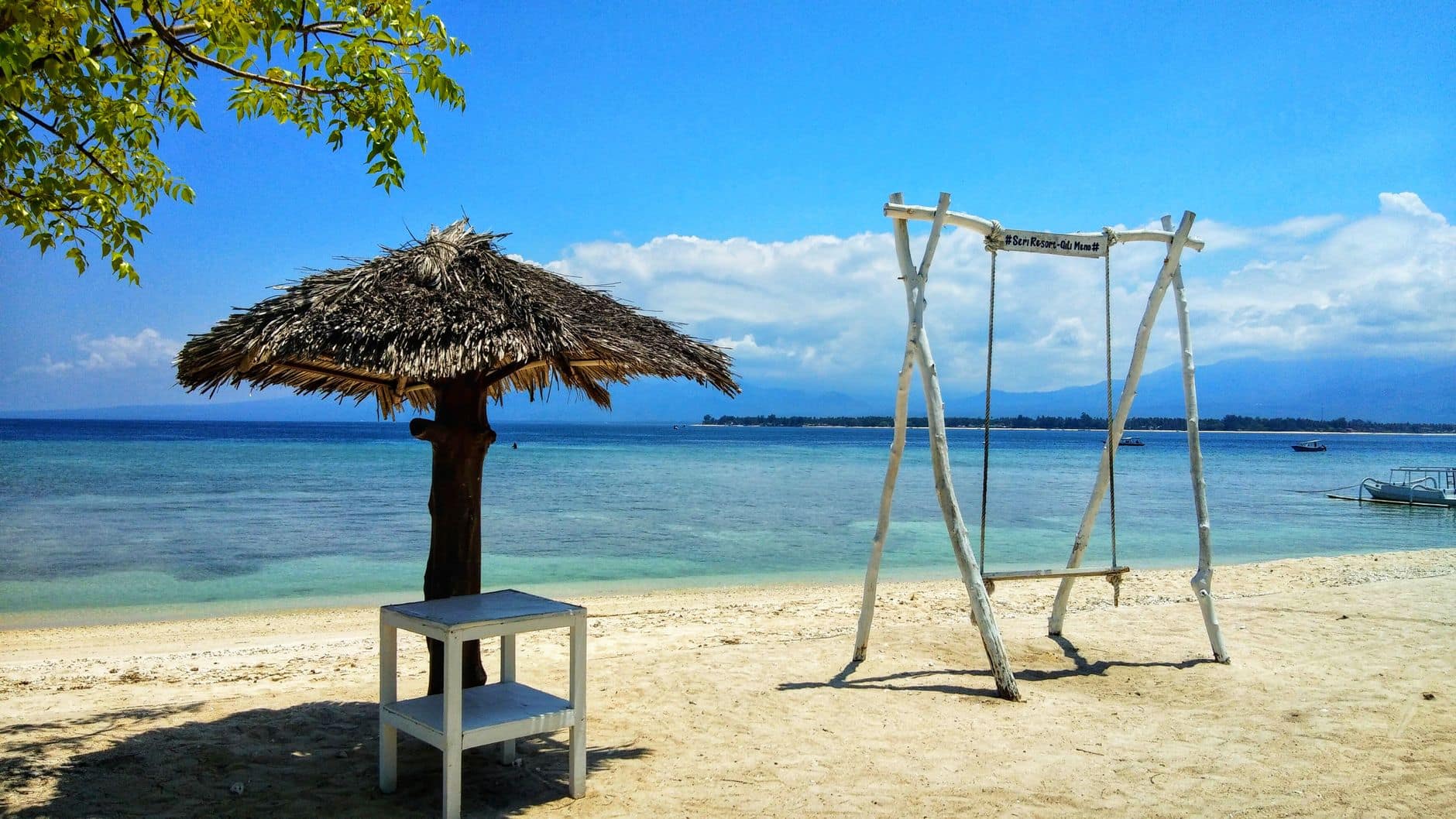
Gili Air, the default with children
The standard family recommendation, and the one we book most. About 175 hectares, with a coastal loop of 4.5-5 km that takes an hour to ninety minutes on foot or roughly half an hour by bike, so nothing is far from your room. It has the largest resident community of the three, cafes, dive shops and a clinic — but no nightlife strip. Roughly one party a week in high season; otherwise quiet well before midnight.
 #2
#2
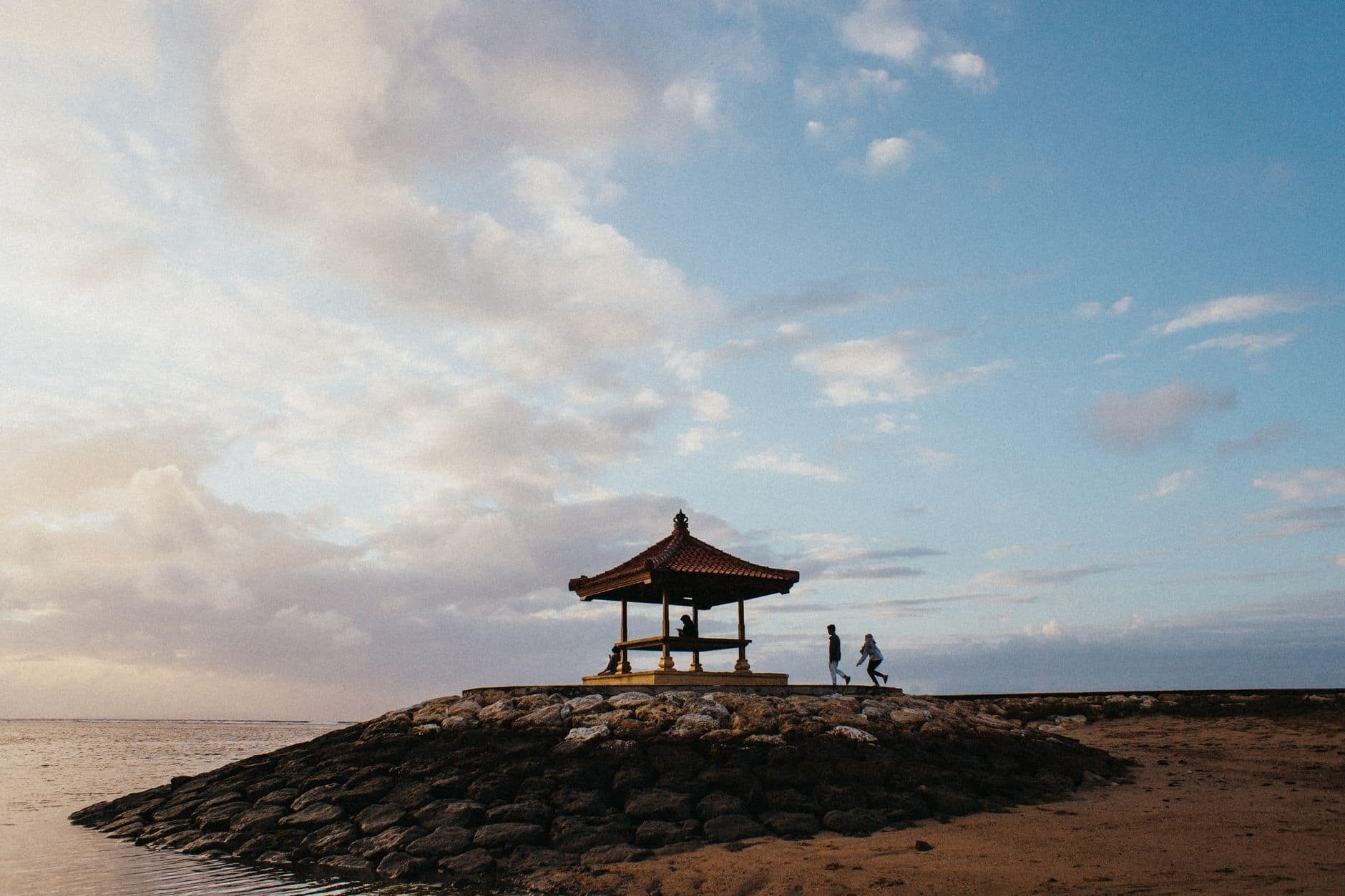
Gili Meno, quiet turtles and thin cover
The smallest island at around 150 hectares with 400-500 residents, the most reliable shore snorkelling of the three, and a donation-funded turtle hatchery that lands well with children. It is also the thinnest: fewest shops, least reliable cash, a small basic clinic, and few enough restaurants that a child who refuses one of them becomes a genuine problem. It works as a few nights added to Gili Air, not as a fortnight.
 #3
#3
Gili Trawangan, but only the north or west
Gili T has the widest choice of food, rooms and dive schools, and nearly all of the noise — bars, night market, hostels — sits on one south-east arc near the harbour. The north and west coasts are genuinely quiet and thinly built. Book there and you get the island's services without its sound system; book blind on the strip and nobody in the family sleeps. The coastal track is 6.5-7 km, so factor in the walking.
 #4
#4
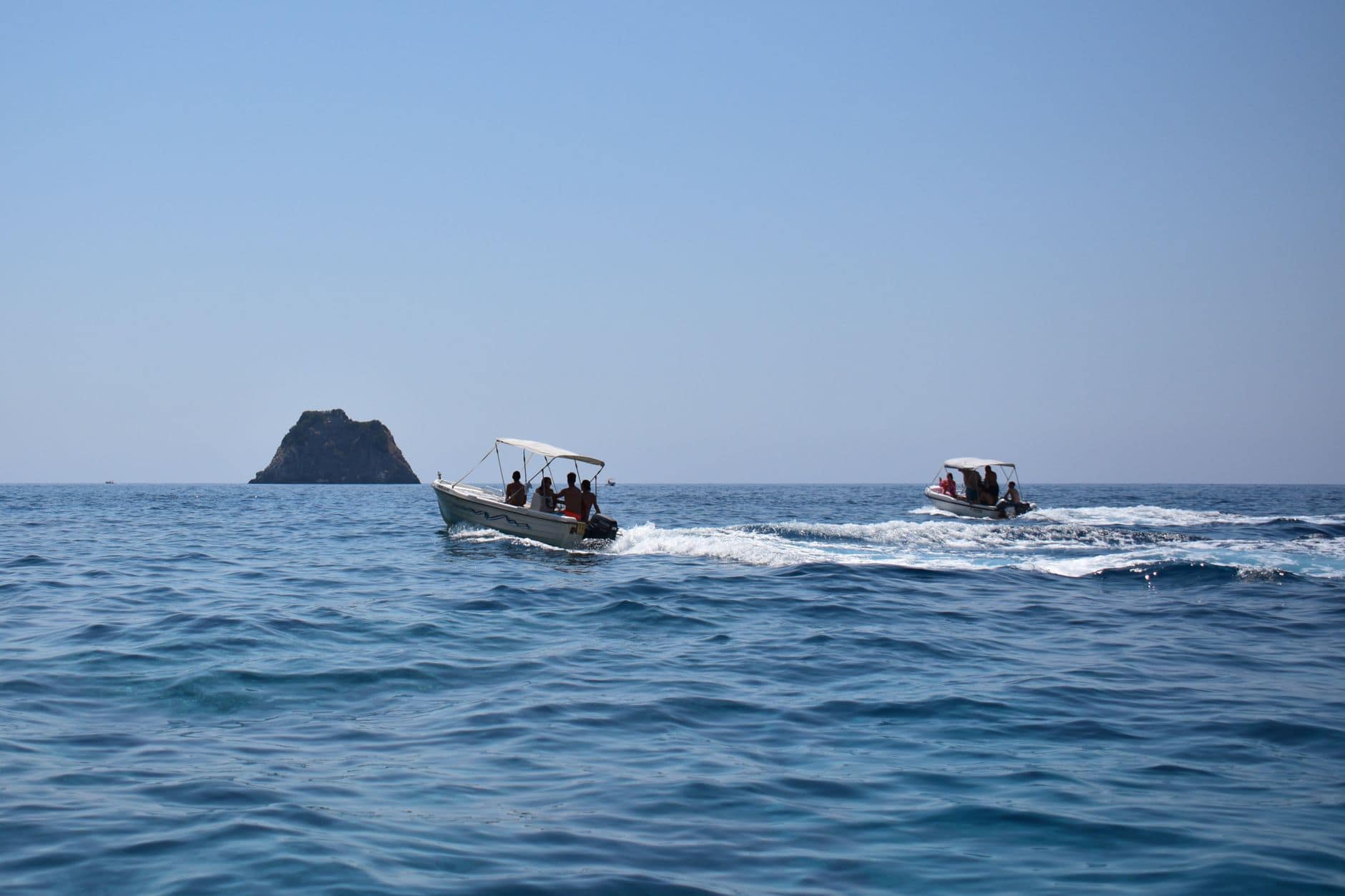
The crossing, which is the hard part
Open sea, frequently bumpy, and the part of this trip children find genuinely hard. Padang Bai to Gili Trawangan runs about 1.5-2.5 hours; Sanur, Serangan and Nusa Dua sailings are 3-4 hours. Add the road leg from south Bali and an early pickup and a family is 5-7 hours door to door. Wet-season crossings, roughly November to March, are rougher and cancelled more often — build in a buffer night before any flight.
#5
No cars, anywhere, on any island
Cars and motorbikes are banned by local ordinance on all three islands. Transport is feet, bicycles and cidomo horse carts, and bikes with child seats are widely available, particularly on Gili Air, at roughly IDR 30,000-50,000 a day as published for 2025-2026. The flip side is the surface: paths are soft, uneven sand, so strollers do not work and anyone under three ends up in a carrier. Cidomo fares are negotiated, not regulated.
 #6
#6
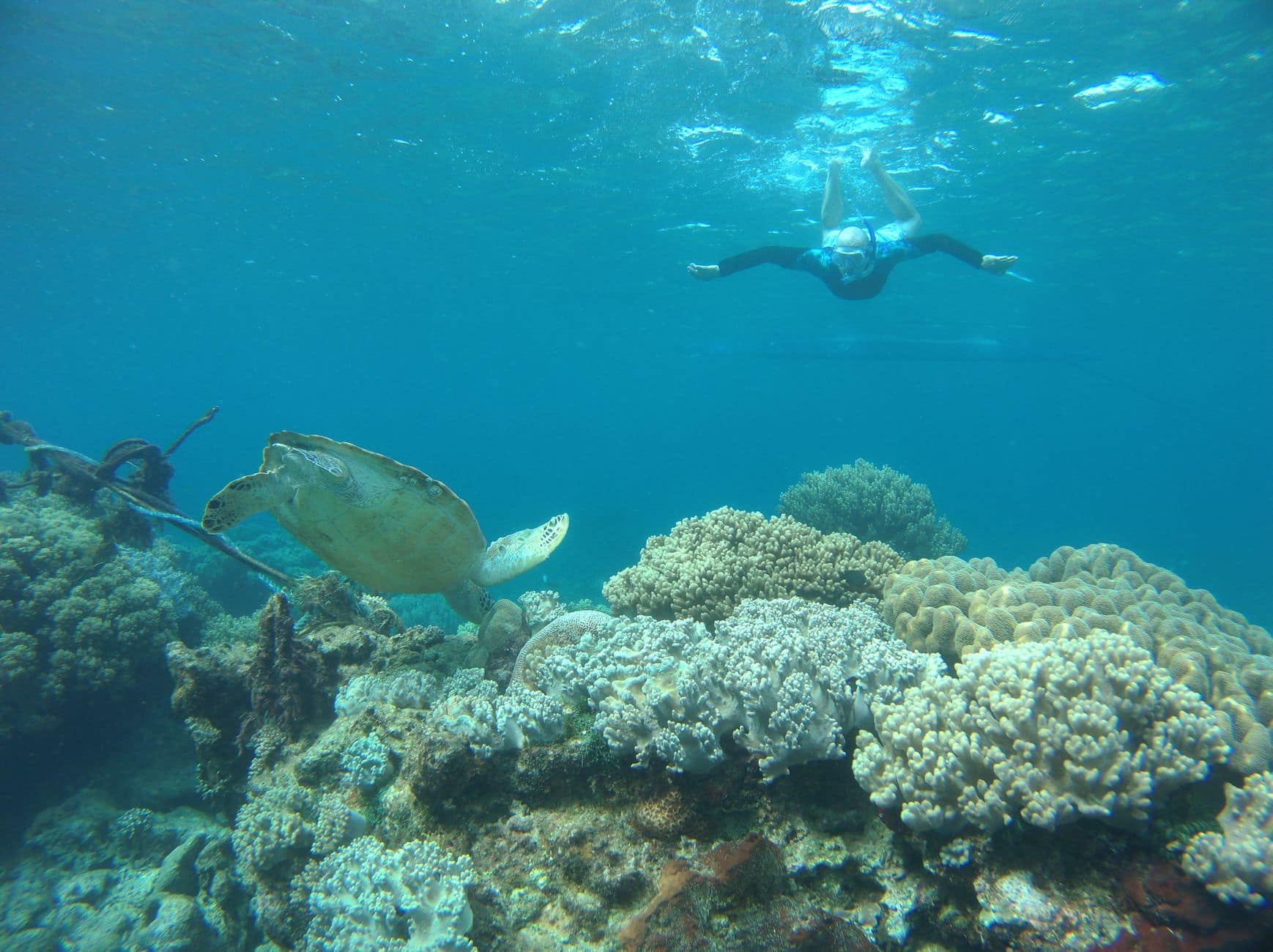
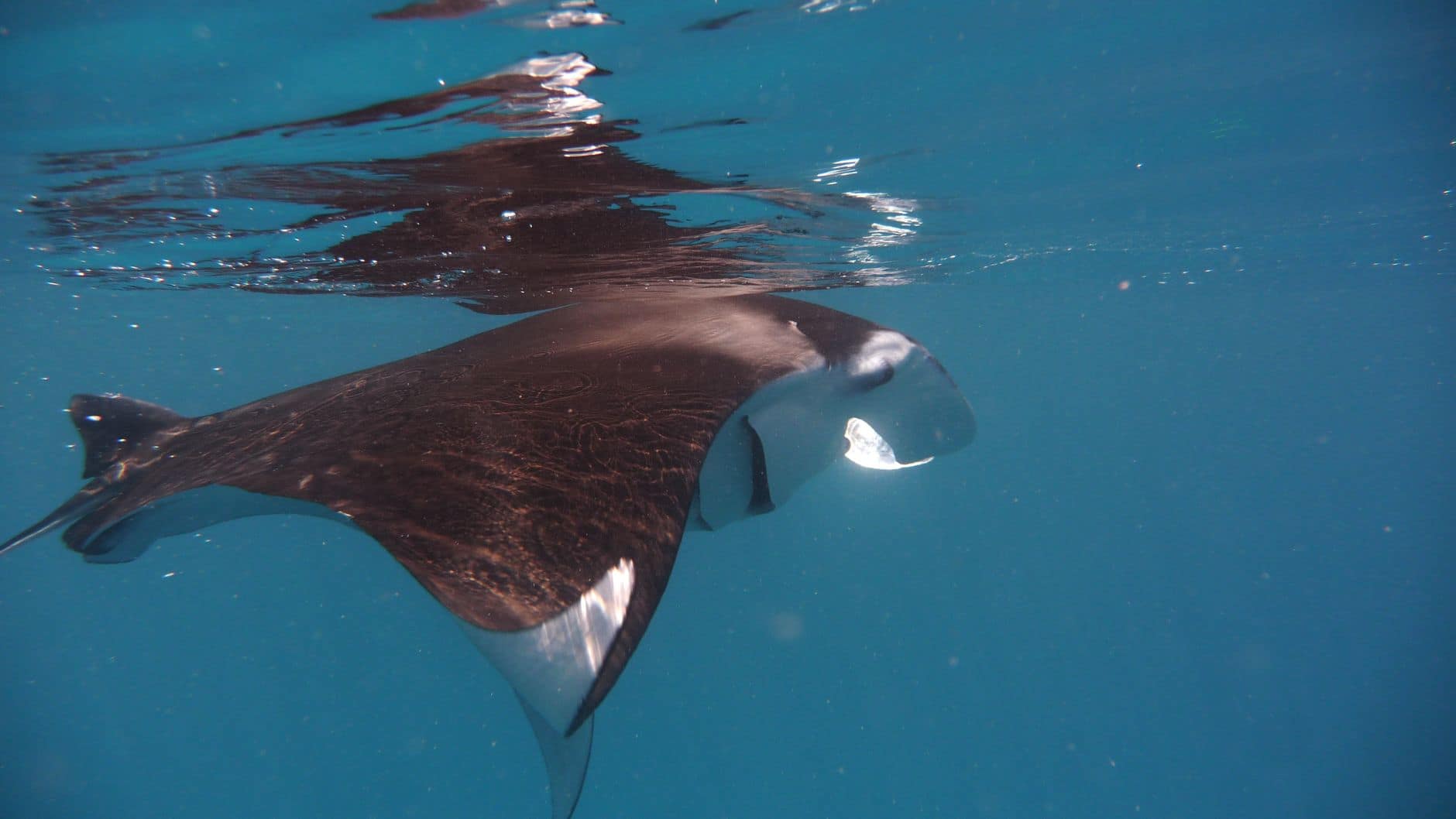
Turtles you can reach from the beach
Green turtles graze shallow seagrass in 0.5-2 m of water off Gili Trawangan's north-east tip and near Turtle Point on Gili Air, close enough to reach from a beach entry with a mask. Gili Meno's west and north-west are the most reliable of all. Sightings are realistic, not guaranteed, and mornings are calmest and clearest. Keep 2-3 m back, never chase, and never sit between a turtle and the surface.
 #7
#7
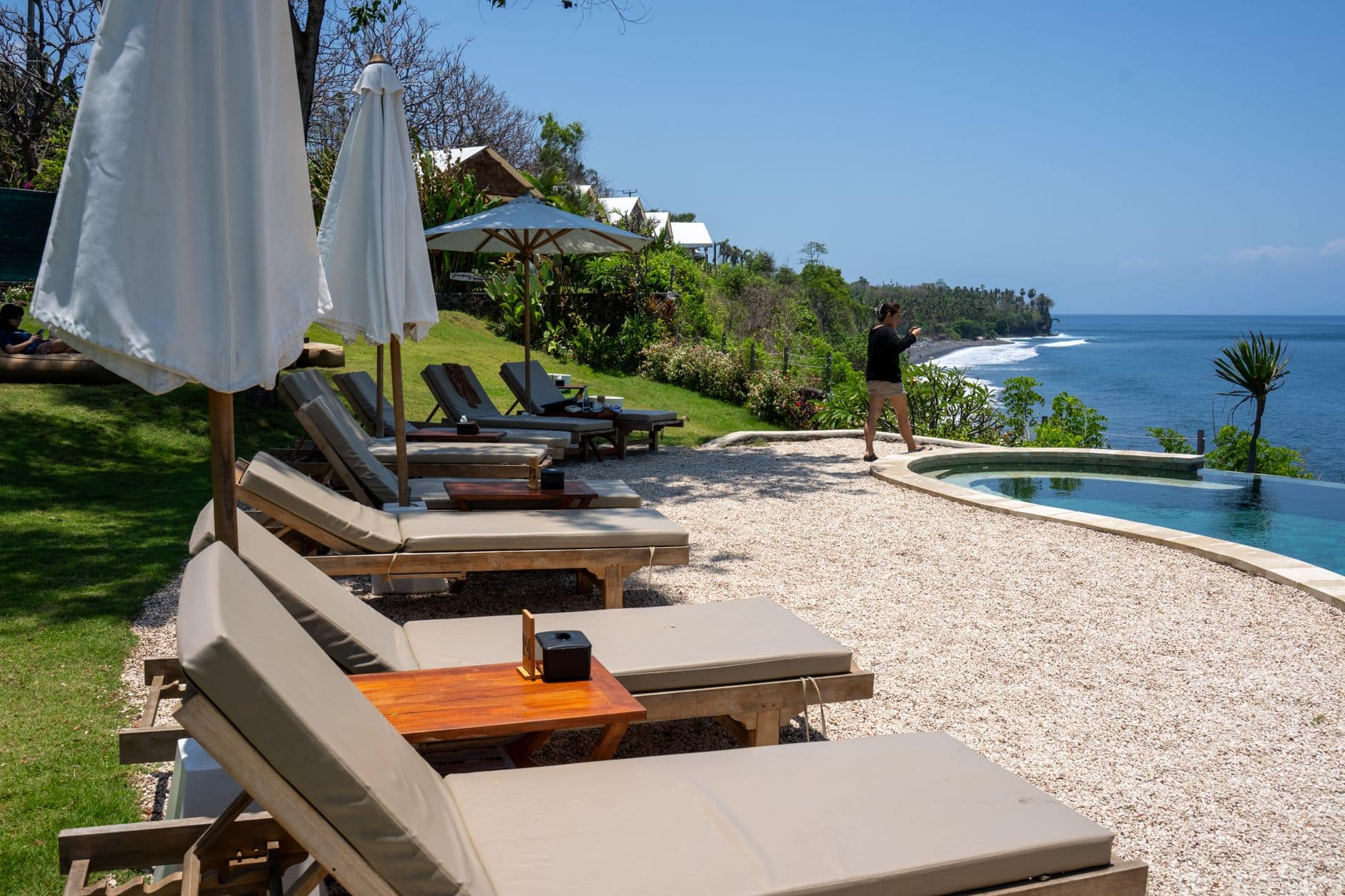
A plan for 10:00 to 16:00
The islands sit close to the equator and UV is intense year-round, with roughly 10:00 to 16:00 the window to stay out of. Sea breeze masks the burn, and water and white sand bounce UV back under an umbrella. A rash vest beats sunscreen on a small back that spends an hour face-down over a reef — a burned back after a day of snorkelling is the single most common avoidable injury here.
 #8
#8
Know where the hospital is, because it is not here
There is no hospital on any of the three islands, only clinics — the Empat Pillar Medika network runs one on each, operating around the clock with call-outs to hotels. The nearest hospitals are in Mataram on Lombok, roughly 60-90 minutes away by speedboat to Bangsal plus a waiting ambulance. Gili Air's 10-15 minute crossing to Bangsal is the shortest of the three, which is a quiet argument for it with young children.
Which Gili island to take children to
Gili Air is the answer for most families. It is the middle island in mood as well as geography: about 175 hectares, a coastal loop of 4.5-5 km that takes an hour to ninety minutes on foot or roughly thirty minutes by bike, the largest permanent community of the three at around 1,800 people, and enough cafes, dive shops and small guesthouses to fill a week — without a nightlife strip. High season brings roughly one party a week, rotating between bars; the rest of the time the island is quiet well before midnight. Our Gili Air guide covers the island in full. Worth saying plainly that "best island for families" is a judgement rather than a measurement — it is the one most sources land on, and the one we land on too. For the beach days in between, the calmest beaches for children are listed by area.
The other two are not wrong, they are narrower. Gili Meno is the smallest at around 150 hectares with 400-500 residents, has the best shore snorkelling of the three and a small turtle hatchery children love — but the fewest shops, the least reliable cash and a basic clinic. It is a three-or-four-night island, not a fortnight, and in the cheap months some restaurants and dive shops close entirely. Gili Trawangan has the most of everything, concentrated almost entirely on one south-east arc; its north and west coasts are genuinely quiet. Families do stay there happily. They stay on the far side.
One question to ask wherever you book: all three islands are Muslim villages with mosques and a call to prayer audible five times a day, and for longer during Ramadan, whose dates shift about eleven days earlier each year. If your children are light sleepers, ask how close the room is to the mosque before you commit. While you are asking, ask whether the shower runs fresh or brackish — on the cheaper places across all three islands it is still sometimes brackish.
Getting there with children, and why we do not day-trip it
The standard route is a fast boat from Padang Bai in east Bali, crossing to Gili Trawangan in about 1.5-2.5 hours; sailings from Sanur, Serangan and Nusa Dua run 3-4 hours. Nobody counts the road leg, and with children it is the part that hurts: Seminyak, Kuta or Canggu to Padang Bai is 1h10 to 2h30 by road and Ubud around 1-1.5 hours, while operators pick up roughly 1.5 hours before departure and up to three hours ahead for some Ubud transfers. An 08:00 sailing therefore means a 05:00-06:30 hotel pickup, and 5-7 hours door to door. We sell fast boat tickets with hotel pickup from $15, booked on WhatsApp with no prepayment; if you would rather own the road leg, a car and driver for the day from $59 per car means you leave when the children are actually awake.
The day-trip version exists — our Gili day tour from $115 — and we will say plainly that it is not the format for small children. Door to door from south Bali it runs 12-16 hours for roughly 3-5 hours ashore, and one-day round trips are explicitly not recommended for young children, elderly travellers or anyone prone to motion sickness. It makes sense from east Bali, where the crossing is short, and it makes sense with teenagers. With a four-year-old it is two rough boat rides bracketing a nap. The overnight Gili getaway from $70 fixes the arithmetic: the last day boats leave, the island empties, and the good snorkelling hours — early morning and late afternoon — belong to people who stayed. If one day is genuinely all you have, our Gili day trip guide sets out the four hours ashore honestly.
Two things to check at booking. First, routing: many Bali fast boats terminate at Gili Trawangan and never call at Gili Air, so a family booked on Air can land on the wrong island and wait for one of only two daily hopper circuits. Second, fares, which are a mess: aggregators list one-way tickets from around IDR 234,000 while Eka Jaya's own site published IDR 685,000, discounted to IDR 650,000 online, for 2025-2026. Sources disagree by roughly a factor of three, fares are seasonally tiered, and none of them is fixed. Budget separately for the IDR 20,000 per person collected on arrival at Gili Air (reported for 2026 — carry small notes and check at the landing) and Bali's own IDR 150,000 tourist levy, widely reported as not re-charged when you return from the Gilis, though we cannot confirm that against the regulation. Our fast boat guide goes operator by operator.
What no cars actually changes
Cars and motorbikes are banned by local ordinance on all three islands. After two weeks of Bali, where the pavement doubles as a scooter lane, the effect on a family holiday is larger than it sounds: a six-year-old walking twenty metres ahead down a sandy track stops being a decision you have to make every few seconds. Distances help — Gili Air's loop is 90 minutes on foot, Gili Trawangan's coastal track is 6.5-7 km and 1.5-2 hours without stops — and bikes with child seats are widely available, particularly on Gili Air, at roughly IDR 30,000-50,000 a day as published for 2025-2026, more at beachfront stands in high season.
What the sand takes back: strollers do not work here. The paths are soft and uneven, worst along the north-west stretches, so bring a carrier for anyone under three. There is almost no street lighting on Gili Trawangan, which makes a head torch a genuine item rather than a packing-list cliché. And cidomo horse-cart fares are a negotiation rather than a tariff: published figures for Gili Trawangan range from IDR 25,000 for a short hop to IDR 350,000 for a full circuit, sources disagree even on whether the price is per cart or per person, and rates rise after dark. Gili Air is the one island with a documented flat rate, reported at IDR 200,000 for a trip of any length as of June 2025 — a single source, so treat it as a starting point. Agree the number before anyone climbs in, and remember most accommodation is walkable anyway.
Two smaller things. Landings are shallow beach or short-jetty landings, so you carry your own bags and quite possibly get your feet wet — pack accordingly if someone in the group is also carrying a toddler. And electric scooters have had an unstable legal history on the islands, banned and unbanned more than once between 2023 and 2024; do not assume you can hire one, and check on arrival.
The medical reality before you book
There is no hospital on any of the three islands. Care is clinic level: the Empat Pillar Medika network runs clinics on all three — Warna Medica on Gili Trawangan, Gili Air Clinic Center, Pillar Meno Medika — operating around the clock with call-outs to hotels, and a first inpatient clinic on Gili Trawangan was reported to have opened in February 2025. Pharmacies are small and thinly stocked, so bring your own prescriptions rather than assuming you can replace them. The nearest hospitals are in Mataram on Lombok — Harapan Keluarga and RSUD Provinsi NTB — roughly 60-90 minutes away, by speedboat to Bangsal with an ambulance meeting the pier. Gili Air's crossing to Bangsal is 10-15 minutes, the shortest of the three, and that is not a small detail with a young child.
This is what makes travel insurance with evacuation cover non-optional rather than sensible, and DAN-style dive cover specifically if anyone is diving. On the recompression question we will not pick a side: sources contradict each other on whether a functioning hyperbaric chamber exists anywhere on the islands, so plan on a Lombok evacuation and let the insurance carry the weight instead of a rumour.
Day to day the injuries are smaller and predictable. Reef shoes are the single most useful thing you can pack — sea urchins are dense in the shallows, notably on Gili Air, and the spines snap off under the skin; fire coral and coral cuts infect fast in the tropics. Stingrays rest in the shallows, so teach children to shuffle rather than stride. The channels between the islands run far stronger than they look, especially on incoming and outgoing tides: keep children on the sheltered leeward side of whichever island you are on, and nobody swims between islands at any age or fitness level. Rinse a jellyfish sting with seawater, not fresh. Our honest safety guide covers the rest, including boat safety.
What to bring from Bali, because you cannot buy it there
There are no large supermarkets on any of the three islands. Small shops, warungs and resort kitchens, yes; a shelf of familiar formula and the right size of nappy, no. Anything a small child specifically needs, buy it in Bali and carry it over.
Carry cash too. Withdrawal fees run IDR 25,000-50,000 per transaction with per-transaction caps commonly around IDR 1,500,000-2,500,000 as published for 2025-2026, and machines fail on connectivity as often as on cash. Gili Trawangan has the most ATMs, clustered near the harbour; Gili Air has a handful near the harbour and along Jalan Mojo; Gili Meno's one or two run dry often enough that the only sane plan is to arrive with the cash you need.
- Nappies, wipes, formula and baby food for the whole trip — no shop on the islands reliably stocks them
- A carrier, not a stroller — sand paths defeat wheels, and the under-threes end up on someone's back regardless
- Reef shoes for every child — urchins and shallow coral cause most of the minor injuries here
- Broad-spectrum SPF 30+ and a rash vest each, reef-safe if you can find it — the burning window is roughly 10:00-16:00 and the sea breeze hides it
- Your own medicines, plus motion-sickness tablets bought in Bali — island pharmacies are small and the crossing is open sea
- Cash in small notes — for the Gili Air arrival fee, cidomo drivers, warungs, bike hire and beach vendors, all cash in practice
- A head torch — Gili Trawangan in particular has almost no street lighting after dark
- Refillable water bottles — tap water is not drinkable on any of the islands, and refill stations exist on Gili T and Gili Air
The water: turtles, boats and how young they can dive
The reason children remember the Gilis is that the turtles are reachable from the beach. Two shore-entry zones sit on Gili Trawangan's north-east tip over sand and seagrass at 0.5-2 m, with coral at 2-3 m and a drop-off past about six metres; the northern zone is quieter with less boat traffic than the eastern one. Gili Air has the same thing at Turtle Point on the north-east, and Gili Meno's west and north-west coasts are the most reliable of the three — green and hawksbill turtles are resident year-round, though sightings are realistic rather than guaranteed. Mornings are calmest and clearest. The etiquette is not decorative: stay 2-3 m back, never chase or touch, and never put yourself between a turtle and the surface, because it is an air-breathing reptile and blocking the ascent genuinely stresses it. Our turtle snorkelling guide lists the sites.
Shared three-island snorkel boats run roughly IDR 100,000-175,000 per person for three to four hours, typically leaving around 09:30-10:30 and 13:00 with 20-30 people aboard. With small children a private charter is often the better buy — one operator published about IDR 550,000 for two hours and IDR 750,000 for four in 2025, per boat rather than per person — because you can turn for shore when a child has had enough. On Gili Meno the turtle hatchery takes donations rather than a ticket, with IDR 50,000-100,000 a normal contribution, and hatchling activity peaks roughly May to October. It is the facility usually named as the credible one; head-starting hatchlings is a contested method among marine biologists generally, and the Gili Trawangan hatchery that day-trippers are often shown draws consistent criticism over its tank conditions.
For diving, the age gates are set by the training agencies rather than the shops: PADI Bubblemaker from age 8 in a pool or shallow confined water, Junior Open Water from 10, with 10-11 year-olds limited to 12 m and required to dive with a parent or dive professional, and 12-14 year-olds to 18 m. Bubblemaker was quoted at around IDR 1,000,000-1,300,000 by individual shops in 2025-2026 — single-operator prices, so ask on the day. Divers also pay a one-time government marine park fee of IDR 100,000 per person, collected at the dive shop; check it at the counter. Dive prices across the islands are set as minimums by the local dive alliance, so shop on instructor quality and group size, not price.
FAQ
Which Gili island is best with kids?
Gili Air. It has more infrastructure than Gili Meno and far less nightlife noise than Gili Trawangan, its coastal loop is only 4.5-5 km, bikes with child seats are easy to hire, and its 10-15 minute crossing to Bangsal on Lombok is the shortest of the three if anyone needs a hospital. Gili Meno suits three or four nights for the turtles and the quiet; Gili Trawangan works if you deliberately book its north or west coast.
Can you do a Gili Islands day trip from Bali with children?
You can, but we would not with young children. From south Bali a day trip runs 12-16 hours door to door for only 3-5 hours ashore, and one-day round trips are explicitly not recommended for children or anyone prone to motion sickness. From east Bali the crossing is short enough to change the maths. Everywhere else an overnight costs less in misery and buys the early-morning and late-afternoon snorkelling that day-trippers never see.
How long is the fast boat to the Gili Islands, and is it rough?
Padang Bai to Gili Trawangan takes about 1.5-2.5 hours at sea, and Sanur, Serangan or Nusa Dua sailings 3-4 hours. It is open sea and frequently bumpy. Wet-season crossings from roughly November to March are rougher with more cancellations, and trade winds can also chop up July and August, so dry season does not guarantee flat water. Buy motion-sickness tablets in Bali, check life jackets are present and accessible before you sail, and accept a cancellation rather than pressing a crew to go.
Is there a kids club on Gili Air?
Not in the sense a large beach resort means it. Gili Air is a village island of small guesthouses, boutique bungalows and a handful of villas rather than big chain resorts, so we would not plan a holiday around a supervised kids club — ask your specific property what it runs before booking. What the island offers instead is the thing those clubs exist to solve: no cars at all, a ninety-minute loop, sheltered shallow swimming and bikes with child seats.
What should we look for in Gili Air accommodation with kids?
Ask three questions before you book: how far it is from the harbour on foot, since there are no cars and you carry your own bags off a beach landing; how close the mosque is, if your children are light sleepers; and whether the shower runs fresh or brackish, because cheaper places on all three islands still sometimes have salt water. Tap water is not drinkable anywhere on the Gilis, so check there is drinking water or a refill station nearby.
Can you stay on Gili Trawangan with children?
Yes, if you book the north or west coast. Almost all of the bars, hostels and the night market sit on a single south-east arc near the harbour, and the rest of the island is quiet and thinly built. The trade-off is distance: the coastal track is 6.5-7 km, there is almost no street lighting, and you will walk or cycle to most restaurants. Book blind on the strip and nobody in the family sleeps.
Recommended Bali tours for this guide
Gili Islands Getaway from Bali
The Gili trip is perfect for travelers who want to connect Bali with a slower island stay or a big sea-focused day. Timing, departure ports, and luggage flow matter here, so setup support adds real value.
- Duration
- Full day or multi-day base route
- Area
- Gili Islands connection
- Format
- Fast boat island transfer route
- Best for
- Travelers extending beyond Bali
From $70 No prepayment
View tour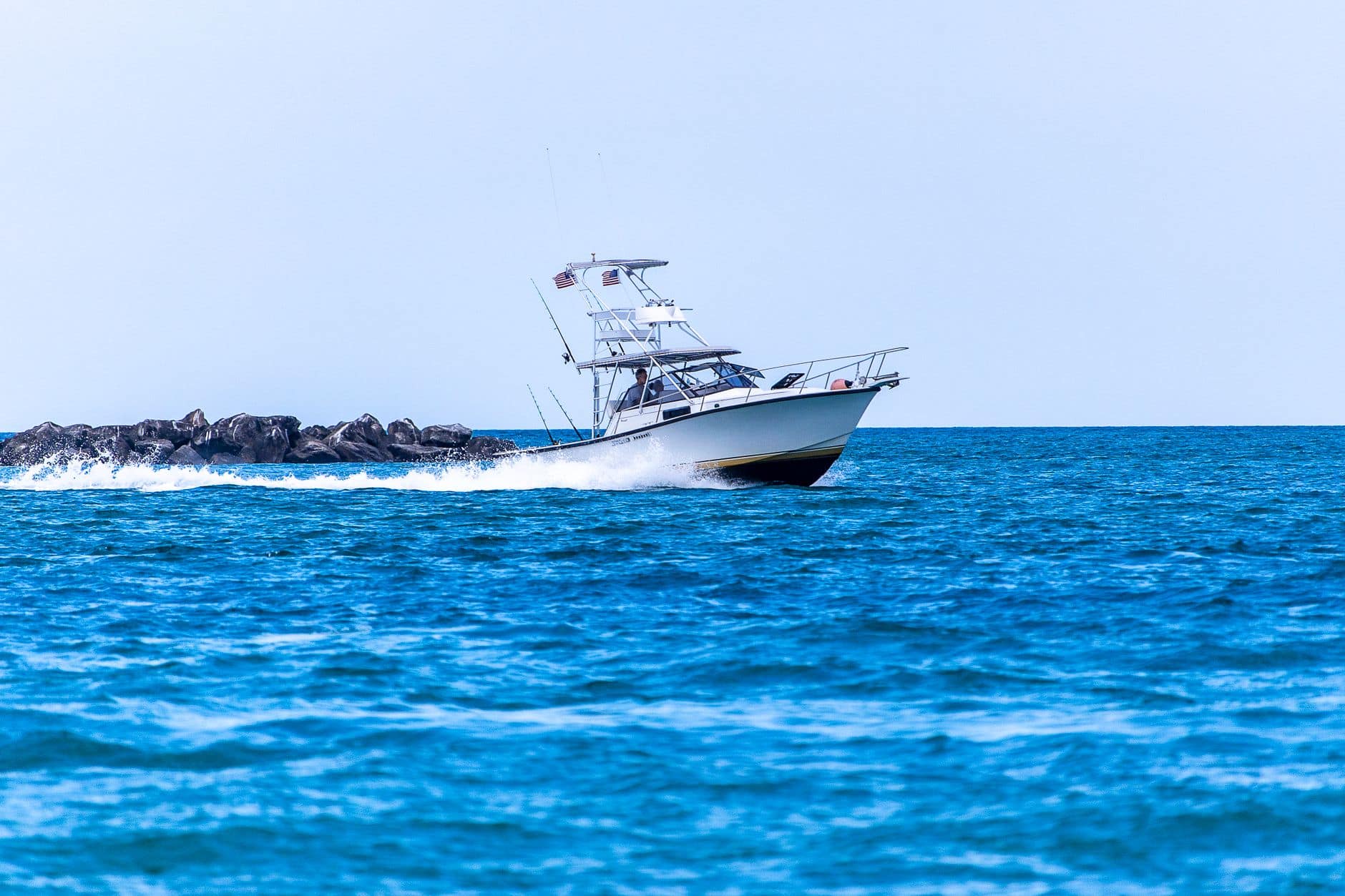
Bali Fast Boat Transfer
Fast boats are simple once booked correctly, but confusing when you are juggling ports, check-in windows, and hotel distance. This service helps turn the whole process into a clean transfer day instead of a stressful logistics puzzle.
- Duration
- Depends on destination
- Area
- Bali harbors and island routes
- Format
- Transfer service
- Best for
- Island-bound travelers
From $15 No prepayment
View tour
Private Car with Driver in Bali
This is one of the most useful products in Bali because so many plans become easier once transport is flexible. It is perfect for custom sightseeing, shopping days, family pacing, and travelers who already know roughly where they want to go.
- Duration
- Flexible daily use
- Area
- All major Bali regions
- Format
- Private transport service
- Best for
- Travelers who want total route flexibility
From $59 per car No prepayment
View tour