

Go to Jatiluwih if you want to walk in the terraces, and Tegalalang if you want the photo and the swing without losing a day to driving. Tegalalang sits about 25 minutes north of central Ubud: compact, steep, lined with cafes and swing platforms, and busy from mid-morning. Jatiluwih is part of Bali's UNESCO-listed subak landscape on the slopes of Mount Batukaru, roughly 1.5-2 hours from Ubud and 2-2.5 hours from Canggu or Seminyak, with marked trails that take an hour or more to walk and a fraction of the crowd. They sit on opposite sides of central Bali, so most people pick one. This guide is about which.
By Alex Moskvin, Founder of SB Excursions · Published 21 May 2026 · Updated 23 October 2026
Tour on this route: Bali UNESCO Heritage Sites Tour — From $65 per car, 10 hours.
Jatiluwih or Tegalalang: which is better?
Neither is better; they answer different days. Tegalalang is 25 minutes from Ubud, compact, and ringed with swings and cafes, so it fits a spare morning. Jatiluwih is a UNESCO-listed hillside 1.5-2 hours from Ubud with marked walking trails and far fewer people, and it needs a full day. If you want to walk, go to Jatiluwih. If you want the photo and your morning back, Tegalalang.
This guide also answers:
- Is Tegalalang worth it?
- How far is Jatiluwih from Ubud?
- How long do you need at Jatiluwih?
Top picks from this guide
 #1
#1
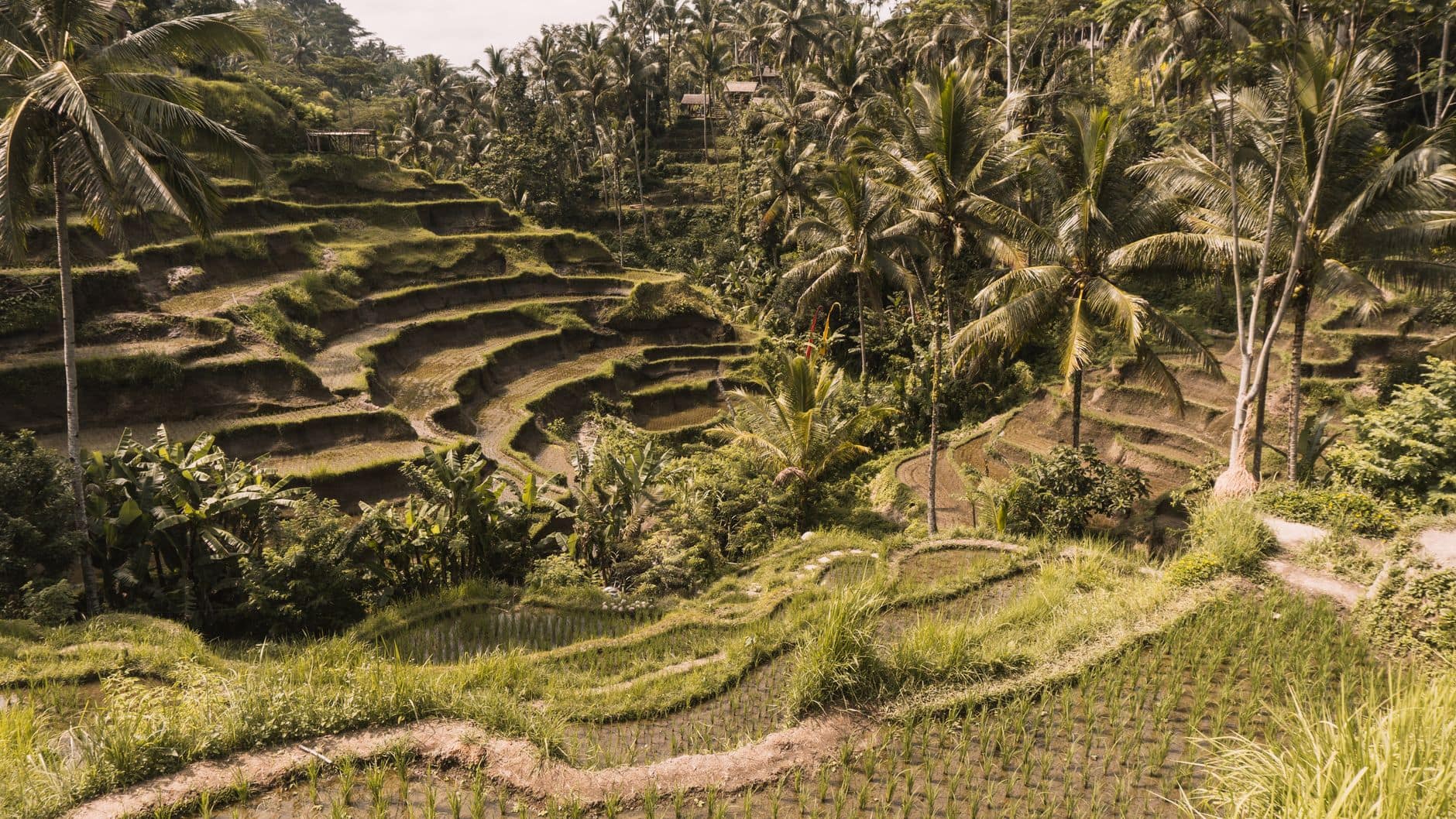
Tegalalang
Close to Ubud and compact enough to see in an hour, which is its real advantage. It is also the commercial one: swings, cafés on the rim and a crowd, with small payments collected at various points as you walk down into the valley.
 #2
#2
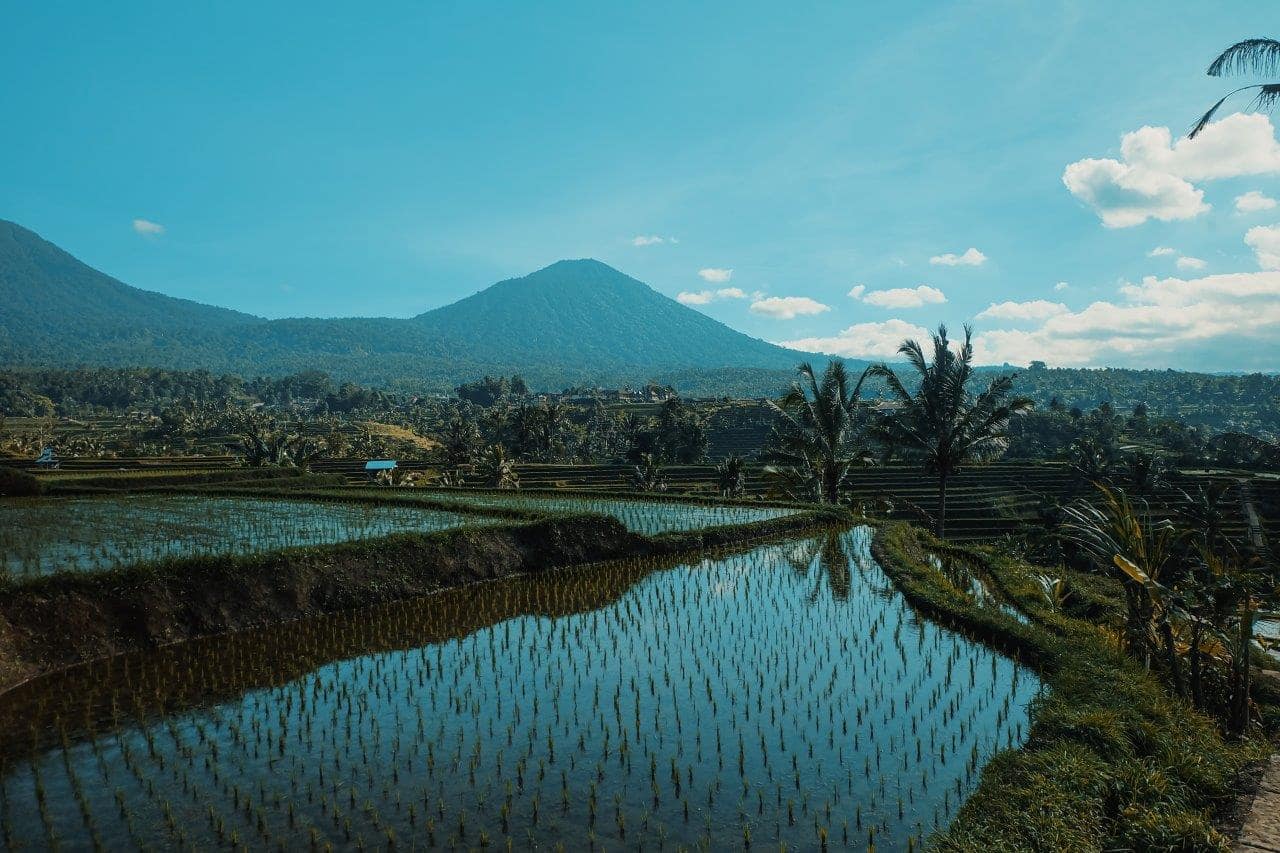
Jatiluwih
A UNESCO-listed hillside of terraces on a completely different scale, with marked walking routes and far fewer people. The cost is the drive: it is a serious detour rather than a stop, and it needs to be the anchor of the day.
 #3
#3
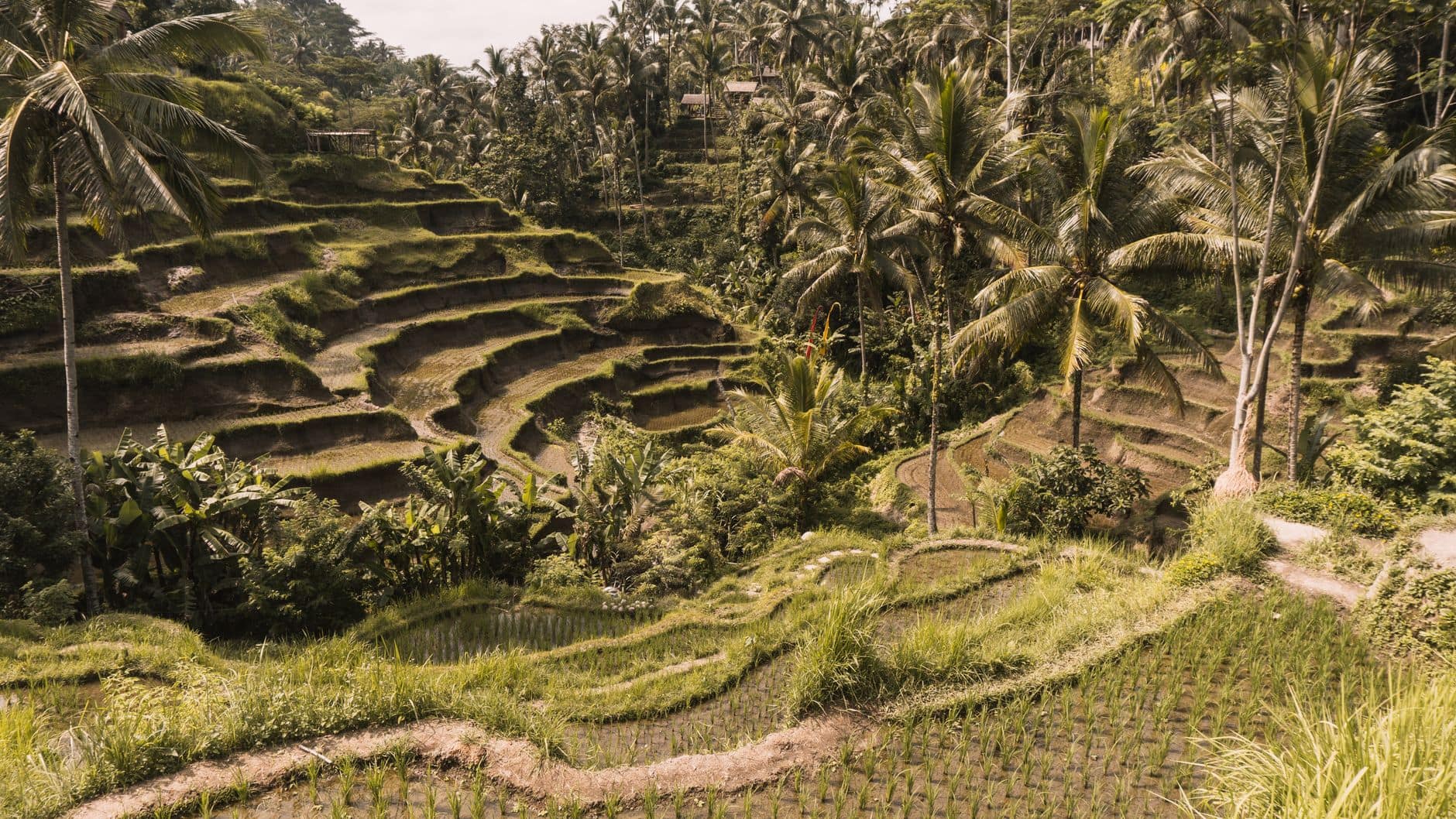
Doing it with a driver
Both sit on routes we already drive, which means the choice does not have to be made in advance. A driver can swap one for the other depending on the weather and how the morning has actually gone.
The short answer: pick by how much of the day you have
Both are working rice terraces, and both are worth the time — the difference is scale, not beauty. Tegalalang is one narrow valley about 25 minutes north of central Ubud: you can take in the whole thing from the top in ten minutes and walk it in an hour. Jatiluwih is an entire terraced hillside inside a UNESCO-listed cultural landscape, and the round trip from Ubud costs three to four hours in the car before you have taken a single step. Convenience against space. That is the whole decision.
Sorted by what your day actually looks like, the choice stops being subtle:
- One free morning in Ubud: Tegalalang. Leave the hotel by 07:30 and you are back for a late breakfast before the coaches arrive.
- A full day and a driver: Jatiluwih, folded into a west and central Bali route so the drive buys you more than one stop.
- You want to walk, not just look: Jatiluwih. Marked trails, open space, and nobody queueing behind you for the same angle.
- You want the swing photo: Tegalalang, and only Tegalalang — the platforms, nests and rim cafes are all on that one valley.
- Based in Canggu, Seminyak or Kuta: Jatiluwih is in your direction, west and inland. Tegalalang means driving past Ubud first.
- Small children, or knees that dislike steps: stay on Tegalalang's top edge, where the cafes have the view without the descent.
- You dislike crowds more than you dislike driving: Jatiluwih, without hesitation.
If you searched for the best rice terraces in Bali and expected a longer list, here is the honest version: these two are the ones with real access, parking, a ticket gate and food. Everything else is either a smaller version of Tegalalang or scenery you pass on the way somewhere. The Sidemen valley in east Bali and the fields inland from Canggu are quieter and prettier than their reputation, but you see them from the road on a longer drive rather than visiting them as a destination. We line up the wider set of terrace and cliff views in the best viewpoints in Bali.
Tegalalang: 25 minutes from Ubud, and it feels like it
The valley is narrow and steep, terraces stacked up both sides, with a footpath that drops down the near slope, crosses the stream and climbs the far one. The descent is quick. The climb back is the part people underestimate: uneven steps, patchy shade, and Bali humidity at 10:00. Budget 45 minutes to an hour for the loop and carry water. Expect small payments as you go — a ticket at the top, informal donation posts along the path, then separate prices for the swings, nests and photo platforms, which are privately run.
Timing changes the place completely. Before 08:30 it is quiet, the light is soft and the rim cafes have empty front-row tables. From mid-morning the coaches arrive, roadside parking jams the main road, and the queue for the most photographed swing can run twenty deep. If you are staying in Ubud, treat this as an early errand rather than an afternoon plan. Our things to do in Ubud guide sets out what else fits around a start that early.
What disappoints people is the gap between the photo and the place. The famous frame is tight and shot from one rim, and just behind the camera there is a road, a car park and a row of cafes. Tegalalang is commercial in a way Jatiluwih is not, and that is the trade for being 25 minutes from your hotel. Go knowing it, go early, and it holds up well.
Jatiluwih: a UNESCO hillside you have to drive for
Jatiluwih was inscribed by UNESCO in 2012 as part of Bali's subak cultural landscape — the centuries-old cooperative irrigation system that shares mountain water between villages, temple by temple. That listing is why the hillside still looks like farmland rather than an attraction: terraces run out across a slope below Mount Batukaru at around 700 metres, wide enough that the far edge disappears into haze, and the photo infrastructure that defines Tegalalang is barely present. You buy one ticket at a gate on the way in.
Walking is the point here. Marked routes leave from the parking area and range from a short circuit of 30-40 minutes to loops of a couple of hours, following farm tracks and the raised edges of irrigation channels. Wear something you do not mind getting muddy: after rain the clay holds water and the channel edges get slippery. Warungs along the rim serve a simple lunch with the full view attached, and the air at that altitude runs noticeably cooler than Ubud.
The honest catch is the drive and the cloud. From Ubud you are looking at roughly 1.5-2 hours each way, from Canggu or Seminyak 2-2.5, on roads that narrow and climb near the end. Cloud tends to build over Batukaru after midday, especially from November to March, so a 14:00 arrival can mean a grey wall where the view should be. Leave early. Arrive by 09:00-10:00 and you get the clear version with the trails largely to yourself.
Is Tegalalang worth it, and can you do both?
Yes if you are staying in Ubud and you go before 09:00. No if you are driving up from Seminyak or Canggu specifically for it. From the south that is two hours each way to see something that takes an hour, and by the time you arrive it will be full. From Ubud it costs you a morning and pays the morning back. That is the whole answer, and it is the same answer for most of the swing-and-cafe stops around Ubud.
The other question people ask is whether both fit in one day. Technically yes, practically no. Tegalalang is north of Ubud, Jatiluwih is west toward Tabanan, and stringing them together is close to five hours of driving for two rushed stops. Pick one, and give the rest of the day to something in the same direction — Ubud in one day has a version of that morning that does not involve a second terrace.
When to go, and what the rice is actually doing
The green in every photo you have seen is rice a few weeks to a couple of months into its cycle. After harvest the same terrace is stubble, mud and standing water — still interesting, not what you came for. Jatiluwih is the exception: its subak does publish a calendar. Red rice goes in around January on a 5.5-month cycle, and a short white Balinese variety around August on a 3.5-month one. Pekaseh I Wayan Mustra puts it plainly — in August farmers may choose their variety, in January the Balinese rice is compulsory. Because a subak schedules its members together rather than plot by plot, the whole panorama switches at once instead of staggering, so size does not protect you there the way people assume. Tegalalang publishes nothing: it is one small valley in the hands of fewer than ten owners, and a single harvest can flatten the frame.
Season matters less than the hour. Both read best before 10:00 — cooler, quieter, and at Jatiluwih ahead of the cloud. In the wet season, roughly November to March, afternoons bring real downpours: Jatiluwih's trails turn to clay and Tegalalang's steps get genuinely slick, so an early start is a plan rather than a preference. Our month-by-month guide to Bali covers what each month does to the light and the roads.
- Shoes with grip. Both walks are on uneven ground, and flip-flops are why people slide down the Tegalalang steps.
- Cash in small notes. Ticket gates, donation posts and rim warungs do not take cards.
- Water. The climb back out of the Tegalalang valley is short, steep and mostly unshaded.
- A rain layer from November to March. Storms arrive fast at both, and faster at altitude.
- Long trousers for the Jatiluwih loops. Wet grass, insects and channel edges that brush your ankles.
How to fit either one into a real day
If Jatiluwih is the one you want, it belongs to a west and central Bali day rather than an Ubud morning. Our Bali UNESCO Heritage Sites tour runs that route from $65 per car over 10 hours, with a morning hotel pickup from Ubud, Sanur, Seminyak, Canggu, Legian, Kuta, Nusa Dua or Jimbaran. The Tanah Lot and Bedugul tour, from $65 per car over 9-11 hours, covers the same western half of the island if you would rather finish the day at the coast.
For Tegalalang, the terrace is a stop rather than a day. The Ubud rice terrace, temple and volcano tour picks up at 08:00 and runs 10 hours through Ubud and Kintamani from $65 per car. If the photo list is the actual goal, the Ubud Instagram tour is built around east Bali icons and finishes at the Tegalalang terraces, from $65 per car with a 07:00 pickup — and the best Instagram places in Bali shows what else tends to land on that list.
If you would rather set your own hours, a private car with driver from $59 per car lets you leave at 06:30 and decide at lunchtime whether to push on or turn back — worth reading next to what a private driver in Bali actually costs. Everything is booked over WhatsApp with no prepayment, so if the forecast turns overnight you can move the day instead of losing it.
FAQ
Jatiluwih or Tegalalang: which is better?
Neither is better; they answer different days. Tegalalang is 25 minutes from Ubud, compact, and ringed with swings and cafes, so it fits a spare morning. Jatiluwih is a UNESCO-listed hillside 1.5-2 hours from Ubud with marked walking trails and far fewer people, and it needs a full day. If you want to walk, go to Jatiluwih. If you want the photo and your morning back, Tegalalang.
Is Tegalalang worth it?
Yes if you are already in Ubud and arrive before 09:00, when it is quiet and the light is soft. No if you are driving two hours up from Seminyak or Canggu specially for it — the valley is small, the loop takes about an hour, and by mid-morning the paths and swing queues are busy. Go early or skip it.
What are the best rice terraces in Bali?
Jatiluwih and Tegalalang are the two with proper access, parking, a ticket gate and food. Jatiluwih is the largest and the quietest; Tegalalang is the closest to Ubud and the most photographed. Beyond those, the Sidemen valley in east Bali and the fields inland from Canggu are quieter, but you see them as scenery on a longer drive rather than visiting them as a destination.
How far is Jatiluwih from Ubud?
Roughly 1.5 to 2 hours each way, depending on traffic around Tabanan and how slow the final climbing stretch is. From Canggu, Seminyak or Kuta allow 2 to 2.5 hours. Leaving by 07:00-07:30 gets you there before cloud builds over Mount Batukaru, which is the difference between a clear view and a grey one.
Can you visit Jatiluwih and Tegalalang in one day?
You can, but it makes a poor day. Tegalalang sits north of Ubud and Jatiluwih west toward Tabanan, so doing both means close to five hours in the car for two rushed stops. Pick one terrace and spend the rest of the day in the same direction — temples on the western route, or Kintamani on the Ubud route.
How long do you need at Jatiluwih?
Two to three hours on site is realistic: a short circuit of 30-40 minutes if you only want the view, or a couple of hours if you walk one of the longer marked loops, plus lunch at a warung on the rim. Add the drive and it becomes a full day out, which is why most people pair it with other stops on a west and central Bali route.
Recommended Bali tours for this guide
Bali UNESCO Heritage Sites Tour
This Bali UNESCO Heritage Sites Tour is built for travelers who want temple courtyards, mountain-lake views, UNESCO rice terraces, and a famous coastal temple finish without stitching separate day trips together. Private transport, a temple sarong, and bottled water are handled from $65 per car, with entrance tickets added at $20 per person.
- Duration
- 10 hours
- Area
- West & Central Bali UNESCO route
- Format
- Private heritage sightseeing route
- Best for
- culture lovers, couples, families, and first-time Bali sightseeing days
From $65 per car No prepayment
View tour
Ubud Rice Terrace, Temple & Volcano Tour
This private Ubud and Kintamani day tour is built for travelers who want Bali culture, scenery, and soft adventure without planning the route or doing the driving. It works especially well for first-time visitors because the route moves from craft villages and temples to volcano views, rice terraces, and the Ubud center in one organized flow.
- Duration
- 10 hours
- Area
- Kintamani, Ubud, and central Bali
- Format
- Private day tour by car
- Best for
- First-time Bali visitors
From $65 per car No prepayment
View tour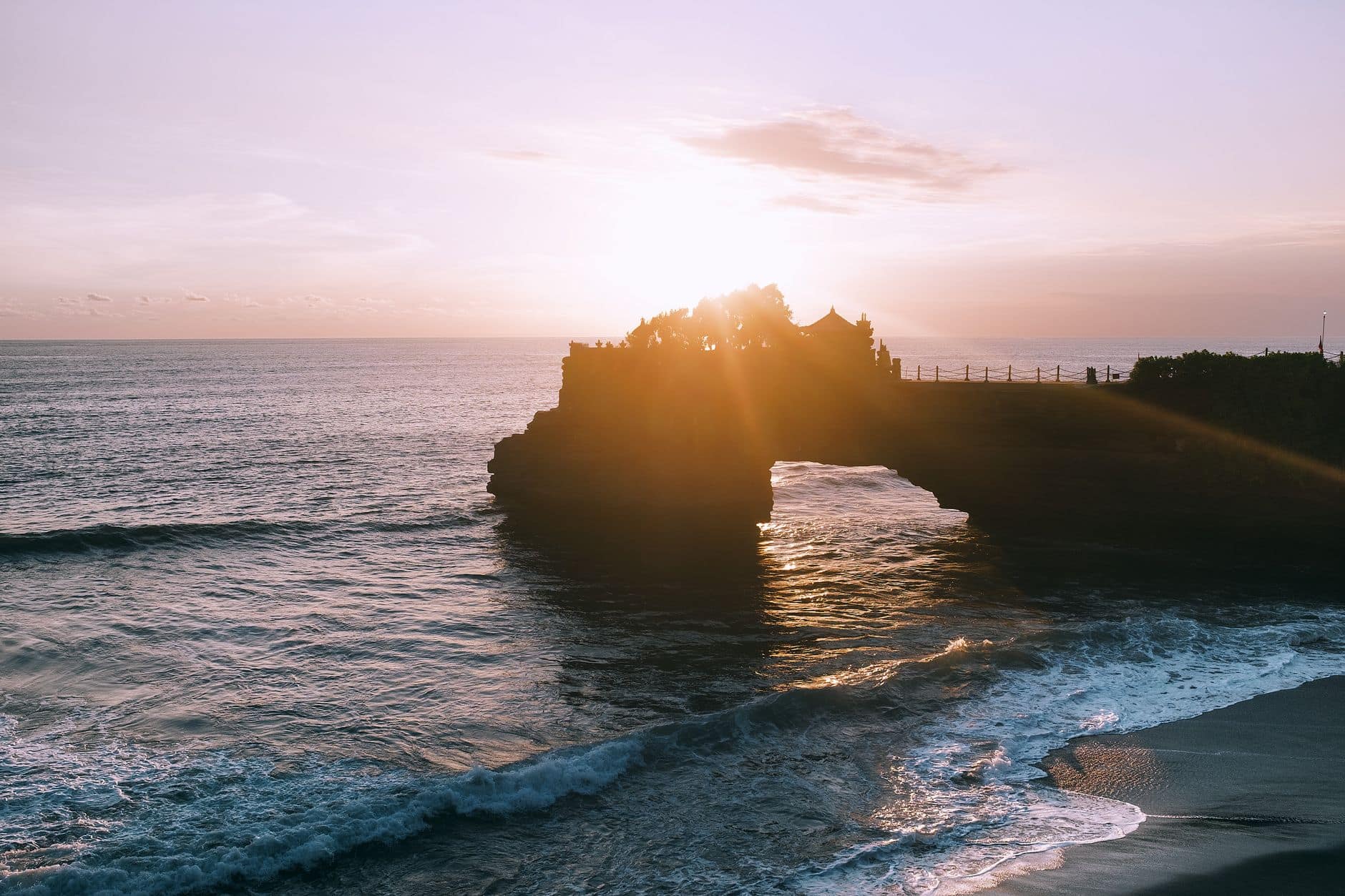
Tanah Lot and Bedugul Tour
This is a strong all-round Bali day for guests who want culture, wide viewpoints, cooler mountain air, and a memorable coastal finish. It is easy to enjoy and easy to sell because the scenery stays varied all day.
- Duration
- 9-11 hours
- Area
- West and central Bali
- Format
- Private day tour
- Best for
- Classic sightseeing days
From $65 per car No prepayment
View tour