

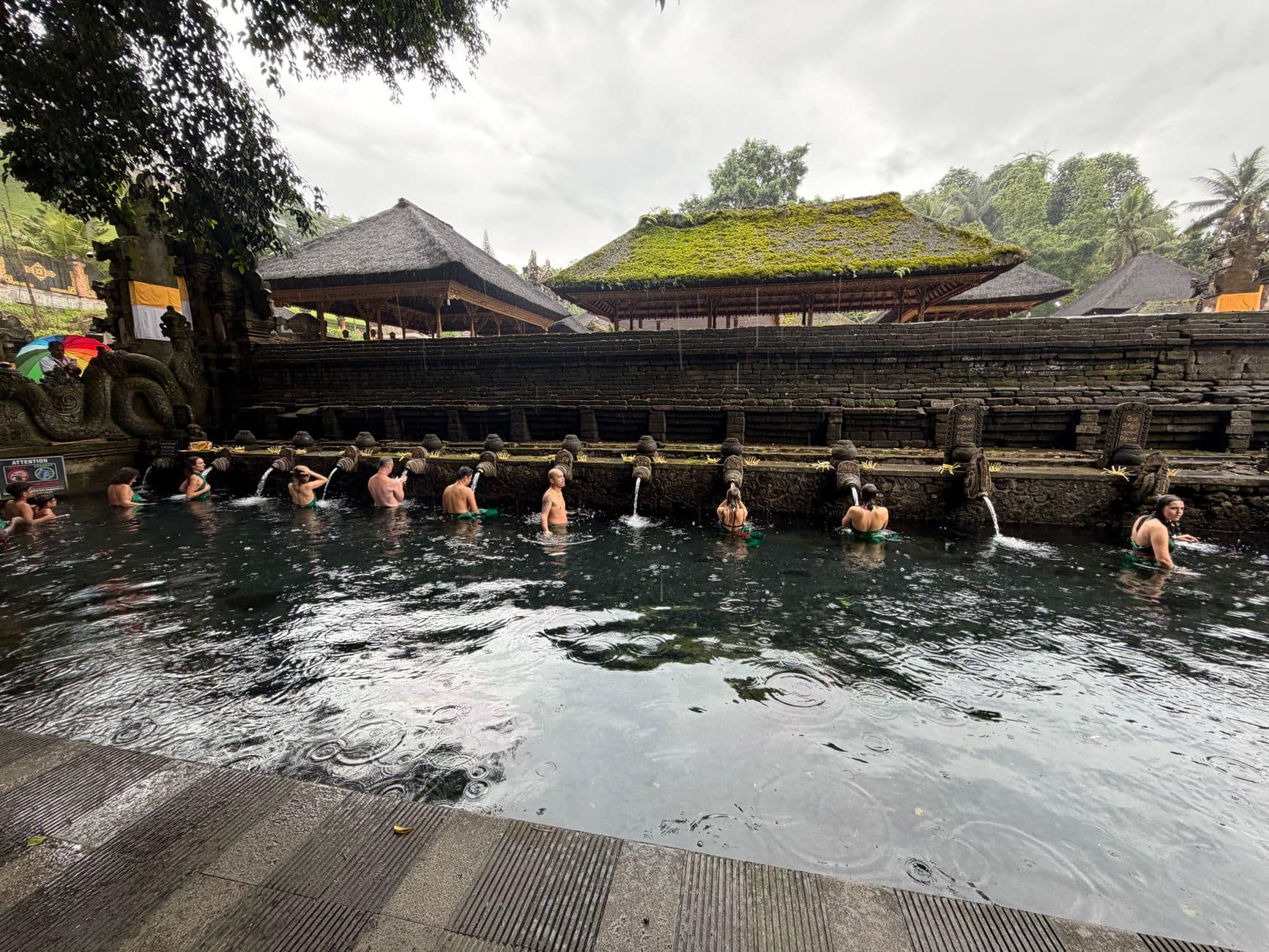
The purification ritual at Tirta Empul, called melukat, works as a queue: you step into the pool at one end, stand under the first stone spout, wash your face, take a little water in your mouth, put your head under, then move one spout along and repeat. Some spouts are reserved for temple ceremonies and everyone walks past them without stopping. This is a working temple in Tampaksiring, roughly 40 minutes from Ubud, not an attraction built for visitors, and Balinese families come here on ordinary weekday mornings. You need a sarong to enter and a second one to bathe in, and going early is the difference between a calm ritual and a slow-moving line.
By Alex Moskvin, Founder of SB Excursions · Published 21 May 2026 · Updated 23 October 2026
Tour on this route: Bali UNESCO Heritage Sites Tour — From $65 per car, 10 hours.
What is the Tirta Empul ritual?
Melukat is a Balinese purification ritual, and at Tirta Empul it is done in a spring-fed pool lined with carved stone spouts. You work along the row in order, pausing at each one to wash your face, sip a little water and put your head under the flow. Some spouts are reserved for temple ceremonies and are skipped. Many people pray in the inner courtyard afterwards.
This guide also answers:
- Do you have to get in the water at Tirta Empul?
- How long do you need at Tirta Empul?
Top picks from this guide
 #1
#1
The purification pools
A working temple where Balinese families come for melukat, moving along a row of spouts in order. Some of the spouts are reserved for ceremony and are skipped rather than used, and following the queue is the whole of the etiquette.
 #2
#2
Two sarongs, not one
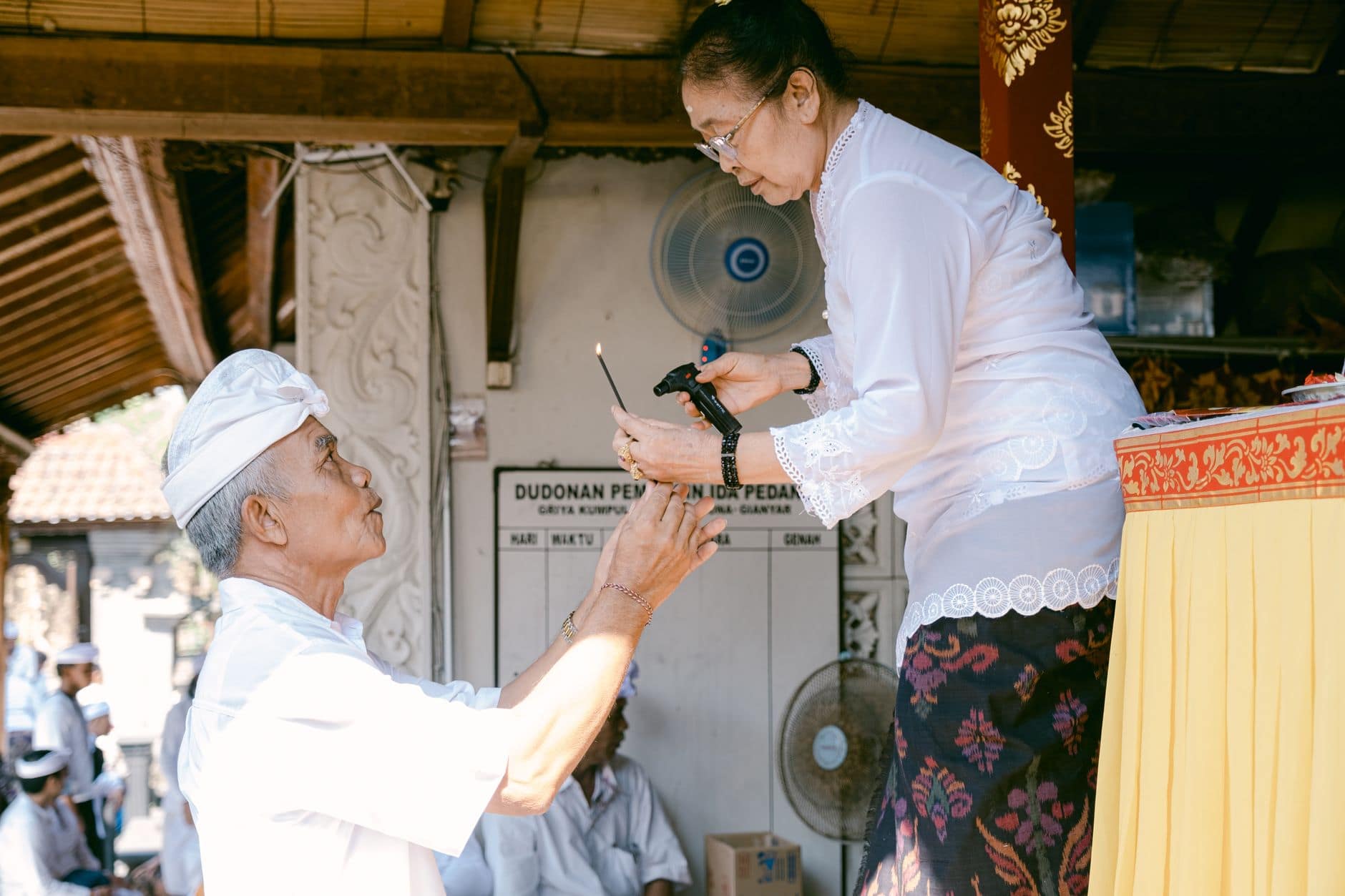
You need one sarong to enter the temple grounds and a second, wet-use one for the pools. Turning up with a single dry sarong is the most common reason people end up watching rather than taking part.
 #3
#3
Fitting it into a temple day
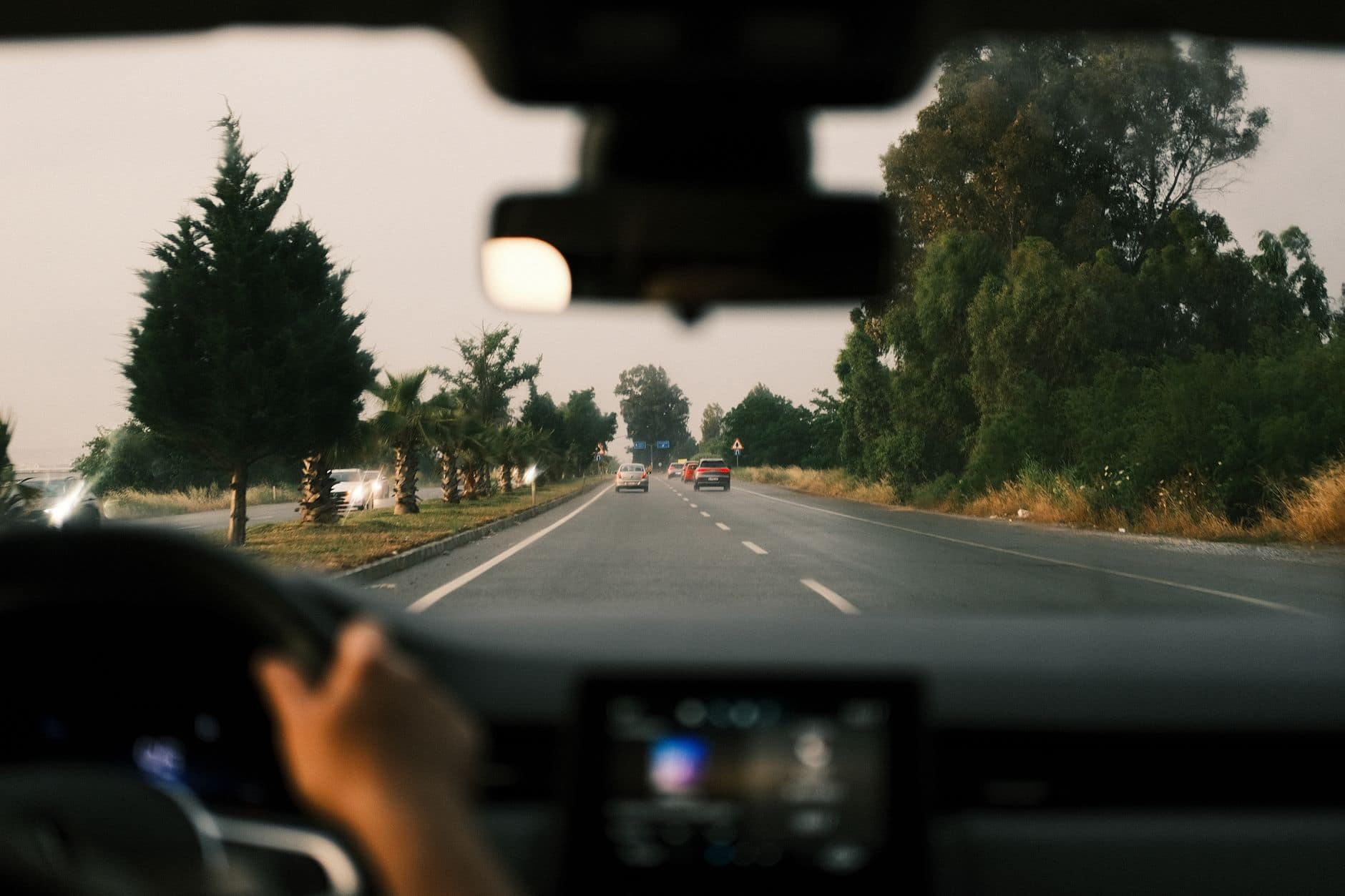
Tirta Empul is close enough to Ubud to be a morning rather than an expedition, and it works best early when the queues are short. With a driver it slots into a wider route instead of being the only thing you do.
What actually happens in the water
Tirta Empul is laid out in three courtyards, and the ritual only happens in the middle one. You come in through the outer gate, put your bag and dry clothes in a locker, change in the changing rooms, then walk down a few steps into a long rectangular pool fed by a row of carved stone spouts along one wall. The water is waist-deep, cool rather than cold, and clear enough to see your feet on the tiles. Behind it, in the inner courtyard, is the spring the whole place is built around — a wide pool where you can watch the sand lifting off the bottom as the water pushes up.
The ritual itself, melukat, is a queue, and that is the part nobody explains before you arrive. You do not wander and pick a favourite fountain. You start at the spout nearest the entry steps and work along the row in one direction, with everybody else moving in the same direction behind you. At each spout you wait your turn, step under the flow, and take as long or as little as you want. Nobody rushes you, but the person behind you is waiting, so a few seconds to half a minute per spout is normal.
- Change first. Lockers and changing rooms are by the pool; you go in wearing the sarong you will get wet in.
- Enter at the steps at one end of the pool, not over the wall by the spouts.
- At each spout: wash your face, cup a little water into your mouth, then put the top of your head under the flow.
- Move one spout along in the same direction as everyone else, and wait behind whoever is there.
- Skip the ceremonial spouts the locals skip — they are usually the last ones in the second pool.
- Dry off, change into the second sarong, then visit the inner courtyard if you want to see the spring.
- Keep both hands out of pockets and do not point your feet at the shrines or the spouts.
Two things regularly catch visitors out. First, some spouts are reserved for temple ceremonies — usually rites for the dead — and Balinese bathers step past them without stopping. Watch what the person in front of you does and do the same; if a spout has offerings placed on it and everyone is skipping it, skip it. Second, most Balinese finish by praying in the inner courtyard rather than walking straight out to the car park. You are not obliged to join, but do not cut through a family mid-prayer to get a photo.
What to wear: two sarongs, not one
You need two sarongs, not one. The first is for entering the temple grounds, which is mandatory for everyone regardless of what else you are wearing, and there are sarongs available at the gate if you turn up without one. The second is the one you actually bathe in, because a soaked sarong is not something you want to keep wearing around the courtyards afterwards. Wear swimwear underneath it and a t-shirt or top that covers your shoulders. Men bathe in a sarong too, not in swim shorts alone.
Beyond that the packing list is short and worth getting right, because there is nowhere to buy any of it once you are wet. Bring a towel, a full change of dry clothes including underwear, flip-flops you can walk in on wet tile, and a waterproof pouch or a friend who is staying dry if you want photos in the pool. Leave anything you would hate to lose in the locker. Our general Bali packing guide covers the rest of the trip; for temple days, this is the whole list.
One rule that is not negotiable and is posted at the gate: women who are menstruating may not enter the temple. This applies at every Balinese temple, not only here, and it applies to the courtyards as well as the water. Nobody stops you and asks, which means it is on you to respect it. If it falls on the wrong day, move the stop to another date — the rest of the Tampaksiring valley and the temples in our guide to Bali's temples and cultural sites will still be there.
The best time to go, and what mornings buy you
Go in the first hour after the gates open in the morning. That is when Balinese families come for melukat before work, when the coach groups have not arrived from the south yet, and when you can move along the row of spouts at your own pace instead of standing in a line for each one. From roughly mid-morning through early afternoon the bathing courtyard fills up, and the same ritual that took twenty minutes at opening can take an hour of waiting.
Two other timing factors are worth knowing. Full moon (purnama) and new moon (tilem) days, along with Kajeng Kliwon in the Balinese calendar, bring large local crowds for purification — genuinely interesting to witness, and the worst possible day if you wanted a quiet pool to yourself. And in the wet season, roughly November to March, the courtyards get slippery and the walk from the car park is muddy, but the ritual is unaffected, since you are getting soaked either way. If you are still choosing dates, our month-by-month guide to visiting Bali is the wider picture.
Getting there, and how to fit it into a day
Tirta Empul sits in Tampaksiring, in the Pakerisan river valley north-east of Ubud. From central Ubud it is roughly 30-40 minutes by car. From Sanur, allow around an hour and a quarter; from Seminyak, Canggu or Uluwatu, plan on 90 minutes to two hours each way depending on traffic, which is why almost nobody in the south comes here as a standalone trip. The valley is also one of the areas covered by Bali's UNESCO subak listing, so the temple usually gets visited as part of a wider cultural route rather than on its own.
There are two sensible ways to fit it into a day, and both are the same day you were already spending in a car. Our Bali UNESCO Heritage Sites tour runs the cultural route over 10 hours from $65 per car, with a morning hotel pickup from Ubud, Sanur, Seminyak, Canggu, Legian, Kuta, Nusa Dua or Jimbaran. The Ubud rice terrace, temple and volcano tour covers Kintamani and central Bali over 10 hours from $65 per car with an 08:00 pickup. Both are private, so the stop list gets agreed on WhatsApp before the day — say you want Tirta Empul early and the route is built around it.
If you would rather set your own pace entirely, a private car with driver from $59 per car lets you leave your hotel at whatever hour gets you to the gate at opening, which is the single biggest thing you can do to improve this stop. Photo-led days work too: the East Bali Instagram tour runs 8-10 hours from $65 per car through Lempuyang and the east. For how these prices compare across operators, we broke it down in real Bali tour prices.
Who should skip Tirta Empul
Be honest about whether you want to get in the water. If you do not, Tirta Empul is a pleasant but fairly ordinary temple visit — carved gates, koi, a spring pool, done in half an hour — and there are temples closer to wherever you are staying that give you the same for less driving. The bathing courtyard is the reason to come. If the queue, the shared water or being photographed by strangers in a wet sarong sounds unpleasant, this is not a stop you have to force.
It is also a poor fit for a tight one-day Ubud plan. Between the drive, changing, the queue and drying off, you are committing around two hours on site plus an hour of driving, which is a large slice of a day that also wants Tegalalang, the Monkey Forest and lunch — see Ubud in one day for how that day actually fits together, or the longer things to do in Ubud guide if you have more time. And if you want melukat without the crowd, the same valley has smaller spring temples that see a fraction of the visitors; ask your driver, not the internet.
FAQ
What is the Tirta Empul ritual?
Melukat is a Balinese purification ritual, and at Tirta Empul it is done in a spring-fed pool lined with carved stone spouts. You work along the row in order, pausing at each one to wash your face, sip a little water and put your head under the flow. Some spouts are reserved for temple ceremonies and are skipped. Many people pray in the inner courtyard afterwards.
What do you wear to Tirta Empul?
A sarong and sash to enter the temple grounds, and a second sarong to actually bathe in, because you cannot walk the courtyards afterwards in a soaked one. Wear swimwear underneath and a top that covers your shoulders. Bring a towel, dry clothes, flip-flops and a waterproof pouch for your phone. Sarongs are available at the gate if you arrive without one.
What is the best time to visit Tirta Empul?
Early morning, in the first hour after the gates open. That is when Balinese families come for melukat, when tour groups have not arrived yet, and when the pool queue moves. From roughly mid-morning until early afternoon the bathing courtyard backs up and you can wait a while for each spout. Full moon and new moon days bring large local crowds.
Do you have to get in the water at Tirta Empul?
No. You can walk the outer and inner courtyards fully dressed, watch the ritual from the edge of the pool and see the spring itself bubbling up through the sand. That takes about 30 minutes. Just be honest with yourself about the trade: the bathing courtyard is the reason most people drive out to Tampaksiring in the first place.
Can women visit Tirta Empul during their period?
No. Balinese temple rules do not allow women to enter while menstruating, and the rule is posted at the gate at Tirta Empul as it is at every temple on the island. It is a religious restriction rather than a formality, and nobody checks by asking, so it is left to you. Plan the stop for another day of your trip.
How long do you need at Tirta Empul?
Allow 90 minutes to two hours if you are doing the ritual, including changing, the queue along the spouts and drying off afterwards. Around 30 to 40 minutes if you are only walking the grounds. Add 30 to 40 minutes of driving each way from Ubud, or 90 minutes to two hours from Seminyak, Canggu or Uluwatu.
Recommended Bali tours for this guide
Bali UNESCO Heritage Sites Tour
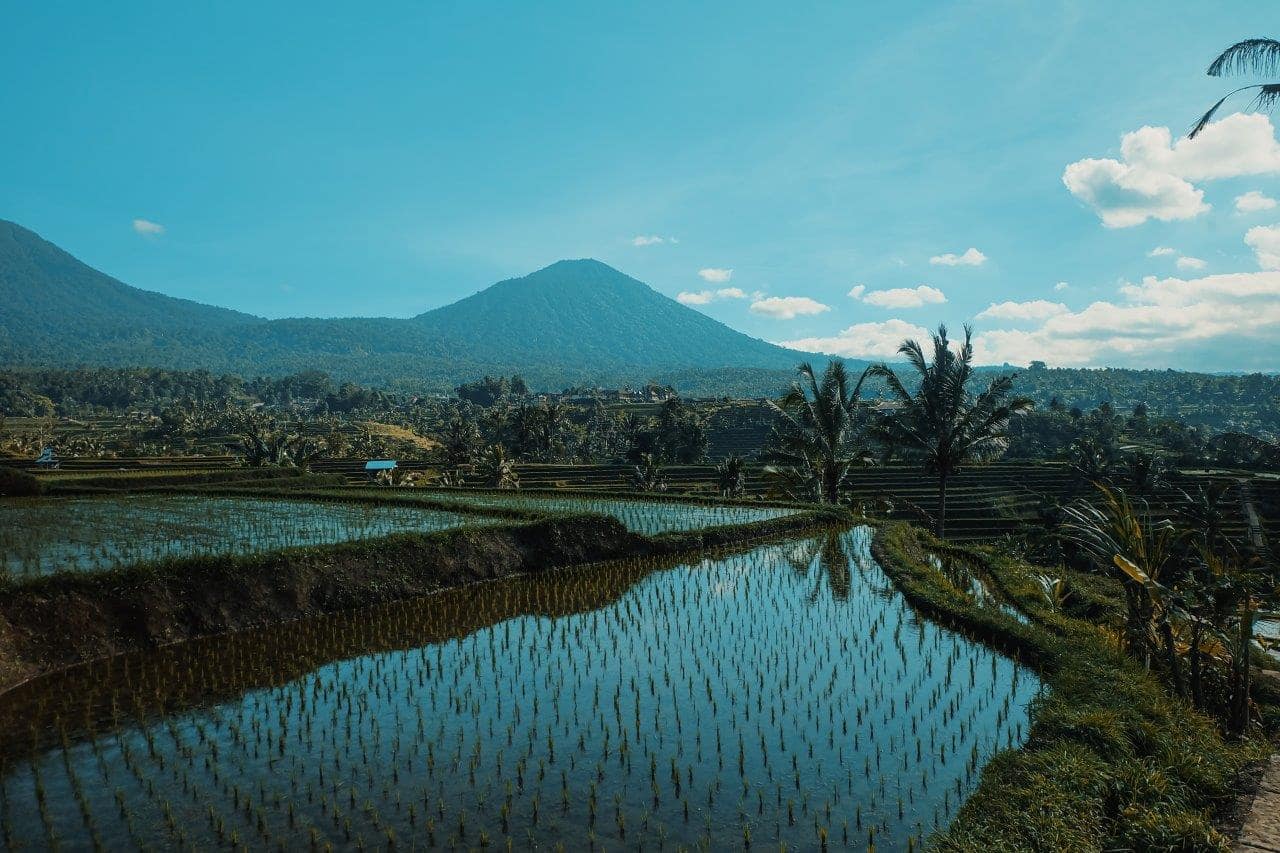
This Bali UNESCO Heritage Sites Tour is built for travelers who want temple courtyards, mountain-lake views, UNESCO rice terraces, and a famous coastal temple finish without stitching separate day trips together. Private transport, a temple sarong, and bottled water are handled from $65 per car, with entrance tickets added at $20 per person.
- Duration
- 10 hours
- Area
- West & Central Bali UNESCO route
- Format
- Private heritage sightseeing route
- Best for
- culture lovers, couples, families, and first-time Bali sightseeing days
From $65 per car No prepayment
View tour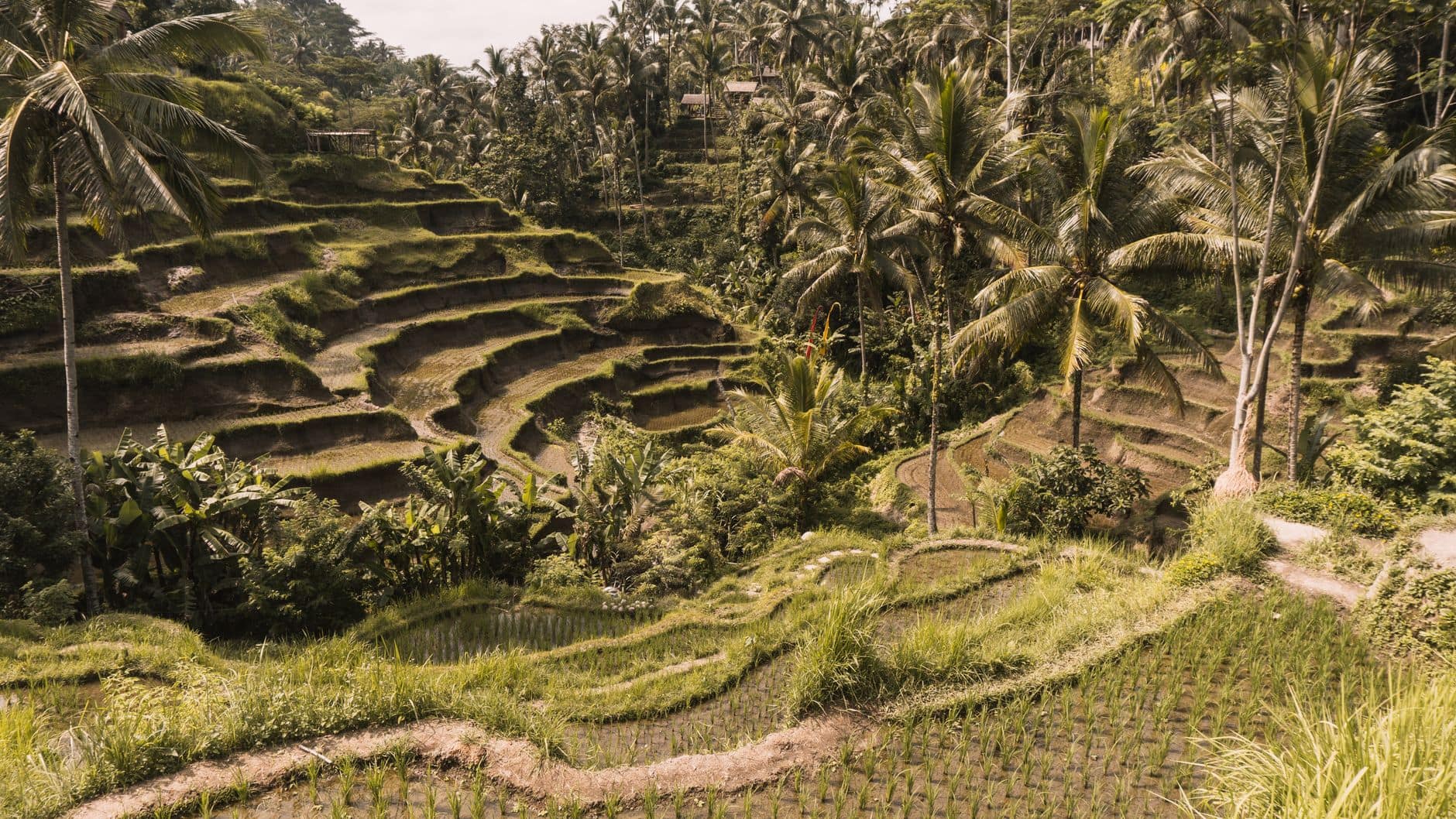
Ubud Rice Terrace, Temple & Volcano Tour
This private Ubud and Kintamani day tour is built for travelers who want Bali culture, scenery, and soft adventure without planning the route or doing the driving. It works especially well for first-time visitors because the route moves from craft villages and temples to volcano views, rice terraces, and the Ubud center in one organized flow.
- Duration
- 10 hours
- Area
- Kintamani, Ubud, and central Bali
- Format
- Private day tour by car
- Best for
- First-time Bali visitors
From $65 per car No prepayment
View tour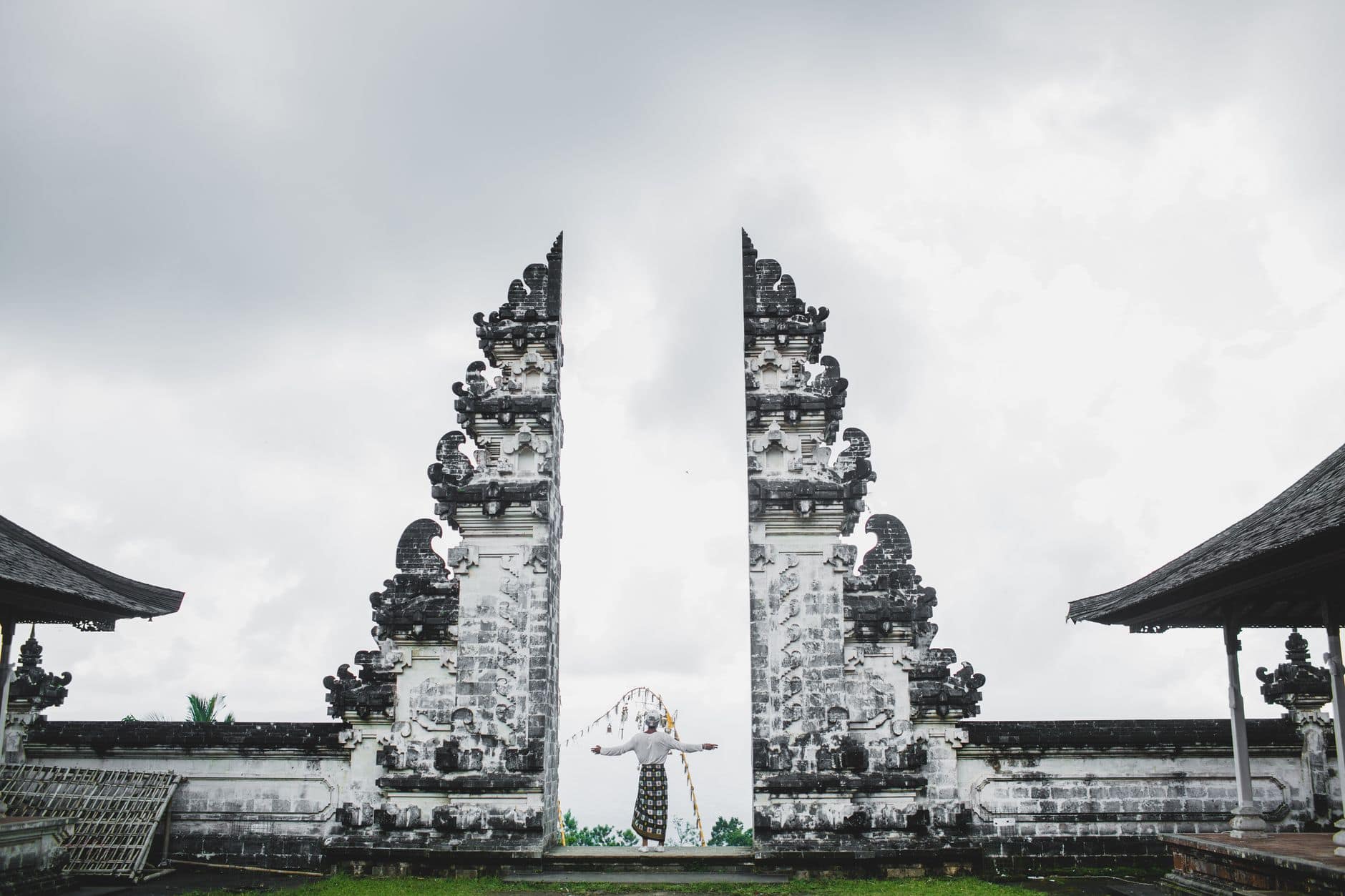
East Bali Instagram Tour
This route is perfect when you want Bali's most recognizable visual locations without guessing the driving order yourself. It works best for couples, creators, and anyone who wants an east Bali signature day with polished logistics.
- Duration
- 8-10 hours
- Area
- Lempuyang and east Bali
- Format
- Private day tour
- Best for
- Photo-focused Bali itineraries
From $65 per car No prepayment
View tour