

Bali is the one part of Indonesia where pork is a celebrated food, because the island is Hindu rather than Muslim. That single fact shapes its whole cuisine. Much of what you can now eat casually — babi guling, bebek betutu, sate lilit — was, within living memory, food you only ate on holy days.
By Alex Moskvin, Founder of SB Excursions · Published 21 May 2026 · Updated 23 October 2026
Tour on this route: Ubud Rice Terrace, Temple & Volcano Tour — From $65 per car, 10 hours.
What food is Bali famous for?
Babi guling (spit-roast suckling pig), bebek betutu (slow-cooked duck), sate lilit (minced satay wrapped on lemongrass), lawar and nasi campur Bali. Because Bali is Hindu rather than Muslim, pork dishes are a mainstream local speciality here unlike the rest of Indonesia.
This guide also answers:
- How much does food cost in Bali?
Top picks from this guide
 #1
#1
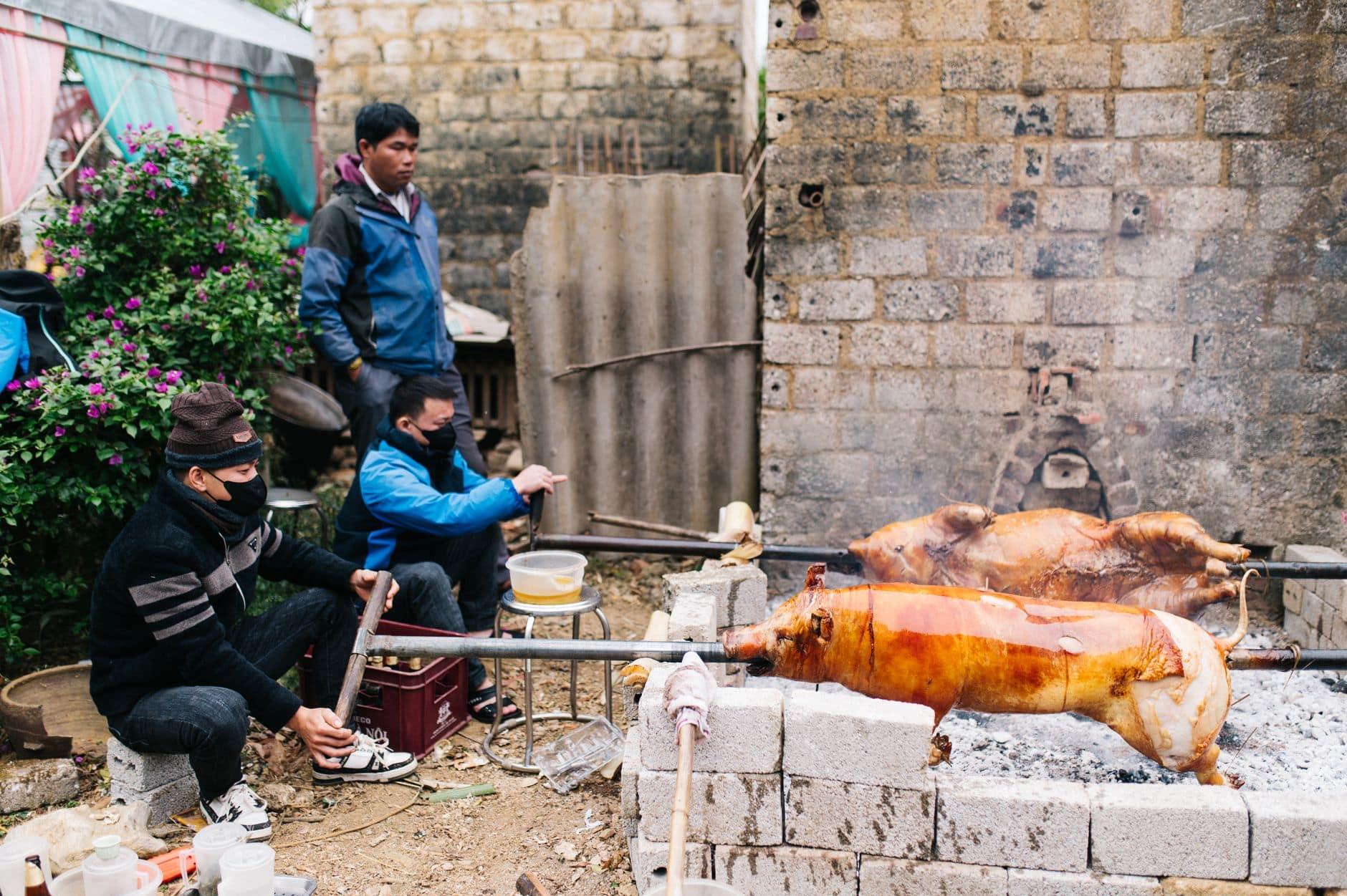
Babi guling
Spit-roast suckling pig stuffed with base genep spice paste. IDR 35,000–60,000 at a local warung. It sells out by early afternoon — this is a lunch dish.
 #2
#2
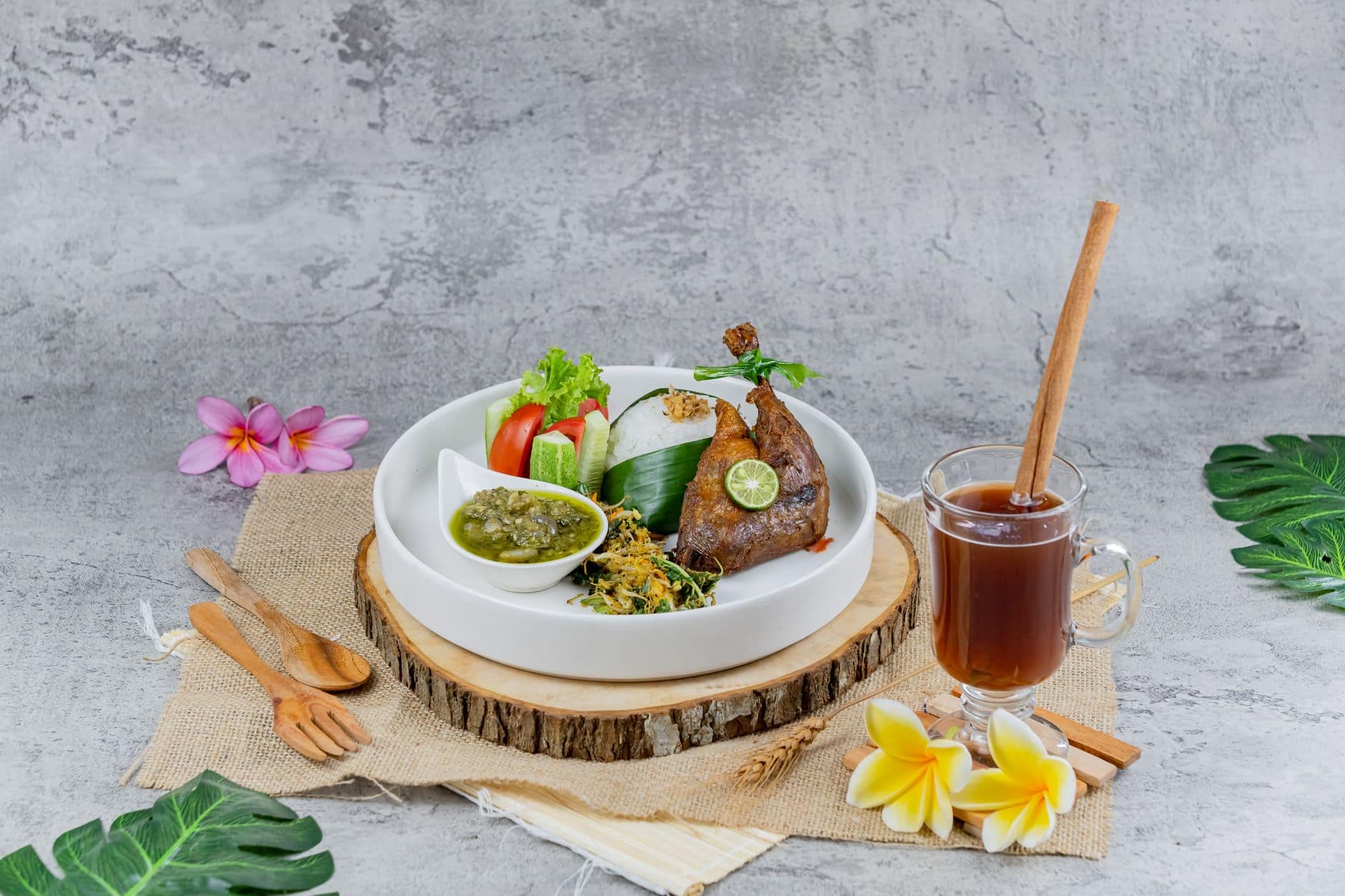
Bebek betutu
Whole duck packed with spice paste, wrapped and slow-cooked for 6–12 hours until it falls apart. Usually needs ordering a day ahead. The chicken version, ayam betutu, is everywhere and cheaper.
 #3
#3
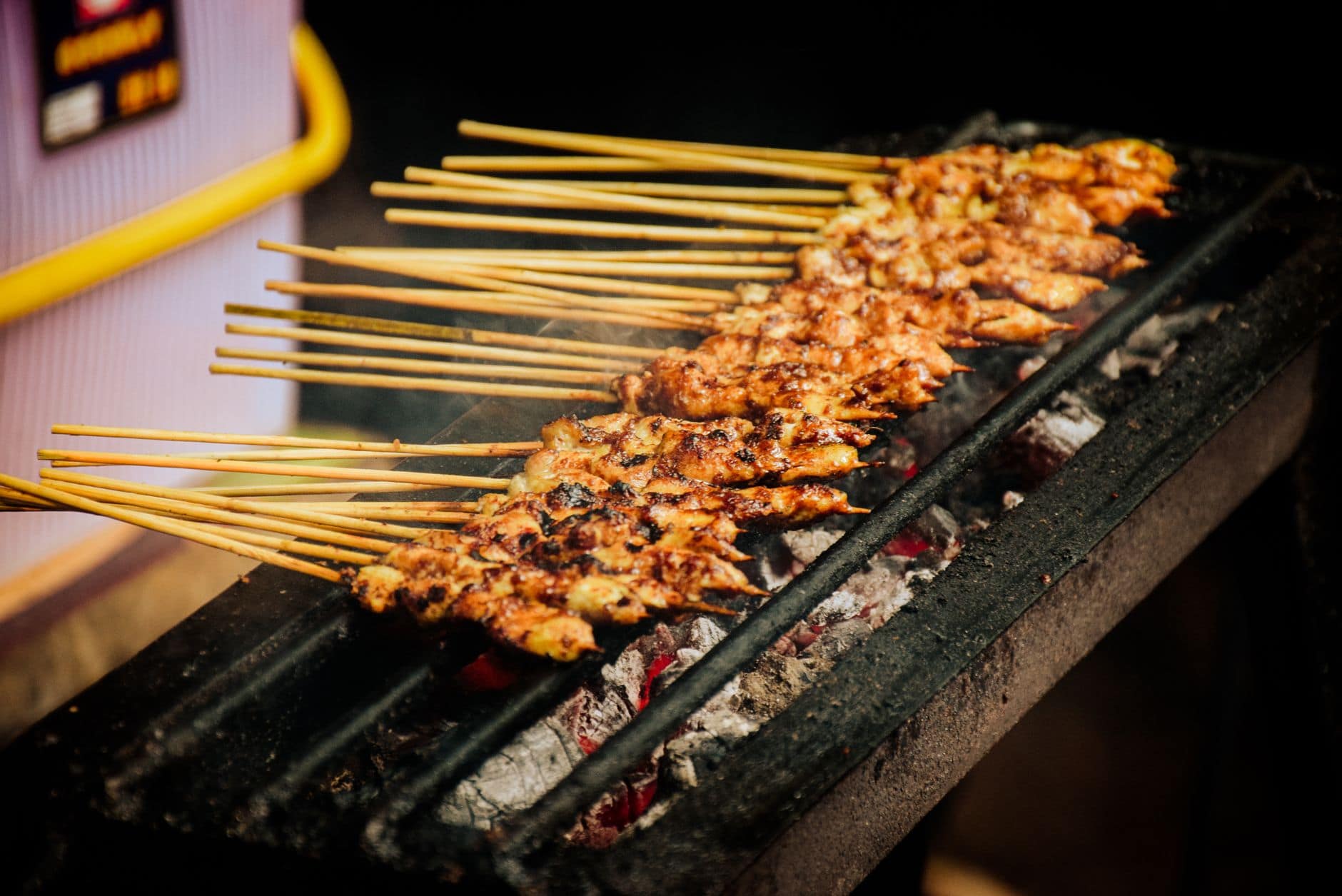
Sate lilit
Minced fish or chicken with coconut and lemongrass, wrapped around a stick rather than cubed. About IDR 5,000–10,000 a skewer.
 #4
#4
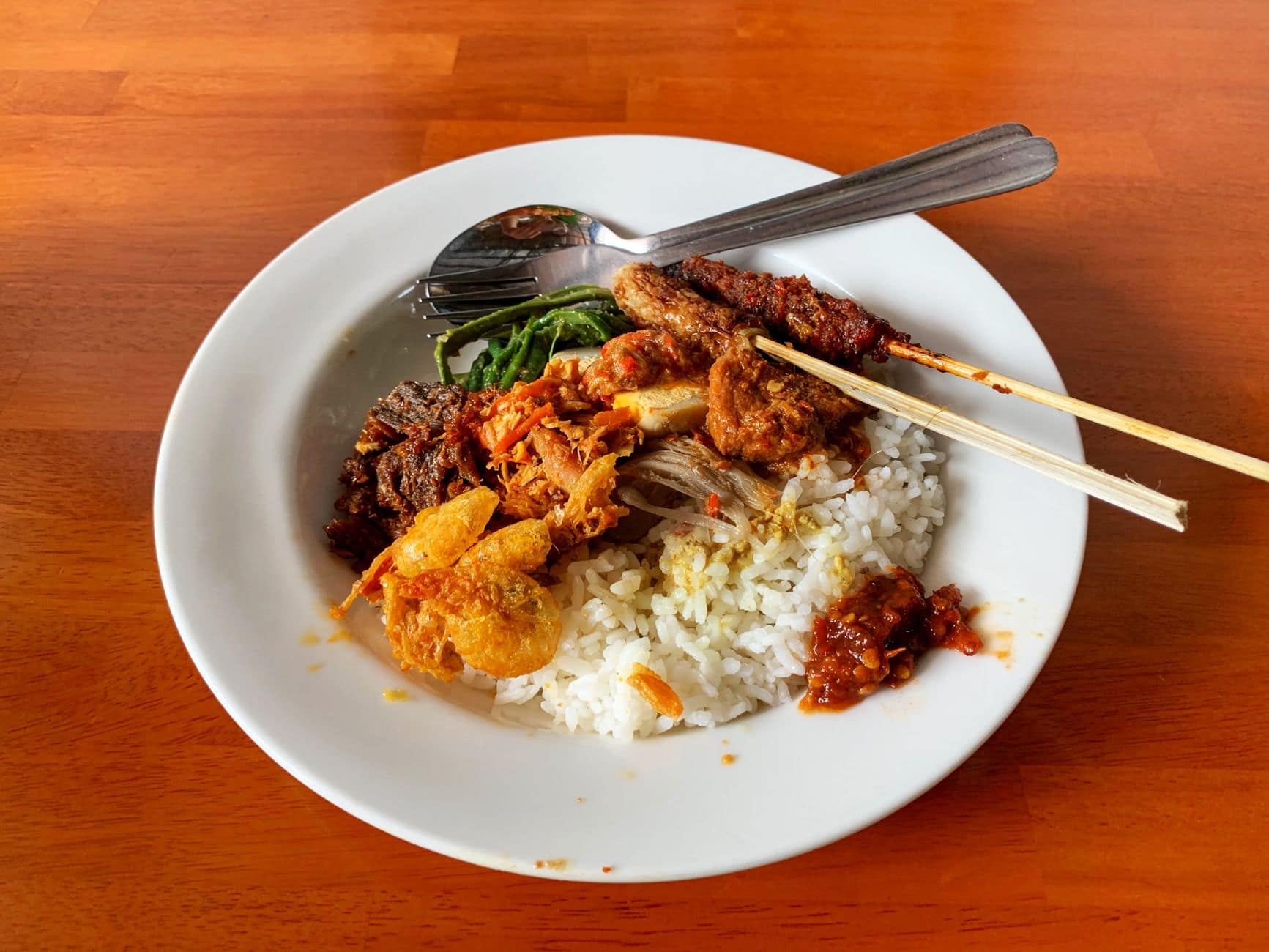
Nasi campur Bali
Rice with a spread of small portions — lawar, satay, tempeh, egg, sambal. IDR 15,000–40,000 local. The best way to try several dishes at once.
 #5
#5
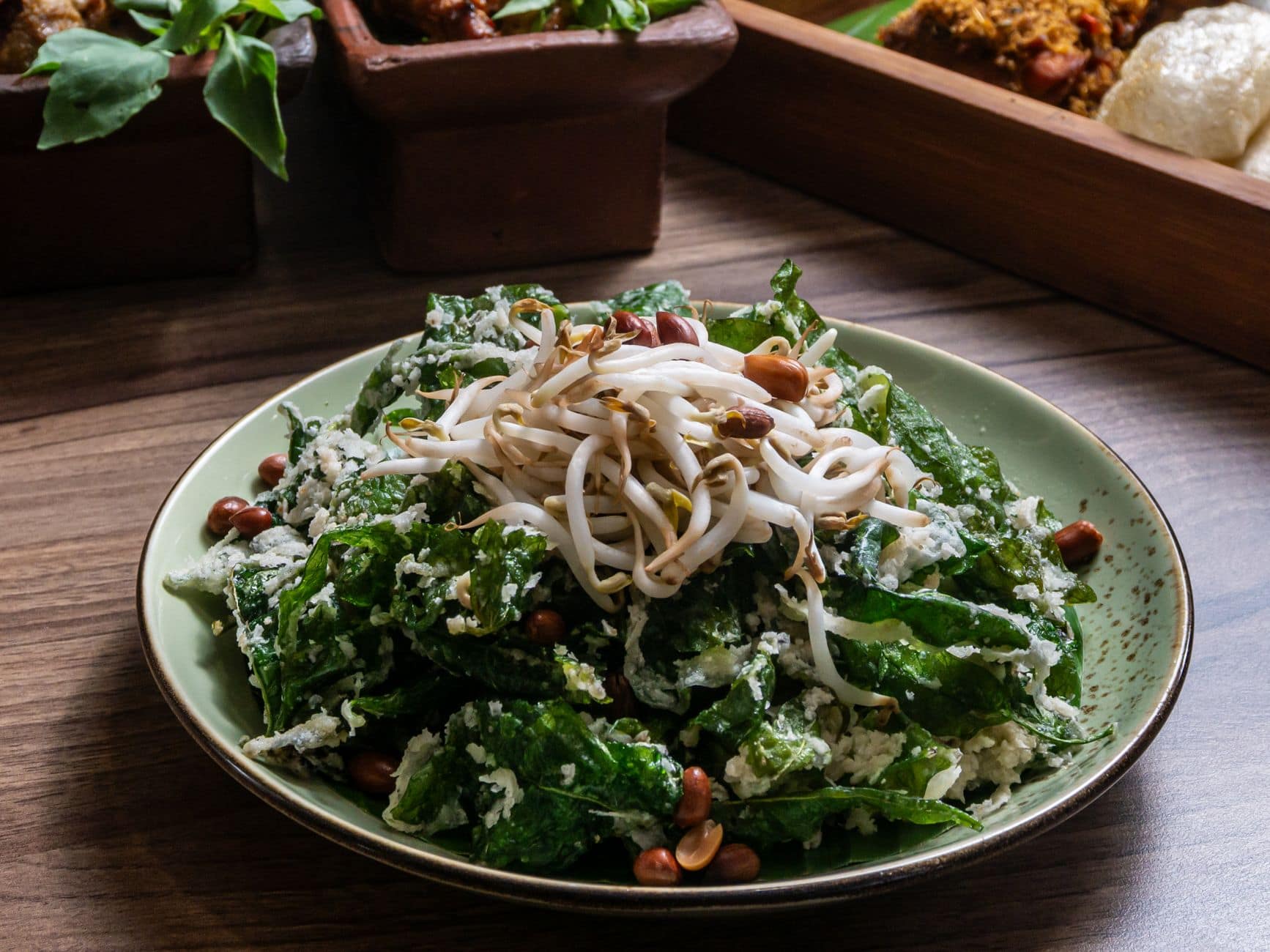
Lawar
Minced meat, vegetables and grated coconut. Lawar merah contains fresh pig's blood; lawar putih does not — ask for putih if you would rather skip it.
 #6
#6
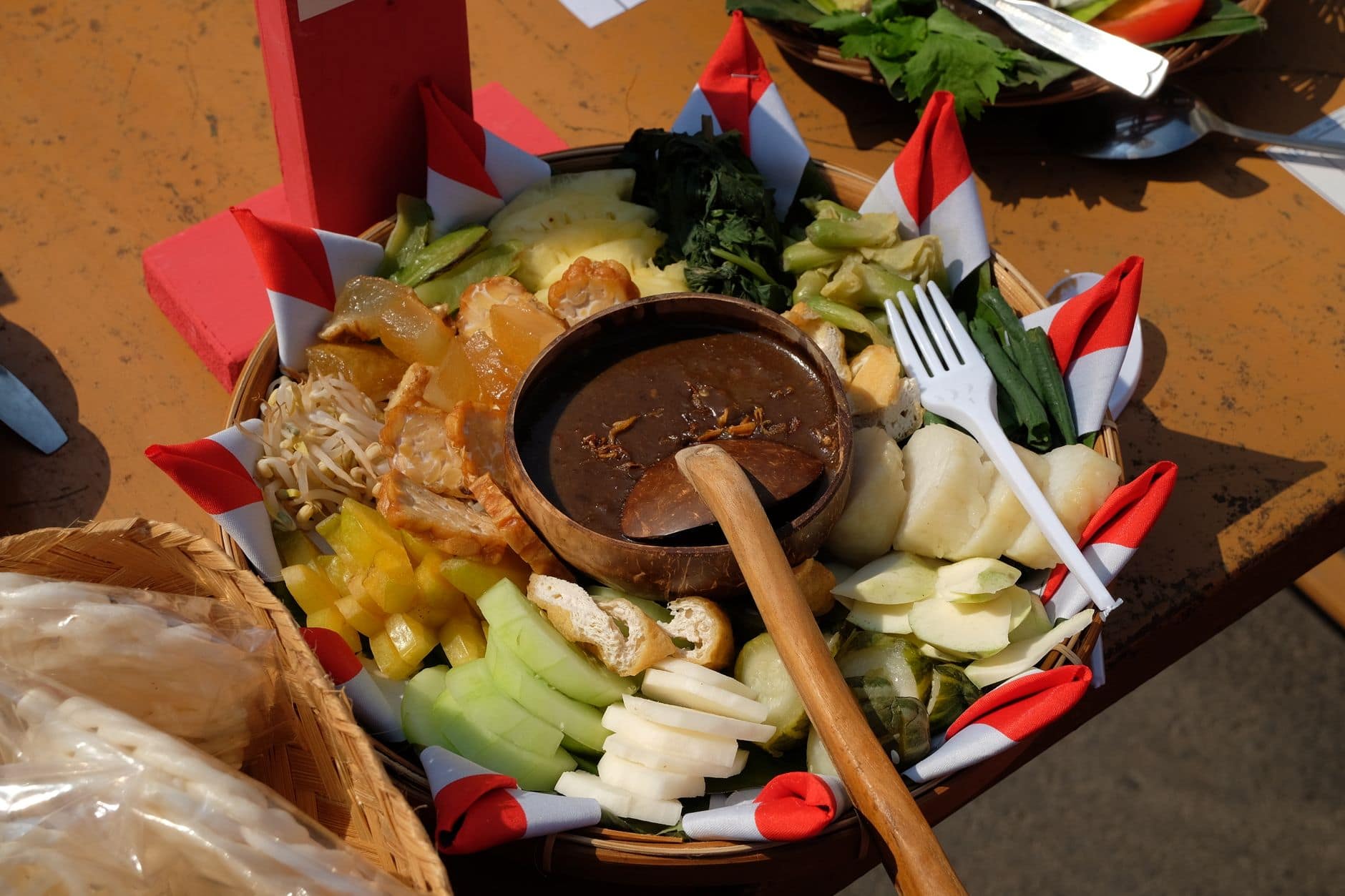
Tipat cantok
Rice cake with blanched vegetables and tofu in a peanut, chilli and tamarind sauce. Around IDR 10,000–20,000 and naturally meat-free.
🍽️ How a warung actually works
A warung is a small family-run eatery, often literally the front room of a house. There are two ordering models and knowing which one you are in saves confusion.
The nasi campur "point and pick" warung has a glass cabinet of ten or twenty dishes cooked that morning. You take a plate of rice and point at what you want; the price scales with how much you take. Say "sedikit" for a little or "banyak" for a lot, and "berapa?" to ask the total. The other model is a normal menu, more common in tourist areas.
A full local warung meal runs IDR 15,000–35,000 — about $1–2.20. Tourist-facing warungs in Canggu and Seminyak charge two to three times that for the same food.
- tidak pedas — not spicy
- tanpa daging — without meat
- tanpa terasi — without shrimp paste
- bungkus — takeaway
- air putih — plain water
🦠 Food safety, without the paranoia
Warungs are not the risk people assume. A busy warung with high turnover, serving hot food cooked that morning, is safer than a quiet upmarket restaurant washing salad leaves in tap water. Judge by turnover and temperature, not by price.
Do not drink the tap water — Indonesia has no enforced municipal purification standard. Cautious travelers use bottled water for teeth too. Ice is generally fine: the cylindrical kind with a hole through the middle is commercially produced from purified water and is what cafes and bars use.
Bali belly is ordinary traveler's diarrhoea, usually bacterial, appearing 6–72 hours after exposure and lasting two to four days. Rehydration matters more than anti-diarrhoeals — oralit rehydration salts cost pennies in any pharmacy. See a doctor if you have fever, blood in your stool, or symptoms beyond three days.
- Eat where locals are queueing
- Prefer food cooked to order or still steaming
- Lunchtime is safest for nasi campur — by late afternoon the display has sat out for hours
- Peel your own fruit; raw salad rinsed in tap water is the main avoidable risk
- Ease into chilli and street food rather than going hard on day one
🌱 Vegetarian and vegan in Bali
Bali is one of the easiest destinations in Asia for this. Tempeh and tofu are staples, not substitutes, and Ubud has the highest density of dedicated vegan cafes on the island, followed by Canggu and Seminyak.
The catch is hidden ingredients rather than availability. Terasi (shrimp paste) is in most sambals and peanut sauces, chicken stock is common in soups, and some kitchens cook with pork fat. Broth and sambal are where a vegetarian meal quietly stops being vegetarian — ask specifically.
☕ Drinks — and one to skip
Kopi luwak deserves an honest warning. The traditional practice collected beans from wild civets, but the modern tourist trade cages wild-caught animals and force-feeds them coffee cherries. Peer-reviewed research in the journal *Animal Welfare* assessed Bali's civet-coffee plantations and found conditions inadequate, with documented malnutrition, wounds and stereotypic behaviour. National Geographic, PETA and World Animal Protection have all investigated. The roadside "coffee plantation" stops on the Kintamani route almost universally keep caged civets. Our advice is to skip it — and by most specialty assessments the coffee is not even very good.
Better options are easy. Kintamani arabica is bright and clean, often grown intercropped with citrus. Kopi tubruk is coarse grounds brewed directly in the glass — let it settle and leave the last centimetre.
Arak, the local palm or rice spirit, needs one safety note: bootleg arak has repeatedly been cut with methanol, causing deaths and blindness. Drink branded, bottled, licensed arak from proper bars — and be wary of unlabelled village arak and unusually cheap free-flow cocktail deals.
🤝 Etiquette that matters
- Right hand only for eating, passing and paying — the left is considered unclean
- Menu prices often carry "++": roughly 15–21% in tax and service on top
- Tipping is not obligatory. Rounding up at a warung, or 5–10% where no service charge applies, is generous
- Never step on or take from canang sari, the small palm-leaf offerings on pavements and doorsteps
- Dishes arrive when ready, not in courses — that is normal, not a mistake
- For Muslim travelers: pork is mainstream here and pork fat is sometimes a cooking medium. Halal options concentrate in Kuta, Denpasar, Seminyak and Nusa Dua; look for the green MUI certification or Javanese and Padang-run warungs
FAQ
What food is Bali famous for?
Babi guling (spit-roast suckling pig), bebek betutu (slow-cooked duck), sate lilit (minced satay wrapped on lemongrass), lawar and nasi campur Bali. Because Bali is Hindu rather than Muslim, pork dishes are a mainstream local speciality here unlike the rest of Indonesia.
Is it safe to eat at warungs in Bali?
Yes, if you choose sensibly. A busy warung serving hot, freshly cooked food with high turnover is lower risk than a quiet restaurant serving salad washed in tap water. Eat where locals queue, prefer steaming food, and treat lunchtime as the safest window for nasi campur.
How much does food cost in Bali?
A local warung meal runs IDR 15,000–35,000, about $1–2.20. Mid-range restaurant mains are $5–15 and western cafe breakfasts $5–9, plus roughly 15–21% in tax and service on top of menu prices.
Can I drink the tap water in Bali?
No. Stick to sealed bottled or filtered water, and use it for brushing teeth if you are cautious. Commercially produced ice — the cylindrical kind with a hole through it, used in cafes and bars — is made from purified water and is generally safe.
Is Bali good for vegetarians and vegans?
Very good. Tempeh and tofu are staples rather than substitutes, and Ubud has the highest concentration of vegan cafes, followed by Canggu. Watch for hidden shrimp paste in sambal and peanut sauce, and chicken stock in soups — ask for tanpa terasi and tanpa daging.
Should I try kopi luwak in Bali?
We recommend skipping it. The tourist trade largely relies on caged, force-fed civets, and peer-reviewed research on Bali's civet-coffee plantations found welfare conditions inadequate. Kintamani arabica or kopi tubruk are better coffee and carry none of the ethical problems.
Recommended Bali tours for this guide
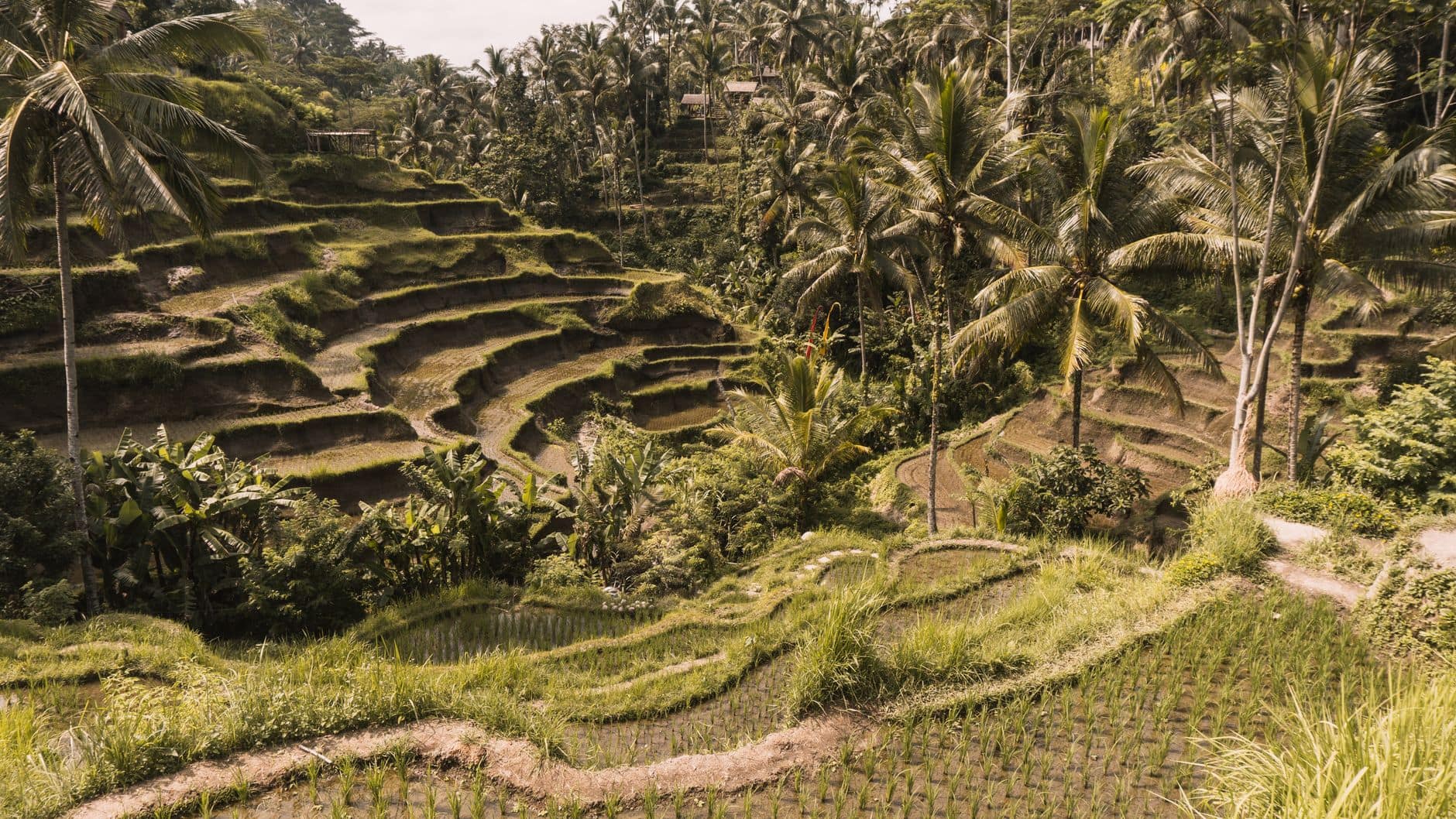
Ubud Rice Terrace, Temple & Volcano Tour
This private Ubud and Kintamani day tour is built for travelers who want Bali culture, scenery, and soft adventure without planning the route or doing the driving. It works especially well for first-time visitors because the route moves from craft villages and temples to volcano views, rice terraces, and the Ubud center in one organized flow.
- Duration
- 10 hours
- Area
- Kintamani, Ubud, and central Bali
- Format
- Private day tour by car
- Best for
- First-time Bali visitors
From $65 per car No prepayment
View tour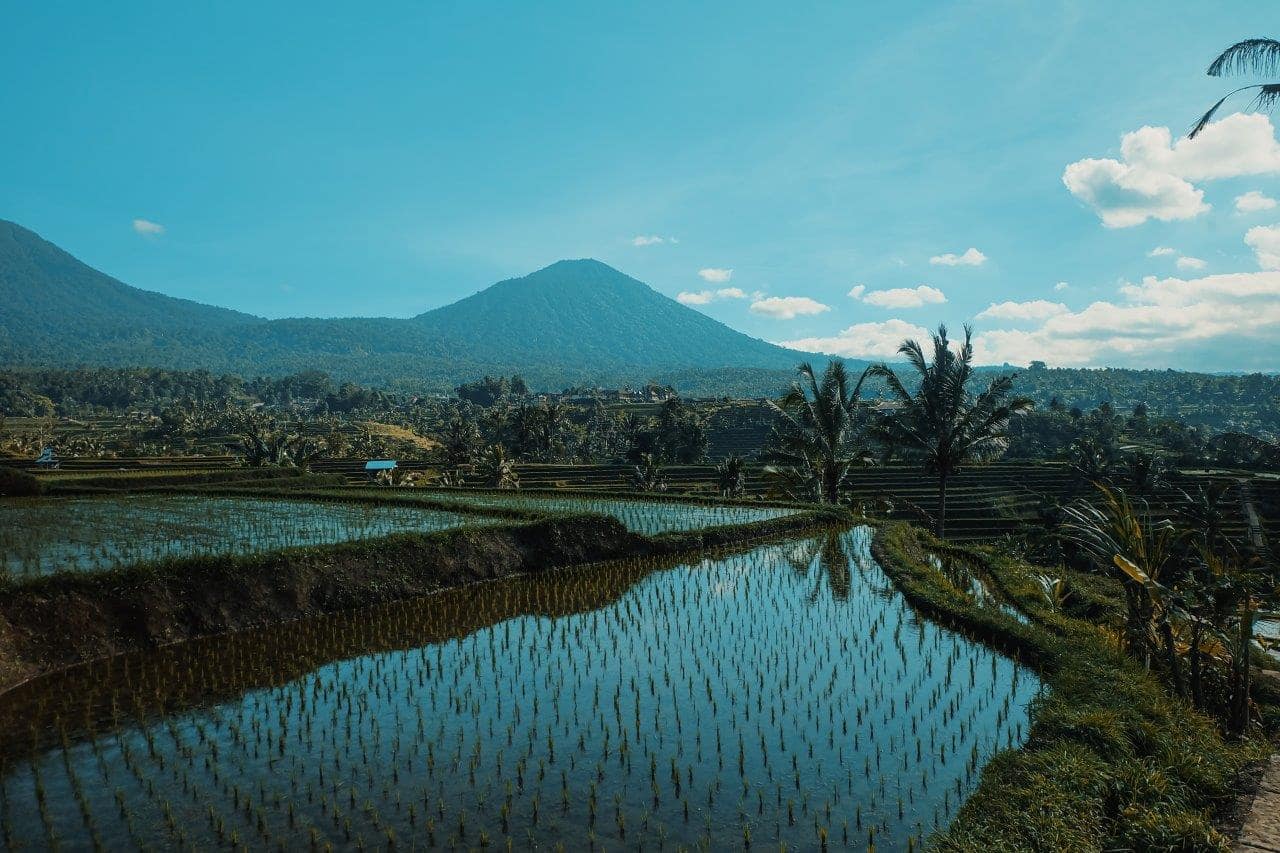
Bali UNESCO Heritage Sites Tour
This Bali UNESCO Heritage Sites Tour is built for travelers who want temple courtyards, mountain-lake views, UNESCO rice terraces, and a famous coastal temple finish without stitching separate day trips together. Private transport, a temple sarong, and bottled water are handled from $65 per car, with entrance tickets added at $20 per person.
- Duration
- 10 hours
- Area
- West & Central Bali UNESCO route
- Format
- Private heritage sightseeing route
- Best for
- culture lovers, couples, families, and first-time Bali sightseeing days
From $65 per car No prepayment
View tour
Private Car with Driver in Bali
This is one of the most useful products in Bali because so many plans become easier once transport is flexible. It is perfect for custom sightseeing, shopping days, family pacing, and travelers who already know roughly where they want to go.
- Duration
- Flexible daily use
- Area
- All major Bali regions
- Format
- Private transport service
- Best for
- Travelers who want total route flexibility
From $59 per car No prepayment
View tour