

Gili Trawangan is the biggest of the three Gilis and the only one with a real nightlife strip — but the strip is one arc of coast, not the island. The land is about 3.4 km², roughly 1,500 people live here, and the coastal track measures 6.5-7 km, so you can walk the whole circuit in 1.5-2 hours. No cars or motorbikes are allowed anywhere; you move on foot, by bicycle or by cidomo, and cidomo fares are negotiated rather than regulated. Two things are worth saying before you book rather than after: the tap water is not drinkable anywhere on the island, and there is no hospital here and no recompression chamber you should count on — serious cases go by speedboat and ambulance to Mataram on Lombok, 60-90 minutes away. Here is what it costs, where the quiet is, and how the boats work.
By Alex Moskvin, Founder of SB Excursions · Published 21 May 2026 · Updated 23 October 2026
Tour on this route: Gili Islands Getaway from Bali — From $70, full day or multi-day base route.
Can you walk around Gili Trawangan?
Yes — the coastal track runs 6.5-7 km and takes 1.5-2 hours on foot without stops, or 45-60 minutes by bicycle. The north-west stretch is soft sand and slower than it looks, and most cyclists end up pushing through that part. There is almost no street lighting away from the main strip, so carry a torch if your loop will run past dusk.
This guide also answers:
- How much does a cidomo cost on Gili Trawangan?
- How much does diving on Gili Trawangan cost?
- Is Gili Trawangan just a party island?
Top picks from this guide
 #1
#1
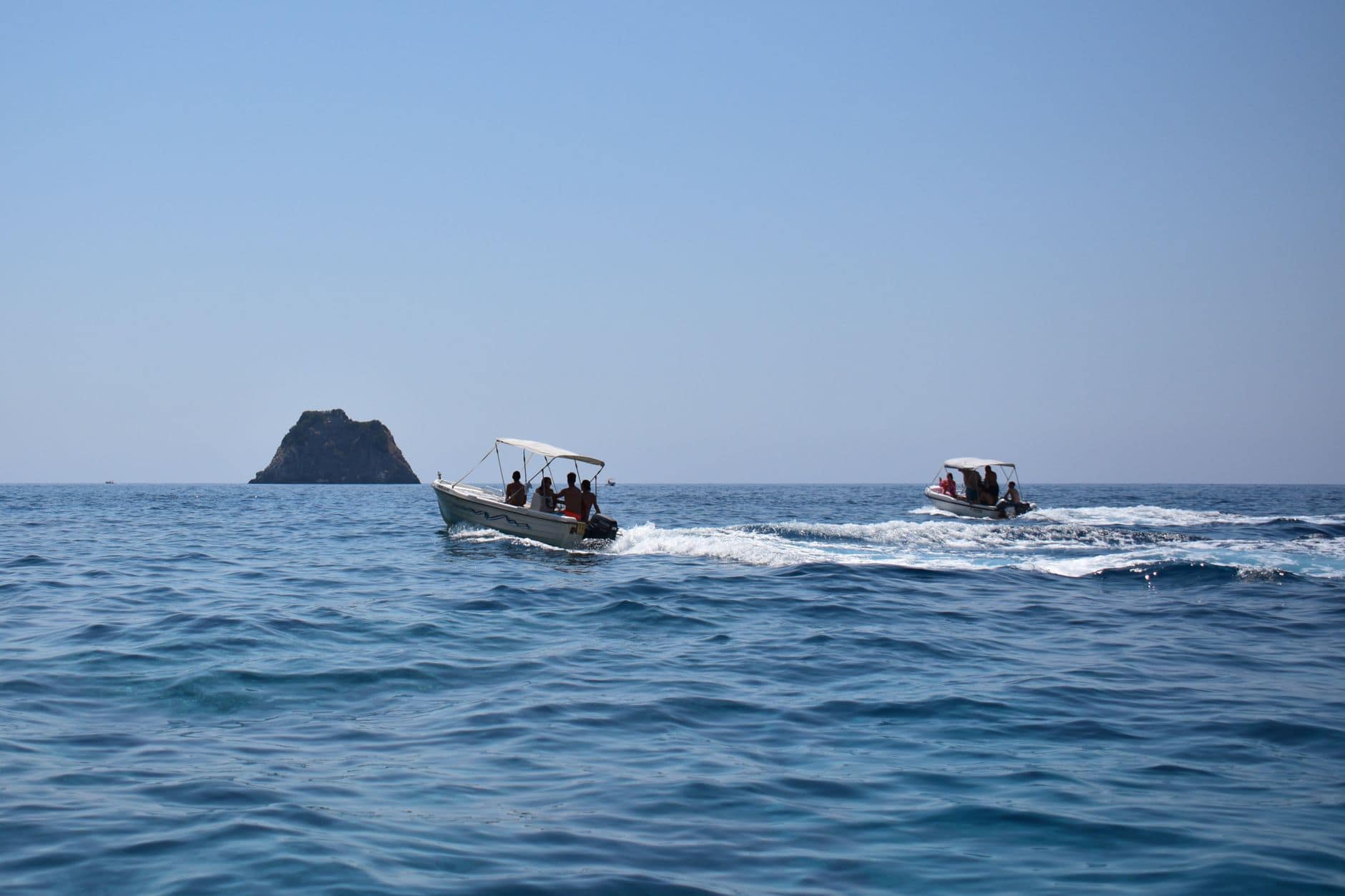
The harbour strip and night market
Nearly everything transactional on Gili T sits in this arc: the boat landing, the dive shops, the ATMs — Wikivoyage counts over twelve — and the pasar malam, where point-and-grill seafood and nasi campur ran roughly IDR 20,000-40,000 in 2025-26 listings. It is also the busiest and loudest stretch of the island, and the reason first-time visitors assume the whole place is like this.
 #2
#2
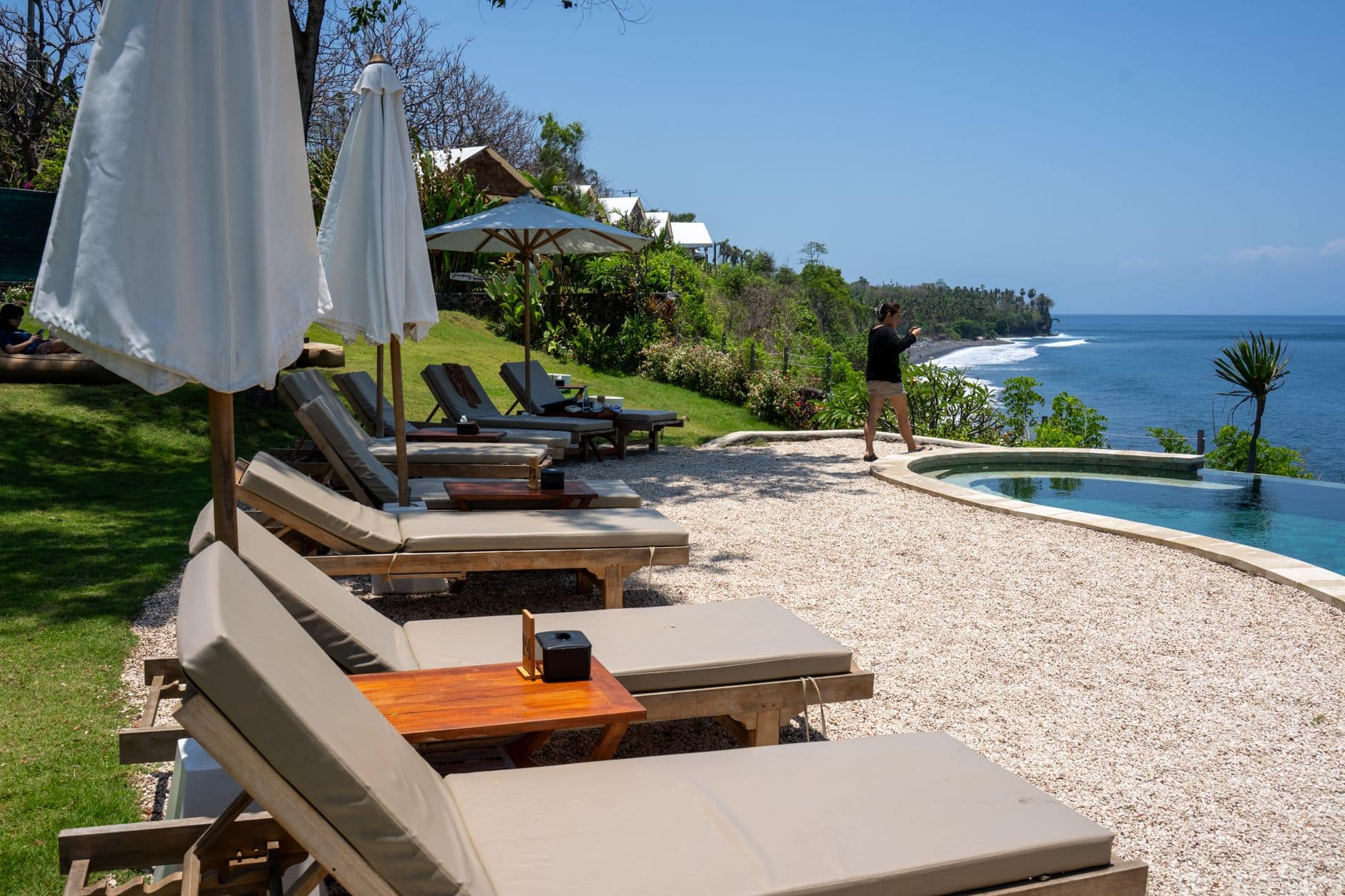
The bar rotation
Bars take turns hosting the late night, so there is somewhere going every night rather than only at weekends. One venue runs the long shift — reported up to around 04:00 — while the others wind down between midnight and 01:00. Specific weekday line-ups get copied between blogs and change constantly, so ask on arrival rather than planning your week around a post.
 #3
#3
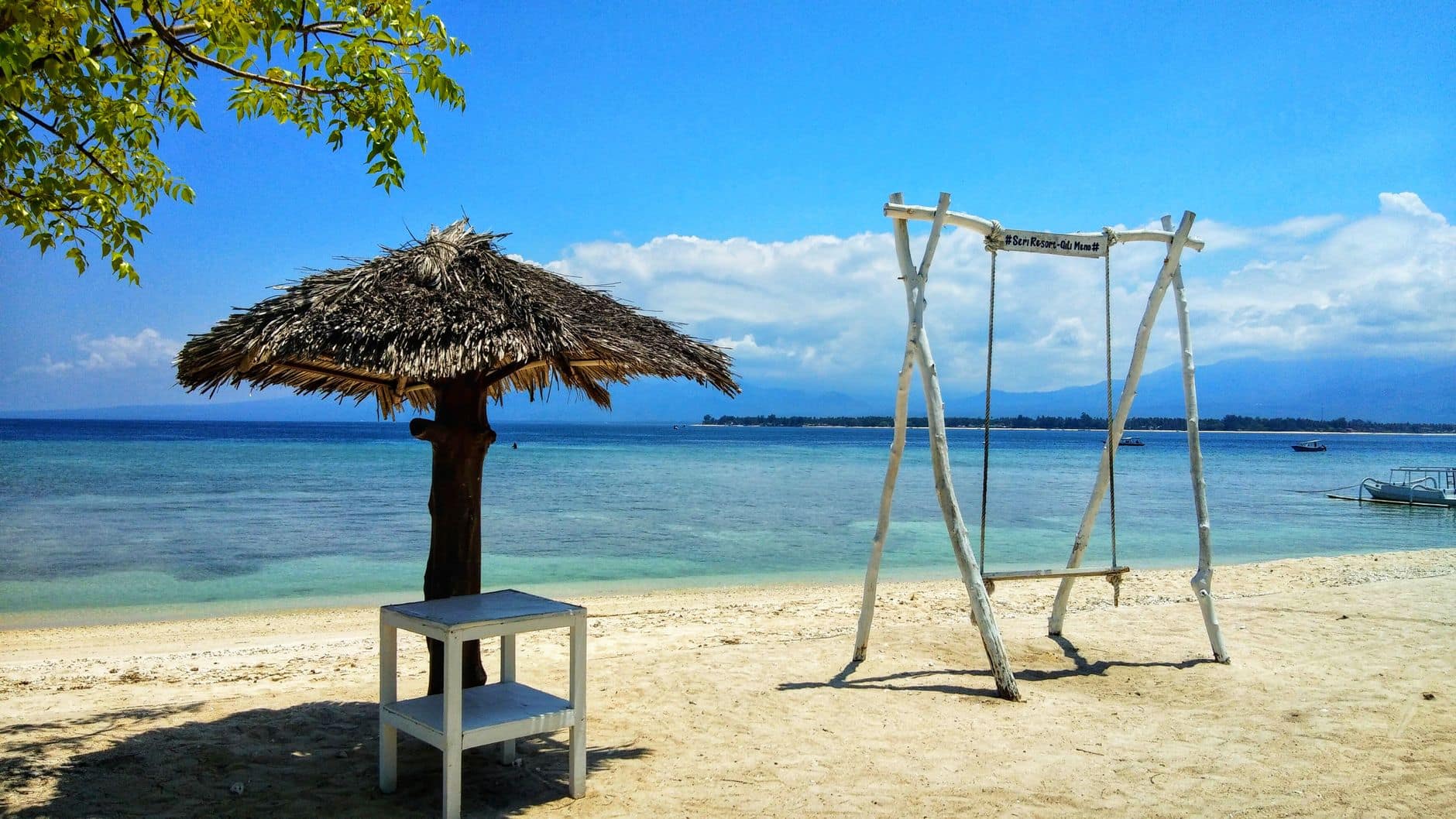
Shore snorkelling for turtles
The standard turtle swim is a shore entry off the east coast just north of the boat landing, no boat required. Green turtles graze the shallow seagrass at 0.5-2 m; hawksbills sit deeper along the drop-off. Turtle Point on the north-east corner is the reliable spot and carries a noticeable north-to-south drift that walks you down the coast — pick your exit before you get in.
 #4
#4
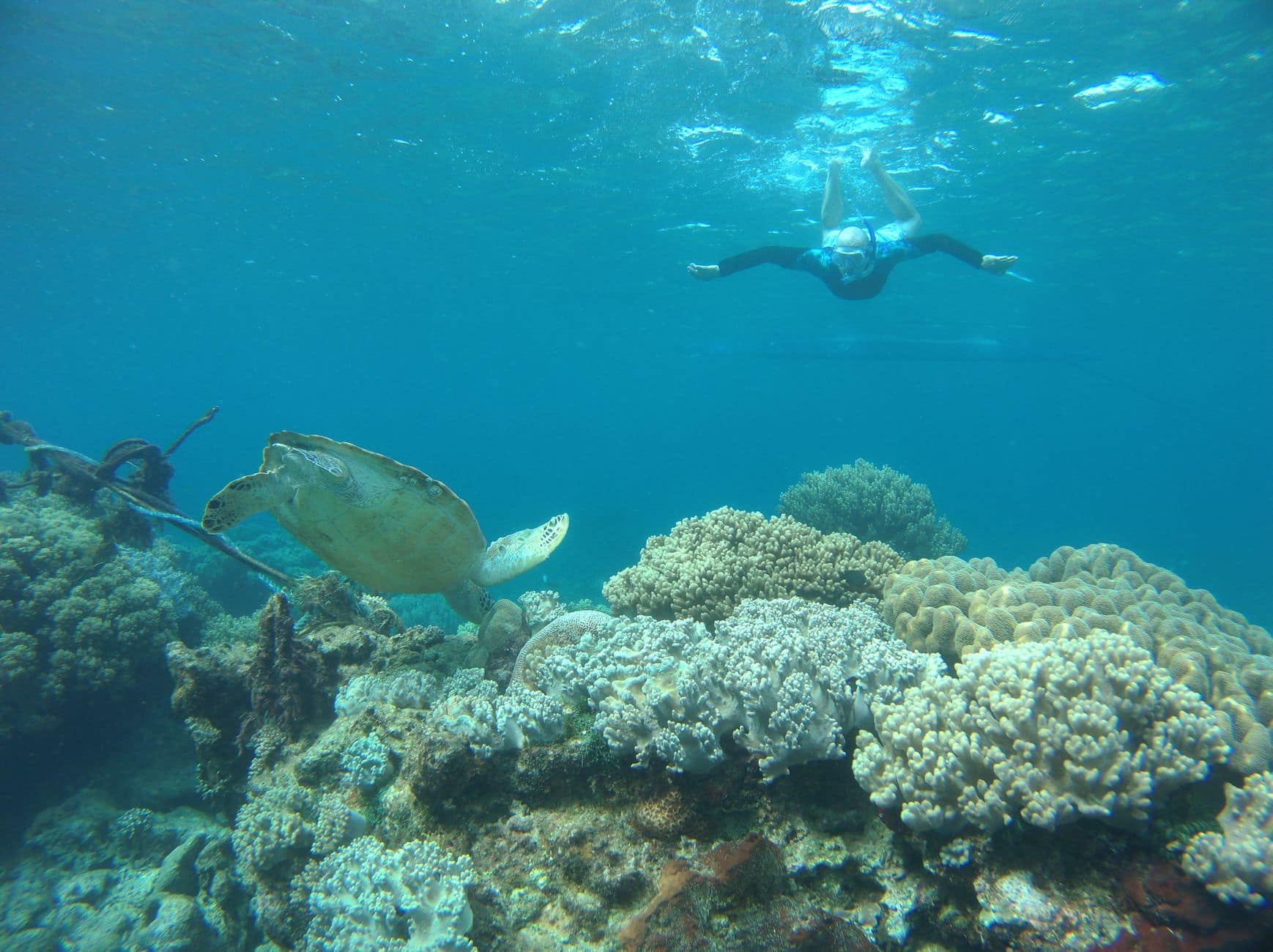
Diving at island-wide fixed prices
Gili Trawangan carries the bulk of the dive industry across the three islands, and rates are set collectively by GIDA, the dive alliance, so member shops charge close to identical prices. Published for 2025-26: a single fun dive IDR 640,000, two dives IDR 1,280,000, a night dive IDR 790,000, plus a one-time marine park fee of IDR 100,000. Choose on instructor and group size, not price.
 #5
#5
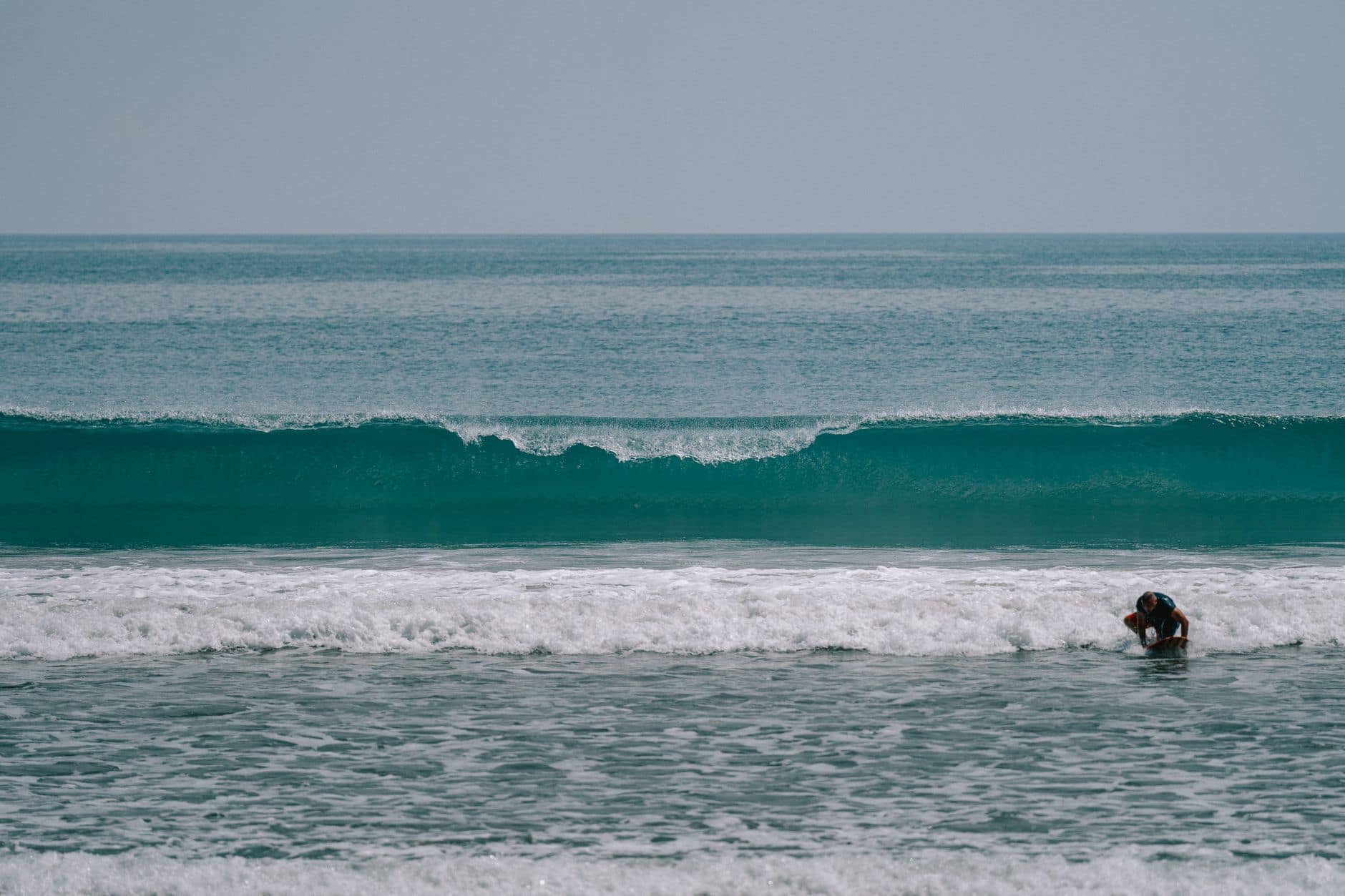
Walking or cycling the full circuit
The coastal track runs 6.5-7 km and takes 1.5-2 hours on foot without stops, or 45-60 minutes by bicycle. The north-west stretch is soft sand and slower than the map suggests — most cyclists end up pushing through it. There is almost no street lighting once you leave the strip, so carry a torch if the loop is going to run into dusk.
 #6
#6
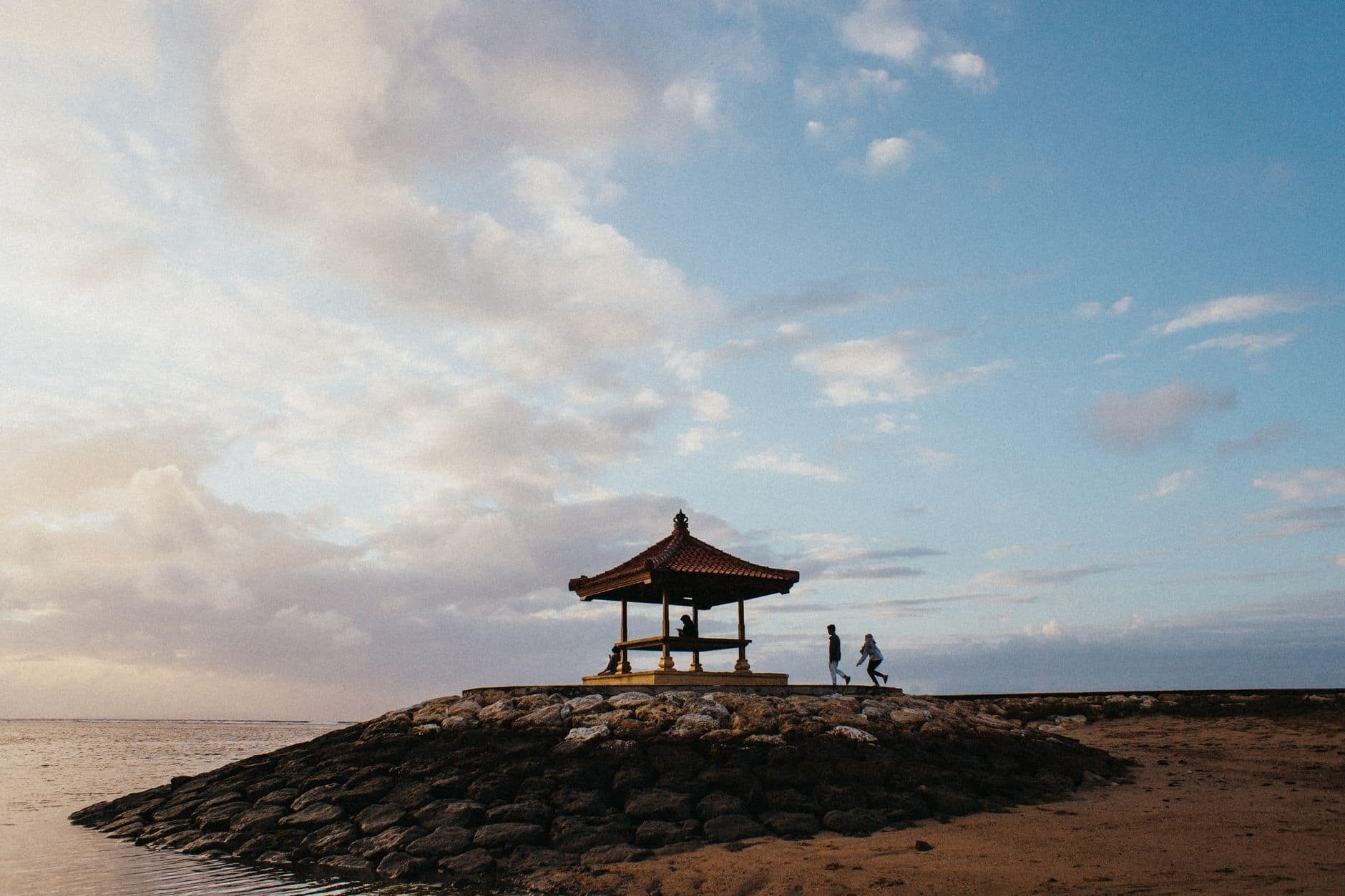
The quiet north and west coast
The west coast faces Bali and Gunung Agung, which is why the sunset bars line it, and the north and west are genuinely thinly built — this is where people who dislike the strip end up staying. The trade-off is real and worth costing out: from the far north-west it is a forty-minute walk home along unlit sand, or a cidomo fare negotiated in the dark.
 #7
#7
Hopping to Gili Meno and Gili Air
The scheduled island-hopper links all three islands twice a day, the Bangsal-based circuit leaving around 09:00 and again about 16:00. Fares are asymmetric and cheap outbound from Gili T — roughly IDR 20,000 to Meno and IDR 23,000 to Gili Air, with the return legs costing more. Miss the afternoon circuit and you are chartering a boat, so treat the timetable as the constraint it is.
What Gili Trawangan actually is
Gili Trawangan is the biggest of the three Gilis, which in practice means about 3 km long by 2 km wide, roughly 340 hectares — about 3.4 km² of land. The frequently repeated 6 km² figure is just length times width and overstates it. Around 1,500 people live here permanently. Development is very uneven: the south-east arc, from the harbour through to the sunset-bar end, holds nearly all the bars, dive shops, hostels and the night market, while the north and west coasts are thinly built and quiet. The west coast faces Bali and Gunung Agung, so that is the sunset side; the east coast faces Lombok and Rinjani for sunrises.
It suits divers and dive-course students, solo travellers who want company by dinner, groups who want nightlife, and anyone who wants the widest choice of food, services and operators in the archipelago. It is a poor fit for people who want silence — unless they deliberately book the north or west, which genuinely is quiet. If you are weighing it against the neighbours, our Gili Air vs Gili Trawangan comparison puts them side by side.
The party reputation against the map
The reputation is accurate and geographically tiny. Nightlife runs every night rather than only at weekends: the bars take turns hosting the late one, and the host venue is reported to run to around 04:00 while the others close somewhere between midnight and 01:00. All of it sits on the south-east arc, alongside the harbour, the dive shops and the night market. Walk twenty minutes north or west and you are on an unlit coast where the loudest thing is the sea. Saying "Gili T is a party island" overstates the whole island and understates the strip.
The mistake is booking blind in either direction. Some people book the strip and cannot sleep; others book the far north-west for the nightlife and then walk forty minutes home along unlit sand. There is a second noise source worth checking: the resident population is Muslim, there are two mosques on Gili T, the call to prayer sounds five times daily, and prayers, sermons and sometimes music can run late — if you are noise-sensitive, ask how close your room is before you book. Away from the beach, signs in the village ask visitors to cover up. Then there is the drinking, which is the one part of the island's reputation that can actually hurt you.
- Bottled beer and sealed cans opened in front of you are the low-risk choice, and it is a genuinely small sacrifice
- Free-poured spirits, cocktails, buckets and cheap local arak are the risk — methanol poisoning has killed and blinded travellers in Indonesia, UK FCDO advice notes cases traced to licensed bars, shops and hotels in tourist areas, and methanol cannot be detected by taste or smell
- Symptoms typically begin 12-24 hours after drinking, long enough that people blame the food; if vision blurs after a night out, that is a medical emergency, not a hangover
- Drink spiking is separately reported in FCDO advice across Bali, Lombok and the Gili Islands, linked to sexual assault — watch your drink being made and keep hold of it
- Magic mushrooms and cannabis are hawked openly on the strip and are illegal under Indonesian narcotics law, which carries long prison sentences and, at the extreme, the death penalty. Open selling is not tolerance
Getting here from Bali, and the day-trip maths
The standard route is a fast boat, and Gili Trawangan is the terminus for most operators, so it has the most sailings and the most flexibility of the three islands. Padang Bai in east Bali is the main port, roughly 1.5-2.5 hours at sea, with Sanur around 2h40 and Serangan around 2.5-3 hours. Amed is the shortest crossing at about an hour, but two booking aggregators currently list Amed port as closed for construction, so verify it is open before you plan around it. Fares move constantly: well-known operators publish roughly IDR 400,000-700,000 one way per person for 2025-26 — Eka Jaya's own site lists IDR 685,000, or IDR 650,000 booked online — which is about USD 23-39 at the August 2026 rate of roughly IDR 17,750 to the dollar. Aggregator listings down to about IDR 234,000 circulate and sit well below what the named operators charge, so read what is actually included. Add a harbour fee of about IDR 20,000, often already inside the ticket, and confirm it when you check in. Our Gili fast boat guide goes through ports and operators, and we sell fast boat tickets with hotel pickup from $15 depending on the route.
Door to door from south Bali, including the hotel pickup, the check-in buffer and the crossing, realistically runs 5-7 hours, and boats leave overwhelmingly in the morning — a reliable same-day late-afternoon arrival does not exist. That arithmetic is what makes the day trip awkward: you buy about 3-5 hours ashore for a 12-16 hour day, and both good snorkelling windows, early morning and late afternoon, fall outside it. It works from Amed or Candidasa, where the crossing is short. From anywhere else an overnight is better value — our Gili overnight getaway runs from $70, and our Gili day tour from $115 if one long day is genuinely all you have. Our Gili Islands day trip from Bali goes through what those hours ashore actually look like.
Two warnings we repeat to every guest. Do not book the last boat back to Bali on the day of an international flight — crossings are cancelled and delayed in rough weather, there is no bridge and no road, and the only fix is a night's buffer in Bali or Lombok. And budget for Bali's tourist levy of IDR 150,000 per person, paid online or on arrival for Bali itself; it is widely reported as not charged again when you come back from the Gilis on the same trip, but we have not seen that confirmed in the regulation, so ask at the point where you pay. If you want the Bali-side road leg on your own terms — a stop en route, or a late return from the harbour — a car and driver for the day from $59 per car covers it.
No cars, and the cidomo question
There are no cars and no motorbikes on Gili Trawangan — they are banned by local ordinance across all three islands, and it changes the feel of the place more than any single beach does. You walk, you cycle, or you take a cidomo, the small horse cart. The coastal track is 6.5-7 km: 1.5-2 hours on foot, 45-60 minutes by bike. Bicycle hire runs IDR 30,000-50,000 a day as a baseline, with IDR 50,000-75,000 commonly asked at beachfront stands in high season. The north-west stretch is soft sand where most cyclists end up pushing, and there is almost no street lighting away from the strip, so carry a torch after dark. Electric bikes and scooters have been banned, confiscated, re-legalised and confiscated again over recent years and we cannot tell you what the rule will be the week you arrive — check on the island rather than assuming.
The cidomo is the most argued-about thing here, in two separate ways. First the money: there is no fixed public tariff on Gili Trawangan and published figures disagree sharply. Second the ethics: the carts are a working livelihood for local families, welfare standards are contested, and North Lombok has announced an intention to eventually replace cidomo with electric carts, with no timetable attached. You do not have to settle that argument to plan a trip. What matters practically is that on an island you can walk round in under two hours, most journeys do not need a cart at all — and the ones that do are a negotiation, not a tariff:
- Short hop within the centre: published figures range from IDR 25,000 to IDR 75,000
- Harbour to your hotel: commonly published at IDR 75,000-150,000, and a lot of arrivals are a walk instead
- Full island circuit: sources are far apart, from around IDR 150,000 up to IDR 250,000-350,000
- Per cart or per person is itself disputed — one well-used source records IDR 20,000-50,000 per head, other sources insist the cart is priced whole. Settle it out loud before you get in
- Rates rise after sunset and nothing is metered. Agree the number and the currency first, every time
What things cost, and why you should arrive with cash
Bring cash. Gili Trawangan is the best-served of the three islands for money — Wikivoyage counts over twelve ATMs, clustered near the harbour and thinning north and west, with Mandiri usually described as the most reliable — but the machines run dry in the evening in peak season, so withdraw in the morning. Withdrawal surcharges of IDR 25,000-50,000 per transaction are normal and per-transaction caps are low, commonly reported between IDR 1,500,000 and 2,500,000, so one larger withdrawal beats several small ones. Warungs, the night market, bike hire, cidomo drivers and boat-boys are cash. Everything below is a published band from 2025-26 listings rather than a quote, and prices here move with season, operator and booking lead time.
Diving is the one price you cannot shop around. GIDA, the Gili Island Dive Alliance, sets minimum prices, so member shops charge close to identical rates: as published for 2025-26, a single fun dive IDR 640,000, two dives IDR 1,280,000, a night dive IDR 790,000, with discounts stepping in from three dives and reaching -20% on a ten-dive pack at IDR 5,120,000. Courses run Discover Scuba IDR 1,350,000 for one dive, Open Water somewhere between IDR 6,200,000 and 6,900,000 depending which shop you ask, Advanced Open Water IDR 5,900,000. On top sits a one-time government marine park fee of IDR 100,000 per person, paid at the dive shop. Because price is fixed, choose on instructor, group size and language instead. Snorkellers skip most of this — the turtles are reachable from the beach, as our Gili snorkelling and turtles guide sets out.
- Food: warung meal IDR 15,000-40,000; night-market nasi campur IDR 20,000-40,000, the best value on the island; mid-range restaurant IDR 40,000-100,000 per head; whole grilled fish IDR 150,000-300,000 by size
- Drinks: small Bintang IDR 30,000-70,000 depending on the venue, with IDR 35,000 typical; cocktails around IDR 90,000-100,000, heavily discounted in happy hour
- Bicycle: IDR 30,000-50,000 a day as a baseline, IDR 50,000-75,000 asked at beachfront stands in high season
- Shared snorkel trip: roughly IDR 100,000-175,000 per person for a 3-4 hour three-island boat booked locally, materially more on booking platforms; private boats from several hundred thousand upward
- Island-hopper boat: roughly IDR 20,000-45,000 per person depending on direction and leg — cheaper leaving Gili T than coming back to it
- Accommodation: budget bungalows around IDR 300,000 low season and IDR 450,000-500,000 in high season; Wikivoyage's bands run budget USD 10-40, mid-range USD 50-100, splurge USD 100 and up
- Divers' extras: the IDR 100,000 marine park fee, and a Gili Eco Trust contribution of about IDR 50,000 often collected alongside it
Water, clinics and the honest medical picture
Gili Trawangan has no usable natural fresh groundwater — the lens beneath the island is contaminated with seawater. Fresh water is made or brought in, and the practical consequences are the same whichever arrangement is currently running: tap water is not drinkable anywhere on the Gilis, older and cheaper accommodation may still have salt or brackish showers (ask specifically if that matters to you), and purified refill stations exist but availability varies. An island-wide clean-water shortage was reported in October 2024, with local commenters disputing how broadly it bit. Short showers are not a gesture here.
There is no hospital on any Gili island — only clinics. Gili Trawangan has the most of them, including Warna Medica within the Empat Pillar Medika network, and an inpatient clinic with beds was reported as opening in February 2025. Anything serious means evacuation: speedboat to Bangsal on Lombok with an ambulance meeting the pier, then road to Mataram, roughly 60-90 minutes door to hospital. On recompression the sources contradict each other — most say there is no functioning chamber on the islands, one claims otherwise — so plan on the conservative version: assume there is no chamber here, and carry dive insurance with evacuation cover. That is the operative point regardless of who turns out to be right. Our Gili safety guide covers the rest of it.
- Reef shoes with thick soles are the single most useful item — urchins and shallow coral cause most minor injuries here
- The channels between the islands run far stronger than they look. Never try to swim between islands, and treat Shark Point's current with respect
- Sun is the most common avoidable injury — a burned back after a face-down snorkelling day. Broad-spectrum SPF 30+, reapplied, plus a rash vest, and stay wary between 10:00 and 16:00
- Pack repellent. Dengue is present in Indonesia and the mosquito that carries it bites during the day
- Shuffle rather than stride in the shallows for resting stingrays, and rinse jellyfish stings with seawater, not fresh water
- Pharmacies are small and thinly stocked — bring your own regular medication from Bali rather than expecting to replace it
FAQ
Can you walk around Gili Trawangan?
Yes — the coastal track runs 6.5-7 km and takes 1.5-2 hours on foot without stops, or 45-60 minutes by bicycle. The north-west stretch is soft sand and slower than it looks, and most cyclists end up pushing through that part. There is almost no street lighting away from the main strip, so carry a torch if your loop will run past dusk.
How much does a cidomo cost on Gili Trawangan?
There is no fixed public tariff on Gili Trawangan, so the fare is a negotiation rather than a rate. Published figures range from IDR 25,000-75,000 for a short hop in the centre, IDR 75,000-150,000 harbour to hotel, and anywhere from around IDR 150,000 to IDR 350,000 for a full island circuit. Sources even disagree on whether it is priced per cart or per person, and rates rise after dark — agree the number before boarding.
How much does diving on Gili Trawangan cost?
Prices are set collectively by GIDA, the Gili Island Dive Alliance, so shops charge close to identical rates: as published for 2025-26, a single fun dive is IDR 640,000, two dives IDR 1,280,000 and a night dive IDR 790,000, with a ten-dive pack at IDR 5,120,000. Open Water runs between IDR 6,200,000 and 6,900,000 depending on the shop. Add a one-time marine park fee of IDR 100,000 per person, paid at the dive shop.
Is Gili Trawangan just a party island?
No — the nightlife is real but geographically tiny, concentrated on the south-east arc around the harbour. Bars take turns hosting the late night, reported to around 04:00, while the others close between midnight and 01:00. The north and west coasts are thinly built and genuinely quiet. Where you sleep decides which island you experience, so choose the coast deliberately rather than booking blind.
Can you drink the tap water on Gili Trawangan?
No. Gili Trawangan has no usable natural fresh groundwater and tap water is not drinkable anywhere on the Gilis — fresh water is made or shipped in. Older and cheaper accommodation may still have salt or brackish showers, so ask specifically if that matters to you. Refill stations exist but availability varies, and an island-wide clean-water shortage was reported in October 2024.
How do you get to Gili Trawangan from Bali, and how long does it take?
By fast boat, with Padang Bai in east Bali the main port at roughly 1.5-2.5 hours at sea; Sanur is about 2h40 and Serangan around 2.5-3 hours. Realistic door-to-door from south Bali is 5-7 hours including pickup and check-in, and boats leave overwhelmingly in the morning. Well-known operators published roughly IDR 400,000-700,000 one way per person for 2025-26, about USD 23-39 at the August 2026 rate.
Recommended Bali tours for this guide
Gili Islands Getaway from Bali
The Gili trip is perfect for travelers who want to connect Bali with a slower island stay or a big sea-focused day. Timing, departure ports, and luggage flow matter here, so setup support adds real value.
- Duration
- Full day or multi-day base route
- Area
- Gili Islands connection
- Format
- Fast boat island transfer route
- Best for
- Travelers extending beyond Bali
From $70 No prepayment
View tour
Gili Islands Private Snorkeling Day Trip
This route is built for travelers who want turtles, clear water, and a real Gili Islands experience without organizing fast boats, harbor flow, snorkeling logistics, and local coordination on their own. The private snorkeling setup makes the day feel cleaner and more premium than a basic shared island transfer.
- Duration
- 7-9 hours
- Area
- Gili Trawangan and Gili Meno
- Format
- Private snorkeling day trip
- Best for
- Sea lovers, couples, and travelers who want one big Gili day from Bali
From $115 No prepayment
View tour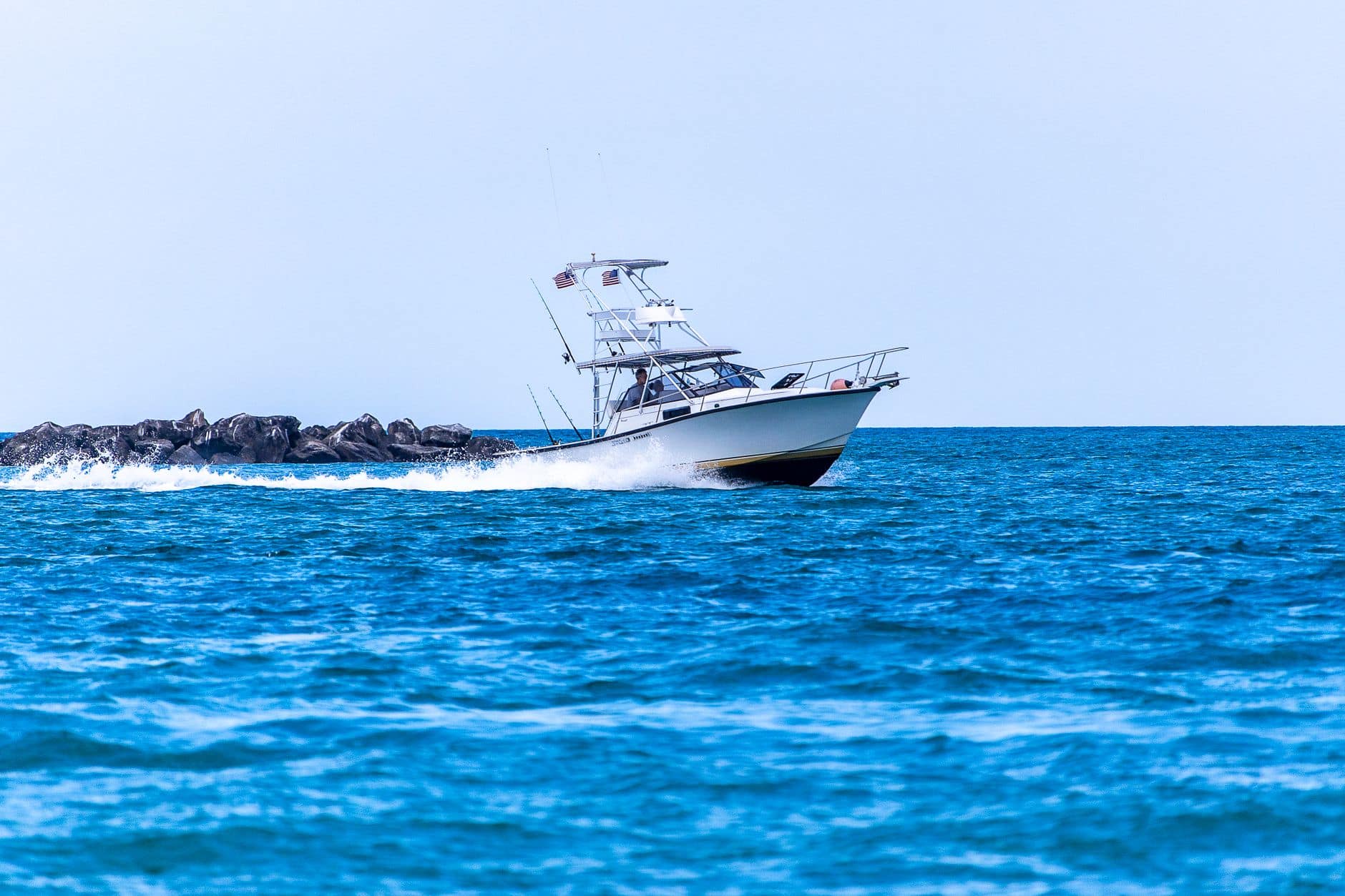
Bali Fast Boat Transfer
Fast boats are simple once booked correctly, but confusing when you are juggling ports, check-in windows, and hotel distance. This service helps turn the whole process into a clean transfer day instead of a stressful logistics puzzle.
- Duration
- Depends on destination
- Area
- Bali harbors and island routes
- Format
- Transfer service
- Best for
- Island-bound travelers
From $15 No prepayment
View tour