

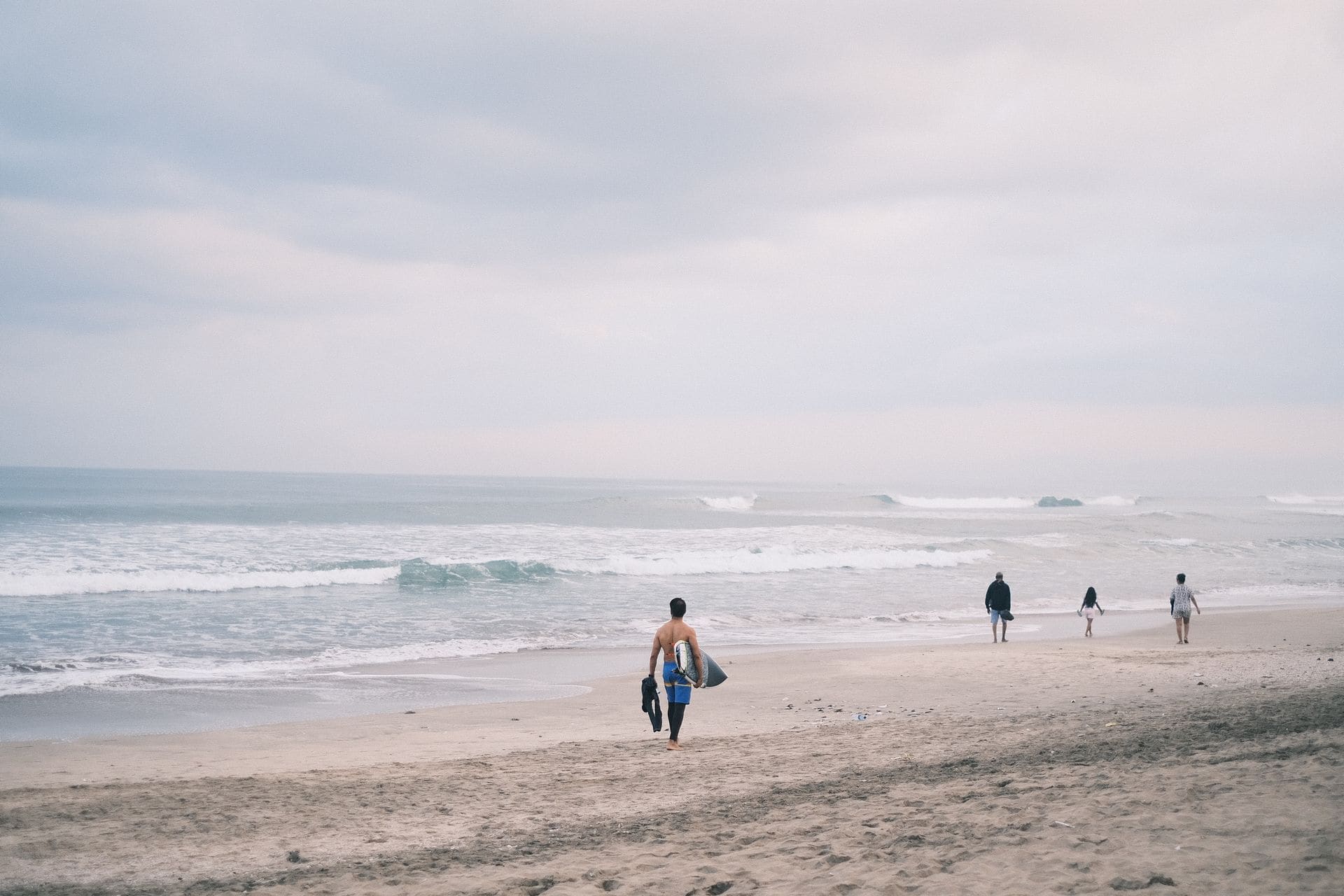
Yes, surfing in Bali is safe — as long as you fear the right things. Every guest asks us about sharks; almost nobody asks about reef cuts, and that ranking is exactly backwards. The incident logs show six surfing shark bites between 2010 and 2017, all non-fatal, all at river-mouth breaks on the west coast near Balian — zero at Uluwatu or anywhere on the Bukit. Meanwhile guides describe reef contact at the Bukit breaks as a matter of when, not if, and an unscrubbed cut can turn red and swollen within a day. This guide ranks the real risks in the order they actually happen: cuts and infection, dirty water after rain, rips, urchins, rocks on the way in and out, crowds — and sharks last, with the numbers that put them there.
By Alex Moskvin, Founder of SB Excursions · Published 21 May 2026 · Updated 23 October 2026
Tour on this route: Bali Surf Lesson for Beginners — From $35, 2-4 hours.
Is surfing in Bali dangerous?
Less dangerous than its reputation, provided you rank the risks honestly. The ones that actually happen are reef cuts and the infections that follow, rips, urchin spines, rocks on entry and exit, and collisions in crowded lineups — sharks sit at the very bottom of the list. The beginner beaches from Kuta to Canggu break over sand and are genuinely forgiving; the Bukit reef breaks demand respect, experience and an early alarm.
This guide also answers:
- Are there sharks where you surf in Bali?
- What should I do about a reef cut in Bali?
- Is surfing in Bali safe for beginners?
Top picks from this guide
 #1
#1
Reef cuts and infection
Guides describe reef contact at the Bukit breaks as a matter of when, not if. The cut is rarely the drama — the problem is what stays in it: coral fragments and debris embed in the tissue and keep feeding infection, so a scratch you barely noticed turns red, warm and swollen within 12-24 hours. Scrub it hard the same hour — the full protocol is below — and treat every reef cut as a dirty wound: if your tetanus booster has lapsed, this is the trip to fix that.
 #2
#2
Dirty water after rain
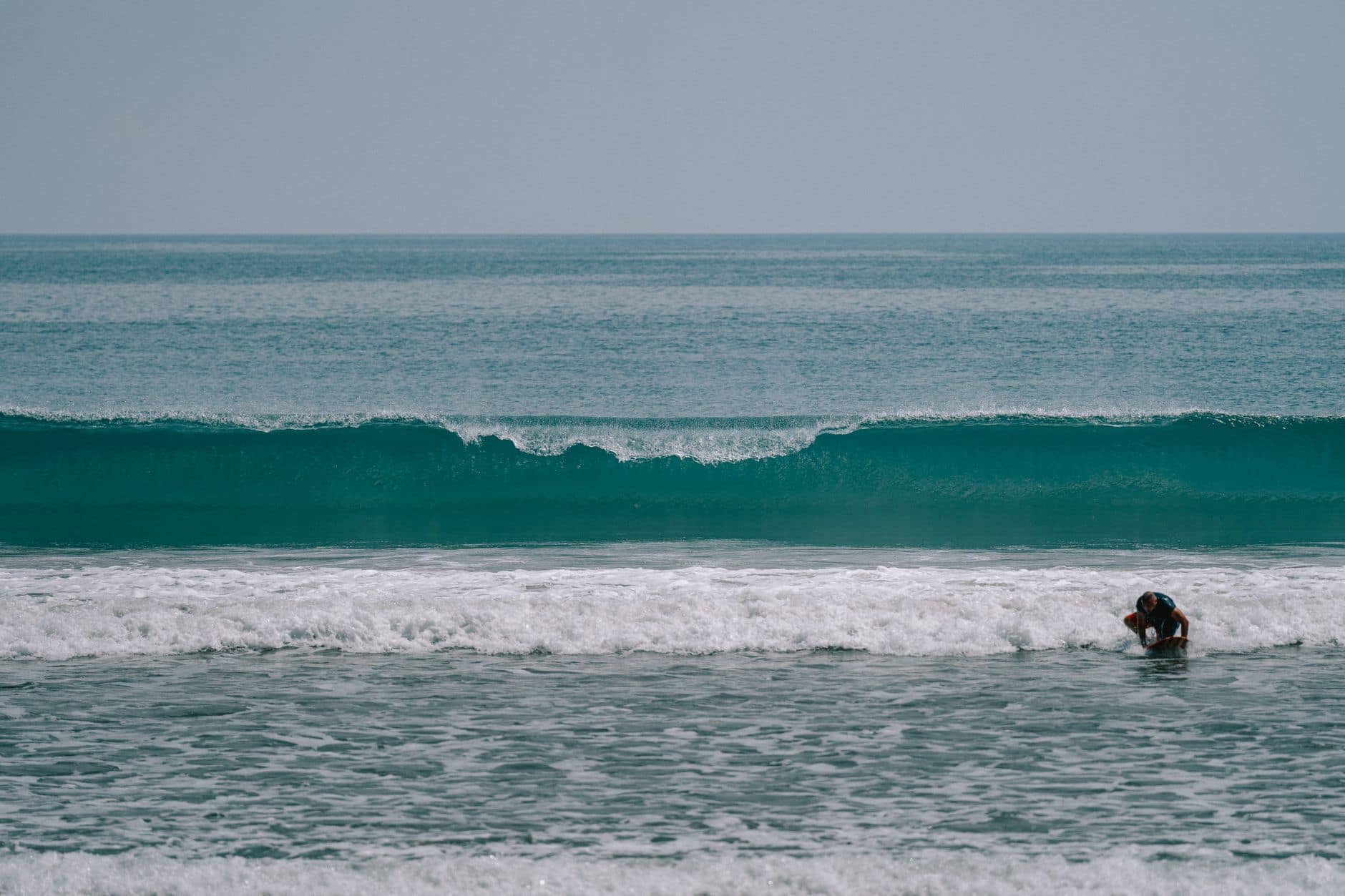
The highest-probability health risk for a Bali surfer is the water itself. The only sustained testing — weekly seawater sampling since January 2022 — found that both tested surf beaches, Petitenget and Batu Bolong, failed the provincial quality standard, with one 2023 round reading E. coli above the test's upper limit. Wet-season rain flushes rivers and overflowing septic tanks straight into the lineup. The rule costs nothing: stay off river mouths, skip the first days after heavy rain, and double the caution when you're carrying an open cut.
 #3
#3
Rip currents
The Bukit's reef ledges channel water back out to sea fast — Bingin, Dreamland, Padang Padang and Uluwatu all do it, and the Padang channel rip strengthens with the swell. Note who actually drowns: the recent recorded deaths are mostly swimmers, not surfers — a leashed board is flotation a swimmer doesn't have. The same current that speeds your paddle-out is dangerous to whoever loses their board, so check your leash before a session and know where the channel runs before you need it.
 #4
#4
Sea urchins
Wade in over reef around Uluwatu and urchin spines find feet — they puncture, snap off deep, and left alone they form nodules and get infected. The treatment is well agreed: hot-water immersion for 30-90 minutes at 43-45°C, hot but not scalding, because the toxin breaks down with heat. Pull large visible spines with tweezers, don't dig for the deep ones, and use vinegar soaks to dissolve shallow fragments. Urine, for the record, does nothing. Booties turn this whole entry into a non-event.
 #5
#5
Rocks on entry and exit
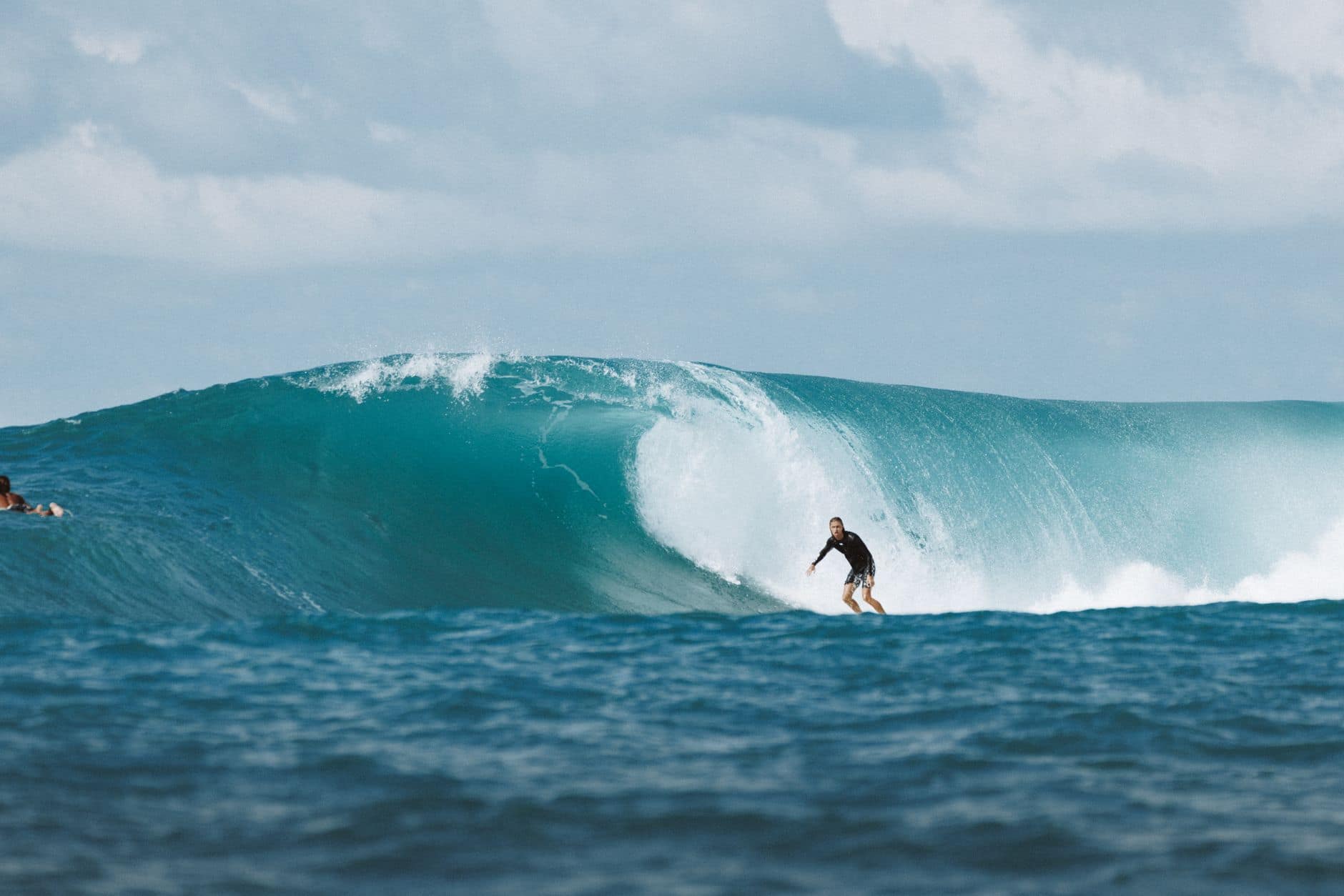
Uluwatu's cave is the operational risk point of the whole peninsula. At low tide you walk about 100 m across sharp, shallow reef; at high tide the cave floods and the surge slams the walls — mistimed exits are the main injury mechanism here. Coming in, aim well south of the cave so the northward drift carries you onto it; swept past Racetrack, don't fight the current — carry on and come ashore at Padang Padang. A guide for a first cave session is the standard advice, not an upsell.
#6
Crowds and drop-ins
Uluwatu is rated ultra crowded, weekdays and weekends alike, and at The Peak — the small takeoff zone in front of the cave — the crowd itself is a top-three hazard: loose boards and dropped-in takeoffs, not the reef. July and August are the crush; April-May and September-October are the calmer shoulders, and the lineup thins once the swell tops about six feet. Dawn is the reliable move — in season, regulars describe the cliff lineup as packed by mid-morning.
 #7
#7
Sharks, with the actual numbers
The logged record for Bali: six surfing incidents from 2010 to 2017, all non-fatal, all on the west coast around Balian and Tabanan — zero at Uluwatu or anywhere on the Bukit. The two best-documented bites were suspected bull sharks at a river-mouth break, one tied to post-rain conditions. The 2023 tiger shark filmed near Uluwatu was feeding on a dugong; surfers paddled in, nobody was touched. Murky river mouths after rain are the one setting that earns respect — and you're avoiding those anyway.
The short answer: safe, if you fear the right things
Two different sports share the word "surfing" in Bali, and safety questions blur them together. Beginner surfing happens on the sand-bottom beaches between Kuta and Canggu, in waist-deep whitewater with an instructor an arm's length away — a private lesson runs from $35, and a fall there costs you nothing but salt water. The famous danger lives on the Bukit reef breaks — Uluwatu, Bingin, Padang Padang — where sharp coral sits under fast, shallow waves. Our beginner spots guide draws that line beach by beach.
For the reef breaks, the honest answer is: safe for the surfer who fears the right things. Almost nobody we drive to Uluwatu worries about reef cuts, and nearly everyone worries about sharks — the exact inverse of the real ranking. What actually sends surfers to clinics is small and cumulative: cuts that got infected, urchin spines, a loose board in a packed lineup. There is a 24/7 clinic minutes from the Bukit breaks in Pecatu, and its existence tells you what the routine injuries are — wounds, not bites.
Reef cut first aid: scrub it like you mean it
A reef cut goes bad for a specific reason: coral fragments and debris embed in the tissue and keep seeding infection long after the bleeding stops, which is why a cut that looks trivial can go septic. The local protocol is therefore aggressive and immediate — within minutes, not after the session.
One honest caveat: Bali's own clinics genuinely disagree on antiseptics — one names povidone-iodine as the standard, another warns against iodine and peroxide entirely as tissue-damaging. The step nobody disputes is mechanical. Irrigate and scrub, and let the clinic you visit pick the chemistry.
- Irrigate with bottled water — not tap water (Indonesian tap water is not clean) and not seawater
- Scrub, don't rinse — sterile gauze or a clean cloth plus soap; a simple rinse won't dislodge the embedded coral particles, and the longer you clean, the better
- Pull visible fragments out with sterilised tweezers
- Cover with a breathable sterile dressing and stay out of the water while it heals
- Go to a clinic for bleeding that won't stop, anything deeply embedded, a wound that needs stitches — or redness, warmth or swelling in the first 12-24 hours, pus, or fever
Rain, river mouths and when to skip a session
The least photogenic risk in Bali surfing is the water quality, and it beats sharks by a wide margin. The only sustained testing that exists — weekly seawater sampling since January 2022 by the Clean Bali Foundation with the Westerlaken Foundation — found that both tested surf beaches, Petitenget in Seminyak and Batu Bolong in Canggu, failed the provincial seawater standard, with one 2023 round measuring E. coli above the test's upper reporting limit. The consequences are ear, eye, throat and wound infections, and plenty of surfers pick one up.
The mechanism is seasonal. From roughly November to March, wet-season rain flushes rivers into the surf zone, septic tanks overflow — most of the surf-tourism belt has no sewer network — and onshore wind holds it all against the coast. So the practical rule costs you nothing: surf away from river mouths, skip the first day or two after heavy rain, and be twice as strict with an open cut. The same murky river-mouth conditions produced the Balian shark bites, so this one rule covers two risks at once. Our month-by-month season guide shows where the clean windows fall.
Bali surf etiquette: the rotation is the safety system
Localism in Bali is real — especially down the Bukit — but Balinese surfers frame it as function rather than territory: with a hundred-plus people competing for waves over shallow reef, someone enforcing order in the lineup is what prevents injuries. The visitor's job is not a ritual, it is a queue.
If you're heading for the flagship wave, read our Uluwatu guide first — the cave entry and the section-by-section crowd map matter as much as the rules below.
- Never drop in. The surfer closest to the peak has priority; one person per wave
- Respect the rotation. Most reef breaks, Uluwatu and Bingin included, run an unwritten queue — take your wave, then paddle to the back of the line. Jumping it is the one offence that reliably earns hostility
- Give locals priority at their home break; you are a guest
- Control your board. Ditching it in a packed lineup is what actually injures people — learn to duck-dive or turtle-roll before you paddle out at a crowded reef
- Paddle wide, through the channel, never through the lineup
- Match the break to your level. The Peak, Padang Padang and the Temple section are not places to learn
- Say hello. Locals make the same point independently: basic friendliness materially changes how you're treated
Boards, drivers and the dawn start
The safest session of the day is the earliest one — glassy, uncrowded, and finished before the mid-morning crush. That is a transport problem before it is a surfing problem, because Bali's ride-hailing does not do boards: a standard Grab or Gojek compact will usually refuse one, and around Uluwatu the villages block ride-hailing pickups outright — drivers won't enter the clifftop lanes. The working answer is a pre-booked MPV. Our car with driver runs from $59 for the day, boards fit inside, and the driver waits while you surf — dawn at Uluwatu, breakfast after, home by noon.
Flying in with your own board, two things protect the trip: boards come out at the oversize-baggage area, and if yours arrives damaged you must file the damage report (PIR) at the airline's counter before leaving the airport — after that you have no claim. Airport taxi drivers are also known to raise the fare on the spot when they see a board bag, so pre-book instead: our airport transfer is from $15. For rental boards, scooter racks and the buy-versus-rent arithmetic, see our board logistics guide.
FAQ
Is surfing in Bali dangerous?
Less dangerous than its reputation, provided you rank the risks honestly. The ones that actually happen are reef cuts and the infections that follow, rips, urchin spines, rocks on entry and exit, and collisions in crowded lineups — sharks sit at the very bottom of the list. The beginner beaches from Kuta to Canggu break over sand and are genuinely forgiving; the Bukit reef breaks demand respect, experience and an early alarm.
Are there sharks where you surf in Bali?
Yes, but the record is tiny: six logged surfing incidents from 2010 to 2017, all non-fatal, all at river-mouth breaks around Balian and Tabanan on the west coast — none at Uluwatu or anywhere on the Bukit. The two best-documented bites were suspected bull sharks, one tied to conditions after heavy rain. Avoid murky river mouths in the days after rain and you have addressed essentially all of Bali's shark risk.
What should I do about a reef cut in Bali?
Scrub it within minutes: irrigate with bottled water — never tap or seawater — then clean with gauze and soap long enough to dislodge embedded coral fragments, pull visible pieces out with sterilised tweezers, and cover with a breathable dressing. Stay out of the water while it heals. See a clinic if it turns red, warm or swollen within 12-24 hours, or for anything deep — a reef cut counts as a dirty wound, so keep your tetanus current.
What is the surf etiquette in Bali?
One person per wave, and the surfer closest to the peak has priority — never drop in. Most Bali reef breaks run an unwritten rotation: take your wave, then paddle back to the end of the queue, because jumping the line is the one offence that reliably earns hostility. Give locals priority at their home break, keep hold of your board, paddle out wide through the channel, and say hello — friendliness genuinely changes how you're treated.
How crowded are Bali's surf spots?
Very — Uluwatu is rated ultra crowded on weekdays and weekends alike, and Old Man's in Canggu fills with surf-school groups. July and August are the peak crush; April-May and September-October are noticeably calmer, and lineups thin once the swell gets above about six feet. The reliable tactic is the dawn session — in high season, regulars describe the Uluwatu cliff lineup as packed by mid-morning.
Is surfing in Bali safe for beginners?
Yes — beginner lessons happen on sand-bottom beaches in waist-deep whitewater, where a fall ends in a splash, and a private lesson with board and coach included costs from $35. The safety line is the bottom: sand is forgiving, reef is not. Stay on the Kuta-to-Canggu strip until you catch green waves confidently, and treat Uluwatu, Padang Padang and the other Bukit reefs as a later chapter.
Recommended Bali tours for this guide
Bali Surf Lesson for Beginners
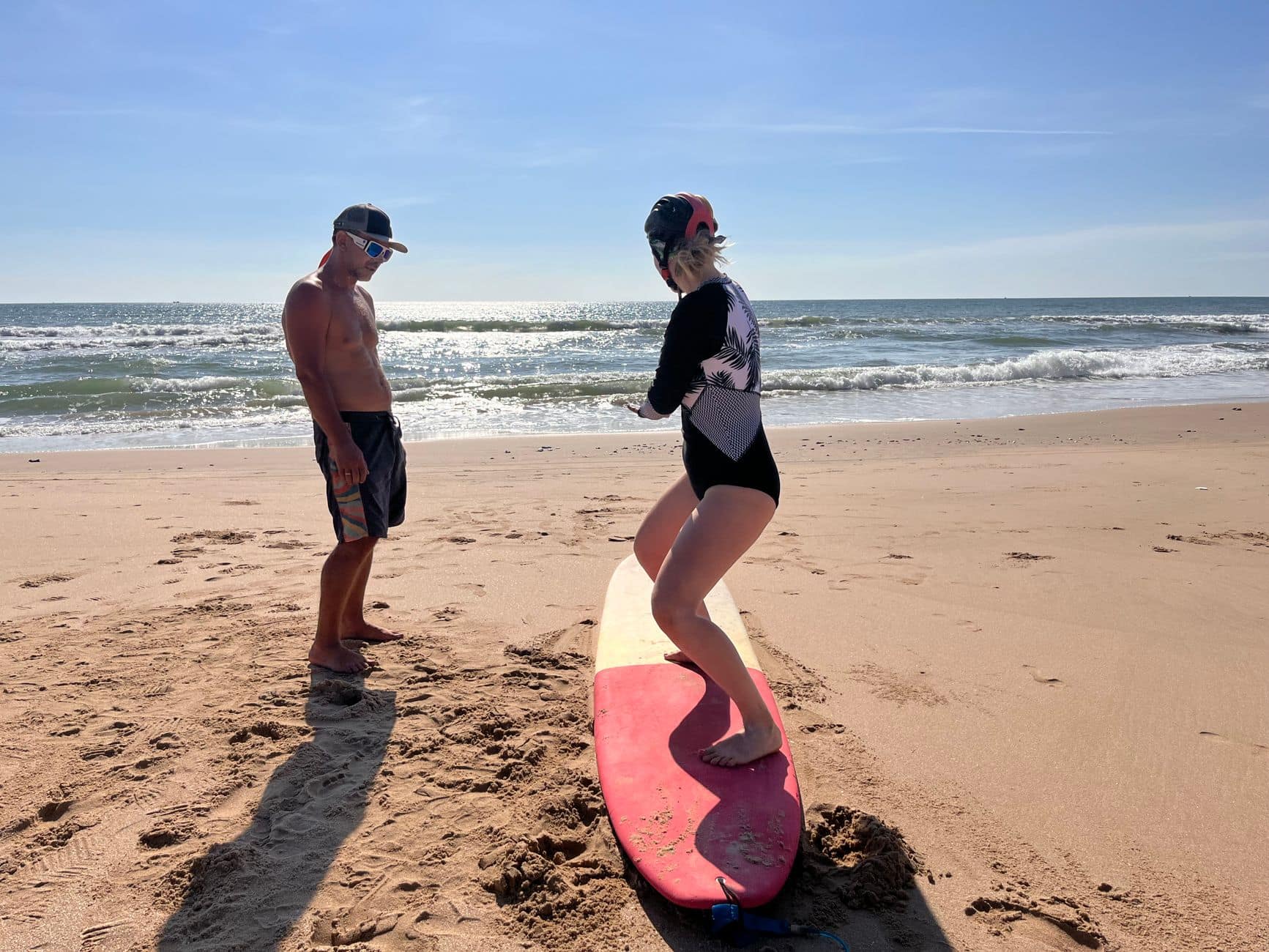
A surf lesson is one of the best short-format Bali activities because it feels local, active, and iconic without taking over the whole day. It is ideal for couples, friends, solo travelers, and anyone curious about the island's surf culture.
- Duration
- 2-4 hours
- Area
- Beginner-friendly Bali surf beaches
- Format
- Water activity
- Best for
- Beginners and casual active travelers
From $35 No prepayment
View tour
Private Car with Driver in Bali
This is one of the most useful products in Bali because so many plans become easier once transport is flexible. It is perfect for custom sightseeing, shopping days, family pacing, and travelers who already know roughly where they want to go.
- Duration
- Flexible daily use
- Area
- All major Bali regions
- Format
- Private transport service
- Best for
- Travelers who want total route flexibility
From $59 per car No prepayment
View tour
Bali Airport Transfer
Airport transfers are not glamorous, but they have an outsized impact on how the trip starts. A clean pickup, clear driver coordination, and direct route to the hotel make a huge difference after a long flight.
- Duration
- Depends on hotel area
- Area
- Ngurah Rai Airport and Bali hotel areas
- Format
- Private transfer service
- Best for
- New arrivals and stress-free departures
From $15 per car No prepayment
View tour