

Surfboard rental in Bali runs about IDR 150,000–300,000 a day, IDR 1.0–1.8 million a week and IDR 3.0–4.5 million a month, depending on board quality and whether the shop delivers. Stay two weeks or more and the maths flips: a used board from the Canggu buy-and-sell market costs about USD 200, resells for USD 120–150 when you leave, and beats both the rental bill and most airlines' board fees. Moving the board is its own subject — scooter side racks add IDR 5,000–15,000 a day, standard Grab and Gojek cars refuse boards, Uluwatu blocks ride-hailing entirely, and airlines into Denpasar split between free carriage on Garuda, Qantas, Emirates and Singapore, and per-board fees on the Lion group and most low-cost carriers. This page is the full logistics rundown: what to pay, when to buy instead, and how to get a board to the wave without drama.
By Alex Moskvin, Founder of SB Excursions · Published 21 May 2026 · Updated 23 October 2026
Tour on this route: Private Car with Driver in Bali — From $59 per car, flexible daily use.
How much does surfboard rental cost in Bali?
Plan on IDR 150,000–300,000 a day, IDR 1.0–1.8 million a week and IDR 3.0–4.5 million a month, with leash and fins included at proper shops. Beach walk-up hire costs more per hour — IDR 50,000–150,000 depending on the board — and delivery shops in the south start around IDR 50,000 a day. Weekly rates run about five daily rates, monthly about fifteen, so longer commitments roughly halve the per-day cost.
This guide also answers:
- Are surfboards cheaper in Bali?
- Where can I rent a surfboard in Canggu?
- How much does it cost to fly a surfboard to Bali?
Top picks from this guide
 #1
#1
Walk-up rental on the beach
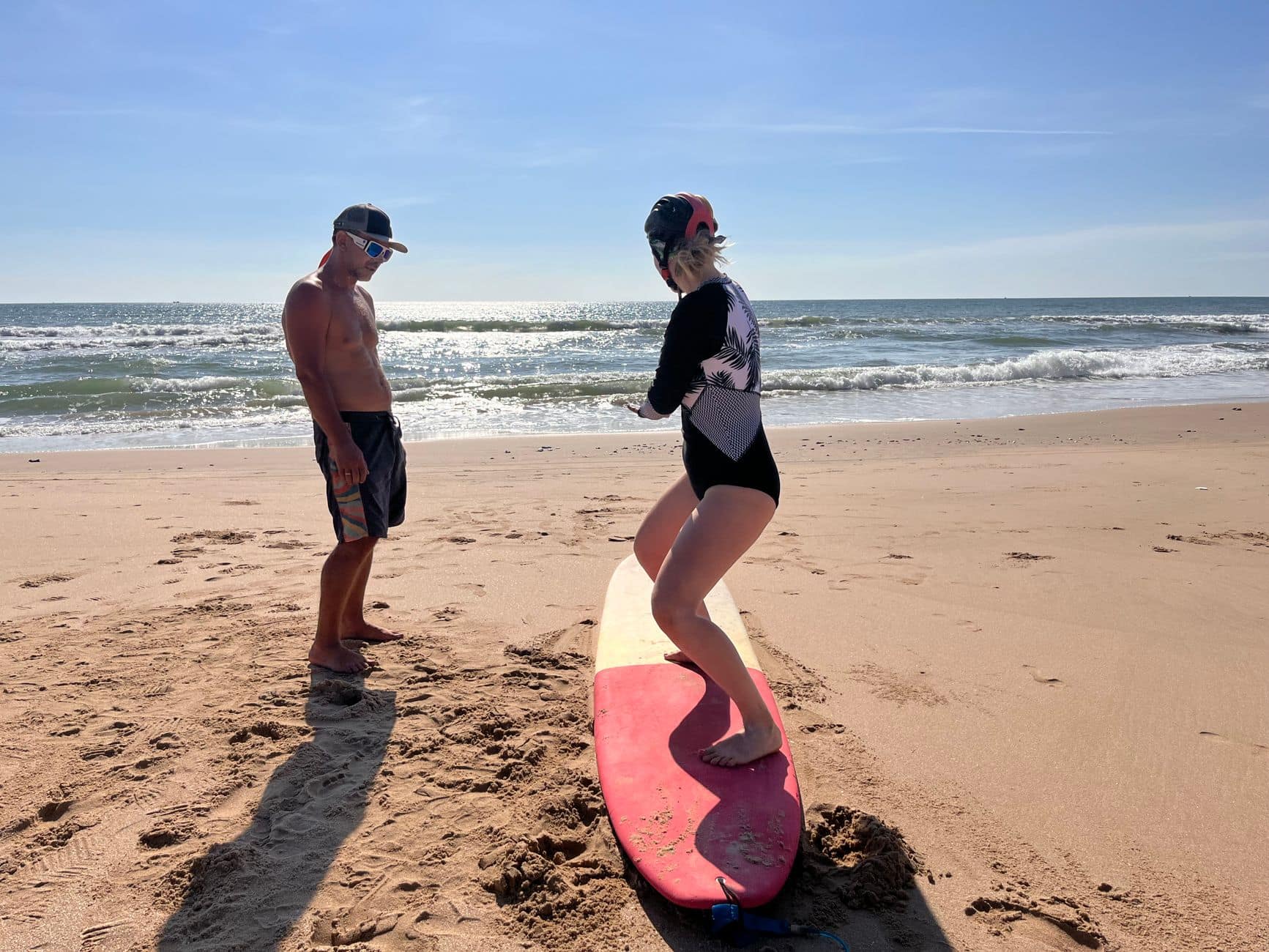
The beach racks charge by the hour: soft-tops at IDR 50,000–100,000, performance boards at IDR 100,000–150,000, a full day at IDR 150,000–250,000. It is the most expensive way to surf per hour and the most convenient — you point, pay and paddle, and some racks quote as little as IDR 50,000 for two hours on a soft-top. Fine for a session or two; past that, the arithmetic turns against you.
 #2
#2
Shop rental by the day
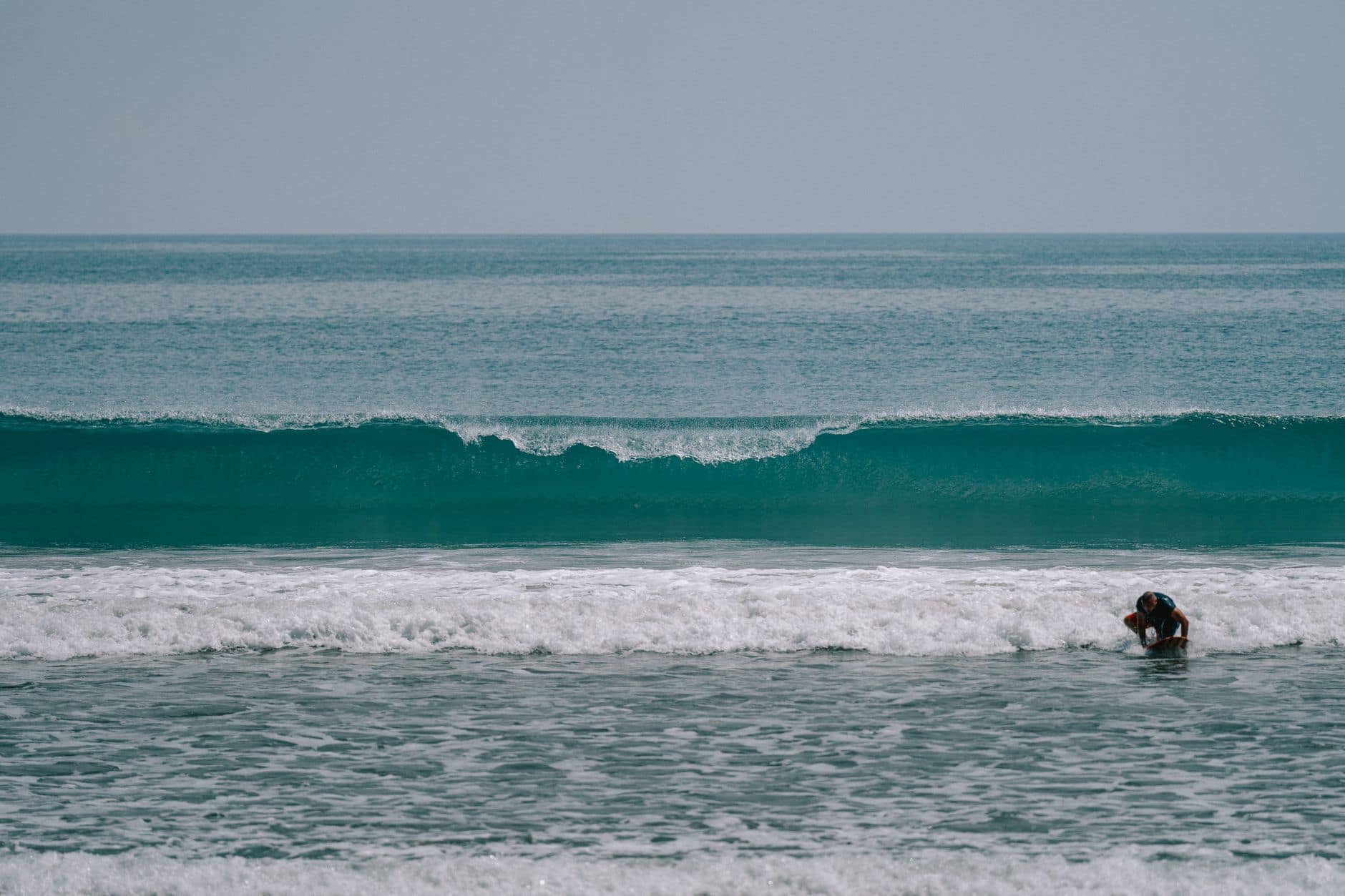
Proper rental shops run two tiers: standard boards — the workhorse 6'6" to 7'2" range plus fish — at IDR 200,000 a day, and premium boards in the Firewire and Hayden Shapes class, plus a 9'0" longboard, at IDR 300,000, leash and fins included. The Bukit operations cover everything from Uluwatu to Nusa Dua and can arrange hotel delivery. Photograph every existing ding before riding off; no shop publishes a deposit or damage policy, so returns are settled on trust and evidence.
 #3
#3
Weekly and monthly rates
A week runs IDR 1.0–1.8 million and a month IDR 3.0–4.5 million. The structure is consistent across shops: a week costs about five daily rates and a month about fifteen, which means roughly 30% off at a week and half price at a month. The south-Bali delivery fleets quote USD 59–120 a week, deliver free between Kuta and Canggu, charge about USD 10 to reach Uluwatu or Sanur, and want two days' notice. Past three or four weeks, stop renting — the used market wins.
#4
Buying used and reselling
The second-hand market is deep because departing surfers sell constantly. A normal used board costs about USD 200 and well-used ones start near USD 50, through the Bali and Canggu buy-and-sell Facebook groups plus the used racks most shops keep. Sell it back for USD 120–150 on your way out and the board cost you USD 50–80 for the whole trip — less than a month of rental, and less than most airlines charge to fly a board both ways.
 #5
#5
Scooter with a side rack
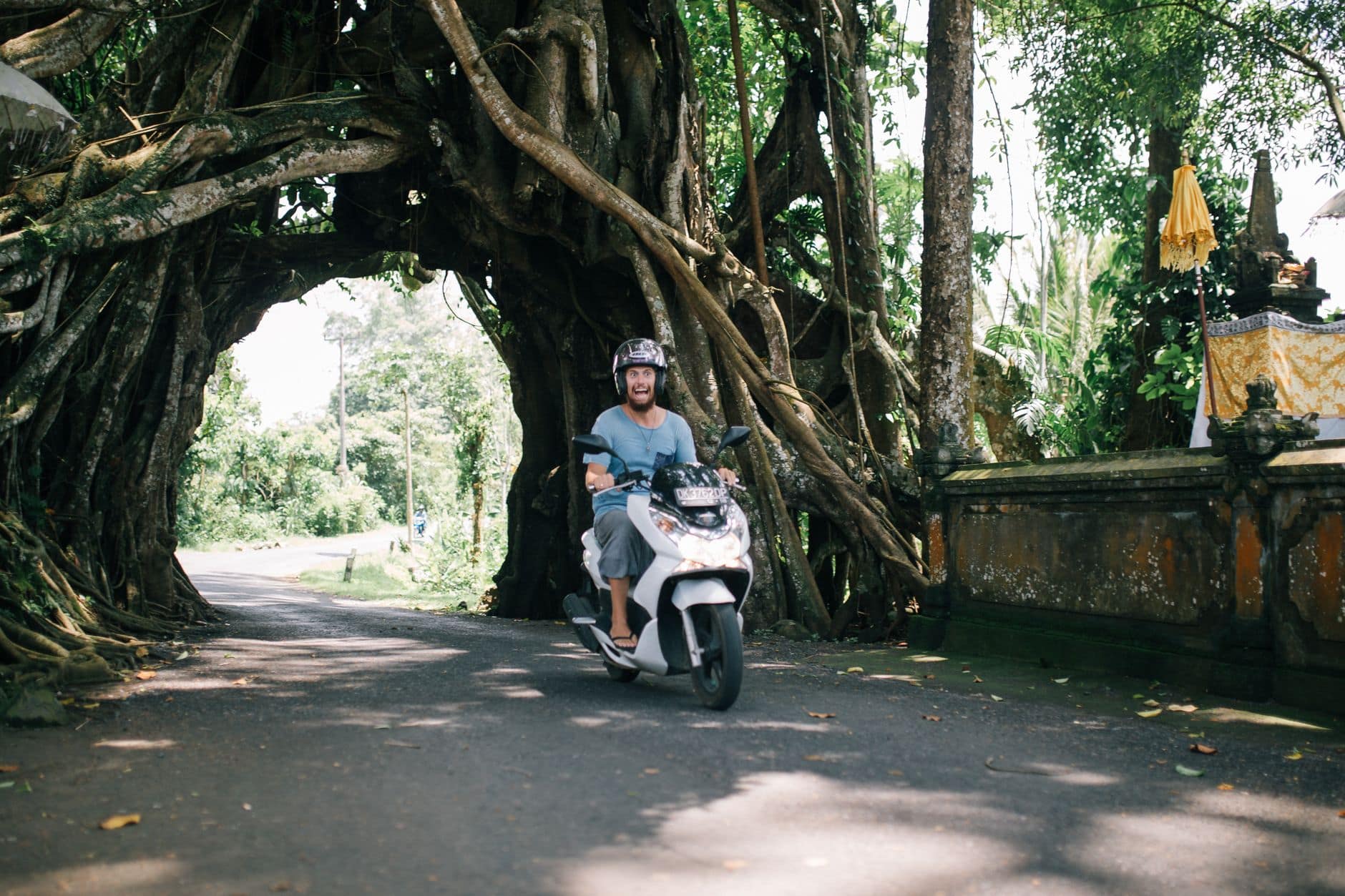
The side-mounted rack is how Bali actually moves boards. It holds one board as standard — a second rack can be fitted for two — and adds IDR 5,000–15,000 a day to a scooter that rents for IDR 80,000–150,000. Not every model takes a rack: one large renter lists the Honda Beat 110 and Vario 160 as rack-less, so ask for the rack at booking, not at pickup. Purpose-built surf editions of the NMax start around USD 10 a day.
 #6
#6
A car with a driver
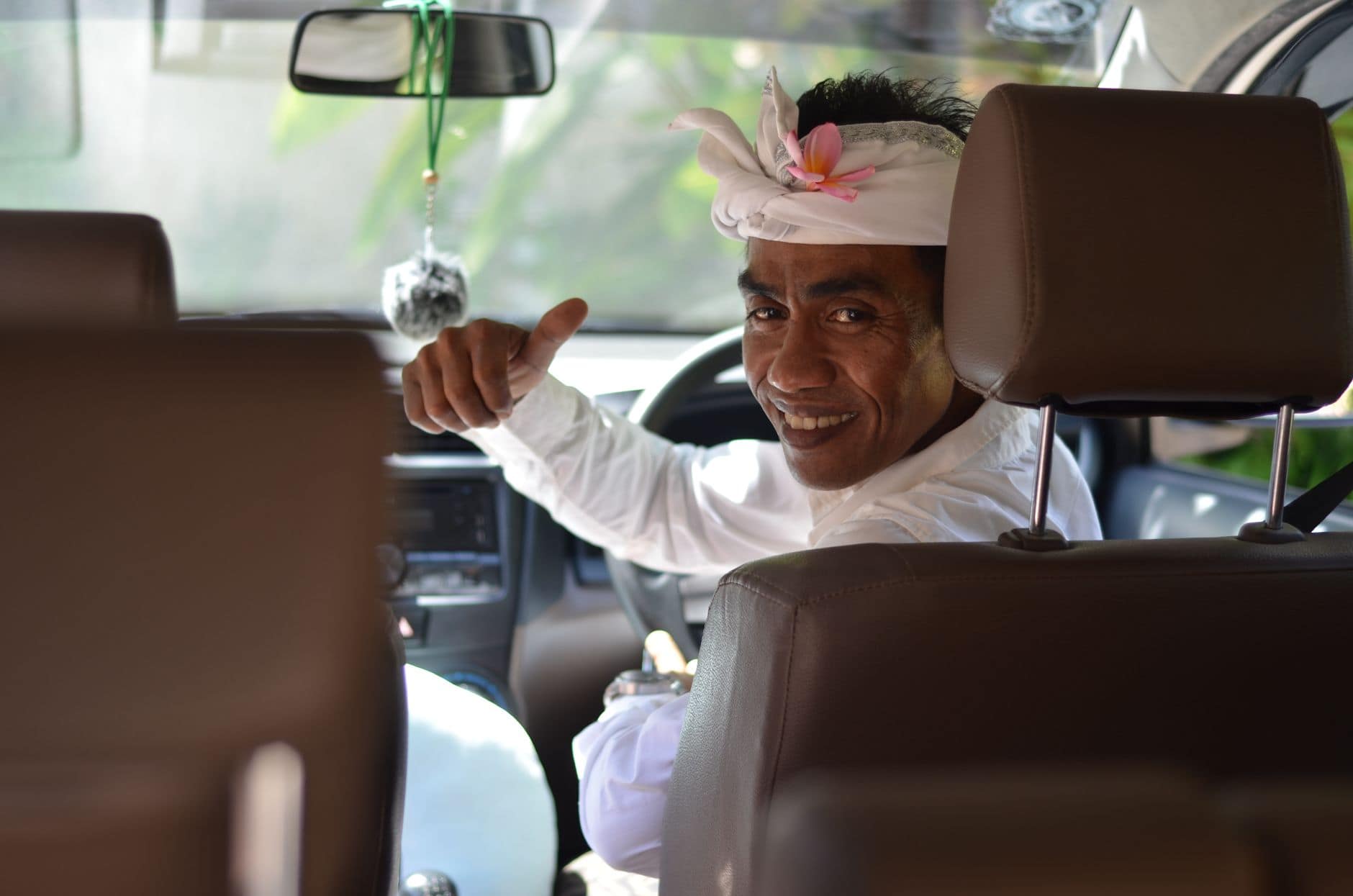
Standard compact Grab and Gojek cars will not take a longboard or several boards, and Uluwatu's villages block ride-hailing outright — pecalang turn drivers away from the clifftop lanes, and airport taxis are known to raise the fare once they see a board bag. The working answer is a pre-booked MPV, the Avanza/Innova class every Bali driver runs: boards go in flat, the driver waits through your session, and ours costs from $59 for the day.
 #7
#7
Flying your board into DPS
Garuda, Qantas, Emirates and Singapore Airlines carry boards free within their limits; Lion Air and Batik charge IDR 200,000 per board domestic or USD 20 international, and most low-cost carriers charge something. Watch the small ATR turboprops on domestic legs — a standard 6'0" shortboard at 183 cm exceeds their 160–170 cm limits. Boards land at the oversize belt, and a damaged board means filing the PIR at the airline counter before you leave the airport, or the claim dies.
What surfboard rental costs in Bali by day, week and month
Surfboard hire across Bali's published rate cards is remarkably consistent: IDR 150,000–300,000 a day, IDR 1.0–1.8 million a week, IDR 3.0–4.5 million a month. The spread is real and tracks two things — board quality and whether the shop delivers. Standard rental boards, the workhorse 6'6"–7'2" range plus fish, sit at IDR 200,000 a day / 1,000,000 a week / 3,000,000 a month; premium boards — Firewire, Hayden Shapes and a proper 9'0" longboard — at IDR 300,000 / 1,800,000 / 4,500,000, leash and fins included. Note the shape of the discount: a week costs about five daily rates and a month about fifteen, so committing longer roughly halves the per-day cost.
Below the shop tier sits the beach walk-up rack — soft-tops at IDR 50,000–100,000 per hour, performance boards at IDR 100,000–150,000 per hour, a full day at IDR 150,000–250,000 — and above it the delivery operations: Canggu shops rent from IDR 50,000 a day with free villa delivery, and the big south-Bali fleets quote USD 59–120 a week, deliver free from Kuta to Canggu, charge about USD 10 to reach Uluwatu or Sanur, and want booking two days ahead. Two practical notes. First, photograph every existing ding before you ride off — no shop we have seen publishes a deposit or damage policy, so the conversation at return time is only as good as your photos. Second, if you are a beginner, skip the rental arithmetic entirely: our private surf lesson runs from $35 for a 2–4 hour session with the board and coach included.
Are surfboards cheaper in Bali? Used, yes — new, not really
New boards first, honestly: not by much. Bali-brand production models publish at IDR 6.4–6.7 million, and custom orders from local shapers are quoted around IDR 5 million — the shops' own dollar conversions put that near USD 330, though treat every dollar figure on this page as indicative rather than exchange-rate gospel. Broader guide pricing puts a new shortboard from about USD 400 and a new longboard from USD 700, which is not far from home.
The used market is where Bali is genuinely cheap, because the turnover of departing surfers never stops. A normal second-hand board runs about USD 200, tired but watertight ones from USD 50, through the Bali and Canggu buy-and-sell Facebook groups and the used racks most shops keep — Canggu is the centre of gravity for both. Dings are cheap to fix here too: small repairs from about USD 5, a tube of Solarez around USD 7 for do-it-yourself, a major break around USD 100.
So the arithmetic. A month of standard rental is IDR 3,000,000 — roughly USD 185 — while a USD 200 used board resold for USD 120–150 on departure nets out at USD 50–80 for the whole trip. Against rental alone the crossover lands around three to four weeks; add what most airlines charge to fly a board and it moves closer to two. Renting stays the right call for beginners, trips under about ten days, and anyone who wants to switch boards as the swell changes. Bringing your own still makes sense for advanced surfers with exact dimensions who will surf every day.
Moving a board around the island
The default is a scooter with a side-mounted rack. It holds one board as standard, a second rack can be fitted for two, and it costs IDR 5,000–15,000 a day on top of the scooter — which itself runs IDR 80,000–150,000 a day for the usual Honda and Yamaha models, while purpose-built surf editions of the NMax with the rack already fitted start around USD 10. Two catches. Not every model takes a rack — one large renter lists the Honda Beat 110 and Vario 160 as no-rack — so ask for the rack when you book, not at pickup. And on legality we will be straight with you: we could not find any official ruling on carrying a board on a scooter in Indonesia. It is universal practice and shops fit racks as a standard accessory, but nobody can show you the regulation.
The part visitors consistently get wrong is the car. A standard compact Grab or Gojek will not take a longboard or multiple boards — most drivers refuse on sight unless you booked a larger vehicle. Worse, Uluwatu and parts of the Bukit enforce local bans on ride-hailing: village pecalang and local transport groups block pickups in the clifftop lanes, and drivers will not risk entering. Airport taxi drivers are known to raise the quoted fare on the spot once they see a board bag. The working answer to all of it is a pre-booked MPV — the Toyota Avanza/Innova class every Bali driver runs. Our car with driver costs from $59 for the day: boards go in flat, and the driver waits through your session, which matters most on the long west-coast runs to Medewi and Balian where there is no plan B if your transport falls through.
Flying a board into Denpasar, and out to the islands
The airline split into DPS is sharp. Garuda Indonesia, Qantas, Emirates and Singapore Airlines carry boards free within their limits — Garuda gives a 23 kg sporting allowance with a 300 cm length cap on standard aircraft, Singapore takes one board per person and nothing over 32 kg, and KLM is free except on North America routes. On the other side, Lion Air and Batik Air charge IDR 200,000 per board domestic and USD 20 international, Citilink charges by weight band, and Wings Air's published fee is disputed between IDR 500,000 and 1,000,000 — verify. The general range on charging carriers is USD 50–150 per board on international sectors and USD 30–100 domestic. All of these figures change; check the airline's current page before ticketing, not after.
Two traps and one recommendation. Trap one: onward domestic legs. The small ATR turboprops have hard length limits — 160 cm on Garuda's ATRs, 170 cm on Citilink's ATR 72-600 — and a standard 6'0" shortboard is 183 cm, so it physically will not fly on some services. Check the aircraft type, not just the airline. Trap two: damage. Boards come out at the oversize belt, and if yours arrives broken you must file a Property Irregularity Report at the airline's counter before leaving the airport — walk out first and the claim is gone. The recommendation: land with transport already arranged rather than negotiating at the curb with a board bag. Our private airport pickup runs from $15 — tell us how many boards and how long, and the right car shows up. Heading onward to Lombok or the Gilis, fast boat tickets with pickup start from $15; ask about boards when you book.
The Bali surf trip packing list, board edition
Pack less than you think. Every consumable on the board side is on the shelf between Kuta and Canggu, usually within a day's reach of wherever you sleep, and the local prices below are why board bags into Bali travel light. The one item genuinely worth carrying from home is fins, if you ride a specific template. And whatever you rent, the pre-ride photo of existing dings is part of the packing routine too.
- Leash ~$20 and wax ~$5 — stocked in every surf shop; not worth the baggage weight
- Fins $50–150 — bring your own if the template matters; buying here is possible but the range is the range
- Deck pad ~$20 — used boards often come with tired grip
- Board bag $15–200+ — buy one locally if you plan to fly out with a board you bought here
- Solarez ~$7 — sun-cure resin for small dings; professional repairs start around $5 and even a major break runs about $100
- A basic wound kit — bottled water and gauze: the standard Bali reef-cut response is to irrigate with bottled water and scrub, not just rinse; our safety guide covers the full protocol
FAQ
How much does surfboard rental cost in Bali?
Plan on IDR 150,000–300,000 a day, IDR 1.0–1.8 million a week and IDR 3.0–4.5 million a month, with leash and fins included at proper shops. Beach walk-up hire costs more per hour — IDR 50,000–150,000 depending on the board — and delivery shops in the south start around IDR 50,000 a day. Weekly rates run about five daily rates, monthly about fifteen, so longer commitments roughly halve the per-day cost.
Are surfboards cheaper in Bali?
Used boards, yes; new boards, not really. New Bali-brand boards publish at IDR 6.4–6.7 million and custom orders around IDR 5 million, which is close to home pricing. The used market is the bargain: about USD 200 for a solid second-hand board, from USD 50 for a beaten one, and you can resell for USD 120–150 when you leave through the same Canggu buy-and-sell groups.
Where can I rent a surfboard in Canggu?
Canggu has the island's densest rental cover: shop rental from around IDR 50,000 a day with free villa delivery, walk-up racks on the beach charging by the hour, and the big south-Bali delivery fleets carrying 150-plus boards that deliver free between Kuta and Canggu and ask for booking two days ahead. Photograph existing dings before taking any board — deposit and damage policies are unwritten everywhere.
How much does it cost to fly a surfboard to Bali?
Between nothing and a few hundred dollars, depending on the airline. Garuda, Qantas, Emirates and Singapore Airlines carry boards free within their size and weight limits; Lion Air and Batik charge IDR 200,000 domestic or USD 20 international per board; and charging carriers generally run USD 50–150 per board on international sectors. Fees change — verify on the airline's own page before booking, and check aircraft length limits on domestic legs.
Can I take a surfboard on a Grab or Gojek in Bali?
Usually not. Standard compact Grab and Gojek cars refuse longboards and multiple boards unless you specifically book a larger vehicle, and Uluwatu plus parts of the Bukit block ride-hailing pickups entirely — local guards turn drivers away from the clifftop lanes. A scooter with a side rack handles one board; for anything more, pre-book a car with a driver in the MPV class.
Should I bring my own surfboard to Bali or rent one?
Rent for trips under about ten days, buy used for stays past three or four weeks, and bring your own only if you are advanced, need exact dimensions and will surf daily. The maths: a month of rental is about IDR 3 million, a used board nets out at USD 50–80 after resale, and flying a board round trip costs roughly USD 60–300 on charging airlines, plus the transit damage risk.
Recommended Bali tours for this guide
Private Car with Driver in Bali
This is one of the most useful products in Bali because so many plans become easier once transport is flexible. It is perfect for custom sightseeing, shopping days, family pacing, and travelers who already know roughly where they want to go.
- Duration
- Flexible daily use
- Area
- All major Bali regions
- Format
- Private transport service
- Best for
- Travelers who want total route flexibility
From $59 per car No prepayment
View tour
Bali Airport Transfer
Airport transfers are not glamorous, but they have an outsized impact on how the trip starts. A clean pickup, clear driver coordination, and direct route to the hotel make a huge difference after a long flight.
- Duration
- Depends on hotel area
- Area
- Ngurah Rai Airport and Bali hotel areas
- Format
- Private transfer service
- Best for
- New arrivals and stress-free departures
From $15 per car No prepayment
View tour
Bali Surf Lesson for Beginners
A surf lesson is one of the best short-format Bali activities because it feels local, active, and iconic without taking over the whole day. It is ideal for couples, friends, solo travelers, and anyone curious about the island's surf culture.
- Duration
- 2-4 hours
- Area
- Beginner-friendly Bali surf beaches
- Format
- Water activity
- Best for
- Beginners and casual active travelers
From $35 No prepayment
View tour