

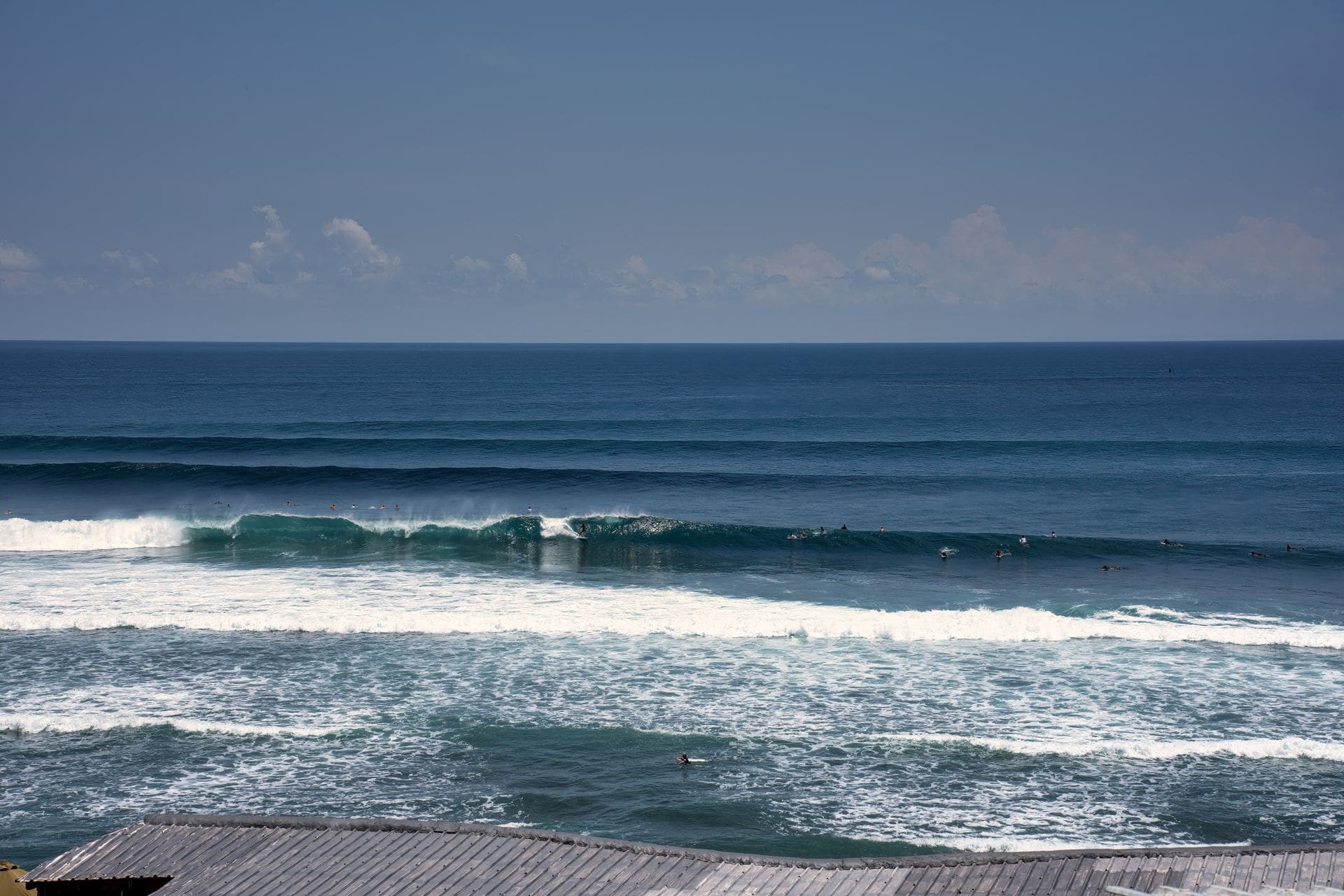
There is no month without waves in Bali. The Southern Ocean swell engine runs all twelve months, so the real season question is wind, not surf. From April to October the east-to-southeast trades blow offshore on the Bukit's west-facing reefs and the west coast from Kuta to Medewi; from November to March the wind swings west and the clean side becomes Nusa Dua, Sanur, Serangan and Keramas. Peak power arrives June to September, when offshore swell averages 2.0-2.2 m at 14-second periods and a typical August delivers clean, rideable waves 99% of the time. The wet season brings smaller, friendlier waves to the east coast, and October is the best-balanced month of the year. Below are all twelve months: which coast is offshore, typical size, the crowd, and who each month actually suits.
By Alex Moskvin, Founder of SB Excursions · Published 21 May 2026 · Updated 23 October 2026
Tour on this route: Bali Surf Lesson for Beginners — From $35, 2-4 hours.
When is the surf season in Bali?
All year — Bali has no true off-season. The dry season from April to October is offshore on the west coast and the Bukit's famous reefs, with peak swell June to September. The wet season from November to March swings the wind west, and the clean surf moves to the east side: Nusa Dua, Serangan, Sanur and Keramas. The coast changes; the waves never stop.
This guide also answers:
- Can you surf in Bali in January?
- How big is the surf in Bali in July?
- Is December a good month to surf in Bali?
Top picks from this guide
 #1
#1
January: surf the east coast
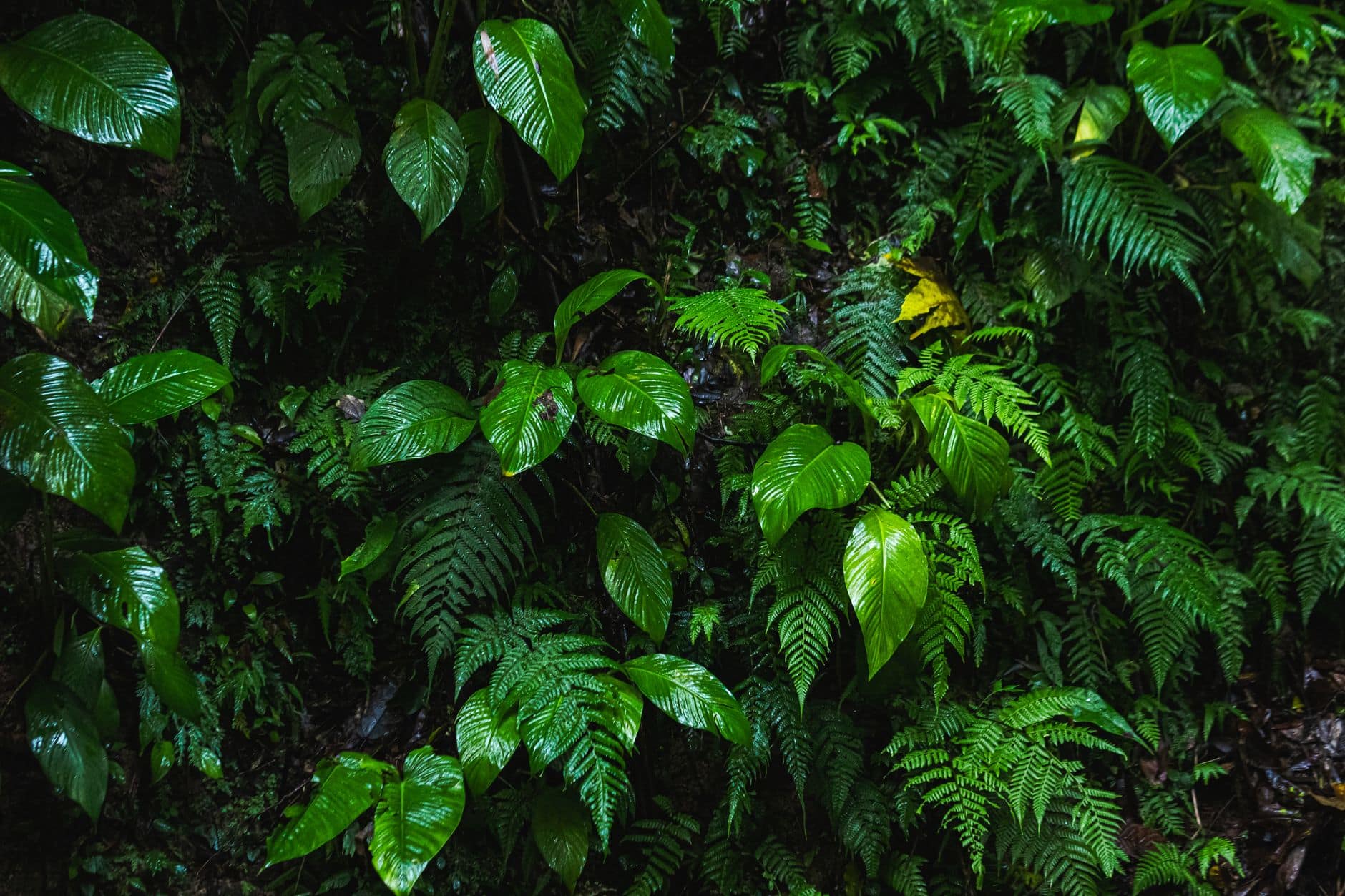
The heart of the wet season and Bali's rainiest month — around 350 mm over 19 rain days — with the west-to-northwest monsoon putting Kuta, Canggu and the Bukit's west reefs onshore and strewing them with river plastic. The clean surf is east: Sanur, Nusa Dua and Serangan handle the refracted 1.7 m swell at 12 s on clear mornings. Water sits near 29°C. Suits surfers who like rights and don't mind sharing the few working peaks — Serangan gets genuinely busy.
 #2
#2
February: Keramas at its cleanest
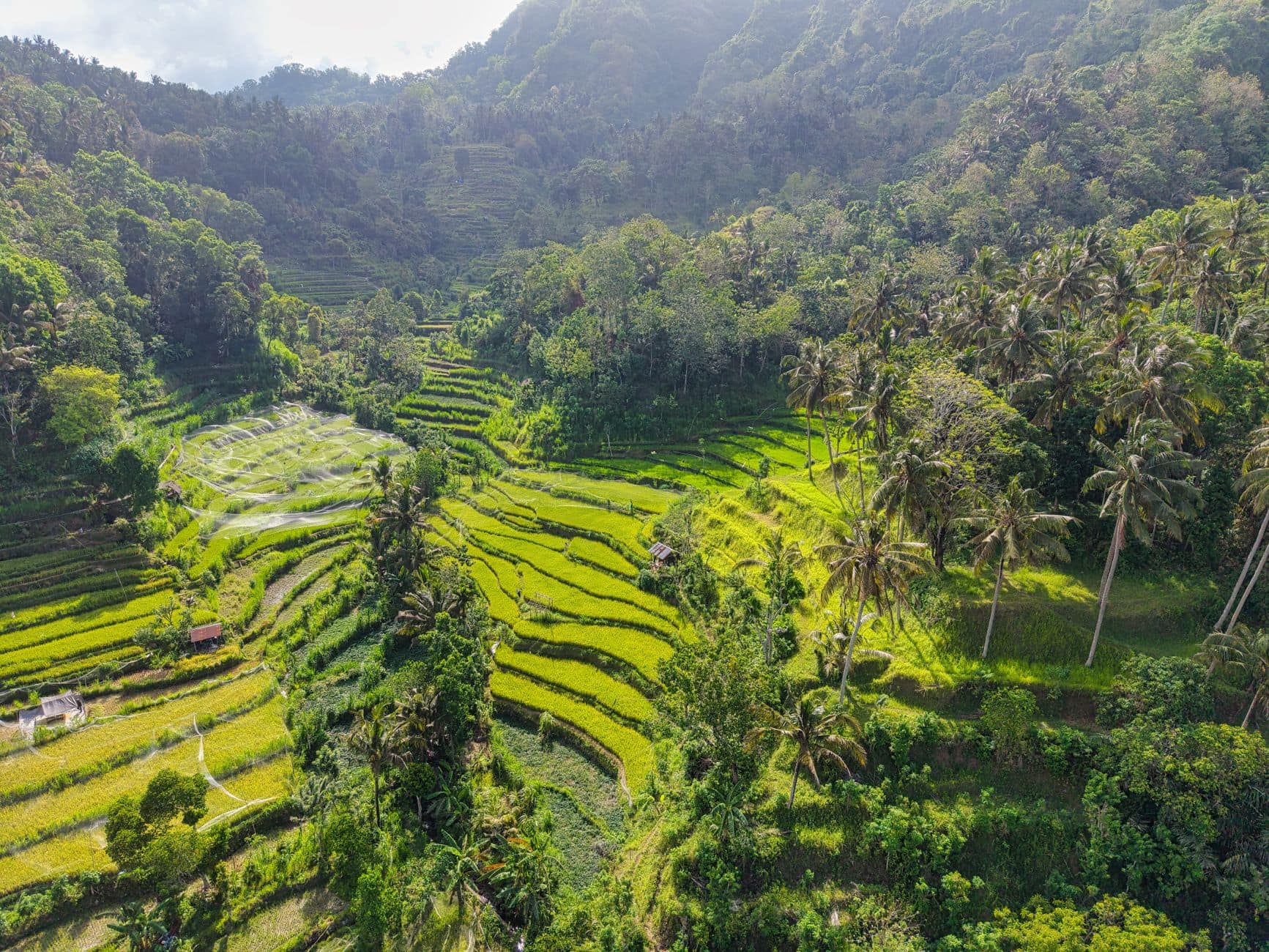
Same regime as January, slightly drier — 280 mm over 18 days — and the month Keramas comes up clean most often in the forecast archives, which is reason enough for some surfers to book it. Offshore swell holds at 1.7 m at 12.5 s, arriving smaller on the east coast after bending around the Bukit. Mornings are the window; afternoons blow out or rain. Suits intermediate-to-advanced surfers hunting east-coast rights — Keramas itself is an advanced wave, with Sanur's Baby Reef the mellow alternative.
 #3
#3
March and April: the turn
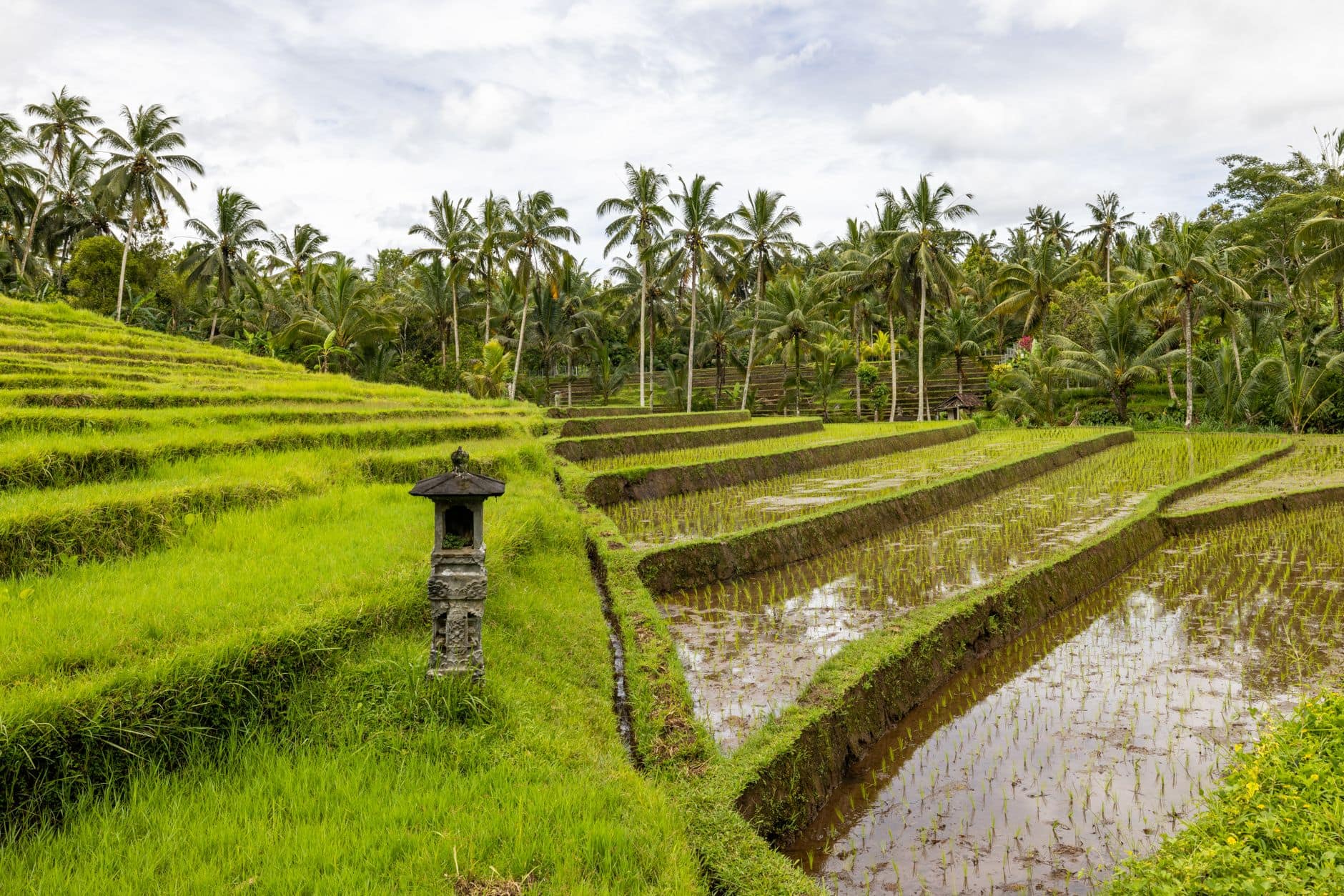
March is the turn: the calmest average wind of the year but the monsoon only half broken, so you keep wet-season rain (215 mm over 20 days) without dry-season reliability — and Nyepi, the Balinese Day of Silence, shuts the entire island including the airport for 24 hours. April is the reward: 1.7 m at 13.8 s, rain down to 90 mm over 12 days, the quietest month for visitors, and the west coast switching back on. Water is at its warmest, about 29°C.
 #4
#4
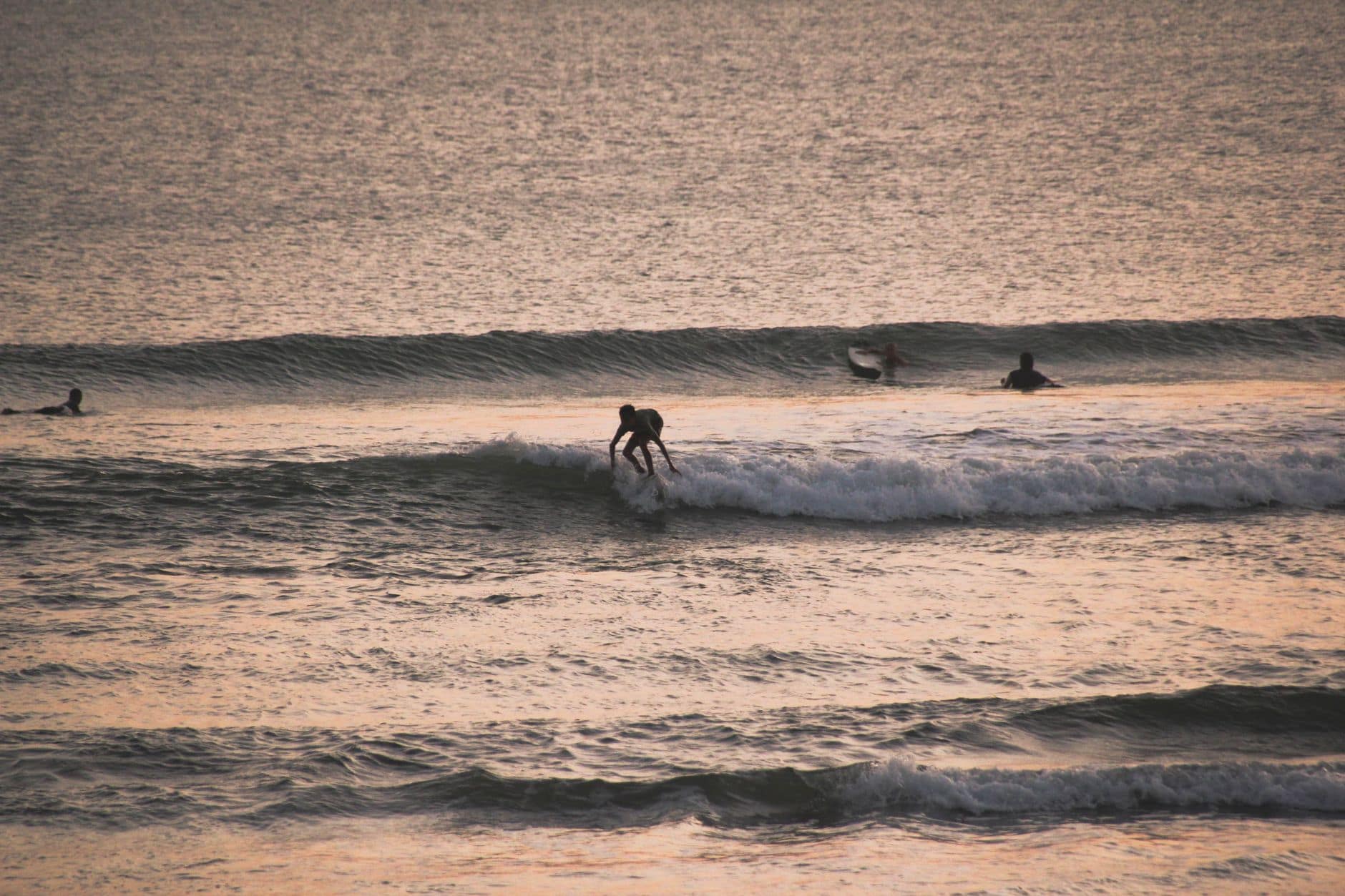
May and June: the trades arrive
The trades settle in and the swell builds — 1.9 m at 14.1 s in May, 2.1 m at 14.3 s in June — and the Bukit's west reefs start doing what the films promise. Late April to early June is one of the two beginner windows of the year: clean dawn sessions on the Kuta-to-Canggu sand with real push but not yet peak power. By June the trades strengthen and blow from first light, so early starts stop being optional.
 #5
#5
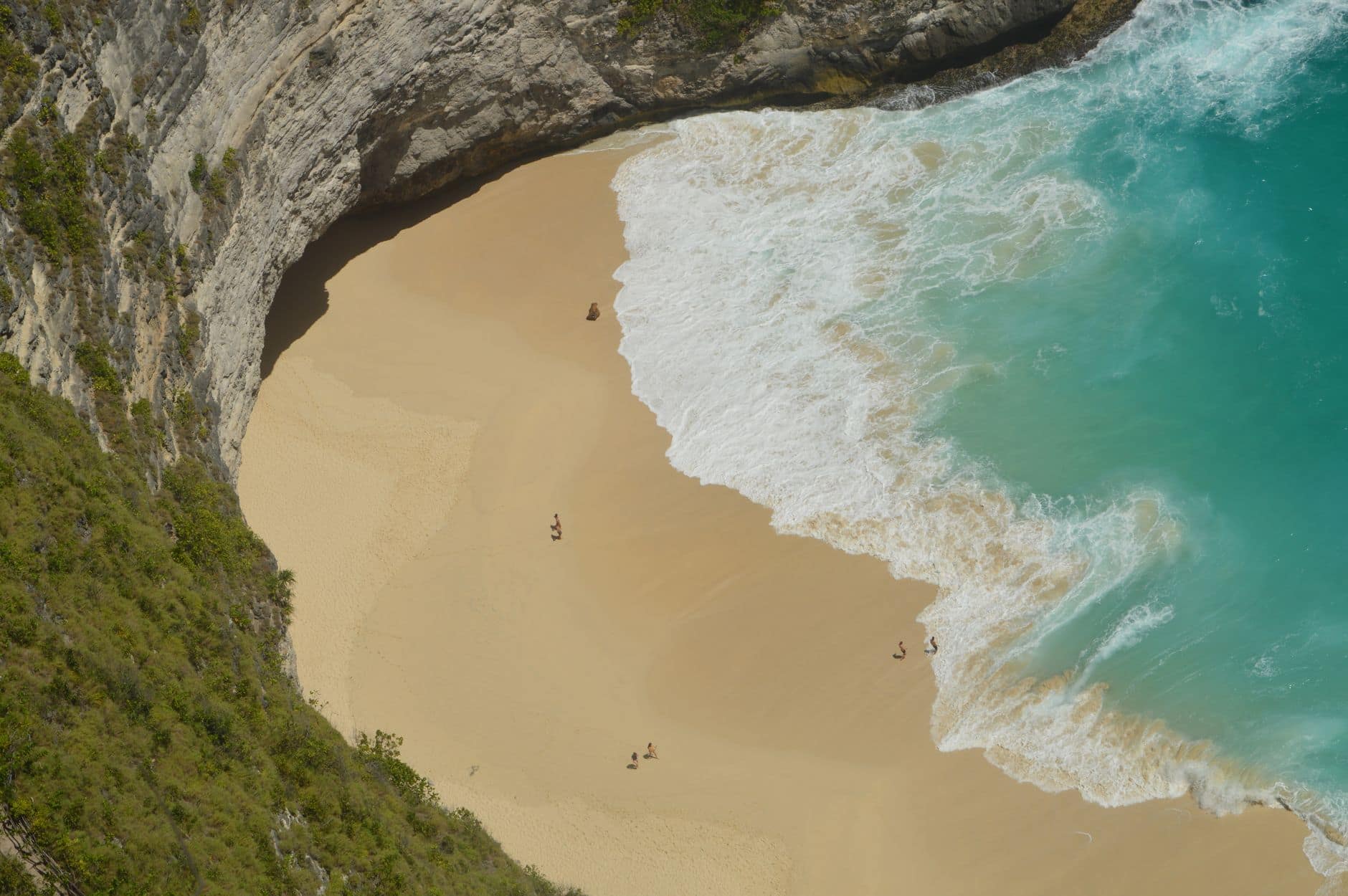
July: the peak of the peak
The biggest month of the year: 2.2 m of offshore swell at 14.4 s, and faces at the reefs run well beyond that figure. Also the busiest — around 697,000 visitors — with the trades at full strength, strong enough some days to blow too hard from the east-southeast. Dawn is everything. Suits experienced surfers with reef time who came for size; it is the wrong month for a first lesson or a first reef wave.
 #6
#6
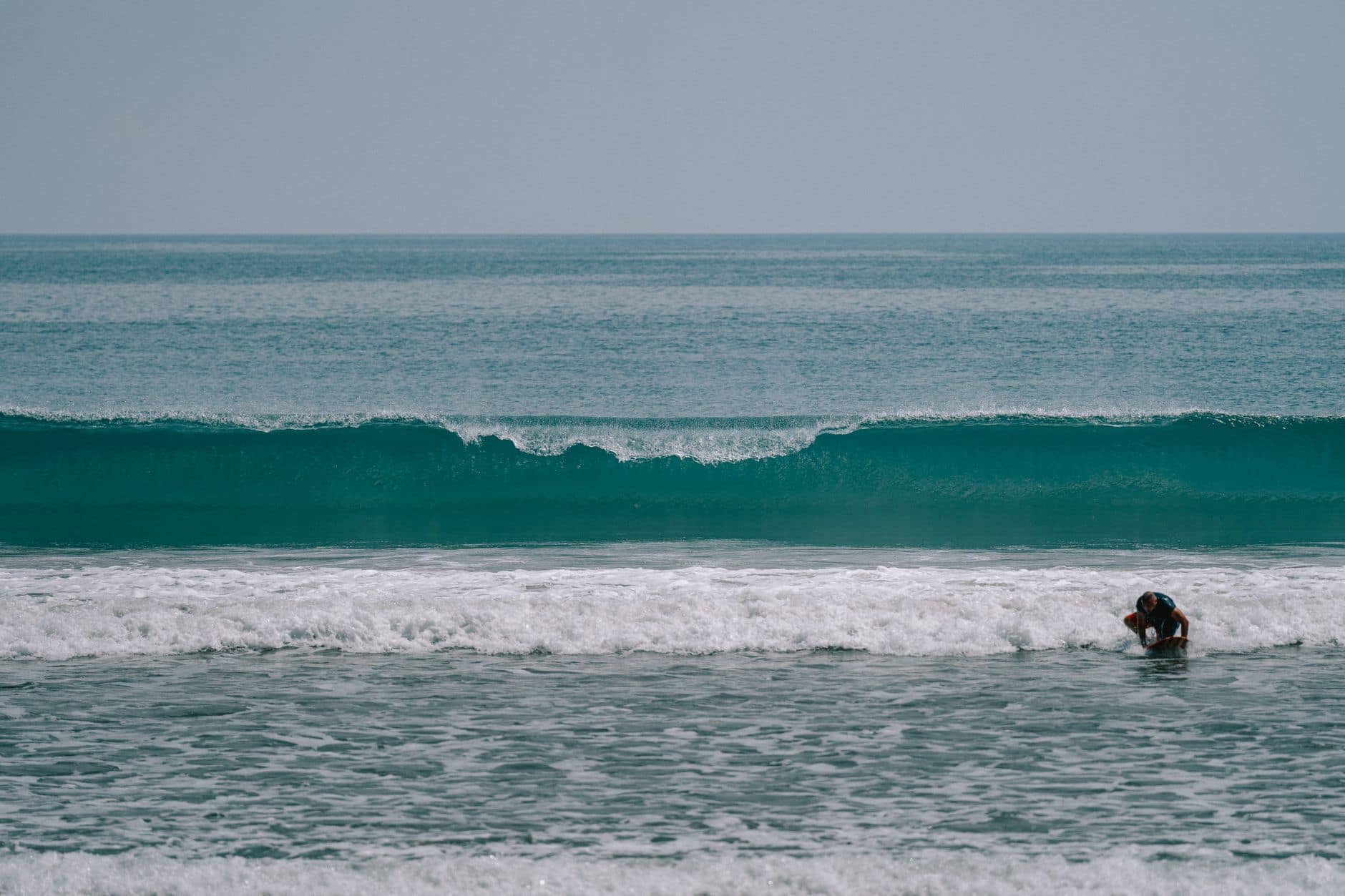
August: the sure thing
Statistically the sure thing: the same 2.2 m at 14.4 s, and in a typical August clean, rideable waves about 99% of the time. The trade wind stays fresh, and dry-season upwelling drops the Bukit's water to a 26°C average, dipping toward 24 — some surfers add a 1-2 mm top at dawn. Bingin is often cited as at its most consistent this month. Crowds run barely thinner than July, so patience in the lineup is part of the kit.
#7
September: the crossover month
The crossover: 2.0 m at 14.3 s with the trades easing — peak-season power with shoulder-season wind, which is why long-run climatologies rate it among Uluwatu's best months of the year. The Bukit's water hits its coolest dawn minima, near 23°C, while the rest of the island stays warm. The beginner window reopens as the month closes. Suits everyone from solid intermediates upward — and anyone who wants July's waves without July's lineup.
#8
October: the best-balanced month
On the numbers, the best-balanced month of the year: 1.8 m at 13.8 s, the most dependable offshore wind of any month, just 90 mm of rain across 6 days, water back to 27°C, and roughly 22% fewer visitors than July. What you give up is the top end — the heaviest, hollowest versions of the reefs come less often. For intermediates, and for anyone who would rather surf twice a day than wait for one bombing session, this is the month we would book ourselves.
#9
November and December: the swap back east
November is the tail of the reliable window — 1.6 m at 13.2 s, wind still mostly offshore in the west but turning variable while the east coast switches on. Plan to move between coasts rather than committing to one. By December the west monsoon is established: 1.6 m at 12.7 s, rain climbing toward 290 mm over 16 days, Keramas and Nusa Dua take over, and the beginner call moves to Sanur. The season has not ended; it has changed address.
How the Bali surf season actually works
Bali's swell engine never switches off. Storms in the Southern Ocean send south-to-southwest groundswell at the island all twelve months, and even the smallest wet-season months average 1.6-1.7 m of offshore swell — in a typical August, surfable waves are present essentially every day. So the season question is not whether there is surf, but which coast the wind is grooming. From April to October the east-to-southeast trades clean the Bukit's west-facing reefs — Uluwatu, Padang Padang, Bingin — and the west coast from Kuta up to Medewi (strictly side-offshore on the Kuta strip, since those beaches face southwest). From November to March the monsoon swings west to northwest, and the clean side becomes the Bukit's east flank and the Sanur stretch: Nusa Dua, Serangan, Sanur, Keramas.
The two coasts are not mirror images, and this is the part most season guides skip. The east coast receives the same southern swell only after it bends around the Bukit, so waves arrive noticeably smaller and need a bigger raw swell to work — Keramas faces more east than south, and Sanur sits in a second shadow cast by Nusa Penida. In practice the wet season delivers clean but smaller surf, and the east coast can be flat on a day the Bukit would have been solid. One myth to bin while we are here: Bali does not get northeast swell in the wet season — the December-to-February swell runs southwest and south-southwest, same as July.
Peak season: June to September
From June to September the offshore swell averages 2.0-2.2 m at periods above 14 seconds — and period, not height, is the real seasonal variable. Average height climbs only about a third from the wet-season floor, but the period stretches from 12.4 to 14.4 seconds, which means far more energy per wave: the reefs break harder, further out, and well above the raw swell figure on the face. July is the biggest and busiest month (around 697,000 visitors), with trades that blow from first light and can be too strong for clean faces some days. August matches it for size and beats everything for reliability. Our Uluwatu guide covers how each section of the reef handles that power.
One thing the brochure photos don't show: the same trade winds drive coastal upwelling, and the Bukit's water drops to a 26°C average in August with dawn minima near 23-24°C — the north and east of the island stay warmer. Nobody needs a wetsuit, but on long dawn sessions a 1-2 mm top earns its bag space, and a long-sleeve rashguard is worth wearing all year for sun and reef anyway. This is the window for confident intermediates and upward with reef experience; it is emphatically not the season to learn.
Wet season: November to March
Wet-season rain is not the problem people imagine. The typical day is a clear or partly cloudy morning, cloud building through midday, then a heavy burst in the afternoon that is often finished within the hour — and since the light-wind surf window is the morning in every month, rain and surfing rarely collide. January and February are the exception, when a strong monsoon can string genuinely wet days together (January: about 350 mm over 19 rain days). The east coast is offshore for the clear majority of December-to-February mornings, Nusa Dua rarely goes flat, and Keramas barrels best in exactly this window — our east Bali surf guide walks the lineup spot by spot.
The two real costs are elsewhere. First, the west coast turns onshore, choppy and poor. Second, the monsoon plastic tide: heavy rain flushes river waste to sea and the wind returns it to the west-facing beaches — up to 60 tonnes a day has been collected from Kuta and Legian in this season. Keep off the west beaches, and skip surfing near any river mouth for 24-48 hours after heavy rain. Who the season suits: surfers who like rights, anyone based on the Sanur-to-Nusa Dua side, and beginners at Sanur — the one genuinely easy east-coast venue, since most of the rest is reef.
The shoulder months — and the best month of all
If we had to pick one month on the numbers, it would be October: 1.8 m at 13.8 s, the most dependable offshore wind of the year, 90 mm of rain across six days, 27°C water, and roughly 22% fewer visitors than July. September is the crossover — peak size with moderating wind — and April is October's quiet mirror on the other side of the year. What every shoulder month trades away is the top end: swell runs 20-27% smaller than the July-August peak with slightly shorter periods, so the heaviest, hollowest versions of the Bukit reefs come less often. Most surfers consider that a fair exchange.
For beginners the calendar is stricter: the honest windows are late April to early June and September to October, when the west-coast sand bottoms get clean offshore mornings without peak-season power in the water. Two cautions we repeat to every first-timer: Canggu's rips make it a poor place to start despite the marketing — the least rip-affected stretch is the south end of Kuta — and the famous reefs are a different sport entirely. A private beginner lesson runs from $35 for a 2-4 hour session with board and coach included, and the instructor picks the beach and tide window for the day. More in our beginner spots guide.
Tides move faster than seasons
Whatever month you choose, the tide will matter more on the day. South Bali runs a mixed semidiurnal tide — two highs and two lows of unequal height — with spring ranges around 2-2.5 m, over fringing reef flats that sit only about a metre below mean sea level. On a spring cycle that much water moves in roughly six hours, so a reef can go from perfect to unrideable inside a single session: either the wave stops breaking properly, or it breaks over centimetres of water. And tide preferences are not uniform — some reefs only work low, others mid-to-high, and guides genuinely conflict on a few famous ones. Check the spot, not just the chart; our conditions guide explains how to read the combination.
Getting to the offshore coast with boards
The month decides the coast; your accommodation usually doesn't move with it. That gap is a driving problem, and the easiest fix is a car and driver for the day from $59 — boards fit, the driver waits while you surf, and you can look at two spots before paddling out, which matters most in the shoulder months when day-to-day wind is less locked in.
- Dry season (April-October): base on the Bukit or the Canggu strip and the surf is on your doorstep — dawn starts beat both the wind and the crowds in every month
- Wet season (November-March): base in Sanur or Nusa Dua, or keep a west-side base and make morning runs east — Keramas is about 45 minutes from Sanur or the airport, Serangan about 15 from the airport
- Arriving with boardbags: a private airport pickup from $15 saves the taxi-rank negotiation at the exact moment you least want it
FAQ
When is the surf season in Bali?
All year — Bali has no true off-season. The dry season from April to October is offshore on the west coast and the Bukit's famous reefs, with peak swell June to September. The wet season from November to March swings the wind west, and the clean surf moves to the east side: Nusa Dua, Serangan, Sanur and Keramas. The coast changes; the waves never stop.
What is the best time to surf in Bali?
For most surfers, September and October: near-peak swell with the year's most dependable offshore wind, warm water and thinner crowds than July and August. Advanced surfers chasing maximum size aim for June to August on the Bukit. Beginners do best from late April to early June and September to October, when the west-coast sand beaches get clean mornings and manageable swell.
Can you surf in Bali in January?
Yes — January still delivers around 1.7 m of offshore swell, but the west-to-northwest monsoon puts Kuta, Canggu and the Bukit's west reefs onshore. Surf the east side instead: Sanur, Serangan, Nusa Dua and Keramas are clean most mornings. Expect Bali's wettest month, roughly 350 mm over 19 rain days, mostly as afternoon downpours, and smaller waves than the dry season because the swell refracts around the Bukit.
How big is the surf in Bali in July?
July is the peak: offshore swell averages 2.2 m at 14-second-plus periods — the biggest and most powerful of the year — and wave faces on the reefs run well beyond that figure. It is also the busiest month, and the trades blow at full strength, sometimes too hard for clean faces. It suits experienced surfers; beginners are better served by the shoulder months.
Is December a good month to surf in Bali?
Yes, if you surf the right coast. December opens the wet season: the west-facing beaches turn onshore and collect monsoon debris, while Nusa Dua, Sanur, Serangan and Keramas turn clean and offshore. The swell is the year's smallest at about 1.6 m and 12.7 s, which makes for friendlier reef waves. Beginners should head for Sanur — the sand-bottom west beaches are at their worst.
When is Bali's peak surf season?
June through September, when offshore swell holds at 2.0-2.2 m with 14-second periods and the east-to-southeast trades groom the Bukit and the west coast. July and August are the biggest and busiest months; September keeps most of the size with gentler wind. This is the window for Uluwatu, Padang Padang and Bingin at full strength — and the wrong one for a first lesson.
Recommended Bali tours for this guide
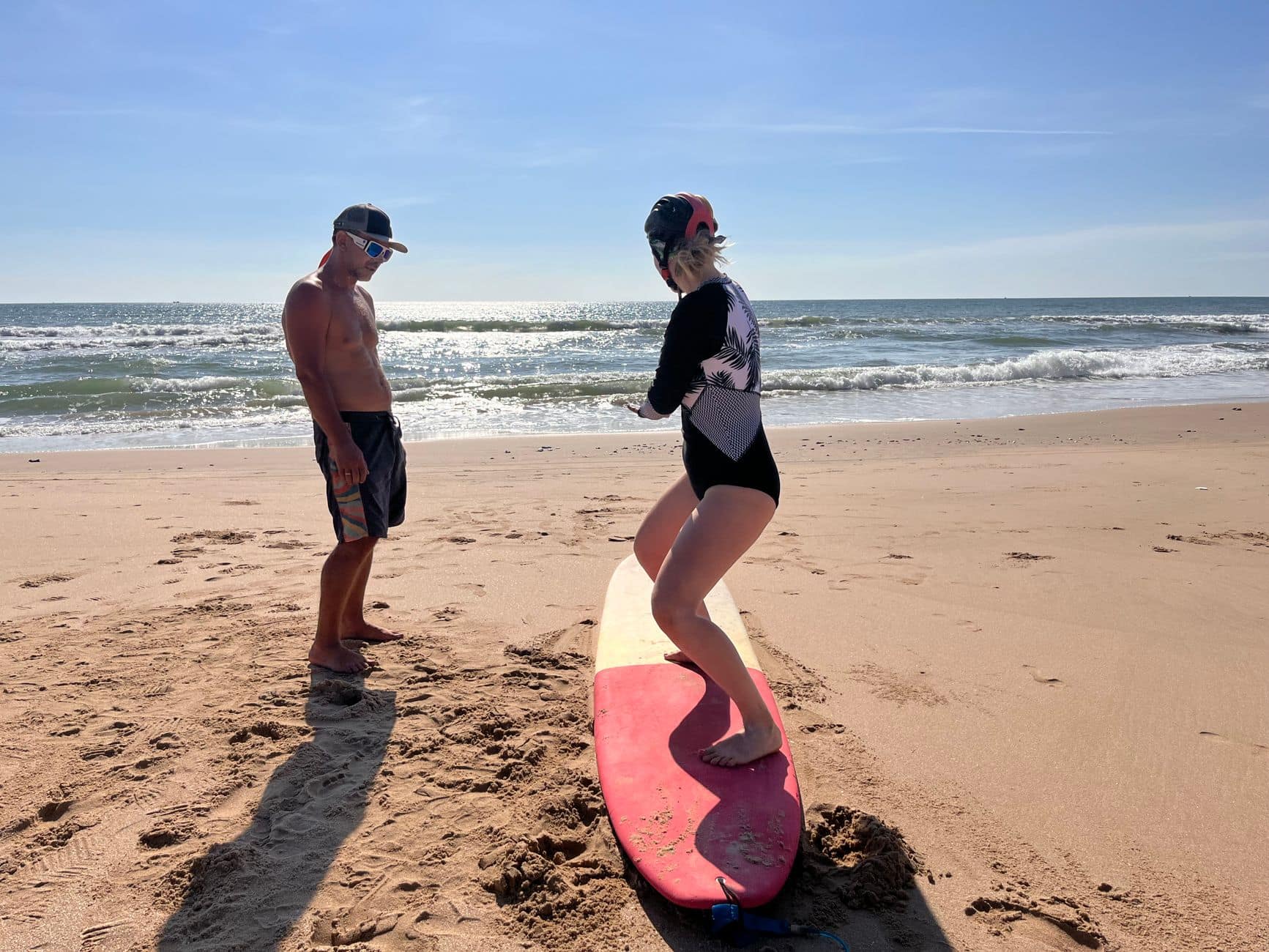
Bali Surf Lesson for Beginners
A surf lesson is one of the best short-format Bali activities because it feels local, active, and iconic without taking over the whole day. It is ideal for couples, friends, solo travelers, and anyone curious about the island's surf culture.
- Duration
- 2-4 hours
- Area
- Beginner-friendly Bali surf beaches
- Format
- Water activity
- Best for
- Beginners and casual active travelers
From $35 No prepayment
View tour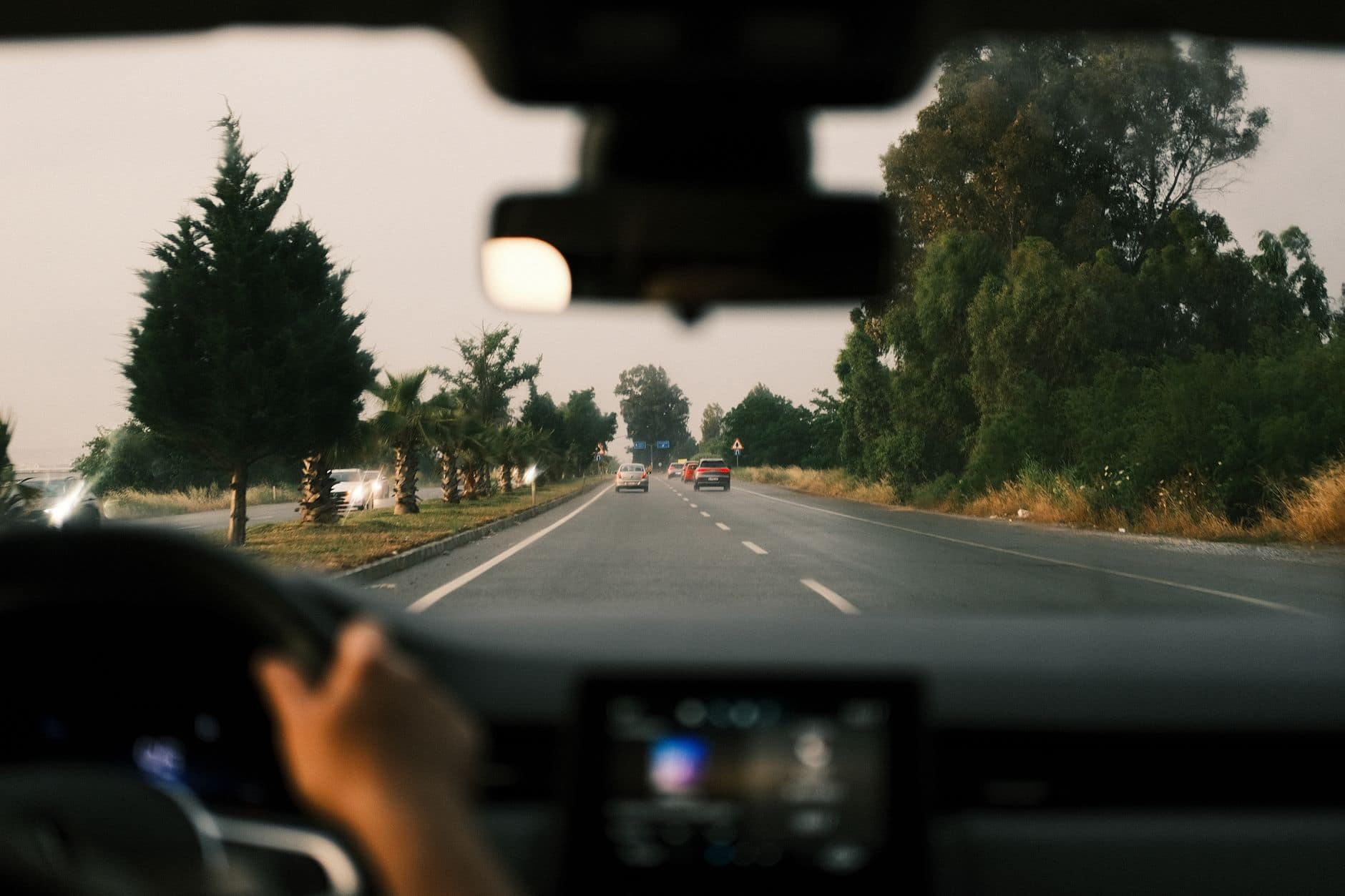
Private Car with Driver in Bali
This is one of the most useful products in Bali because so many plans become easier once transport is flexible. It is perfect for custom sightseeing, shopping days, family pacing, and travelers who already know roughly where they want to go.
- Duration
- Flexible daily use
- Area
- All major Bali regions
- Format
- Private transport service
- Best for
- Travelers who want total route flexibility
From $59 per car No prepayment
View tour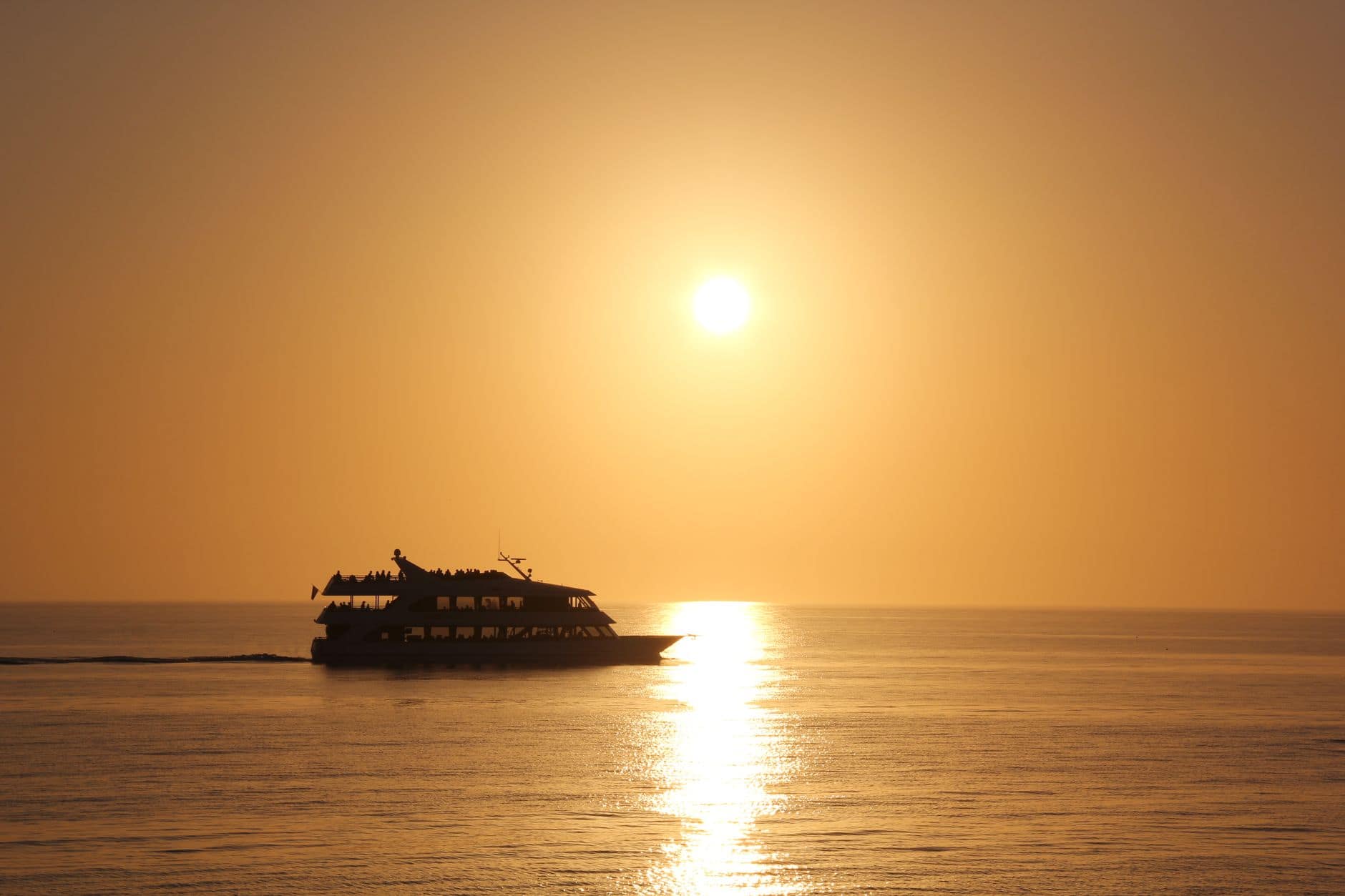
Bali Sunset Cruise from Benoa
This experience is ideal for couples, celebration groups, and travelers who want a premium-feeling evening without needing a full-day commitment. The main value is atmosphere, timing, and easy sea-facing views at the right hour.
- Duration
- 2-4 hours
- Area
- Bali coastal waters
- Format
- Boat experience
- Best for
- Couples, groups, and celebration nights
From $150 No prepayment
View tour