

Bali's surf spots stop being confusing the moment you see the pattern: one Southern Ocean swell engine that never switches off, and two coasts that take turns being offshore. From May to September the trades groom the west — the Bukit reefs from Uluwatu to Balangan, the Canggu rock shelves, the Kuta sand strip, the cobblestone points of Medewi and Balian. From November to March the wind swings west-to-northwest and the east side wakes up: Keramas, Serangan, Sanur, Nusa Dua. Levels range from waist-deep whitewater over sand to a peak one guide calls the most dangerous wave in Bali. This page is the table of the whole island — every region, its level, its season — with detailed guides one click deeper. We drive surfers to all of it, boards in the back.
By Alex Moskvin, Founder of SB Excursions · Published 21 May 2026 · Updated 16 October 2026
Tour on this route: Bali Surf Lesson for Beginners — From $35, 2-4 hours.
What are the best surf spots in Bali?
Uluwatu is the benchmark — a section-rich left over a limestone reef platform running from intermediate to expert — with Padang Padang, Bingin and Keramas completing the marquee list. But the honest answer depends on your level: for beginners the best spots are the sand-bottom beaches from Kuta to Seminyak, for improvers Medewi and Balian in west Bali, and from November to March the east coast from Serangan to Keramas takes over.
This guide also answers:
- Where should a beginner surf in Bali?
- Which surf breaks in Bali work in the wet season?
Top picks from this guide
 #1
#1
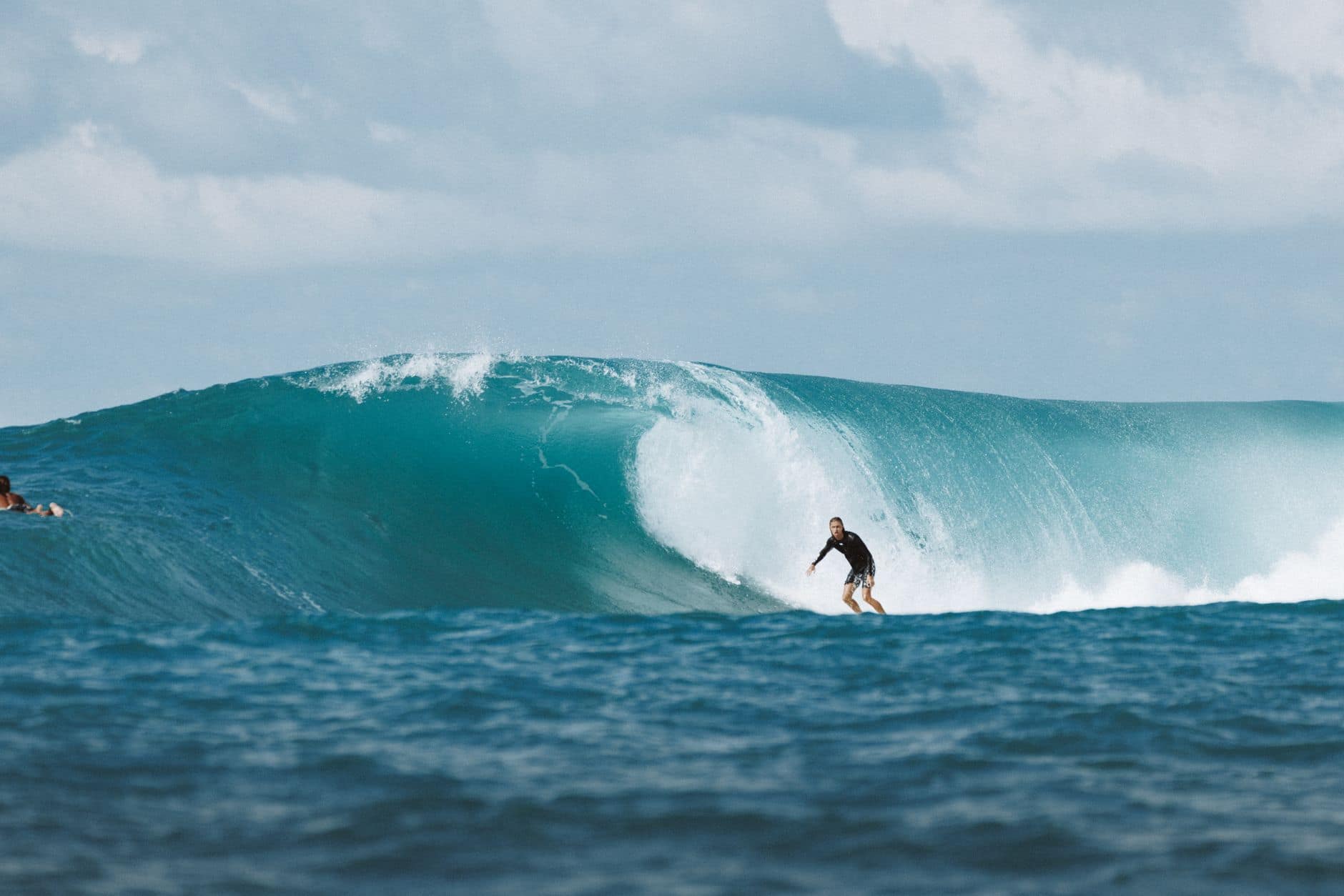
Uluwatu
A left-hand wave breaking over a flat limestone-and-coral platform below the cave, split into named sections — Temples, the Peak, Racetrack, Outside Corner — that run from intermediate to genuine big-wave expert. It is not a beginner wave at any tide. Best May to September, rideable year-round until the wet-season westerlies ruin it. The lineup is one of the busiest anywhere; Temples, the long paddle to the southern end, stays the calmest of the main sections.
 #2
#2
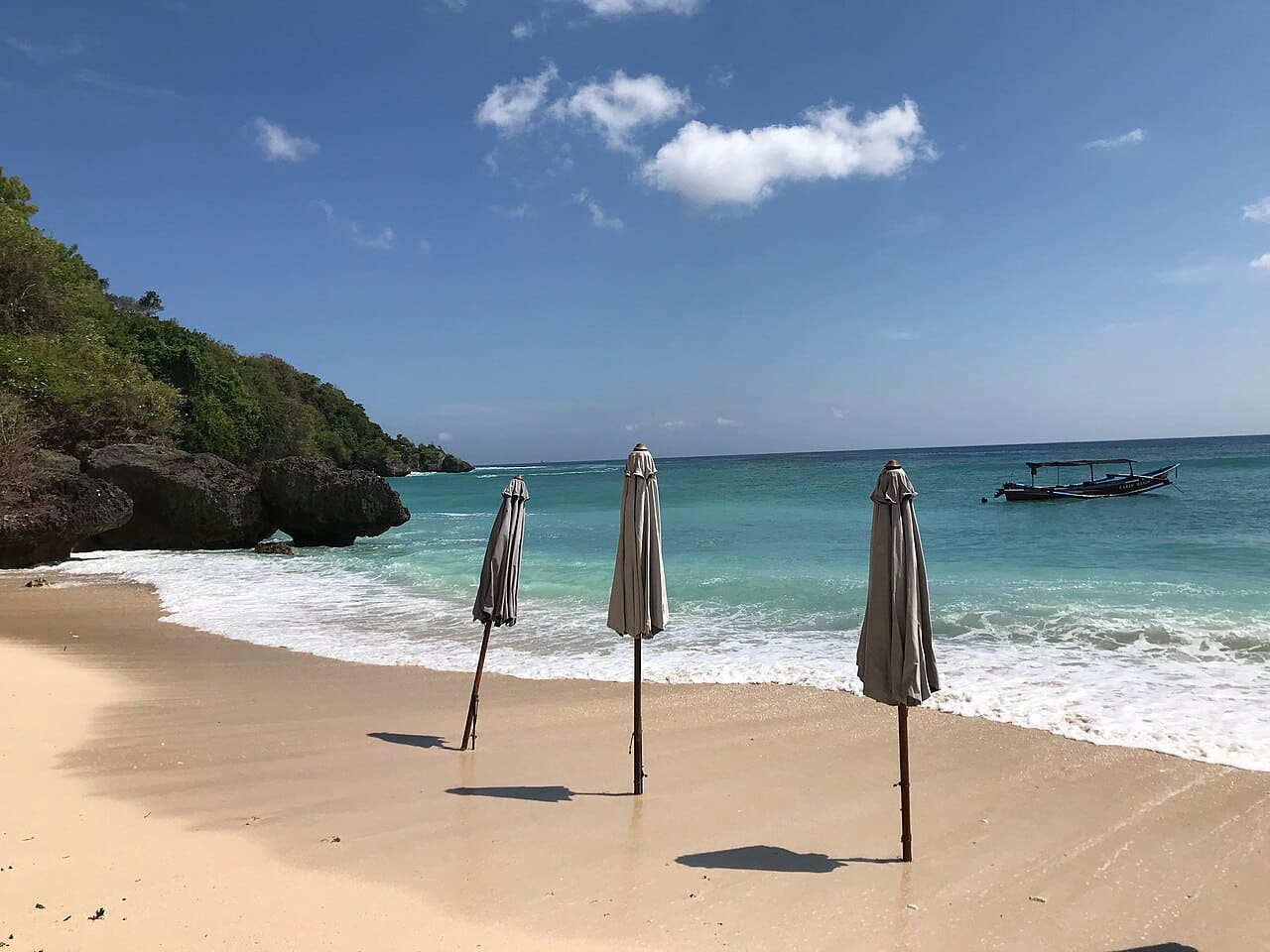
Padang Padang & Baby Padang
Padang Padang is the Balinese Pipeline: a sharp, very shallow left for advanced and expert surfers only, and it needs a specific swell to switch on at all — when it does, the crowd and the localism are as heavy as anywhere in Bali. Across the channel, Baby Padang is the opposite animal: a right over seaweed-cushioned reef that works on almost no swell and stays busy but friendly. Most guides call it beginner-to-improver, though not all agree — it is still reef.
 #3
#3
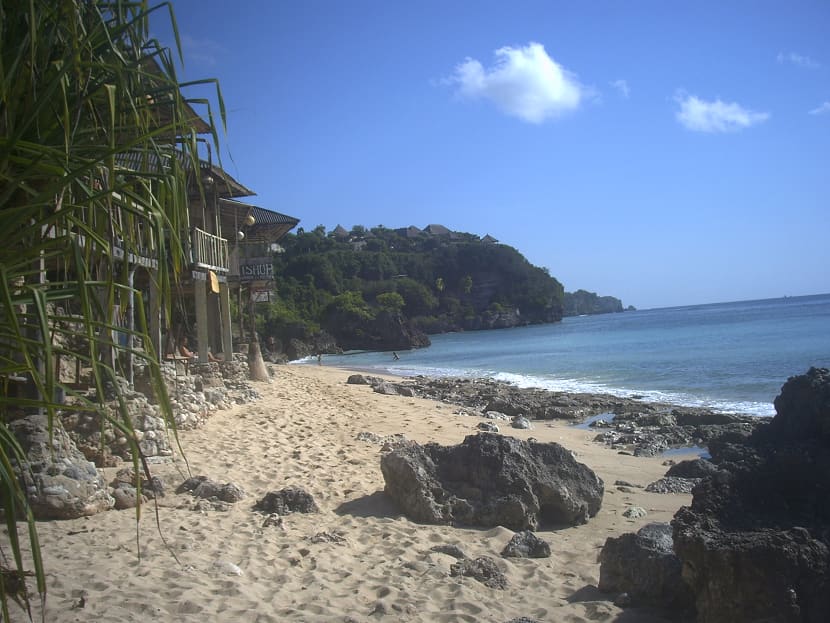
Bingin & Impossibles
Bingin is a short, hollow left over a coral shelf so shallow it dries out at low tide — intermediate to advanced, expert territory on the low. The crowd is extreme and the local crew runs the peak, so wait your turn. Next door, Impossibles stretches fast left walls down a long, sharp reef; it gets busy too, but multiple take-off zones spread the pack in a way Bingin's single peak never can. Both are dry-season waves.
 #4
#4
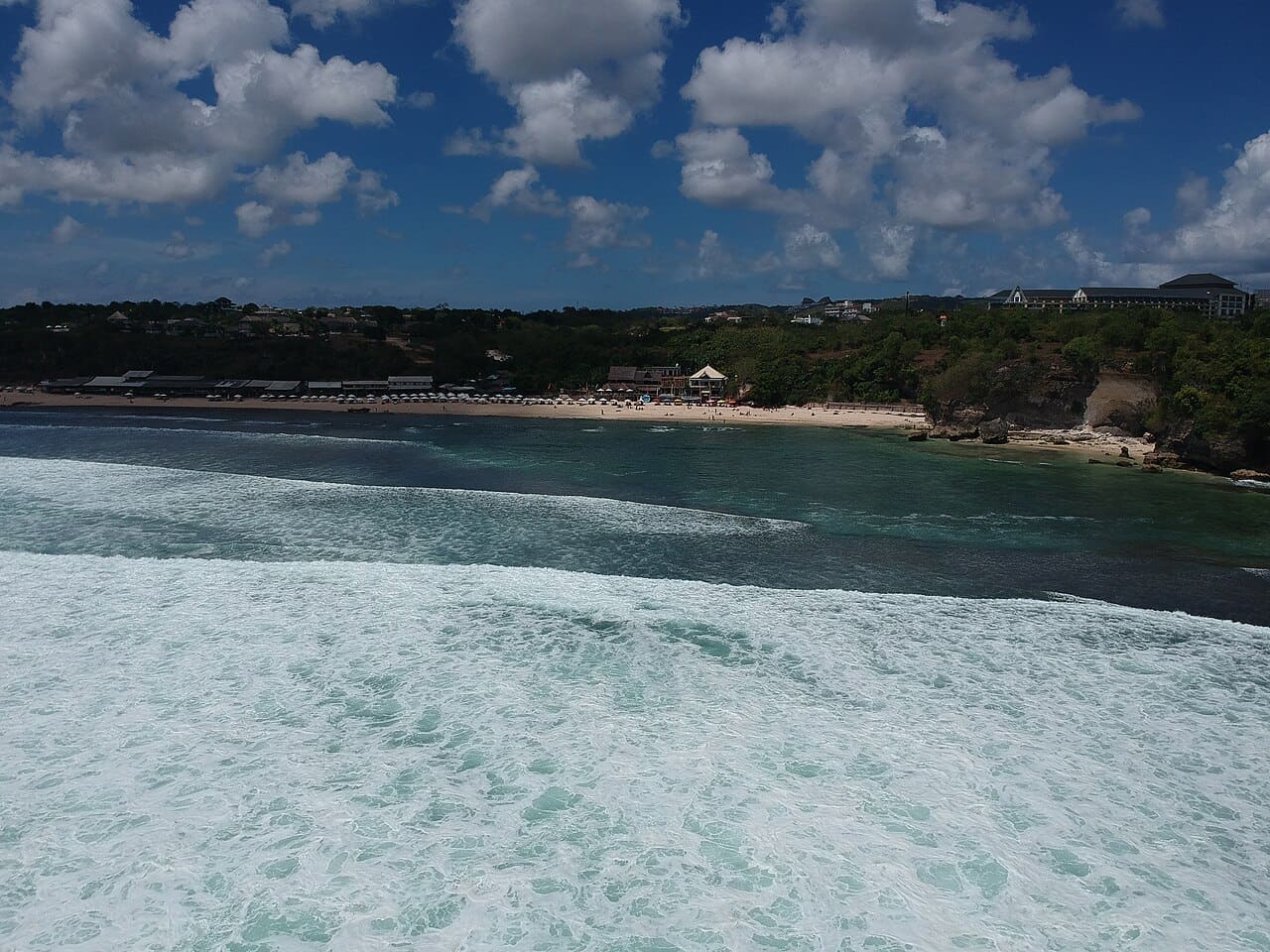
Balangan & Dreamland
Dreamland is the only break in this stretch with a substantially sandy bottom: an A-frame with lefts and rights, beginner-to-intermediate on ordinary days, serious once it reaches double overhead, and heavily touristed. Balangan, the northernmost of the group, is a left-hand wave that stays mellow at higher tides on a small swell and turns serious on low tide with size; crowd reports vary more here than for any other Bukit wave. Both run April to October.
 #5
#5
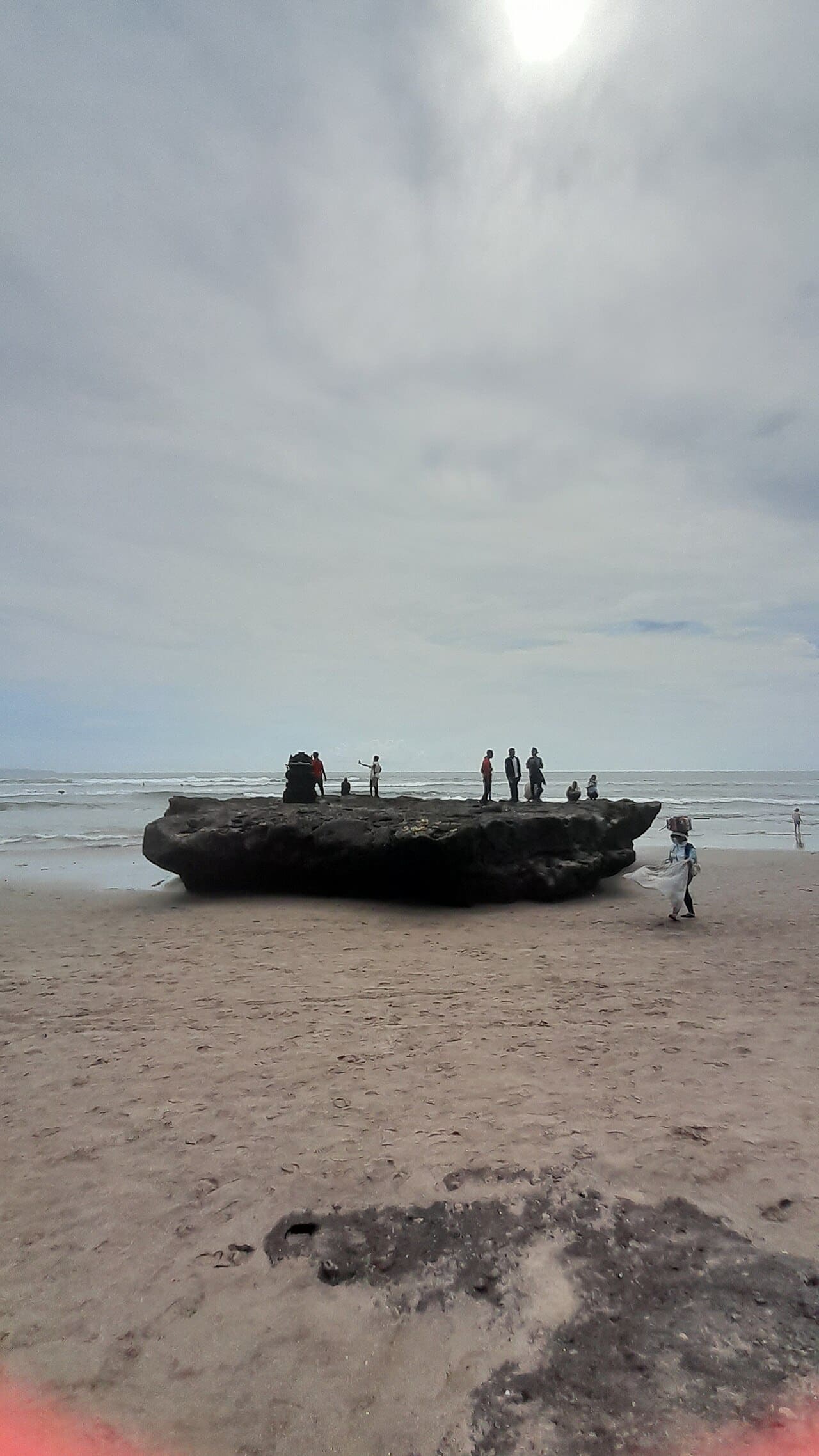
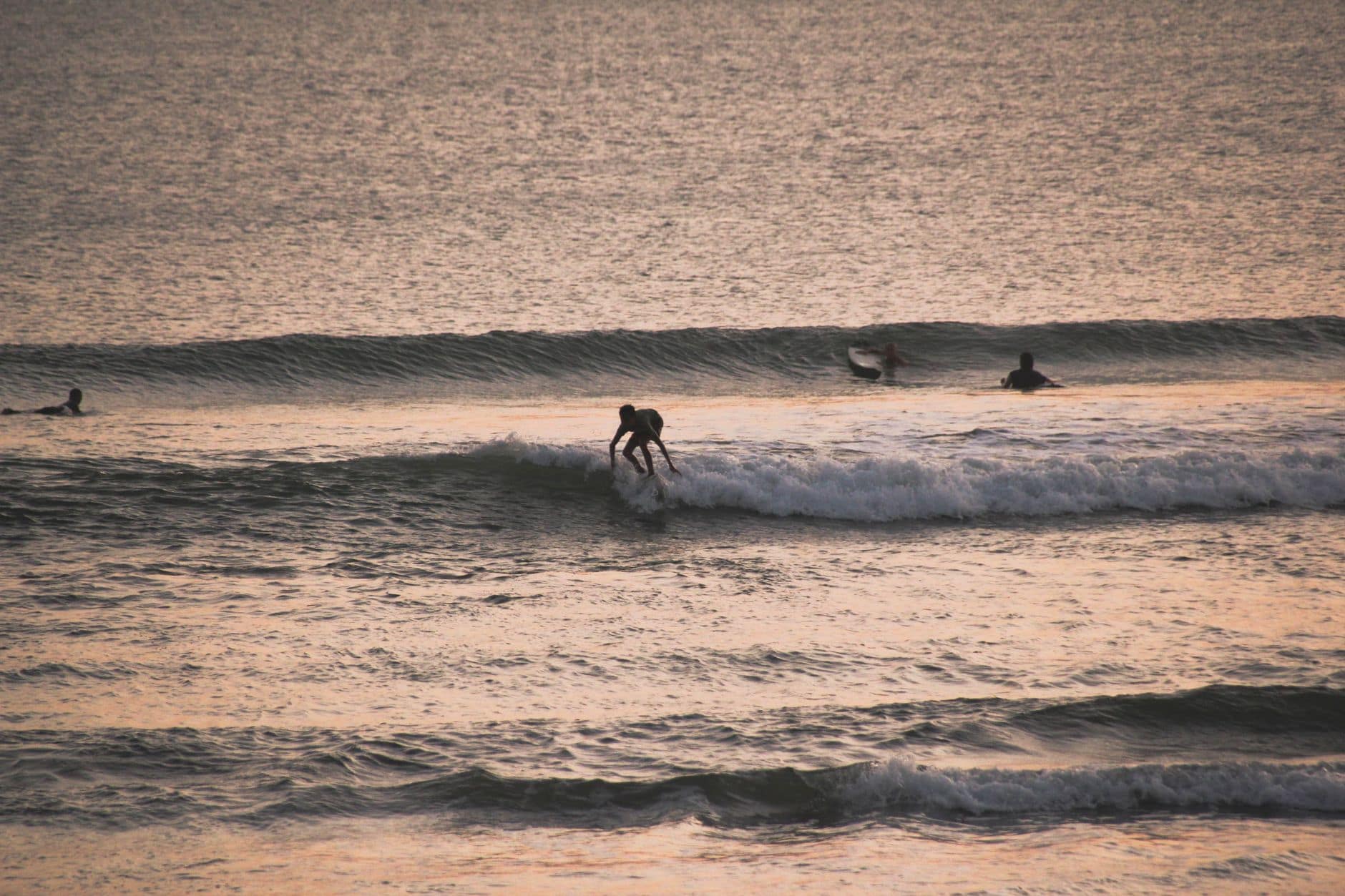
Canggu: Batu Bolong to Pererenan
Batu Bolong is the famous one: a long, mellow left over flat lava rock and sand patches, longboard-oriented, beginner-to-intermediate, with a crowd as thick as any in Bali. Old Man's next door spreads similar waves across several take-off zones. The level jumps fast from there — Echo Beach runs a fast, tubey left over jagged rock, and Pererenan's punchy right can draw forty surfers at dawn on a two-foot day. Clean mornings run May to October.
 #6
#6
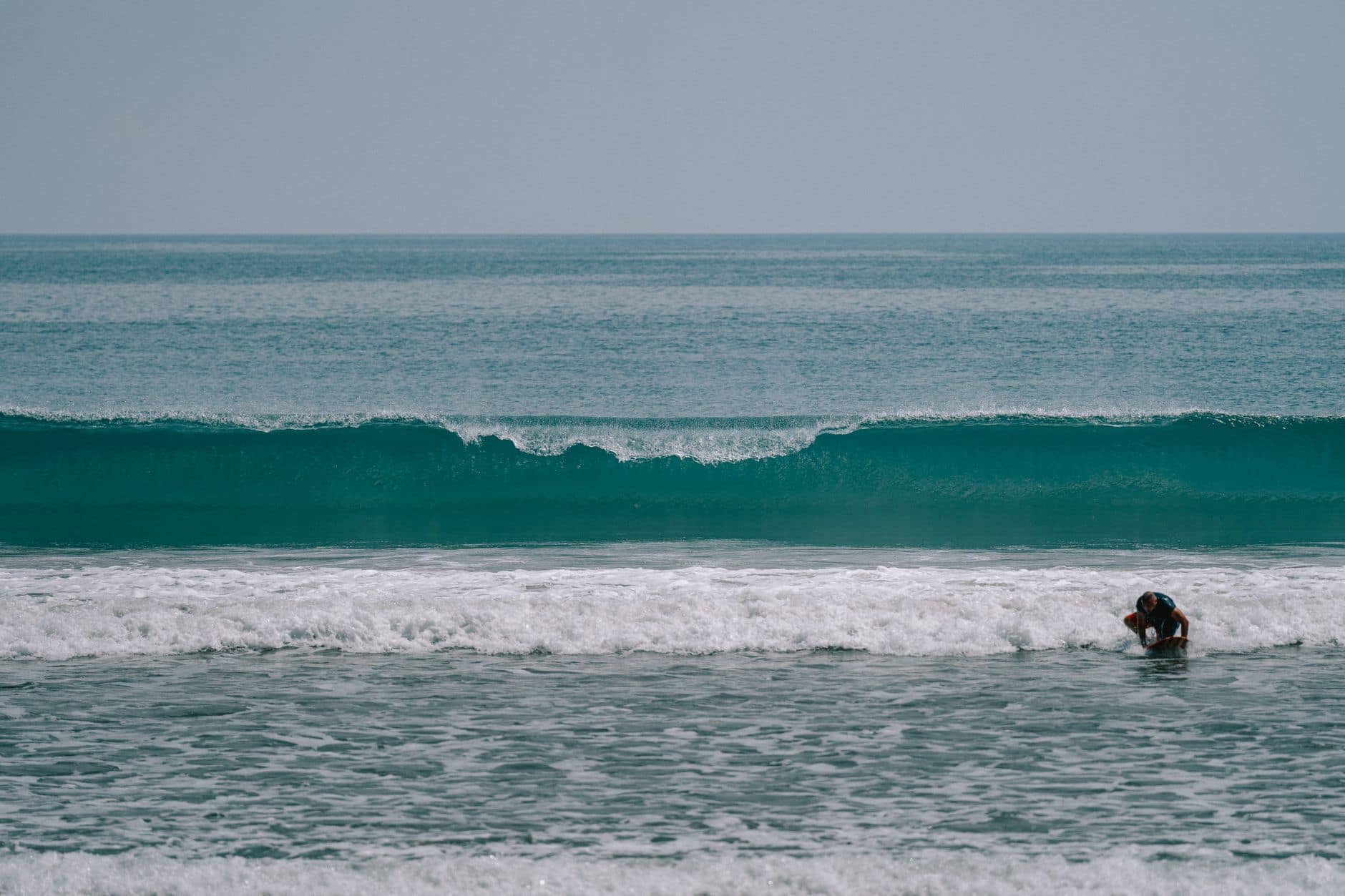
Kuta, Legian & Seminyak
The island's only long stretch of true sand-bottom surf, which is why every first lesson happens here. Kuta is the softest and the most crowded; Legian breaks with a little more push; Seminyak and Double Six offer more space, with surf schools thick on the inside banks. Dry-season mornings, May to October, are the window — from November to March the wind turns onshore and the monsoon current dumps plastic on exactly these beaches.
 #7
#7
The wet-season side: Keramas to Nusa Dua
When the westerlies wreck the west coast, this side turns offshore. Keramas is the star: a world-class right over black volcanic reef, advanced-plus, with a WSL contest pedigree and floodlit night sessions. Serangan is the accessible one — shifting peaks in deeper water, intermediate-friendly, rarely flat, and one of the wet season's most crowded lineups. Sanur hides a beginner-friendly inside reef and an expert-only outer one, and Nusa Dua's main peak is a wave one guide calls the most dangerous in Bali.
#8
West Bali: Medewi & Balian
Medewi is a mellow left-hand wave peeling over round cobblestones — improver to intermediate, with the rocky walk-in as the real filter — and midweek the lineup stays light. Balian, the rivermouth further east toward Tabanan, is the consistency play: it breaks essentially year-round with genuinely low crowds. Guides dispute its grade; the safe read is improver-to-intermediate that turns serious above head-high. Skip it right after the first heavy wet-season rains, when the river runs dirty through the lineup.
#9
Nusa Lembongan
The fast boat from Sanur puts you on a row of coral reefs off Lembongan's north shore. Playgrounds is the learner wave, a forgiving A-frame that is still coral underneath; Shipwrecks is the consistent right, sharp and shallow on the inside, with old seaweed-farm spikes still in the reef; Lacerations earns its name. One correction worth printing: these are dry-season waves behind the southeast trades — Lembongan is not the wet-season escape some blogs suggest.
One swell engine, two coasts that take turns
Bali's surf runs on a single engine: low-pressure systems in the Southern Ocean, sending south-southwest swell at the island all twelve months. That is why Bali is effectively never flat — in a typical August, the model record shows rideable swell present essentially 100% of the time at Uluwatu. Open-ocean swell averages 1.6–1.7 m in the wet season and 2.2 m in July–August, but the number that matters more is the period: it stretches from about 12.4 to 14.4 seconds at the mid-year peak, and longer-period swell breaks harder, hollower and further out on reef. Those figures are deep-water swell heights, not wave faces — the wave at the reef is regularly much bigger than the raw number suggests.
The wind decides which side of the island is clean. From roughly May to September the trades blow from the east-southeast and groom everything that faces southwest: the Bukit reefs, Canggu, the Kuta strip, Medewi and Balian, the Lembongan reefs. From November to March the monsoon swings west-to-northwest and the mirror flips — Sanur, Keramas, Serangan and Nusa Dua turn offshore while the west coast blows out. The swap is near-total: through the core dry-season months, clean wind on the east coast all but disappears. One honest asymmetry, though — the east coast takes the same swell only after it bends around the Bukit, so it arrives smaller, and Sanur sits in Nusa Penida's shadow on top of that. Wet-season surf is cleaner than its reputation, but it is smaller surf.
- May–September: the Bukit west coast, Canggu, the Kuta–Seminyak sand strip, Medewi and Balian, Nusa Lembongan
- November–March: Keramas, Serangan, Sanur and Nusa Dua — plus the south-coast outliers Green Bowl and Nyang Nyang, which run on the wet-season wind clock
- April and October: the shoulders — smaller, cleaner, quieter everywhere, and on the climatology numbers October is the best-balanced month of the year
- Every month: dawn. First light has the lightest wind in every season, which is why our surf days start early
The dry-season side: the Bukit, Canggu and the sand between
The Bukit's west coast is the wave list that made Bali famous, and it is all reef, nearly all lefts: Balangan and Dreamland as the gentler doorway, Bingin and Impossibles in the middle, Padang Padang and Uluwatu at the top of the ladder. Read the ladder honestly. Uluwatu is not a beginner wave at any tide; Padang Padang is advanced-to-expert only; Bingin's crowd and local hierarchy are as serious as its shallow shelf. The kind exceptions are Baby Padang's seaweed-padded right and Dreamland's part-sand bottom. Our Bukit Peninsula guide walks the coast reef by reef, tide window by tide window.
North of the airport the bottom changes and so does the mood. Kuta, Legian and Seminyak break over sand — this is where lessons happen, and where a private beginner lesson from $35 puts a board, leash and instructor in the water with you. Canggu is the next step, not the first one: Batu Bolong's long left runs over a lava-rock shelf with sand patches, kind to improvers on a longboard but repeatedly flagged as unsuitable for absolute first-timers because of the rips. Echo Beach and Pererenan are intermediate-and-up, and when the sand stops teaching you anything, Kuta Reef and the airport reefs wait offshore. The full strip, peak by peak, is in our Canggu surf guide.
The wet-season side: Keramas to Nusa Dua
From November to March, the same drivers who took you to Uluwatu in July point the car east. Keramas is the marquee wave: a fast right over black volcanic reef, a World Championship Tour venue that even runs floodlit night sessions, honestly rated advanced-and-up, about 45 minutes from Sanur by the bypass. Serangan, fifteen-odd minutes from the airport, is the accessible one: a field of shifting peaks in deeper water that rarely goes flat and draws one of the wet season's most crowded lineups. Sanur itself splits in two — Baby Reef, the mellow surf-school wave inside the bay, and the outer Sanur Reef, expert-only, fiercely local, and too small to break properly most days even in season.
Nusa Dua almost never goes flat — its outer reef takes the swell head-on, spread across several named peaks, and the main peak is the one a respected guide calls probably the most dangerous wave in Bali. Intermediates should aim at the satellite peaks, not the main one. Two south-coast outliers belong to this season for wind reasons: Green Bowl, a right at the bottom of a long cliff staircase that keeps its crowd modest, and Nyang Nyang below the cliffs south of Uluwatu. Everything on this side runs smaller than the Bukit would on the same swell — our east Bali surf guide covers the coast in detail.
The quiet corners: west Bali and Nusa Lembongan
Northwest of Canggu the coast empties out. Medewi is a mellow left peeling over round cobblestones — improver to intermediate, with the rocky walk-in as the real test — and midweek the lineup stays light; the river-mouth right a few hundred metres south is the recognised escape when the point gets busy. Balian is the consistency play: rivermouth peaks over cobble and sand that break essentially year-round with genuinely low crowds. Guides dispute Balian's grade, so we publish the safe read — improver-to-intermediate, serious above head-high — and we skip it after the first heavy wet-season rains for water-quality reasons. The long version is in our Medewi and Balian guide.
Nusa Lembongan is the other direction: a fast boat from Sanur — tickets with hotel pickup from $15 — and you are looking at a row of dry-season reefs. Playgrounds is the island's learner wave, forgiving by reef standards but still reef; Shipwrecks is the consistent right, sharp and shallow inside, with old seaweed-farm spikes in the reef; Lacerations is the safety briefing in one word, and Razors across the channel stays the quietest of the four. They all want the April-to-October trades — in the wet-season westerlies these reefs are onshore, the same as the west coast.
Boards in the car, tides on the chart: how a surf day runs
Chasing the right coast in the right season means driving, and driving with boards. Our car with driver runs from $59 for the day, and boards fit — the plan stays loose on purpose. You message us on WhatsApp, we start before dawn because first light carries the lightest wind in every month of the year, and if the first spot is blown or the tide is wrong, the driver already knows the fallback. No prepayment, same as every tour we run. Landing with a board bag? A private airport pickup from $15 starts the trip at the kerb instead of the taxi line.
Respect the tide chart more than the forecast app. South Bali runs a mixed tide with a spring range around 2–2.5 metres, and the premier waves break over fringing reef platforms that sit barely a metre below mean sea level — at a spring low, parts of some reefs are effectively dry, and a spot can go from perfect to unrideable inside a single session. Tide preferences are not uniform either: some waves only work on low, others want mid-to-high, and for a few — Padang Padang is the famous case — published guides genuinely contradict each other. Our regional guides list windows spot by spot; when in doubt, ask the surfers walking back up the path.
Gear stays simple: boardshorts and a rashguard work all twelve months — no wetsuit, ever. The one nuance is the Bukit late in the dry season, when upwelling pulls the water down to a 25–26°C average in August and September, noticeably cooler than the 29°C of March; cold-prone surfers pack a 1–2 mm top for dawn sessions and regret nothing. A long-sleeve rashguard earns its place year-round anyway — sun on the paddle out, reef on the way in.
FAQ
What are the best surf spots in Bali?
Uluwatu is the benchmark — a section-rich left over a limestone reef platform running from intermediate to expert — with Padang Padang, Bingin and Keramas completing the marquee list. But the honest answer depends on your level: for beginners the best spots are the sand-bottom beaches from Kuta to Seminyak, for improvers Medewi and Balian in west Bali, and from November to March the east coast from Serangan to Keramas takes over.
Where should a beginner surf in Bali?
On sand: Kuta, Legian and Seminyak are the island's true beginner venues, and the south end of Kuta is the least rip-affected stretch. Batu Bolong in Canggu suits improvers on longboards, but it breaks over a rock shelf and Canggu's rips make it a poor first-ever venue. A private lesson from $35, with board, leash and instructor included, is the fastest safe start.
When is the best time to surf in Bali?
May to September for the west coast — the Bukit, Canggu, the Kuta strip, Medewi — and November to March for the east coast around Sanur, Keramas and Nusa Dua. There is genuinely no flat season: the Southern Ocean sends swell all year, so the only question is which coast the wind favours. On the climatology numbers, October is the best-balanced single month, with April close behind.
Which surf breaks in Bali work in the wet season?
The east and southeast side: Keramas, Serangan, Sanur and Nusa Dua turn offshore from November to March, plus Green Bowl and Nyang Nyang on the south coast. Expect clean but smaller waves — the swell bends around the Bukit and loses size on the way in. Avoid the west coast then: it is onshore, and the monsoon can land up to 60 tonnes of plastic a day on Kuta and Legian.
How are Bali's surf spots arranged around the island?
Think of five zones: the sand strip from Kuta to Canggu on the southwest coast; the reef ladder down the Bukit's west side from Balangan to Uluwatu; the wet-season coast from Sanur through Keramas, plus Nusa Dua on the Bukit's east; the quiet cobblestone points of Medewi and Balian in the far west; and the Lembongan reefs across the strait. This page is the table of the island — the regional guides go spot by spot.
How crowded are Bali's surf breaks?
The famous ones are as crowded as anywhere on earth — Uluwatu's Peak, Padang Padang, Bingin and Batu Bolong all sit at the top of the scale, and Padang and Bingin add real localism. The escape valves are real too: Temples at Uluwatu's southern end, Medewi midweek, Balian almost always, Green Bowl behind its cliff staircase, and Nusa Dua's crowd diluted across several separate peaks.
Recommended Bali tours for this guide
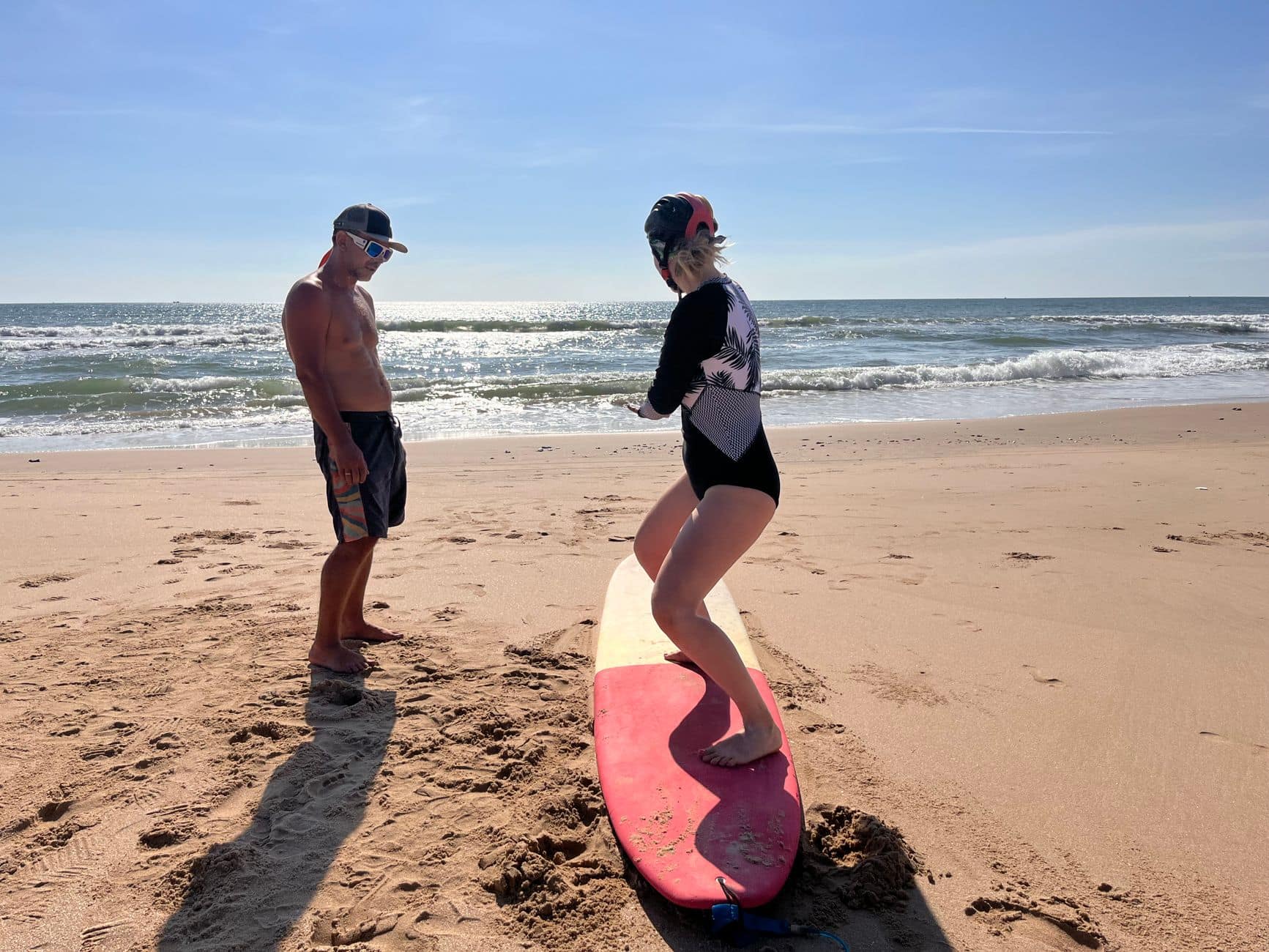
Bali Surf Lesson for Beginners
A surf lesson is one of the best short-format Bali activities because it feels local, active, and iconic without taking over the whole day. It is ideal for couples, friends, solo travelers, and anyone curious about the island's surf culture.
- Duration
- 2-4 hours
- Area
- Beginner-friendly Bali surf beaches
- Format
- Water activity
- Best for
- Beginners and casual active travelers
From $35 No prepayment
View tour
Private Car with Driver in Bali
This is one of the most useful products in Bali because so many plans become easier once transport is flexible. It is perfect for custom sightseeing, shopping days, family pacing, and travelers who already know roughly where they want to go.
- Duration
- Flexible daily use
- Area
- All major Bali regions
- Format
- Private transport service
- Best for
- Travelers who want total route flexibility
From $59 per car No prepayment
View tour
Bali Airport Transfer
Airport transfers are not glamorous, but they have an outsized impact on how the trip starts. A clean pickup, clear driver coordination, and direct route to the hotel make a huge difference after a long flight.
- Duration
- Depends on hotel area
- Area
- Ngurah Rai Airport and Bali hotel areas
- Format
- Private transfer service
- Best for
- New arrivals and stress-free departures
From $15 per car No prepayment
View tour