

People book the Nusa Penida snorkeling day assuming it works like snorkelling on a resort beach, and it does not. Three of the four stops have no beach at all: you step off a ladder into open water with the boat alongside and nothing under your feet. That does not mean a non-swimmer cannot do it — every boat provides a life vest, a guide goes in the water with you, and plenty of people who cannot swim 25 metres have floated above a manta perfectly happily. But it does mean the decision has to be made before you are sitting on the side of the boat with six strangers waiting behind you. Here is exactly what the day asks of you, and what to book instead if the answer is no. Calmer alternatives from $50.
By Alex Moskvin, Founder of SB Excursions · Published 21 May 2026 · Updated 23 October 2026
Tour on this route: Snorkel with Manta Rays, Nusa Penida — From $29, full day.
Can you snorkel in Nusa Penida if you cannot swim?
Yes, with a life vest and a guide, and plenty of people do. Every shared boat provides vests and somebody is in the water at each stop. What you cannot avoid is that three of the four stops are deep-water entries off a boat ladder with no beach — so the honest requirement is a willingness to float in open water, not an ability to swim 25 metres.
This guide also answers:
- Is Nusa Penida snorkeling suitable for beginners?
- What is the calmest snorkeling near Bali for a nervous swimmer?
Top picks from this guide
 #1
#1
What actually keeps you up
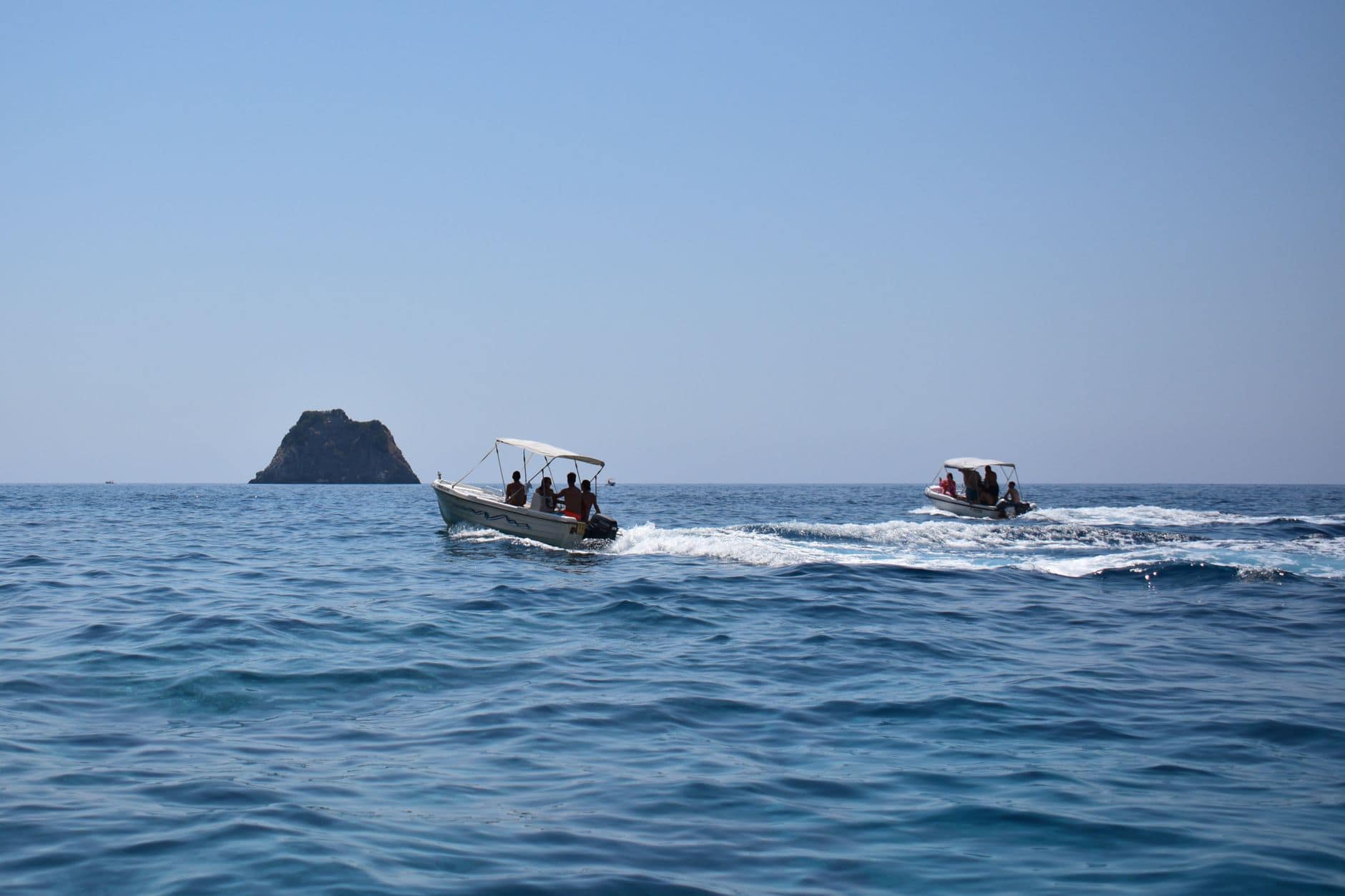
A life vest, and it is not optional on shared boats. With one on you float whether or not you do anything, and with a mask and snorkel you breathe with your face in the water while doing nothing at all. Swimming ability is not what keeps you at the surface here — the vest is. What swimming ability buys you is calm, which is a different thing and matters more.
 #2
#2
The boat entry
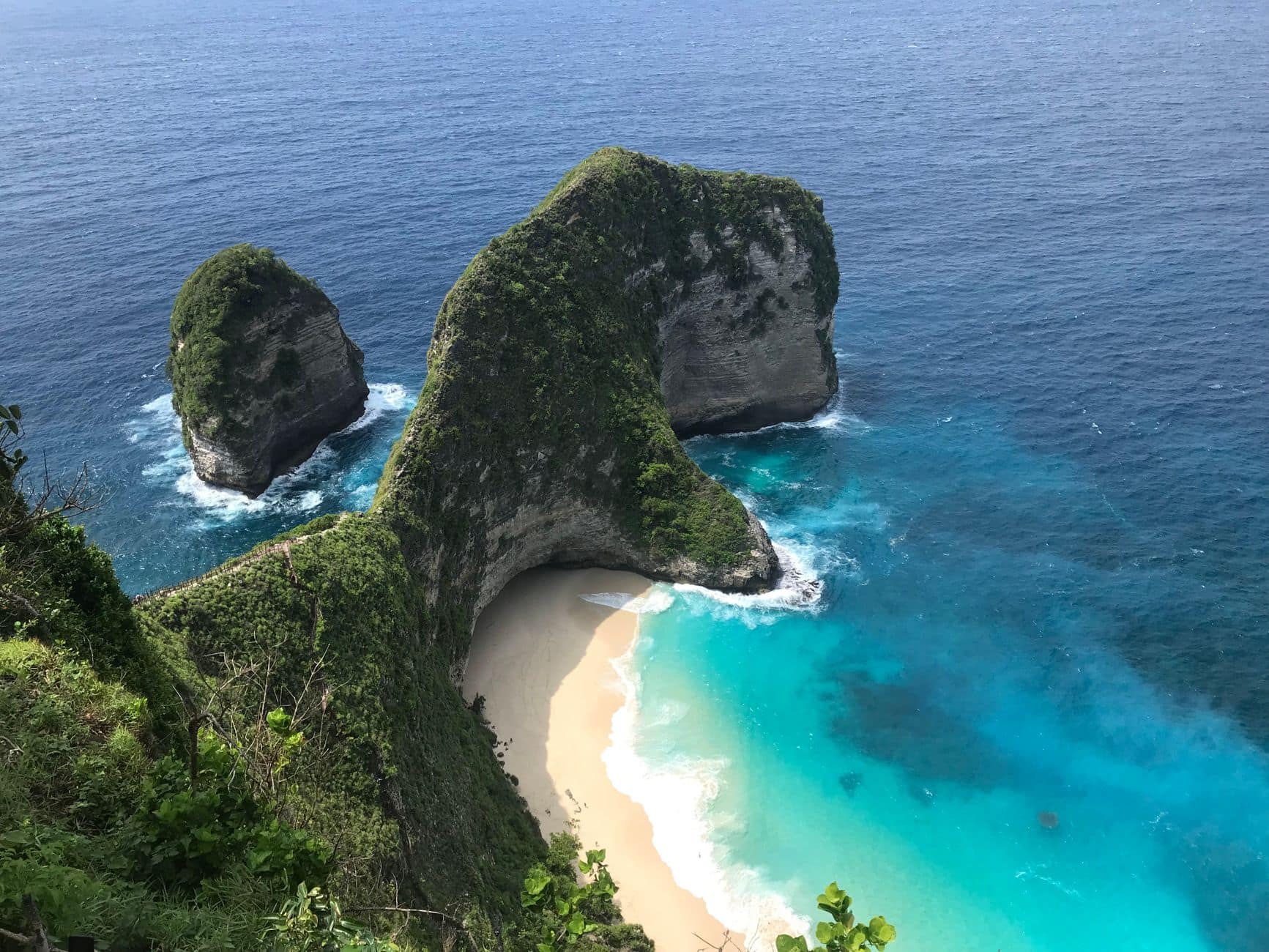
You sit on the side, put your fins on, and step down a short ladder into deep water. The first three seconds are the whole difficulty for most people: no bottom, some movement on the surface, and a boat you now have to turn round and find. Once you are floating it stops being frightening almost immediately. Tell the crew beforehand and you go first, with the guide already in the water.
 #3
#3
Crystal Bay, the easy one
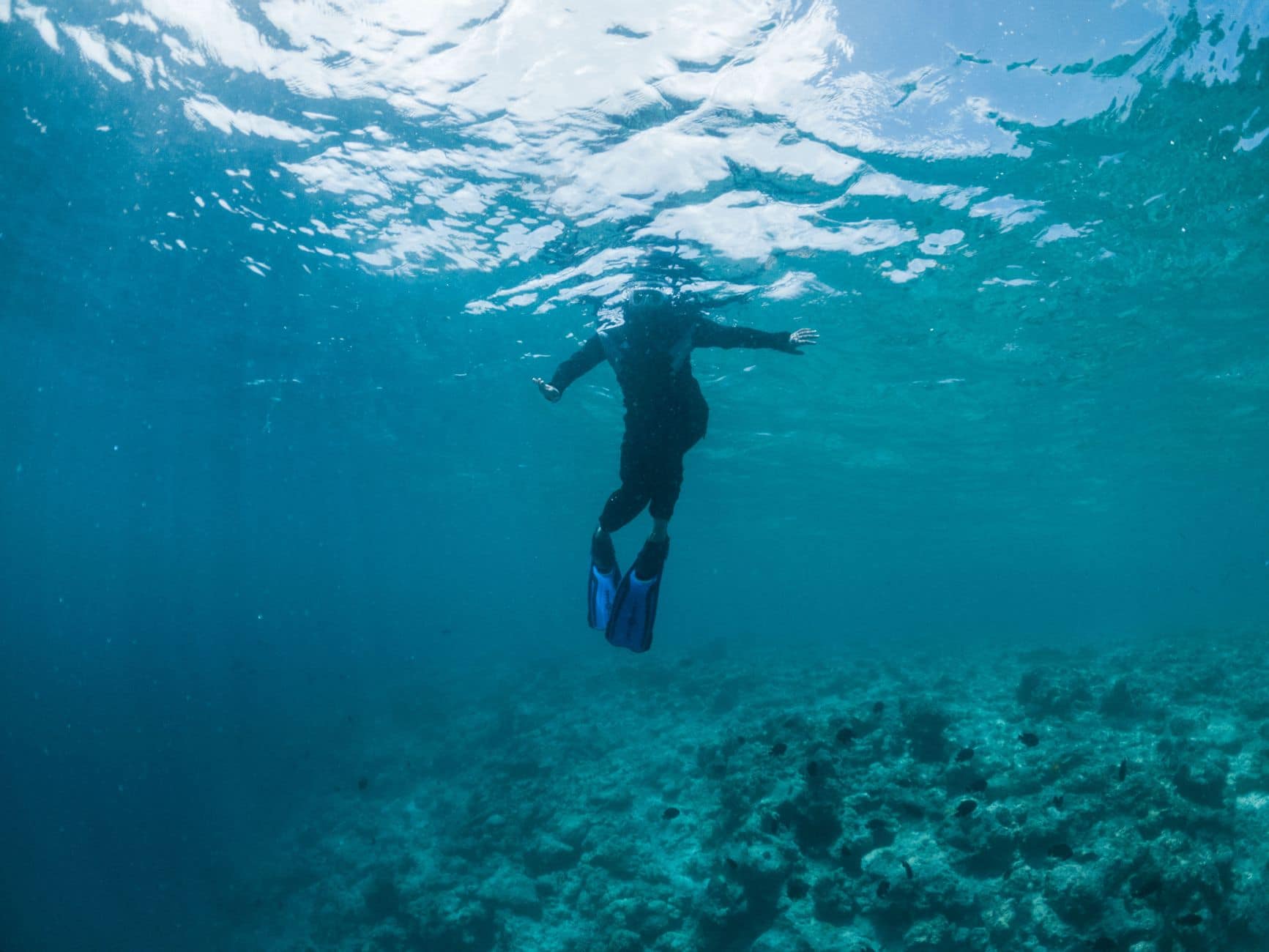
The one stop on the standard route with a beach. Inside the bay you can stand up, walk in from the sand, and stay in water that is shallow and calm with coral a short way out. If you do only one stop on the whole day, do this one. The rule at Crystal Bay is simple: stay inside the bay, and do not swim toward the headland at the mouth where the current runs.
 #4
#4
Blue Lagoon, if the answer is no
A small sheltered cove five minutes north of Padang Bai harbour, on the mainland, where you walk in from a beach into shallow water with good coral and no crossing to make. Clearest between 07:00 and 10:00. It is the honest recommendation for a genuinely nervous first-timer, and it costs less to get to than the Penida day.
Stop by stop, for a non-swimmer
The same four stops everyone does, rated by what they ask of you rather than by what you see:
| Stop | Entry | Can you stand? | Verdict for a non-swimmer |
|---|---|---|---|
| Manta Point | Ladder, deep water | No | Doable in a vest with a guide — but this is the demanding one |
| Manta Bay | Ladder, deep water | No | Easier than the point: shallower and flatter |
| Gamat Bay | Ladder, deep water | No | Skip it — the current here is the strongest of the day |
| Crystal Bay | Ladder or walk in from sand | Yes, inside the bay | Comfortable. Do this one |
| Toyapakeh | Ladder, shallow reef | No | Fine when the tide is still, skip it when it is running |
Nobody makes you get in. Staying on the boat for one stop is completely normal and the crew will not mind — on most trips somebody does. What is not normal, and what causes the incidents that do happen on this coast, is getting in at a current stop to keep up with a group and then being too tired or too far from the boat to be comfortable.
Six things to do before the boat
- Tell the crew when you book, not when you arrive. One line on WhatsApp — one of us is not a strong swimmer — changes who goes in first and who the guide stays next to.
- Try the mask in the pool at your hotel. Breathing through a snorkel with your face down is the genuinely unfamiliar part, and learning it in deep water beside a boat is the worst place to learn it.
- Keep the vest inflated and do not let anyone talk you out of it. Confident snorkellers sometimes skip it. You are not one of them today, and nobody is giving out marks for it.
- Take a seasickness tablet an hour before leaving the hotel. Floating face-down on a moving surface at the manta stop is what makes people seasick, more than the crossing does.
- Ask which stop has a beach and plan to be in the water there. That is Crystal Bay, and it is the stop worth saving your energy for.
- Agree a signal with the guide. Arm straight up means come and get me. Use it early rather than late.
What the actual risks are, honestly
The hazard around Nusa Penida is current, not depth. Under a floating body wearing a vest, eight metres and eighty metres feel identical, and nobody drowns because the water was deep. What causes trouble is water that moves faster than you can swim — at Gamat Bay where it squeezes past the headland, at the mouth of Crystal Bay toward the point, and at Toyapakeh when the tide is running. Every serious incident on this coast follows the same pattern: somebody swims away from the boat, toward a headland, and cannot get back.
Which is why the rules are simple and worth following exactly. Keep the guide between yourself and open water. Do not swim toward the ends of a bay. If you feel yourself moving without swimming, do not fight it — signal, float, and let the boat come to you, because the boat is faster than you are. And at the manta mooring specifically, stay above the animals rather than dropping into the water between a manta and the reef.
For the wider picture on the island, including the roads and the cliff stairs, see is Nusa Penida safe.
Should you do it at all?
If the idea of floating in a vest in open water sounds exciting-but-nervous, do it. That is the normal feeling and it usually disappears about ninety seconds after your face goes in the water. Take the Manta Point snorkeling trip from $29, tell the crew, go in first, and treat Gamat Bay as optional.
If the idea sounds genuinely frightening, do not spend your holiday proving something. Start at Blue Lagoon from $50, where you walk in from a beach on the mainland with gear, a guide, lunch and pickup included, and where standing up is always an option. Our guide to snorkeling in Bali if you cannot swim lists five more calm spots. The mantas will still be there next trip — they are there in all twelve months.
And if the water is not for you at all, the island still is. The Nusa Penida West Tour from $49 per car covers Kelingking, Angel's Billabong, Broken Beach and Crystal Bay from the road, and you can swim in the shallow end of the bay at the last stop with your feet on the sand.
Children and older travellers
There is no fixed age limit on shared snorkelling boats, and the practical question is not age but whether a person is comfortable floating in a vest away from land while somebody else is running the day. Confident children of eight or nine often do better at the manta stop than nervous adults, because they have fewer ideas about what could go wrong. Younger than that, a private boat is worth the money purely because you can leave a stop the moment it stops being fun.
For older travellers the limiting factor is usually the ladder and the swell rather than the swim — getting back onto a small boat that is moving takes more upper-body strength than getting off it. Crews are practised at helping, and asking in advance is normal. Families should also read Nusa Penida with kids, which covers which land stops are safe and which involve unfenced cliff edges.
FAQ
Can you snorkel in Nusa Penida if you cannot swim?
Yes, with a life vest and a guide, and plenty of people do. Every shared boat provides vests and somebody is in the water at each stop. What you cannot avoid is that three of the four stops are deep-water entries off a boat ladder with no beach — so the honest requirement is a willingness to float in open water, not an ability to swim 25 metres.
Is Nusa Penida snorkeling suitable for beginners?
Partly. Crystal Bay is genuinely beginner-friendly, with sand behind it and shallow water you can stand in. Manta Point is not a place for beginners in any weather: it is an open-water entry on an exposed corner with surface movement. A complete beginner is better off starting at Blue Lagoon on the mainland from $50 and doing Penida on a later trip.
Do they give you a life jacket for snorkeling in Nusa Penida?
Yes, on every shared trip, and you should keep it on. The vest is what holds you at the surface, not your swimming, and it means a tired swimmer can simply stop and float. Experienced snorkellers sometimes go without one; if you are asking this question, you are not in that group today.
Is there an age limit for snorkeling in Nusa Penida?
No fixed limit on shared boats, and the real test is temperament rather than age. Confident children of eight or nine often manage the manta stop better than nervous adults. Below that, a private boat is worth the extra cost because you can end a stop the moment it stops being enjoyable rather than waiting for a group.
Are there sharks at Nusa Penida?
Reef sharks are present around the island but are shy, usually deeper than snorkellers go, and are not a hazard. Divers occasionally see whitetips resting on the sand. The animals you will actually be in the water with at the manta stop are filter feeders with no barb and no teeth of consequence. Current is the risk here, not wildlife.
Has anyone drowned snorkeling at Nusa Penida?
There have been incidents on this coast, as on any exposed coast with strong currents, and they follow a consistent pattern: somebody swims away from the boat toward a headland and cannot get back against the water. That is what the guide, the vest and the rule about staying near the boat exist to prevent. Stay with the group, do not swim toward the ends of a bay, and signal early rather than late.
Can you skip a snorkeling stop and stay on the boat?
Yes, and it is completely routine — on most trips somebody sits one out. Skipping Gamat Bay is the sensible choice for a weak swimmer, since it has the strongest current of the day. Nobody on the crew will mind, and it is far better than getting in to keep up with a group and then struggling.
What is the calmest snorkeling near Bali for a nervous swimmer?
Blue Lagoon at Padang Bai on the mainland: a small sheltered cove where you walk in from the beach into shallow water with good coral, clearest between 07:00 and 10:00, from $50 with gear, guide, lunch and pickup. On Nusa Penida itself the answer is Crystal Bay, inside the bay, where you can stand on sand.
Recommended Bali tours for this guide
Snorkel with Manta Rays, Nusa Penida
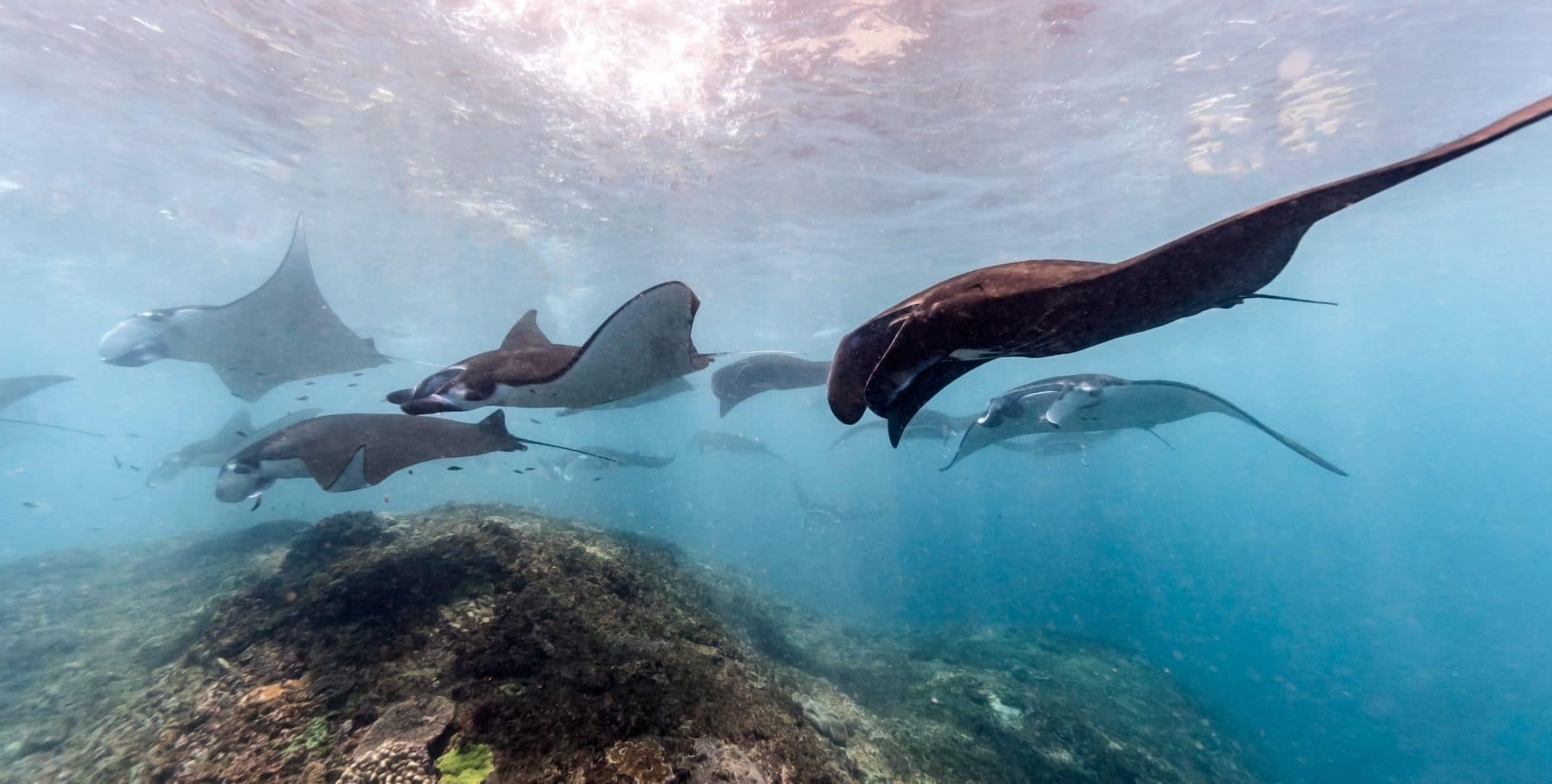
This is one of Bali's strongest sea-day products because the experience starts delivering early and stays visually powerful all day. It works for couples, small groups, and first-time snorkelers who want clear planning and strong photo value.
- Duration
- Full day
- Area
- Manta Point and Nusa Penida waters
- Format
- Snorkeling tour
- Best for
- Snorkeling lovers and sea-day travelers
From $29 No prepayment
View tour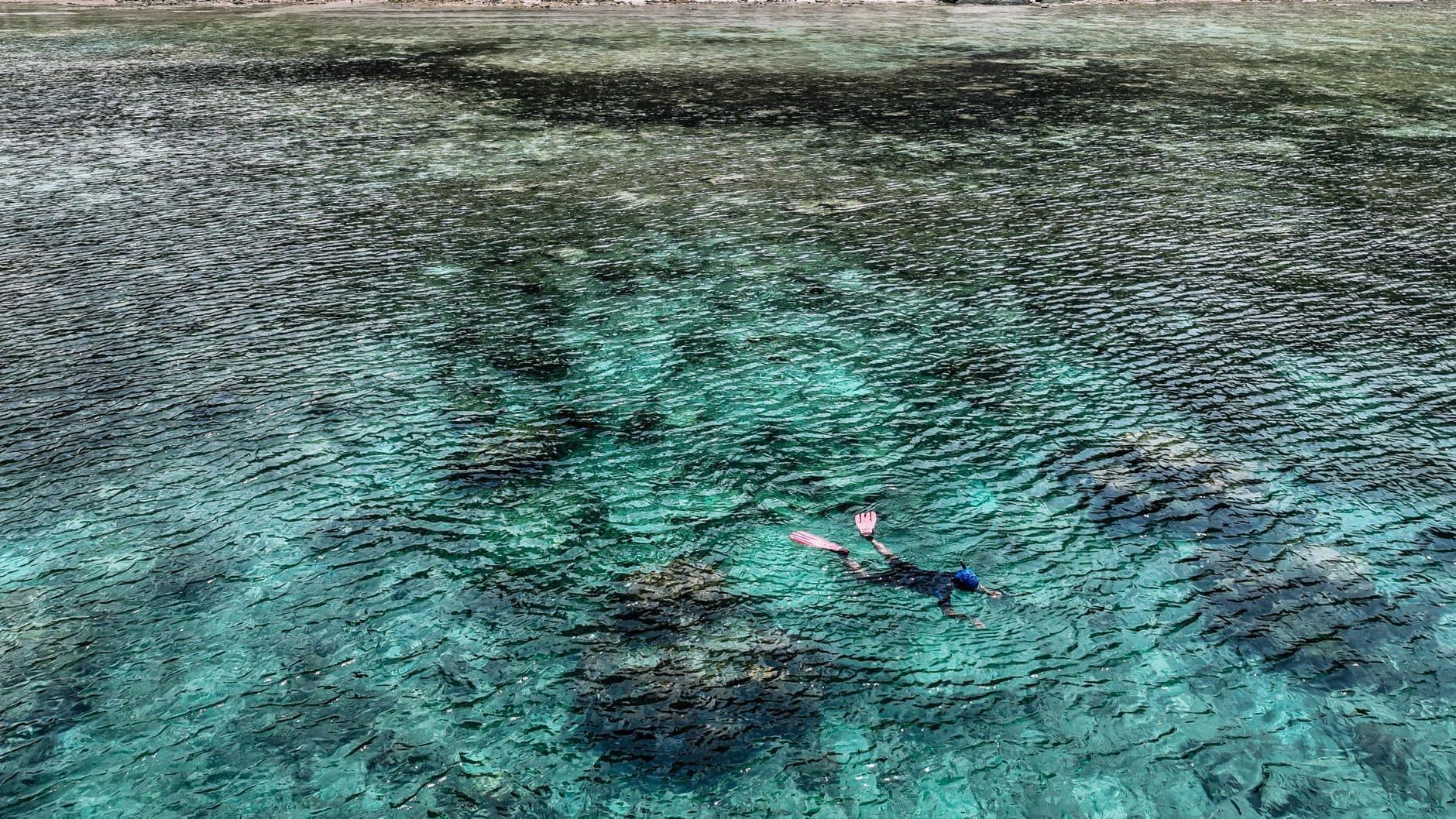
Blue Lagoon Snorkeling, Padang Bai
This is one of the easiest snorkeling products to recommend for beginners and casual sea-day travelers. It gives you underwater visibility, reef-life value, and a cleaner half-day or lighter full-day structure than more demanding offshore routes.
- Duration
- 2 hours on the water
- Area
- Padang Bai and Blue Lagoon
- Format
- Snorkeling trip
- Best for
- Beginners, couples, and mixed groups
From $19 No prepayment
View tour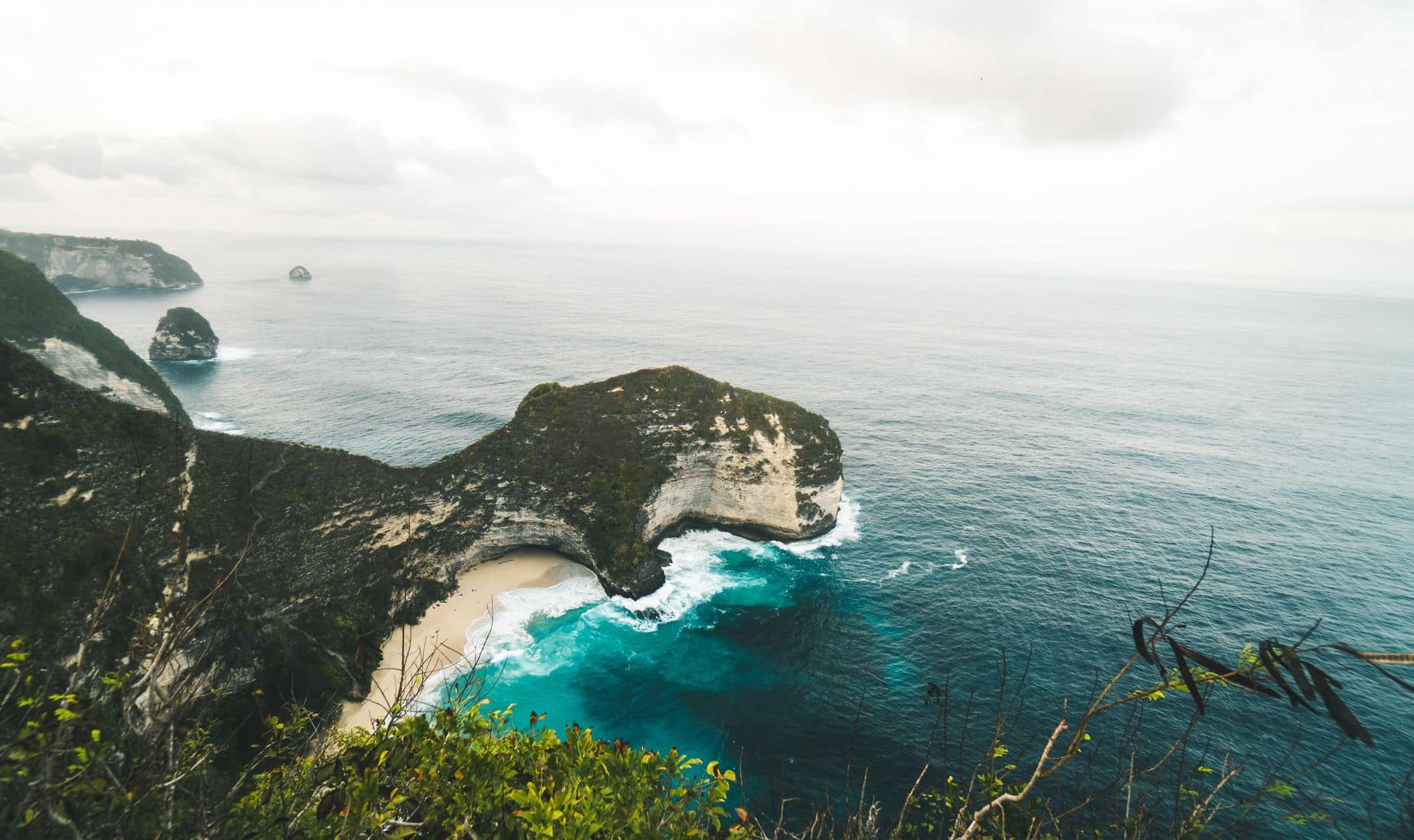
Nusa Penida West Tour
If your priority is bold scenery over snorkeling, the west route is the cleanest and most iconic Penida choice: one car, one driver and the island's four most photographed stops in a single day. It is especially strong for couples and first-time visitors who want the headline views with transport handled professionally.
- Duration
- Full day
- Area
- West Nusa Penida
- Format
- Island day tour
- Best for
- Cliff viewpoints and first-time Penida sightseeing
From $49 per car No prepayment
View tour