

Jatiluwih runs on a written subak calendar: red rice in January, a short white variety in August. That calendar decides whether you see a green panorama, bare mud or a harvest. Tegalalang publishes nothing at all, and the reason is structural.
By Alex Moskvin, Founder of SB Excursions · Published 21 May 2026 · Updated 23 October 2026
Tour on this route: Private Car with Driver in Bali — From $59 per car, flexible daily use.
When is Jatiluwih actually green?
By the written calendar, red rice goes in during January and needs about 5.5 months, so the fields fill out roughly from February to April. The August mangsur planting needs about 3.5 months, which gives a second green window around September and October. That is the schedule, not a guarantee: in the 2024/25 season the harvest came in November 2024 and the main red-rice cut ran from May 2025 into the first week of July 2025.
This guide also answers:
- When is the harvest, if that is what I want to see?
- If Jatiluwih is cut, will Tegalalang be green?
- Isn't a big terrace a safer bet, since part of it is always green?
Top picks from this guide
 #1
#1
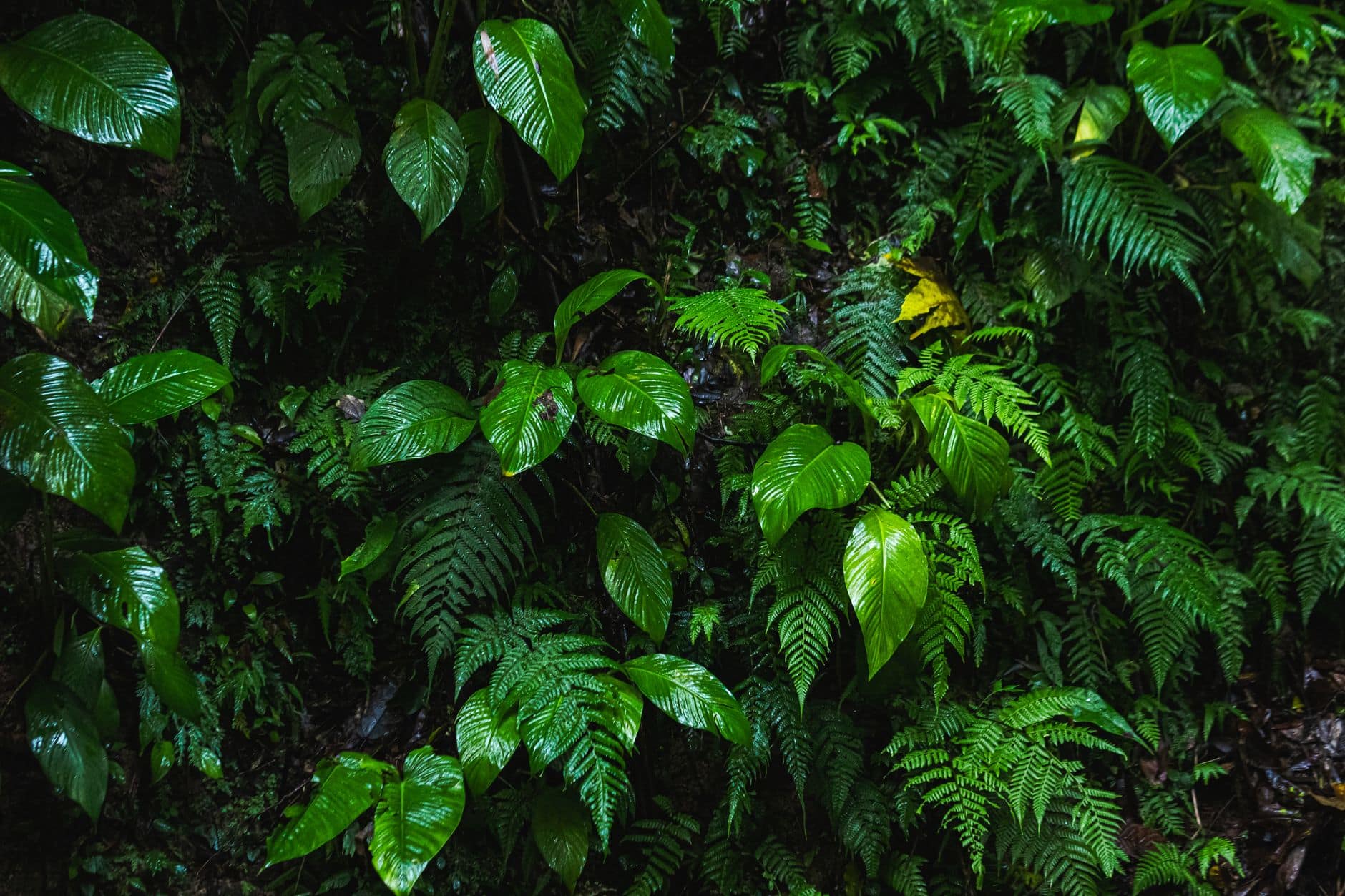
Jatiluwih in January
The subak charter obliges members to plant Balinese rice in January. Pekaseh I Wayan Mustra, quoted in the Indonesian press, said red rice planting would only start in January 2026 after a high-yield variety went in during August 2025. Fields at this point are flooded or freshly transplanted.
 #2
#2
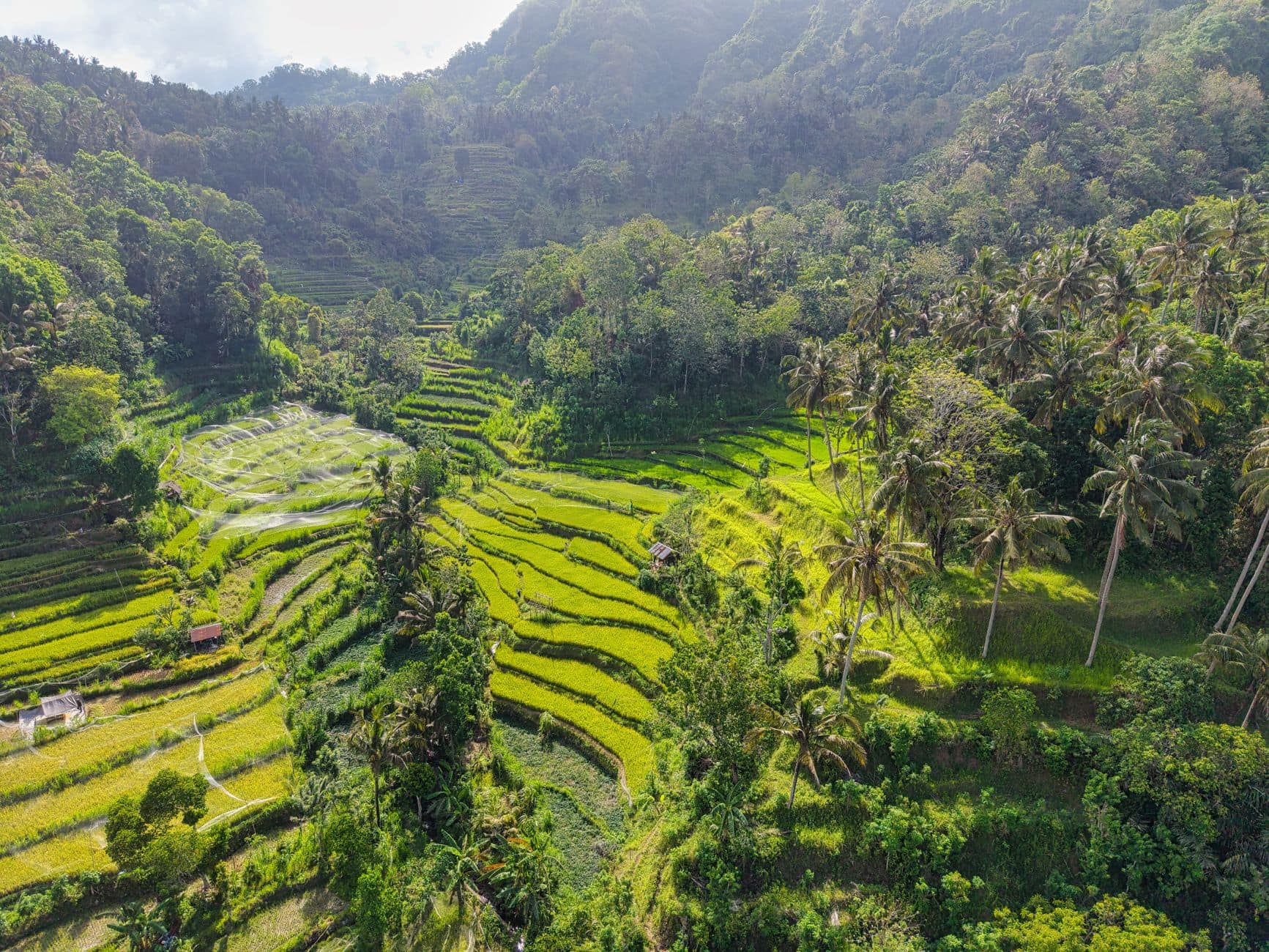
Jatiluwih, February to April
Red rice needs about 5.5 months from a January planting, so this is the fill-out stage. On 23 February 2023 the crop was just over a month old, with two weedings due at 1.5 and 2.5 months. In February 2023, 227.41 ha of the subak were under red rice.
 #3
#3
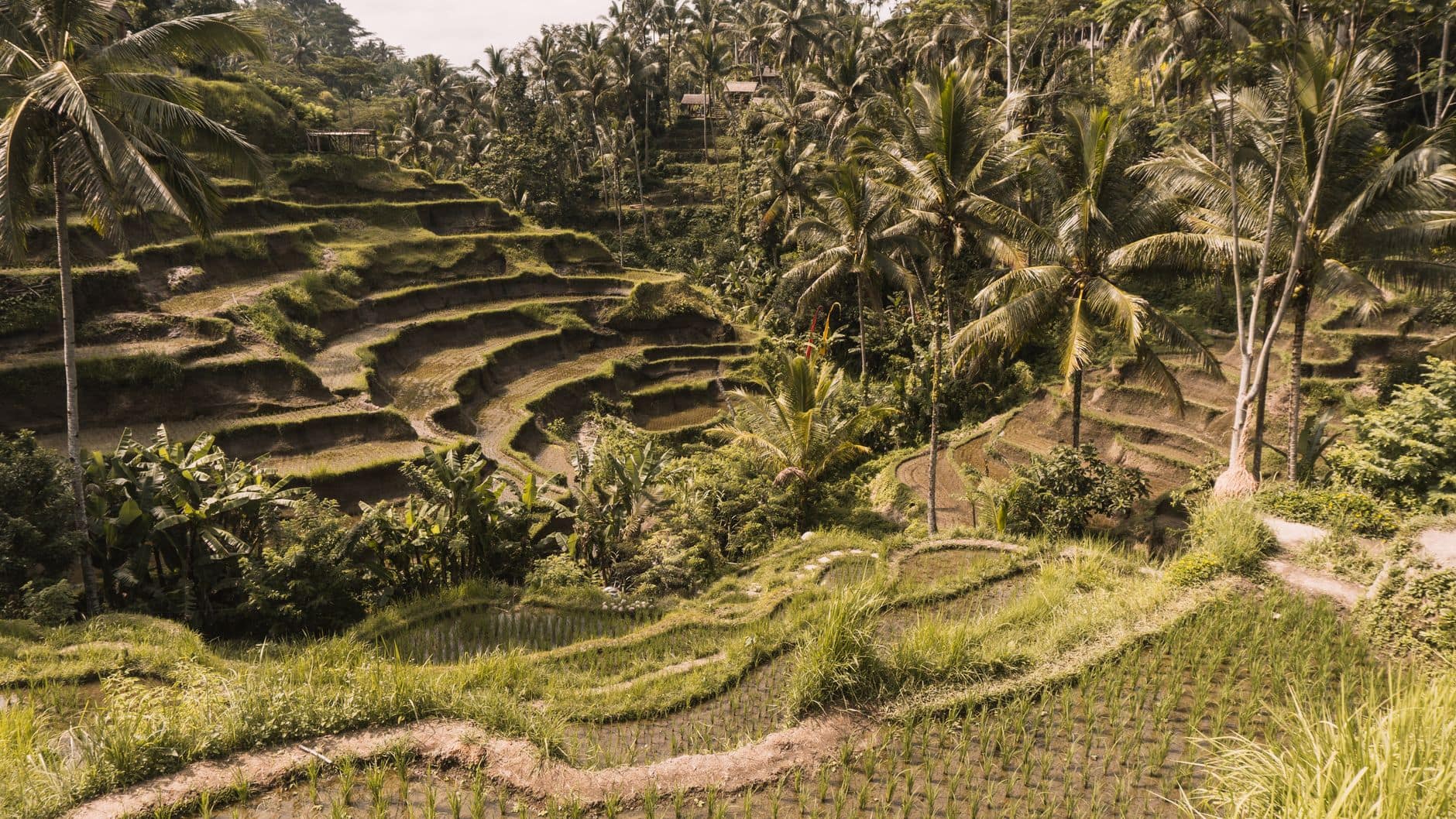
Jatiluwih, May to early July
The panen raya of red rice ran from May 2025 to the first week of July 2025. On 26 June 2025 about 30 per cent of the fields were still uncut, at 7.5 t/ha. The Jatiluwih Festival on 20-22 June 2026 fell inside this window, which the DTW manager described as coincidence rather than scheduling.
 #4
#4
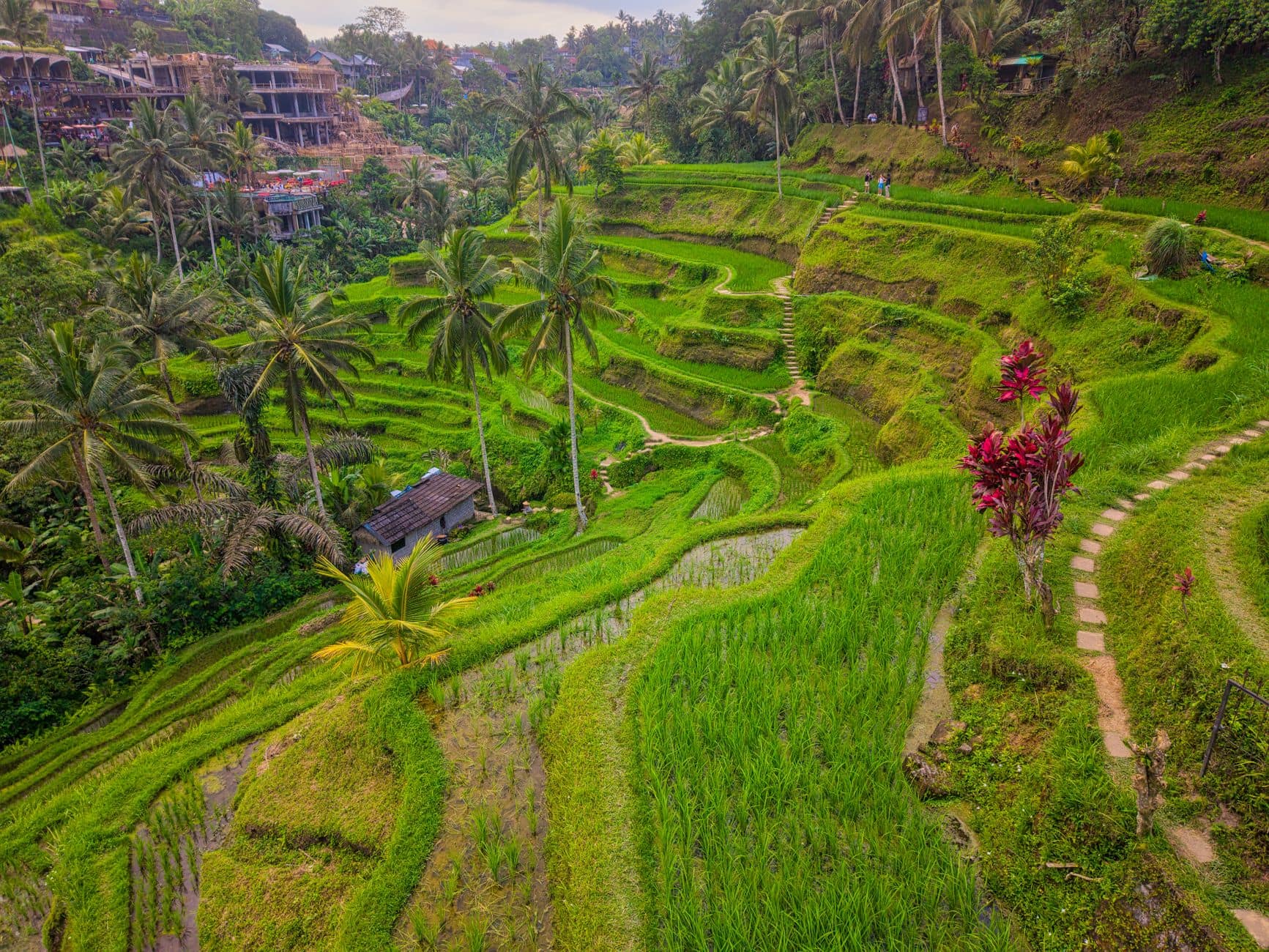
Jatiluwih, September and October
Balinese white rice, mangsur, is usually planted in August with a growing period of about 3.5 months according to the official DTW site. That puts the green phase in the weeks after planting and a harvest towards November — the 2024/25 season was cut in November 2024 at 6-7 t/ha.
 #5
#5
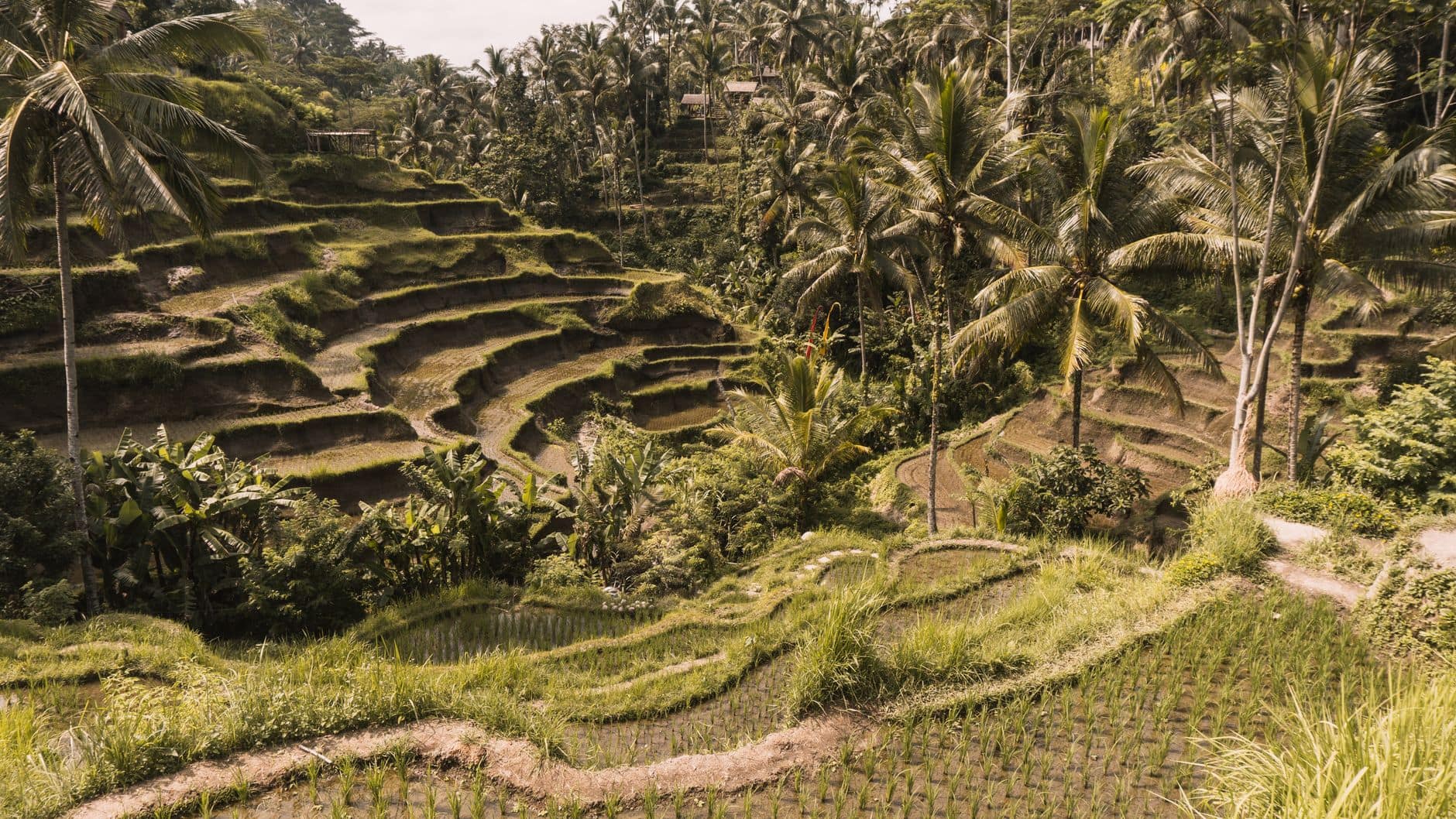
Tegalalang, the Ceking slope
The view is held by fewer than ten private owners in the banjars Tangkub and Kebon, and by several small subaks — Kedisan Kaja is 22.8 ha against 131 ha in a single Jatiluwih tempek. Wayan Japa works about 1.8 ha with 7-8 workers a day and is contractually required to always keep rice in the ground.
 #6
#6
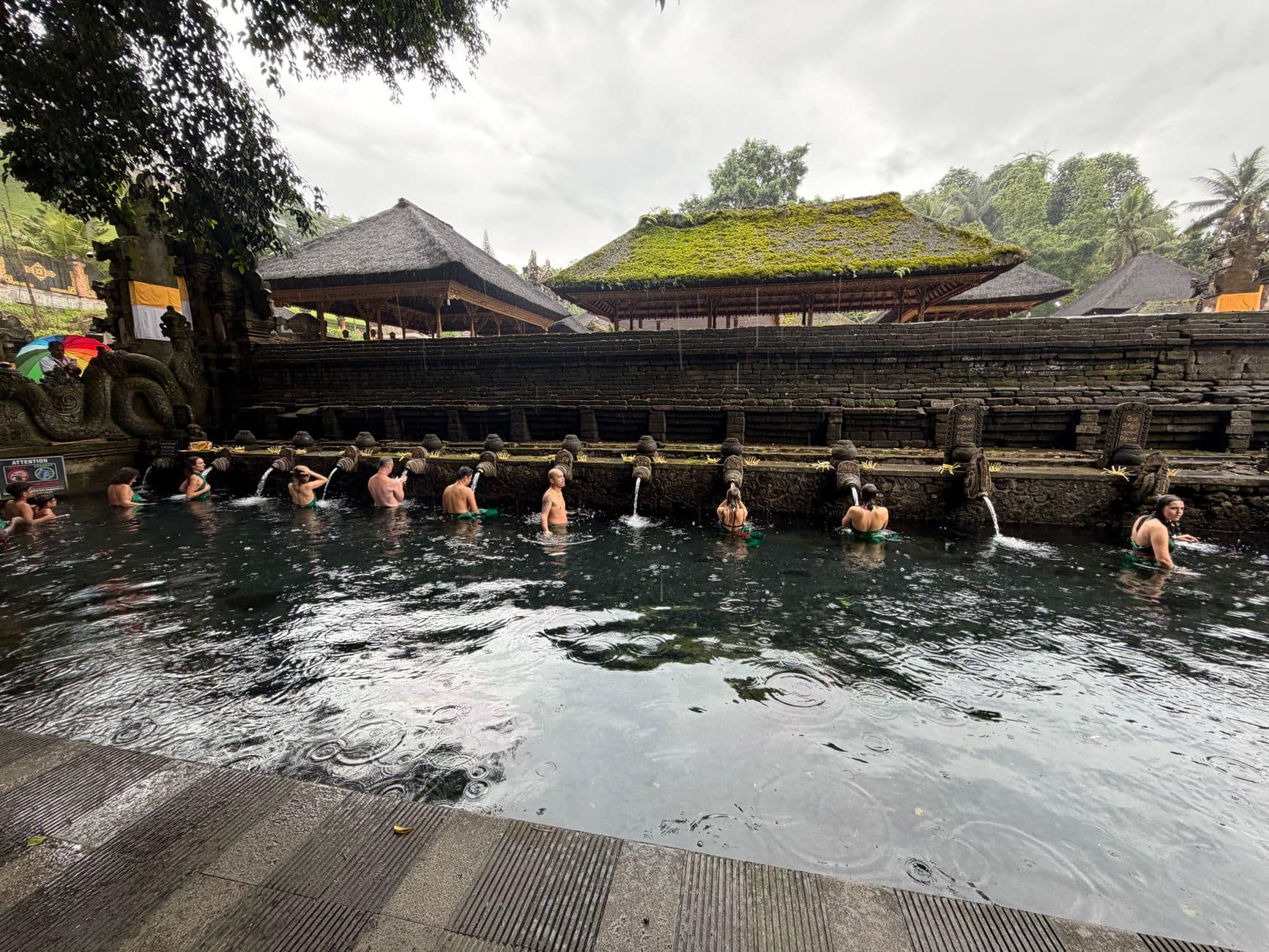
The subak ritual calendar
Offerings are pegged to the crop in days: Banten Tulung on day 7 after planting, Mubuhin on day 12, Ngabut Bulih at 14 days, Wali Nyungsung on day 60, Mabiyukukung around day 75, Banten Manyi on the day of the harvest. If you see one, you know how old the crop is to within a few days.
 #7
#7
Checking before you book
Message the Jatiluwih management office on WhatsApp, look at the fields yourself in Sentinel-2 at 10 m per pixel with a 5-day revisit, and read the BPS Bali table of harvested paddy area per month for Tabanan and Gianyar. Three independent checks, all free, all faster than trusting a stock photo.
A subak is not a village, and that is why the view switches
The UNESCO nomination dossier 1194rev is blunt about it: subaks are not villages, they are specialised institutions charged with managing irrigation water, and most of them have written legal codes called awig-awig. Membership follows the water, not the address. Two neighbours on the same lane can belong to different subaks, and two fields on opposite sides of the valley can be governed by the same rulebook.
Water is divided by proportional dividers cut so that you can see at a glance how much is going into each canal. That is what makes a schedule enforceable rather than aspirational. After the harvest the fields are flooded together, which strips pests of their habitat, and the dossier states plainly that this depends on farmers being able to schedule simultaneous harvests over large areas.
So the planting decision is collective, and the visual consequence is direct: a subak panorama changes state all at once. The largest water-temple congregation on the island, Pura Ulun Danu Batur, coordinates more than 250 subaks. At the time the dossier was submitted, in 2010-2011, Bali held roughly 82,000 ha of irrigated terraces.
Jatiluwih's calendar is written down, and the charter names the month
The official DTW Jatiluwih site publishes the cycle. Red rice is usually planted in January, with a growing period of about 5.5 months. Balinese white rice, mangsur, is usually planted in August, with a growing period of about 3.5 months. Pekaseh I Wayan Mustra — named in the Indonesian press rather than on the site itself — puts the rule behind it in one sentence: in August farmers are free to choose the variety, but in January the subak obliges them to plant Balinese rice.
That single line explains the whole viewing problem. Jatiluwih is one subak with a charter that names a month, so the panorama switches as a block. Anyone who tells you that a terrace this large always has something green somewhere has the logic backwards. Size does not hedge your odds here — it synchronises them. The patchy site is the small one, not the big one.
The scale, from the same source: 7 tempek, a total the site gives as about 303 ha, and 545 members. We say about 303 because the arithmetic does not close — the seven individual areas listed on that page add up to 338.7 ha, and the site does not explain the gap. In February 2023, 227.41 ha of the subak were under red rice.
Two documented seasons, with dates
Season 2022/23: planting ran December 2022 into January 2023, the variety was padi merah cendana grown from the previous harvest's own seed, with two weedings — peniangan — at 1.5 and 2.5 months. By 23 February 2023 the rice was described as a little over a month old, and the expected yield was around 7 t/ha.
Season 2024/25: the harvest came in November 2024 at 6-7 t/ha, then the panen raya of red rice ran from May 2025 to the first week of July 2025. On 26 June 2025 roughly 30 per cent of the fields were still uncut, yield was 7.5 t/ha, and the GKP price had climbed to IDR 2 million per quintal against IDR 700,000 before. Mustra said a high-yield variety went in during August 2025 and that red rice planting would only begin in January 2026. An independent peg on the same window: the Jatiluwih Festival ran 20-22 June 2026, and DTW manager I Ketut "John" Purna described the overlap with the harvest as a coincidence, not something the festival was scheduled around.
Read together, those two seasons give an honest booking rule. If you want green Jatiluwih, aim at February to April and at September to October. If you want a harvest — people in the fields, cut stalks, loaded motorbikes — aim at May and June. A private car with driver at $59 for the car is the setup that works there, because Penebel is a slow road and the light on the terraces is better early and late than at the hour a group bus arrives. For sunrise timing on the ridge itself, our notes on Bali viewpoints cover where to stand.
What we will not do is sell Jatiluwih as a guaranteed photograph in December and January or in July and August. In those windows the fields are being ploughed, flooded, transplanted or cut, and the recorded calendar says so. We are not going to promise green terraces year-round, and if that is the only reason you are making the drive, move the date instead of buying the day.
Tegalalang has no schedule to publish
The slope you photograph at Ceking sits in the banjars Tangkub and Kebon of Kedisan village, and it is held by fewer than ten private owners. Wayan Japa works about 1.8 ha of it with 7-8 workers a day, paid IDR 120,000 with food or IDR 100,000 without, and his agreement requires him to always keep rice in the ground; the variety is mansur, and tourists often join the harvest. In 2020 owners put up mirrors facing the restaurants across the valley after an IDR 4.5 million a month arrangement expired in 2019 — the view is a commercial asset, and it is negotiated, not managed by one body.
That fragmentation is the whole difference. The Tegalalang panorama is formed by several small subaks: Kedisan Kaja is 22.8 ha in total, with pekaseh I Putu Yoga Wibawa running about 4 ha organically, against 131 ha in Telabah Gede, a single tempek of Jatiluwih. Small units, separate decisions, staggered fields — a patchwork by construction.
There is no published planting calendar for Tegalalang, and no source we could find puts the two sites side by side month by month. Blogs will tell you Tegalalang is green in March and April or in September and October, and that Jatiluwih is bare while Tegalalang is full. Neither claim has a source behind it. Our separate comparison of the two, Jatiluwih vs Tegalalang, goes through the layout of each site. What is safe to say is structural: with several owners and several subaks, a total blank across the whole slope is unlikely, and a total sweep of green is equally unscheduled.
If you can read the offerings, you can date a field without asking. The subak ritual calendar counts the crop in days: Banten Tulung on the 7th day after planting, Mubuhin on the 12th, Ngabut Bulih at 14 days, Wali Nyungsung on the 60th, Mabiyukukung around the 75th, and Banten Manyi on the day of the cut. Tegalalang is a stop on our Ubud Highlights tour at $65 for the car, with entrance tickets paid per person on top.
How to check before you book, in four ways
One: ask the people who run it. Kantor Badan Pengelola DTW Jatiluwih, Jl. Batu Luwih Kawan, Penebel, Tabanan 82152. WhatsApp +62-85692381416 and +62-85739939148 — the site names the second number for bookings. Instagram @infojatiluwih and TikTok @infojatiluwih_, not @jatiluwihdestination. The news feed on the website has been dead since 2024, so a silent site tells you nothing about the fields; message a human.
Two: look yourself. Sentinel-2 imagery is free in the Copernicus Browser at 10 m per pixel in the visible bands, with a revisit every 5 days. At that resolution the subak reads clearly, and a cut field looks different from a flooded one even to an untrained eye. Compare the last two clear passes before you commit to a date.
Three: read the statistics. BPS Bali publishes harvested paddy area per month with a breakdown by regency, including Tabanan and Gianyar. Island-wide the peak is May — 16,500 ha in May 2024, 14,280 ha in May 2023 — and the trough is February, at 3,588.93 ha in February 2024, with January 2025 at 7,376.70 ha. But in Gianyar, January 2025 was the strongest month of the year at 2,188.91 ha. The island pattern does not transfer to the regency, which is precisely why Tegalalang and Jatiluwih should not be treated as one season.
Four: tickets and rules, so the day does not stall at the gate. Foreign adult IDR 75,000, child IDR 50,000, Indonesians IDR 25,000 and IDR 15,000. Drones only with permission. A banner carries a surcharge of IDR 300,000 on one page of the official site and IDR 150,000 in the accordion on the same site — the two figures contradict each other and we have not been able to resolve which is current, so call before you plan anything with a banner. Guided trekking starts at IDR 450,000, cycling at IDR 470,000, and bookings are taken at least 2 days ahead.
FAQ
When is Jatiluwih actually green?
By the written calendar, red rice goes in during January and needs about 5.5 months, so the fields fill out roughly from February to April. The August mangsur planting needs about 3.5 months, which gives a second green window around September and October. That is the schedule, not a guarantee: in the 2024/25 season the harvest came in November 2024 and the main red-rice cut ran from May 2025 into the first week of July 2025.
When is the harvest, if that is what I want to see?
May and June. The documented panen raya of red rice ran from May 2025 to the first week of July 2025, and on 26 June 2025 about 30 per cent of the fields were still standing, at 7.5 t/ha. The Jatiluwih Festival on 20-22 June 2026 fell inside that window, which the DTW manager described as a coincidence rather than deliberate timing.
If Jatiluwih is cut, will Tegalalang be green?
Nobody publishes a planting calendar for Tegalalang, and there is no source that compares the two sites month by month. What can be said is structural: the Tegalalang view is made by several small subaks — Kedisan Kaja is only 22.8 ha — plus fewer than ten private owners, so the slope is staggered rather than synchronised. A patchwork is likely. A specific month is not predictable.
Isn't a big terrace a safer bet, since part of it is always green?
No, and this is the most common mistake about Jatiluwih. It is one subak with a charter that names the planting month, so 7 tempek and roughly 303 ha switch state together. Size synchronises the view instead of hedging it. The fragmented site is the smaller one.
How much does Jatiluwih cost to enter?
Foreign adult IDR 75,000, child IDR 50,000, Indonesian visitors IDR 25,000 and IDR 15,000. Guided trekking starts at IDR 450,000 and cycling at IDR 470,000, both booked at least 2 days in advance through the management office.
Can I fly a drone or set up a banner for a shoot?
Drones require permission from the management office. A banner carries a surcharge listed as IDR 300,000 in one place on the official site and IDR 150,000 in the accordion on the same site. The two figures contradict each other and we have not resolved which applies, so confirm by phone before you plan the shoot.
How do I check the state of the fields two weeks before my trip?
Three ways that all work from home. WhatsApp the Jatiluwih office on +62-85692381416 or +62-85739939148 — the website news feed has been dead since 2024, so ask a person. Open the free Copernicus Browser and compare the last Sentinel-2 passes at 10 m per pixel, refreshed every 5 days. Then check the BPS Bali monthly harvested-area table for Tabanan and Gianyar.
Should I book Jatiluwih for December or January?
You can go, and the place is worth seeing in any state, but we will not describe it as a green panorama in those weeks. That is when the fields are being prepared, flooded and transplanted — the pekaseh said red rice planting would only begin in January 2026. Come for the water system, the water temples and the walk, and put the photograph you have in mind on a February-to-April or September-to-October date instead.
Recommended Bali tours for this guide
Private Car with Driver in Bali
This is one of the most useful products in Bali because so many plans become easier once transport is flexible. It is perfect for custom sightseeing, shopping days, family pacing, and travelers who already know roughly where they want to go.
- Duration
- Flexible daily use
- Area
- All major Bali regions
- Format
- Private transport service
- Best for
- Travelers who want total route flexibility
From $59 per car No prepayment
View tour
Ubud Rice Terrace, Temple & Volcano Tour
This private Ubud and Kintamani day tour is built for travelers who want Bali culture, scenery, and soft adventure without planning the route or doing the driving. It works especially well for first-time visitors because the route moves from craft villages and temples to volcano views, rice terraces, and the Ubud center in one organized flow.
- Duration
- 10 hours
- Area
- Kintamani, Ubud, and central Bali
- Format
- Private day tour by car
- Best for
- First-time Bali visitors
From $65 per car No prepayment
View tour